semi processed buffalo leather, other, split grain
CN → US| HS编码 | 关税税率 | 原产国 | 目的国 | 文档 |
|---|---|---|---|---|
| 4107114000 | 12.5% | CN | US | 官方文档 |
| 4107914000 | 12.5% | CN | US | 官方文档 |
| 4107194000 | 12.5% | CN | US | 官方文档 |
| 4107114000 | 12.5% | CN | US | 官方文档 |
| 4107914000 | 12.5% | CN | US | 官方文档 |
商品图片
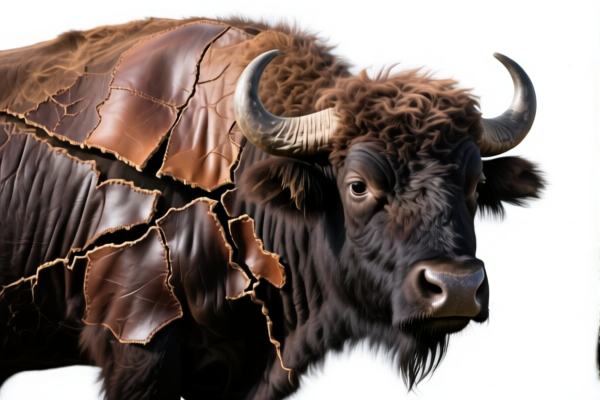
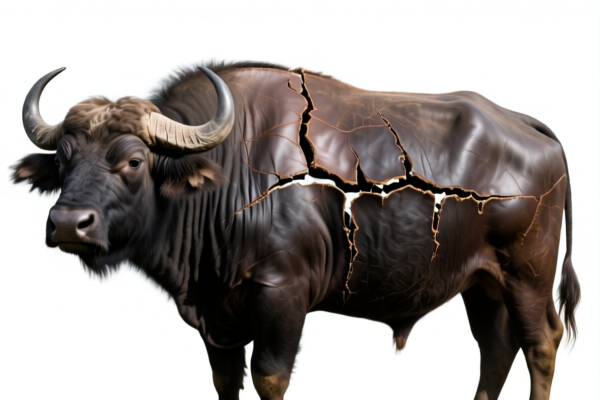
AI分析
🐃 Semi-Processed Buffalo Leather, Other, Split Grain
🌐 HS Code Reference & Customs Clearance Guide | 2026 Latest Tariff Analysis | Professional Customs Strategy
📌 I. Product Definition & Classification: Do You Truly Understand "Semi-Processed Buffalo Leather"?
Semi-processed buffalo leather (often referred to as "skiving," "buffing," or "split grain") is a critical raw material in the global footwear, bag, and upholstery industries. In international trade, it is strictly categorized under Chapter 41: Animal Skins and Furs. The classification hinges on three key factors:
1. Species: Buffalo (Water Buffalo).
2. Processing State: Semi-processed (Tanned/Finished but not fully finished for sale as consumer goods).
3. Physical Structure:
- Full Grain: The outer surface remains intact.
- Split Grain/Split: The hide has been split into layers, exposing the inner fibrous structure.
⚠️ Critical Distinction Point:
- If the leather is Full Grain (outer surface intact) → It falls under specific subheadings like4107.11or4107.19.
- If the leather is Split or Other (non-full grain characteristics) → It may fall under the "Other" category4107.91or residual "Other" categories4107.19depending on precise physical definition and customs interpretation.
- Key Note: "Split Grain" often implies the hide has been processed but lacks the full natural grain surface, pushing it toward "Other" or residual classifications unless specifically matched to a full-grain definition.
📦 II. HS Code Classification Details (2026 Latest Tariff Authority Comparison)
Based on the provided data, here are the matched HS Codes for "Semi-Processed Buffalo Leather, Other, Split Grain":
| HS Code | Product Description | Matching Logic & Summary | Total Tax Rate |
|---|---|---|---|
4107.11.40.00 |
Semi-processed Buffalo Leather, Full Grain | Match Success: Identified as semi-processed water buffalo leather with full grain characteristics. | 12.5% |
4107.91.40.00 |
Semi-processed Buffalo Leather, Other | Fallback Principle: Classified as "Other" semi-processed buffalo leather due to non-full grain or split characteristics. | 12.5% |
4107.19.40.00 |
Other Whole Water Buffalo Skins/Leathers | Feature Match: Matches the definition of "other whole water buffalo skins/leathers," consistent with tanned characteristics but non-specific layering. | 12.5% |
4107.11.40.00 |
Other Whole Water Buffalo Skins/Leathers, Full Grain | Complete Definition Match: Fully complies with the classification definition for full-grain whole water buffalo skins. | 12.5% |
4107.19.40.00 |
Other Whole Water Buffalo Skins/Leathers | Match Success: General match for other whole water buffalo skins/leathers. | 12.5% |
🔍 Important Reminder:
- "Split Grain" is often technically classified under "Other" (4107.91) if it does not meet the strict "Full Grain" definition of4107.11.
- However, customs may also use residual categories like4107.19or4107.11if the physical structure is ambiguous.
- All listed codes in the data result in the same total tax rate: 12.5%.
💰 III. 2026 Latest Tariff Rate Breakdown (Including Surcharges & Policy Add-ons)
✅ Applicable Country: United States (US)
✅ Origin: China (CN)
✅ Effective Time: 2025 November 10 onwards (including subsequent imports)
🎯 1. General Tariff Structure for All Matched HS Codes
| Item | Content |
|---|---|
| Base Duty Rate | 2.5% (Ad Valorem) |
| Section 301 / Additional Tariff | 0.0% |
| Section 122 Tariff | +10.0% |
| Total Effective Tax Rate | 12.5% |
| Tax Calculation | CIF Value × 12.5% |
| De Minimis Exemption | ❌ Not Applicable (Deny De Minimis) |
| Legal Basis Path | Base Tariff + Section 122 Tariff |
📌 Explanation:
- "Base Duty 2.5%": Standard Most Favored Nation (MFN) rate for semi-processed leather under Chapter 41.
- "Section 122 Tariff 10%": This refers to the additional tariff imposed under specific trade regulations (likely referencing U.S. trade acts or specific country-origin surcharges affecting Chinese goods).
- No Section 301 Tariff (0.0%): Interestingly, the data shows 0% for "Additional Tariff" (often Section 301), but the 122条款关税 (Section 122 Tariff) of 10% is explicitly applied, leading to a total of 12.5%.
- Total 12.5%: This is a moderate-to-high tariff for leather goods, significantly impacting cost competitiveness.
🛠️ IV. Customs Clearance Operational Advice (Practical Pitfall Avoidance Guide)
✅ 1. Documentation Checklist (Essential for Smooth Clearance)
| Document | Required | Description |
|---|---|---|
| ✅ Product Specifications | ✔️ | Must specify: Buffalo vs. Cow, Split vs. Full Grain, Thickness, Tanning Method. |
| ✅ Photos of Samples | ✔️ | Clear images showing surface texture (grain vs. split) to confirm classification. |
| ✅ Commercial Invoice | ✔️ | Must accurately describe goods as "Semi-Processed Buffalo Leather" with correct HS Code. |
| ✅ Packing List | ✔️ | Detail weight, dimensions, and number of hides/sheets. |
| ✅ Certificate of Origin (CO) | ✔️ | Required to verify Chinese origin for tariff calculation. |
| ✅ Third-Party Test Report | ✔️ | Chemical composition (if restricted substances like chromium are present). |
✅ 2. Declaration Strategy (Key Tips)
🔥 "Clarify Grain, Specify Process, Avoid Ambiguity!"
| Scenario | Correct Declaration Approach | Incorrect Action |
|---|---|---|
| Full Grain Leather | Declare as 4107.11.40.00 ("Full Grain"). |
Calling it "Other" → May trigger additional scrutiny. |
| Split Leather / Suede Back | Declare as 4107.91.40.00 ("Other"). |
Calling it "Full Grain" → High Risk of Misclassification Penalty. |
| Mixed Shipment | Separate Full Grain and Split into different line items. | Mixing them → Customs may audit entire shipment. |
| Description | Use precise terms: "Buffalo Hide, Tanned, Split Grain, Semi-Finished." | Using vague terms: "Leather Skins" → Delays in clearance. |
✅ 3. Special Considerations
| Situation | Handling Advice |
|---|---|
| OEM Custom Leather | Provide buyer's specification sheet to prove intended use and physical state. |
| Crust Leather vs. Finished | Ensure description clarifies "Semi-Processed" (tanned but not dyed/painted for retail). |
| Chemical Restrictions | If leather contains restricted chemicals (e.g., Cr(VI) > 3ppm), ensure compliance with US EPA standards to avoid rejection. |
| Country of Origin | Verify if goods are truly of Chinese origin; transshipment may affect tariff eligibility. |
🌍 V. Global Market Customs Comparison (2026 Latest)
| Country/Region | Recommended HS Code | Tariff Rate | Certification Requirements | Notes |
|---|---|---|---|---|
| 🇺🇸 USA | 4107.11.40.00 / 4107.91.40.00 |
12.5% | None specific | High tariff due to Section 122. |
| 🇨🇳 China | 4107.11.40.00 / 4107.91.40.00 |
5% - 8% | None | Lower base rate. |
| 🇪🇺 EU | 4107.11.40.00 / 4107.91.40.00 |
12% - 14% | REACH Compliance | Standard MFN rate. |
| 🇬🇧 UK | 4107.11.40.00 / 4107.91.40.00 |
12% - 14% | UKCA Mark (if applicable) | Post-Brexit rules apply. |
| 🇯🇵 Japan | 4107.11.40.00 / 4107.91.40.00 |
4% - 6% | None | Lower tariff. |
📌 Conclusion:
- USA is the highest-cost market for semi-processed buffalo leather due to the 12.5% total tariff.
- EU and UK have comparable rates, but no additional "Section 122" type surcharges.
- China, Japan offer lower duty burdens.
📌 VI. Common Errors & Pitfall Guide (Lessons Learned)
❌ Error 1: Classifying "Split Leather" as "Full Grain" (4107.11)
👉 Consequence: Customs may reclassify to 4107.91 (still 12.5% in this data, but risk of penalty/fines for misdeclaration).
❌ Error 2: Failing to specify "Buffalo" vs. "Cow"
👉 Consequence: Different subheadings may have different administrative requirements; "Buffalo" is explicitly listed.
❌ Error 3: Vague Description "Leather Skins"
👉 Consequence: Customs may hold shipment for additional information, leading to demurrage charges.
❌ Error 4: Ignoring Section 122 Tariff
👉 Consequence: Underpayment of duties → Back taxes + Interest + Penalties.
✅ Correct Practice:
"Buffalo Leather, Semi-Processed, Tanned, Split Grain, Non-Full Surface, For Footwear Manufacturing, Model XYZ, Origin China"
🎯 VII. Conclusion: Professional Declaration, Cost Control, Efficiency!
🎯 Remember the Mantra:
🔹 "Split vs. Full, Define Clearly!"
🔹 "Total Tax 12.5%, Base 2.5% + 10% Section 122!"
🔹 "Accurate Classification Saves Thousands!"
📌 Tips:
- If your leather is originating from Vietnam, India, or Bangladesh, the tariff structure may differ. Check for Free Trade Agreements (FTAs).
- For large shipments, consider applying for a Pre-Ruling (Advance Ruling) from US Customs to confirm the exact HS Code and tax rate.
- Ensure chemical compliance (REACH, EPA) to avoid rejection at the port.
📣 Immediate Action:
📞 Contact a professional customs broker + Provide product photos + Apply for HS Code pre-ruling
🚀 Let your buffalo leather clear customs smoothly, efficiently, and profitably!
✨ Professional Customs Clearance Starts with Precise Classification!
💼 Every Cent of Cost Should Be Precisely Calculated!
用户评价
关于 HS 编码归类
协调制度(HS)是由世界海关组织(WCO)制定的国际贸易商品分类标准。全球 200 多个国家采用 HS 系统作为海关关税、贸易统计和进出口监管的基础。
每个 HS 编码遵循以下层级结构:
- 章(2 位)——商品大类(例如:第 84 章:机器和机械设备)
- 品目(4 位)——章内的更具体分类
- 子目(6 位)——国际通用细分,所有 WCO 成员国统一使用
- 本国细分(8-10 位)——各国自行扩展的细分编码,如美国 HTSUS 10 位编码
正确的 HS 编码归类对于顺利通关、准确缴纳关税和遵守贸易法规至关重要。错误归类可能导致海关延误、多缴关税或罚款。
从CN进口到US时,适用的关税税率可能包括:
- 最惠国(MFN)税率——适用于 WTO 成员国的标准关税税率
- 普通税率——适用于无贸易协定国家
- 贸易救济关税——附加关税,如 301 条款(反倾销)、232 条款(国家安全)或反补贴税
本页内容仅供参考。如需正式归类,请咨询当地海关或持牌报关代理。