semi processed buffalo leather, other, split grain
CN → US| HS Code | Tariff Rate | Origin | Destination | Doc |
|---|---|---|---|---|
| 4107114000 | 12.5% | CN | US | Official Doc |
| 4107914000 | 12.5% | CN | US | Official Doc |
| 4107194000 | 12.5% | CN | US | Official Doc |
| 4107114000 | 12.5% | CN | US | Official Doc |
| 4107914000 | 12.5% | CN | US | Official Doc |
Product Images
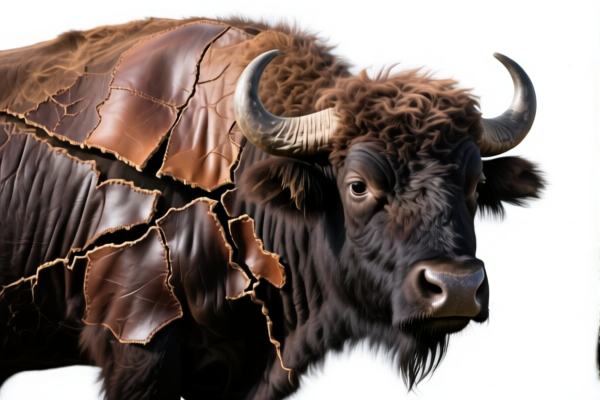


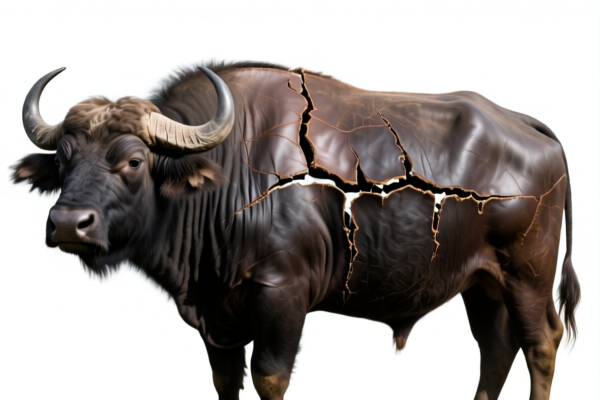
AI Analysis
🐃 Semi-Processed Buffalo Leather, Other, Split Grain
🌐 HS Code Reference & Customs Clearance Guide | 2026 Latest Tariff Analysis | Professional Customs Strategy
📌 I. Product Definition & Classification: Do You Truly Understand "Semi-Processed Buffalo Leather"?
Semi-processed buffalo leather (often referred to as "skiving," "buffing," or "split grain") is a critical raw material in the global footwear, bag, and upholstery industries. In international trade, it is strictly categorized under Chapter 41: Animal Skins and Furs. The classification hinges on three key factors:
1. Species: Buffalo (Water Buffalo).
2. Processing State: Semi-processed (Tanned/Finished but not fully finished for sale as consumer goods).
3. Physical Structure:
- Full Grain: The outer surface remains intact.
- Split Grain/Split: The hide has been split into layers, exposing the inner fibrous structure.
⚠️ Critical Distinction Point:
- If the leather is Full Grain (outer surface intact) → It falls under specific subheadings like4107.11or4107.19.
- If the leather is Split or Other (non-full grain characteristics) → It may fall under the "Other" category4107.91or residual "Other" categories4107.19depending on precise physical definition and customs interpretation.
- Key Note: "Split Grain" often implies the hide has been processed but lacks the full natural grain surface, pushing it toward "Other" or residual classifications unless specifically matched to a full-grain definition.
📦 II. HS Code Classification Details (2026 Latest Tariff Authority Comparison)
Based on the provided data, here are the matched HS Codes for "Semi-Processed Buffalo Leather, Other, Split Grain":
| HS Code | Product Description | Matching Logic & Summary | Total Tax Rate |
|---|---|---|---|
4107.11.40.00 |
Semi-processed Buffalo Leather, Full Grain | Match Success: Identified as semi-processed water buffalo leather with full grain characteristics. | 12.5% |
4107.91.40.00 |
Semi-processed Buffalo Leather, Other | Fallback Principle: Classified as "Other" semi-processed buffalo leather due to non-full grain or split characteristics. | 12.5% |
4107.19.40.00 |
Other Whole Water Buffalo Skins/Leathers | Feature Match: Matches the definition of "other whole water buffalo skins/leathers," consistent with tanned characteristics but non-specific layering. | 12.5% |
4107.11.40.00 |
Other Whole Water Buffalo Skins/Leathers, Full Grain | Complete Definition Match: Fully complies with the classification definition for full-grain whole water buffalo skins. | 12.5% |
4107.19.40.00 |
Other Whole Water Buffalo Skins/Leathers | Match Success: General match for other whole water buffalo skins/leathers. | 12.5% |
🔍 Important Reminder:
- "Split Grain" is often technically classified under "Other" (4107.91) if it does not meet the strict "Full Grain" definition of4107.11.
- However, customs may also use residual categories like4107.19or4107.11if the physical structure is ambiguous.
- All listed codes in the data result in the same total tax rate: 12.5%.
💰 III. 2026 Latest Tariff Rate Breakdown (Including Surcharges & Policy Add-ons)
✅ Applicable Country: United States (US)
✅ Origin: China (CN)
✅ Effective Time: 2025 November 10 onwards (including subsequent imports)
🎯 1. General Tariff Structure for All Matched HS Codes
| Item | Content |
|---|---|
| Base Duty Rate | 2.5% (Ad Valorem) |
| Section 301 / Additional Tariff | 0.0% |
| Section 122 Tariff | +10.0% |
| Total Effective Tax Rate | 12.5% |
| Tax Calculation | CIF Value × 12.5% |
| De Minimis Exemption | ❌ Not Applicable (Deny De Minimis) |
| Legal Basis Path | Base Tariff + Section 122 Tariff |
📌 Explanation:
- "Base Duty 2.5%": Standard Most Favored Nation (MFN) rate for semi-processed leather under Chapter 41.
- "Section 122 Tariff 10%": This refers to the additional tariff imposed under specific trade regulations (likely referencing U.S. trade acts or specific country-origin surcharges affecting Chinese goods).
- No Section 301 Tariff (0.0%): Interestingly, the data shows 0% for "Additional Tariff" (often Section 301), but the 122条款关税 (Section 122 Tariff) of 10% is explicitly applied, leading to a total of 12.5%.
- Total 12.5%: This is a moderate-to-high tariff for leather goods, significantly impacting cost competitiveness.
🛠️ IV. Customs Clearance Operational Advice (Practical Pitfall Avoidance Guide)
✅ 1. Documentation Checklist (Essential for Smooth Clearance)
| Document | Required | Description |
|---|---|---|
| ✅ Product Specifications | ✔️ | Must specify: Buffalo vs. Cow, Split vs. Full Grain, Thickness, Tanning Method. |
| ✅ Photos of Samples | ✔️ | Clear images showing surface texture (grain vs. split) to confirm classification. |
| ✅ Commercial Invoice | ✔️ | Must accurately describe goods as "Semi-Processed Buffalo Leather" with correct HS Code. |
| ✅ Packing List | ✔️ | Detail weight, dimensions, and number of hides/sheets. |
| ✅ Certificate of Origin (CO) | ✔️ | Required to verify Chinese origin for tariff calculation. |
| ✅ Third-Party Test Report | ✔️ | Chemical composition (if restricted substances like chromium are present). |
✅ 2. Declaration Strategy (Key Tips)
🔥 "Clarify Grain, Specify Process, Avoid Ambiguity!"
| Scenario | Correct Declaration Approach | Incorrect Action |
|---|---|---|
| Full Grain Leather | Declare as 4107.11.40.00 ("Full Grain"). |
Calling it "Other" → May trigger additional scrutiny. |
| Split Leather / Suede Back | Declare as 4107.91.40.00 ("Other"). |
Calling it "Full Grain" → High Risk of Misclassification Penalty. |
| Mixed Shipment | Separate Full Grain and Split into different line items. | Mixing them → Customs may audit entire shipment. |
| Description | Use precise terms: "Buffalo Hide, Tanned, Split Grain, Semi-Finished." | Using vague terms: "Leather Skins" → Delays in clearance. |
✅ 3. Special Considerations
| Situation | Handling Advice |
|---|---|
| OEM Custom Leather | Provide buyer's specification sheet to prove intended use and physical state. |
| Crust Leather vs. Finished | Ensure description clarifies "Semi-Processed" (tanned but not dyed/painted for retail). |
| Chemical Restrictions | If leather contains restricted chemicals (e.g., Cr(VI) > 3ppm), ensure compliance with US EPA standards to avoid rejection. |
| Country of Origin | Verify if goods are truly of Chinese origin; transshipment may affect tariff eligibility. |
🌍 V. Global Market Customs Comparison (2026 Latest)
| Country/Region | Recommended HS Code | Tariff Rate | Certification Requirements | Notes |
|---|---|---|---|---|
| 🇺🇸 USA | 4107.11.40.00 / 4107.91.40.00 |
12.5% | None specific | High tariff due to Section 122. |
| 🇨🇳 China | 4107.11.40.00 / 4107.91.40.00 |
5% - 8% | None | Lower base rate. |
| 🇪🇺 EU | 4107.11.40.00 / 4107.91.40.00 |
12% - 14% | REACH Compliance | Standard MFN rate. |
| 🇬🇧 UK | 4107.11.40.00 / 4107.91.40.00 |
12% - 14% | UKCA Mark (if applicable) | Post-Brexit rules apply. |
| 🇯🇵 Japan | 4107.11.40.00 / 4107.91.40.00 |
4% - 6% | None | Lower tariff. |
📌 Conclusion:
- USA is the highest-cost market for semi-processed buffalo leather due to the 12.5% total tariff.
- EU and UK have comparable rates, but no additional "Section 122" type surcharges.
- China, Japan offer lower duty burdens.
📌 VI. Common Errors & Pitfall Guide (Lessons Learned)
❌ Error 1: Classifying "Split Leather" as "Full Grain" (4107.11)
👉 Consequence: Customs may reclassify to 4107.91 (still 12.5% in this data, but risk of penalty/fines for misdeclaration).
❌ Error 2: Failing to specify "Buffalo" vs. "Cow"
👉 Consequence: Different subheadings may have different administrative requirements; "Buffalo" is explicitly listed.
❌ Error 3: Vague Description "Leather Skins"
👉 Consequence: Customs may hold shipment for additional information, leading to demurrage charges.
❌ Error 4: Ignoring Section 122 Tariff
👉 Consequence: Underpayment of duties → Back taxes + Interest + Penalties.
✅ Correct Practice:
"Buffalo Leather, Semi-Processed, Tanned, Split Grain, Non-Full Surface, For Footwear Manufacturing, Model XYZ, Origin China"
🎯 VII. Conclusion: Professional Declaration, Cost Control, Efficiency!
🎯 Remember the Mantra:
🔹 "Split vs. Full, Define Clearly!"
🔹 "Total Tax 12.5%, Base 2.5% + 10% Section 122!"
🔹 "Accurate Classification Saves Thousands!"
📌 Tips:
- If your leather is originating from Vietnam, India, or Bangladesh, the tariff structure may differ. Check for Free Trade Agreements (FTAs).
- For large shipments, consider applying for a Pre-Ruling (Advance Ruling) from US Customs to confirm the exact HS Code and tax rate.
- Ensure chemical compliance (REACH, EPA) to avoid rejection at the port.
📣 Immediate Action:
📞 Contact a professional customs broker + Provide product photos + Apply for HS Code pre-ruling
🚀 Let your buffalo leather clear customs smoothly, efficiently, and profitably!
✨ Professional Customs Clearance Starts with Precise Classification!
💼 Every Cent of Cost Should Be Precisely Calculated!
Customer Reviews
About HS Code Classification
The Harmonized System (HS) is an internationally standardized nomenclature developed by the World Customs Organization (WCO) to classify traded products. Over 200 countries use the HS system as the basis for customs tariffs, trade statistics, and import/export regulations.
Each HS code follows a hierarchical structure:
- Chapter (2 digits) — Broad category of goods (e.g., Chapter 84: Machinery and Mechanical Appliances)
- Heading (4 digits) — More specific grouping within the chapter
- Subheading (6 digits) — Internationally standardized breakdown, used by all WCO member countries
- National subdivisions (8-10 digits) — Country-specific extensions for further classification, such as US HTSUS 10-digit codes
Correct HS code classification is essential for smooth customs clearance, accurate duty payment, and compliance with trade regulations. Misclassification can lead to customs delays, overpayment of duties, or penalties.
When importing from CN to US, the applicable tariff rates may include:
- Most-Favored-Nation (MFN) rate — The standard duty rate applied to WTO members
- General rate — Applied to countries without trade agreements
- Trade remedy duties — Additional tariffs such as Section 301 (anti-dumping), Section 232 (national security), or countervailing duties
The information provided on this page is for reference purposes only. For official classification, please consult with your local customs authority or a licensed customs broker.