silicate refractory concrete
CN → US| HS编码 | 关税税率 | 原产国 | 目的国 | 文档 |
|---|---|---|---|---|
| 6902901010 | 35.0% | CN | US | 官方文档 |
| 6810110070 | 38.2% | CN | US | 官方文档 |
| 3816001000 | 35.0% | CN | US | 官方文档 |
| 3816002050 | 38.0% | CN | US | 官方文档 |
| 6902905010 | 35.0% | CN | US | 官方文档 |
商品图片
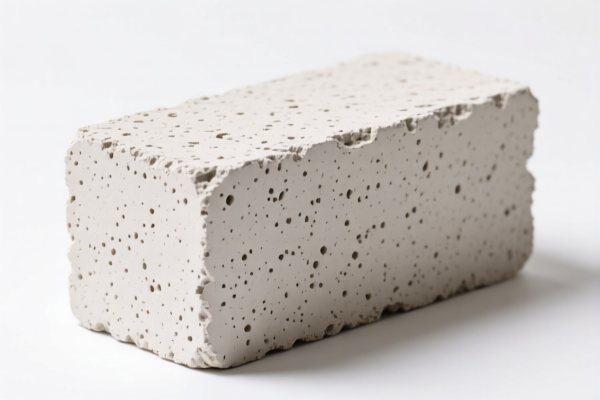
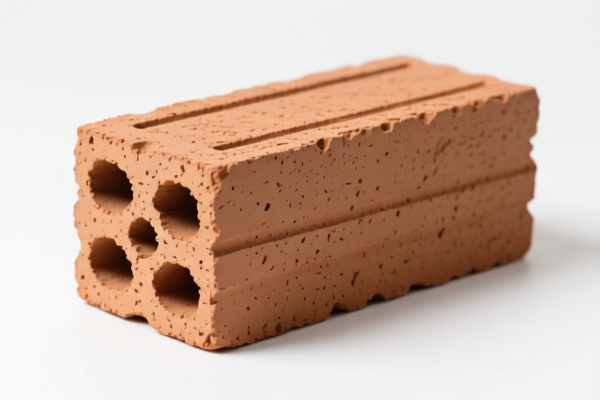
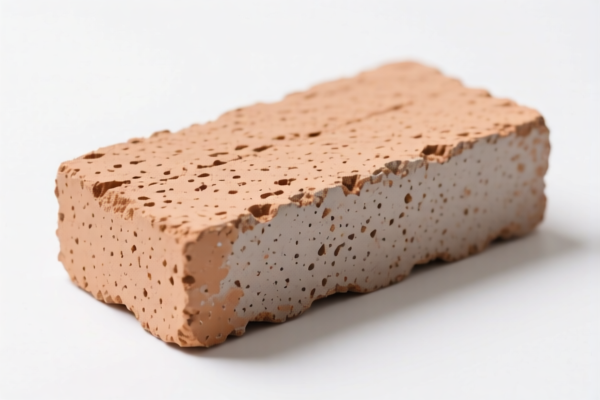
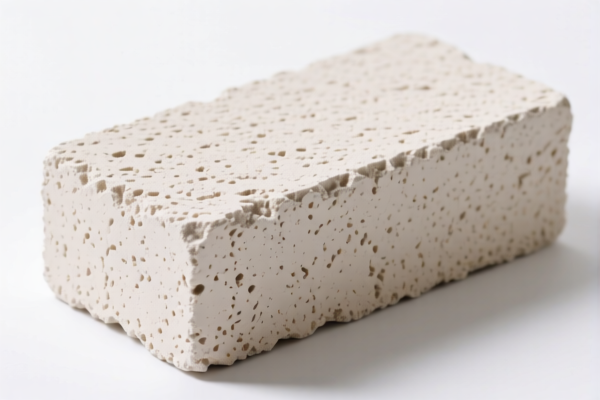
AI分析
🔥 Silicate Refractory Concrete (耐火混凝土)
🌐 HS Code Reference & Customs Clearance Guide | 2026 Latest Tariff Analysis | Professional Clearance Strategy
📌 1. Product Definition & Classification: What is "Silicate Refractory Concrete"?
Silicate Refractory Concrete is a specialized construction material used in high-temperature environments (furnaces, kilns, incinerators). It combines binders (often silicate-based or cementitious) with refractory aggregates (fireclay, silica, etc.) to form a monolithic lining.
In international trade, classification hinges on two key factors: 1. Material Composition: Is it primarily a ceramic product (clay/silica-based) or a cementitious/concrete product? 2. Form & Function: Is it a finished "refractory brick/block" or a general "construction article"?
⚠️ Key Distinction Points: - If the product is primarily ceramic/clay/silica-based and used for refractory purposes (heat resistance), it falls under Chapter 69 (Ceramic Products). - If the product is primarily cementitious/concrete-based but retains refractory properties, it often falls under Chapter 68 (Stone, Plaster, Cement, Asbestos, Mica) or Chapter 38 (Miscellaneous Chemical Products) if specific chemical bindings are emphasized.
📦 2. HS Code Classification Details (2026 Latest Tariff Authority Comparison)
Based on the provided data, the following HS codes are applicable. Each has distinct tax implications due to US trade policies.
| HS Code | Product Description | Classification Logic | Tax Rate (Total) |
|---|---|---|---|
6902.90.10.10 |
Other Refractory Bricks, Blocks, Stones & Similar Refractory Ceramics of Other Materials | Based on shape and use, this refractory concrete is inferred to fall under refractory materials. It aligns with logic for refractory construction articles under "Other Categories." | 35.0% |
6810.11.00.70 |
Refractory Concrete | The material is concrete. It meets the material requirements for cement/concrete or man-made stone articles. The form belongs to construction blocks. | 38.2% |
3816.00.10.00 |
Refining Agents, Prepared Catalysts, & Other Products of Chapter 38 | The product name fits the classification explanation for "Concrete and Similar Products," and its use is in the refractory category. | 35.0% |
3816.00.20.50 |
Other Prepared Refractory Bricks, Blocks, Stones & Similar Refractory Construction Materials | "Refractory" corresponds to "Refractory Characteristics," and "Concrete" corresponds to "Concrete and Similar Products." | 38.0% |
6902.90.50.10 |
Other Refractory Bricks, Blocks, Stones & Similar Refractory Ceramics of Other Materials | Refractory attributes match the use. Concrete is an inorganic material, inferred to contain clay or siliceous earth components. | 35.0% |
🔍 Important Note: - Section 301 Tariffs (25%) and IEEPA Tariffs (10%) apply to most of these codes if the origin is China. - The base tariff varies (0% vs 3.0-3.2%), but the total effective tariff is high due to additional duties. - Chapter 69 (Ceramics) often has lower base rates but is strictly defined by composition. Chapter 68 (Concrete/Stone) is broader but may attract slightly higher base rates. Chapter 38 is for specialized chemical/industrial products.
💰 3. 2026 Latest Tariff Rate Breakdown (Including Surtaxes & Policy Additions)
✅ Applicable Country: United States (US)
✅ Origin: China (CN)
✅ Effective Date: November 10, 2025 onwards (including subsequent imports)
🎯 1. 6902.90.10.10 & 6902.90.50.10 & 3816.00.10.00 —— Refractory Materials (Ceramic/Chemical Basis)
| Item | Detail |
|---|---|
| Base Rate | 0.0% (ad valorem) |
| Section 301 Surtax | +25.0% (Additional Duty) |
| IEEPA Surtax | +10.0% (122 Section Tariff for China) |
| Total Tax Rate | 35.0% |
| Tax Calculation | CIF Value × 35.0% |
| De Minimis Eligibility | ❌ Not Eligible (deny_de_minimis) |
| Legal Basis Path | IEEPA:9903.01.25 → IEEPA:9903.01.24 → USITC:6902.90.10.10/3816.00.10.00 |
📌 Explanation: - "Section 301 Surtax 25%": From US Trade Act Section 301. - "IEEPA 10%": Under the International Emergency Economic Powers Act for Chinese goods. - Total 35%: High tax burden. Pre-calculation is essential.
🎯 2. 6810.11.00.70 —— Refractory Concrete (Cementitious Basis)
| Item | Detail |
|---|---|
| Base Rate | 3.2% (ad valorem) |
| Section 301 Surtax | +25.0% (Additional Duty) |
| IEEPA Surtax | +10.0% (122 Section Tariff for China) |
| Total Tax Rate | 38.2% |
| Tax Calculation | CIF Value × 38.2% |
| De Minimis Eligibility | ❌ Not Eligible (deny_de_minimis) |
| Legal Basis Path | IEEPA:9903.01.25 → IEEPA:9903.01.24 → USITC:6810.11.00.70 |
📌 Note: - Higher base rate (3.2%) leads to a higher total (38.2%). - Applies to general concrete products with refractory properties.
🎯 3. 3816.00.20.50 —— Prepared Refractory Materials (Chemical/Industrial)
| Item | Detail |
|---|---|
| Base Rate | 3.0% (ad valorem) |
| Section 301 Surtax | +25.0% (Additional Duty) |
| IEEPA Surtax | +10.0% (122 Section Tariff for China) |
| Total Tax Rate | 38.0% |
| Tax Calculation | CIF Value × 38.0% |
| De Minimis Eligibility | ❌ Not Eligible (deny_de_minimis) |
| Legal Basis Path | IEEPA:9903.01.25 → IEEPA:9903.01.24 → USITC:3816.00.20.50 |
📌 Note: - Similar to 6810.11.00.70, slightly lower base rate (3.0%) but same surtaxes. - Used when the product is defined by specific chemical/refractory preparations rather than general concrete form.
🛠️ 4. Customs Clearance Practical Advice (Pitfall Avoidance Guide)
✅ 1. Documentation Checklist (Mandatory)
| Document | Required | Description |
|---|---|---|
| ✅ Product Specification Sheet | ✔️ | Composition (silicate/cement content), fire-resistance temperature, density, strength. |
| ✅ Material Safety Data Sheet (MSDS) | ✔️ | Crucial for chemical classification (Chapter 38 vs 69/68). |
| ✅ Product Photos (Label/Marking) | ✔️ | Clear view of model, brand, country of origin, and technical specs. |
| ✅ Third-Party Test Report | ✔️ | Refractoriness under load (RUL), cold crushing strength, thermal shock resistance. |
| ✅ Commercial Invoice | ✔️ | Must clearly state "Silicate Refractory Concrete" and not generic "Concrete." |
| ✅ Packing List | ✔️ | Detail packaging to prevent damage claims. |
| ✅ Certificate of Origin (CO) | ✔️ | If non-China origin, may apply for preferential rates (but US-China tariffs are strict). |
✅ 2. Declaration Tips (Key Mantra)
🔥 "Match Material to HS, Declare Refractory Clearly, Avoid Misclassification Penalties!"
| Scenario | Correct Declaration | Incorrect Action |
|---|---|---|
| High-Temp Lining Material | 6902.90.10.10 or 3816.00.20.50 |
Misdeclare as general concrete (3002) → Risk of audit & back taxes |
| Standard Construction Concrete | 6810.11.00.70 |
Over-declare as "Refractory" → May trigger unnecessary chemical scrutiny |
| Mixed Shipment | Split declaration | Consolidate into one line → Misclassification risk |
| Small Samples | Not De Minimis | Ship via $800 De Minimis → Seizure Risk (deny_de_minimis) |
✅ 3. Special Cases Handling
| Situation | Handling Advice |
|---|---|
| OEM Custom Refractory | Provide client order + technical drawings to prove specific refractory use. |
| Pre-mixed vs. On-site Mix | Pre-mixed bagged goods are subject to the above HS codes. Loose bulk may have different logistics but same tariff. |
| Used/Recycled Refractory | May face stricter environmental checks; declare as "Used" if applicable. |
| Multi-purpose Concrete | If it can be used both in furnaces and general construction, declare the primary intended use (Refractory) with supporting docs. |
🌍 5. Global Market Clearance Comparison (2026 Latest)
| Country/Region | Recommended HS Code | Tariff (China Origin) | Certification Requirements | Remarks |
|---|---|---|---|---|
| 🇺🇸 USA | 6902.90.10.10 / 6810.11.00.70 |
35.0% - 38.2% | None specific for concrete, but commercial invoice critical | High Surtaxes Apply |
| 🇨🇳 China | 6815.99.90 (General) |
0-5% | GB Standards | Low import tax for domestic |
| 🇪🇺 EU | 6810.11 / 6902.90 |
~6-8% (CE/REACH) | REACH Compliance | No Section 301 equivalent, but higher base |
| 🇦🇺 Australia | 6810.11 |
5% | WERS (if applicable) | Standard MFN rates |
| 🇯🇵 Japan | 6810.11 |
0-3% | JIS Standards | Low tariffs, high quality checks |
📌 Conclusion: - USA is the most expensive market due to Section 301 (25%) + IEEPA (10%). - EU/Asia have lower tariffs but stricter chemical/environmental regulations (REACH, JIS). - China Origin goods face significantly higher costs in the US compared to other regions.
📌 6. Common Mistakes & Pitfall Guide (Lessons Learned)
❌ Mistake 1: Declaring as "General Concrete" (3002) to avoid high tariffs
👉 Consequence: Customs audit → Misclassification → Back taxes + Penalties
❌ Mistake 2: Using "Concrete" only, omitting "Refractory"
👉 Consequence: Customs may classify under general construction, leading to incorrect duty assessment or delays.
❌ Mistake 3: Assuming De Minimis applies for small shipments
👉 Consequence: Seizure/Return because 6902, 6810, 3816 are explicitly denied de minimis entry.
❌ Mistake 4: Incorrect origin marking
👉 Consequence: Border Tax Collection Service (BTC) penalty if origin is not clearly marked.
✅ Correct Approach:
"Silicate Refractory Concrete, Pre-mixed, Fire-resistance 1500°C, HS 6902.90.10.10, Made in China, FCC RoHS Compliant"
🎯 7. Conclusion: Precision in Classification Saves Costs!
🎯 Remember the Mantra:
🔹 "Refractory Means High Tax, Declare Clearly, Avoid De Minimis!"
🔹 "HS Code Determines Duty, 35-38% is Normal, Misclass is Fatal!"
📌 Tips: - If your product originates from Vietnam, Mexico, Thailand, or Malaysia, you may apply for IEEPA Exemptions or lower tariffs. - Recommend applying for Advance Rulings for large shipments to avoid clearance risks.
📣 Immediate Action:
📞 Contact Professional Customs Broker + Provide Product Specs + Apply for HS Code Advance Ruling
🚀 Let your Silicate Refractory Concrete clear customs smoothly, efficiently, and profitably!
✨ Professional Clearance Starts with Accurate Classification!
💼 Every Cent of Cost Deserves Precise Calculation!
用户评价
关于 HS 编码归类
协调制度(HS)是由世界海关组织(WCO)制定的国际贸易商品分类标准。全球 200 多个国家采用 HS 系统作为海关关税、贸易统计和进出口监管的基础。
每个 HS 编码遵循以下层级结构:
- 章(2 位)——商品大类(例如:第 84 章:机器和机械设备)
- 品目(4 位)——章内的更具体分类
- 子目(6 位)——国际通用细分,所有 WCO 成员国统一使用
- 本国细分(8-10 位)——各国自行扩展的细分编码,如美国 HTSUS 10 位编码
正确的 HS 编码归类对于顺利通关、准确缴纳关税和遵守贸易法规至关重要。错误归类可能导致海关延误、多缴关税或罚款。
从CN进口到US时,适用的关税税率可能包括:
- 最惠国(MFN)税率——适用于 WTO 成员国的标准关税税率
- 普通税率——适用于无贸易协定国家
- 贸易救济关税——附加关税,如 301 条款(反倾销)、232 条款(国家安全)或反补贴税
本页内容仅供参考。如需正式归类,请咨询当地海关或持牌报关代理。