silicate refractory concrete
CN → US| HS Code | Tariff Rate | Origin | Destination | Doc |
|---|---|---|---|---|
| 6902901010 | 35.0% | CN | US | Official Doc |
| 6810110070 | 38.2% | CN | US | Official Doc |
| 3816001000 | 35.0% | CN | US | Official Doc |
| 3816002050 | 38.0% | CN | US | Official Doc |
| 6902905010 | 35.0% | CN | US | Official Doc |
Product Images
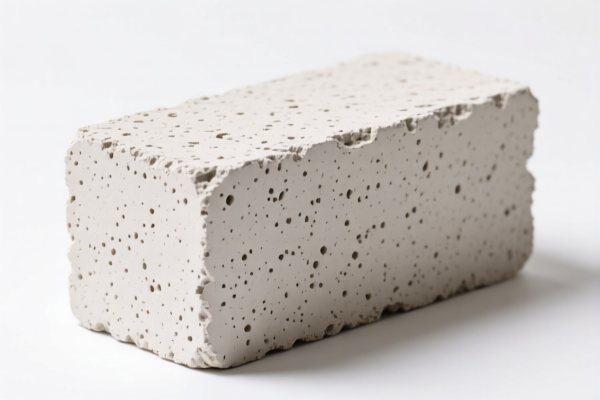
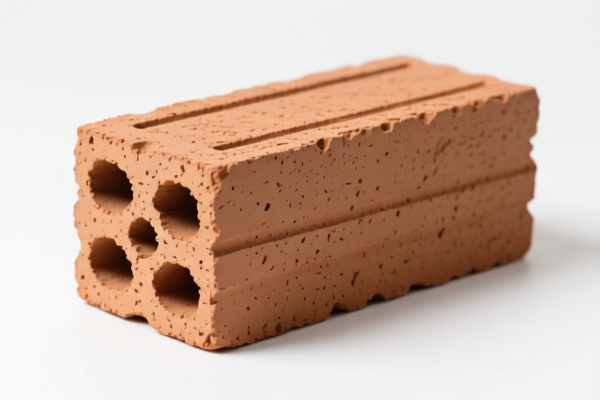
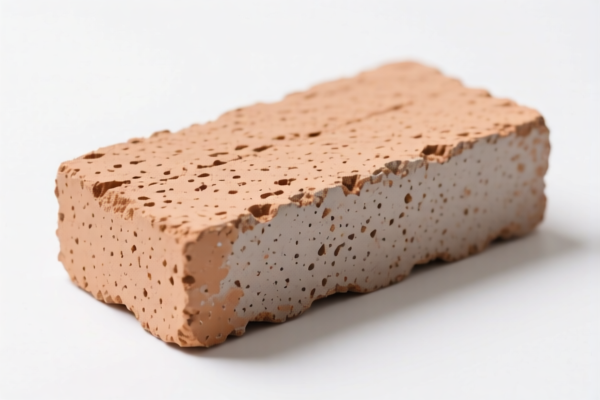
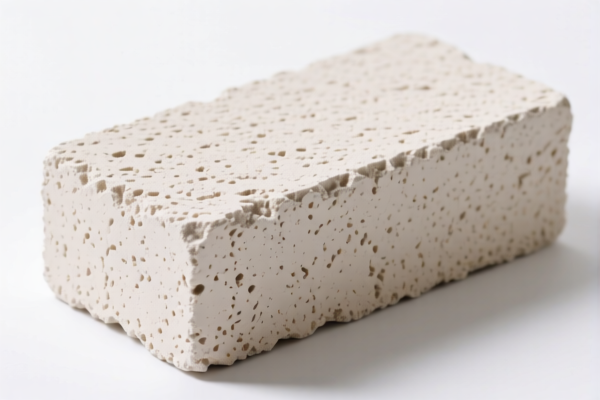
AI Analysis
🔥 Silicate Refractory Concrete (耐火混凝土)
🌐 HS Code Reference & Customs Clearance Guide | 2026 Latest Tariff Analysis | Professional Clearance Strategy
📌 1. Product Definition & Classification: What is "Silicate Refractory Concrete"?
Silicate Refractory Concrete is a specialized construction material used in high-temperature environments (furnaces, kilns, incinerators). It combines binders (often silicate-based or cementitious) with refractory aggregates (fireclay, silica, etc.) to form a monolithic lining.
In international trade, classification hinges on two key factors: 1. Material Composition: Is it primarily a ceramic product (clay/silica-based) or a cementitious/concrete product? 2. Form & Function: Is it a finished "refractory brick/block" or a general "construction article"?
⚠️ Key Distinction Points: - If the product is primarily ceramic/clay/silica-based and used for refractory purposes (heat resistance), it falls under Chapter 69 (Ceramic Products). - If the product is primarily cementitious/concrete-based but retains refractory properties, it often falls under Chapter 68 (Stone, Plaster, Cement, Asbestos, Mica) or Chapter 38 (Miscellaneous Chemical Products) if specific chemical bindings are emphasized.
📦 2. HS Code Classification Details (2026 Latest Tariff Authority Comparison)
Based on the provided data, the following HS codes are applicable. Each has distinct tax implications due to US trade policies.
| HS Code | Product Description | Classification Logic | Tax Rate (Total) |
|---|---|---|---|
6902.90.10.10 |
Other Refractory Bricks, Blocks, Stones & Similar Refractory Ceramics of Other Materials | Based on shape and use, this refractory concrete is inferred to fall under refractory materials. It aligns with logic for refractory construction articles under "Other Categories." | 35.0% |
6810.11.00.70 |
Refractory Concrete | The material is concrete. It meets the material requirements for cement/concrete or man-made stone articles. The form belongs to construction blocks. | 38.2% |
3816.00.10.00 |
Refining Agents, Prepared Catalysts, & Other Products of Chapter 38 | The product name fits the classification explanation for "Concrete and Similar Products," and its use is in the refractory category. | 35.0% |
3816.00.20.50 |
Other Prepared Refractory Bricks, Blocks, Stones & Similar Refractory Construction Materials | "Refractory" corresponds to "Refractory Characteristics," and "Concrete" corresponds to "Concrete and Similar Products." | 38.0% |
6902.90.50.10 |
Other Refractory Bricks, Blocks, Stones & Similar Refractory Ceramics of Other Materials | Refractory attributes match the use. Concrete is an inorganic material, inferred to contain clay or siliceous earth components. | 35.0% |
🔍 Important Note: - Section 301 Tariffs (25%) and IEEPA Tariffs (10%) apply to most of these codes if the origin is China. - The base tariff varies (0% vs 3.0-3.2%), but the total effective tariff is high due to additional duties. - Chapter 69 (Ceramics) often has lower base rates but is strictly defined by composition. Chapter 68 (Concrete/Stone) is broader but may attract slightly higher base rates. Chapter 38 is for specialized chemical/industrial products.
💰 3. 2026 Latest Tariff Rate Breakdown (Including Surtaxes & Policy Additions)
✅ Applicable Country: United States (US)
✅ Origin: China (CN)
✅ Effective Date: November 10, 2025 onwards (including subsequent imports)
🎯 1. 6902.90.10.10 & 6902.90.50.10 & 3816.00.10.00 —— Refractory Materials (Ceramic/Chemical Basis)
| Item | Detail |
|---|---|
| Base Rate | 0.0% (ad valorem) |
| Section 301 Surtax | +25.0% (Additional Duty) |
| IEEPA Surtax | +10.0% (122 Section Tariff for China) |
| Total Tax Rate | 35.0% |
| Tax Calculation | CIF Value × 35.0% |
| De Minimis Eligibility | ❌ Not Eligible (deny_de_minimis) |
| Legal Basis Path | IEEPA:9903.01.25 → IEEPA:9903.01.24 → USITC:6902.90.10.10/3816.00.10.00 |
📌 Explanation: - "Section 301 Surtax 25%": From US Trade Act Section 301. - "IEEPA 10%": Under the International Emergency Economic Powers Act for Chinese goods. - Total 35%: High tax burden. Pre-calculation is essential.
🎯 2. 6810.11.00.70 —— Refractory Concrete (Cementitious Basis)
| Item | Detail |
|---|---|
| Base Rate | 3.2% (ad valorem) |
| Section 301 Surtax | +25.0% (Additional Duty) |
| IEEPA Surtax | +10.0% (122 Section Tariff for China) |
| Total Tax Rate | 38.2% |
| Tax Calculation | CIF Value × 38.2% |
| De Minimis Eligibility | ❌ Not Eligible (deny_de_minimis) |
| Legal Basis Path | IEEPA:9903.01.25 → IEEPA:9903.01.24 → USITC:6810.11.00.70 |
📌 Note: - Higher base rate (3.2%) leads to a higher total (38.2%). - Applies to general concrete products with refractory properties.
🎯 3. 3816.00.20.50 —— Prepared Refractory Materials (Chemical/Industrial)
| Item | Detail |
|---|---|
| Base Rate | 3.0% (ad valorem) |
| Section 301 Surtax | +25.0% (Additional Duty) |
| IEEPA Surtax | +10.0% (122 Section Tariff for China) |
| Total Tax Rate | 38.0% |
| Tax Calculation | CIF Value × 38.0% |
| De Minimis Eligibility | ❌ Not Eligible (deny_de_minimis) |
| Legal Basis Path | IEEPA:9903.01.25 → IEEPA:9903.01.24 → USITC:3816.00.20.50 |
📌 Note: - Similar to 6810.11.00.70, slightly lower base rate (3.0%) but same surtaxes. - Used when the product is defined by specific chemical/refractory preparations rather than general concrete form.
🛠️ 4. Customs Clearance Practical Advice (Pitfall Avoidance Guide)
✅ 1. Documentation Checklist (Mandatory)
| Document | Required | Description |
|---|---|---|
| ✅ Product Specification Sheet | ✔️ | Composition (silicate/cement content), fire-resistance temperature, density, strength. |
| ✅ Material Safety Data Sheet (MSDS) | ✔️ | Crucial for chemical classification (Chapter 38 vs 69/68). |
| ✅ Product Photos (Label/Marking) | ✔️ | Clear view of model, brand, country of origin, and technical specs. |
| ✅ Third-Party Test Report | ✔️ | Refractoriness under load (RUL), cold crushing strength, thermal shock resistance. |
| ✅ Commercial Invoice | ✔️ | Must clearly state "Silicate Refractory Concrete" and not generic "Concrete." |
| ✅ Packing List | ✔️ | Detail packaging to prevent damage claims. |
| ✅ Certificate of Origin (CO) | ✔️ | If non-China origin, may apply for preferential rates (but US-China tariffs are strict). |
✅ 2. Declaration Tips (Key Mantra)
🔥 "Match Material to HS, Declare Refractory Clearly, Avoid Misclassification Penalties!"
| Scenario | Correct Declaration | Incorrect Action |
|---|---|---|
| High-Temp Lining Material | 6902.90.10.10 or 3816.00.20.50 |
Misdeclare as general concrete (3002) → Risk of audit & back taxes |
| Standard Construction Concrete | 6810.11.00.70 |
Over-declare as "Refractory" → May trigger unnecessary chemical scrutiny |
| Mixed Shipment | Split declaration | Consolidate into one line → Misclassification risk |
| Small Samples | Not De Minimis | Ship via $800 De Minimis → Seizure Risk (deny_de_minimis) |
✅ 3. Special Cases Handling
| Situation | Handling Advice |
|---|---|
| OEM Custom Refractory | Provide client order + technical drawings to prove specific refractory use. |
| Pre-mixed vs. On-site Mix | Pre-mixed bagged goods are subject to the above HS codes. Loose bulk may have different logistics but same tariff. |
| Used/Recycled Refractory | May face stricter environmental checks; declare as "Used" if applicable. |
| Multi-purpose Concrete | If it can be used both in furnaces and general construction, declare the primary intended use (Refractory) with supporting docs. |
🌍 5. Global Market Clearance Comparison (2026 Latest)
| Country/Region | Recommended HS Code | Tariff (China Origin) | Certification Requirements | Remarks |
|---|---|---|---|---|
| 🇺🇸 USA | 6902.90.10.10 / 6810.11.00.70 |
35.0% - 38.2% | None specific for concrete, but commercial invoice critical | High Surtaxes Apply |
| 🇨🇳 China | 6815.99.90 (General) |
0-5% | GB Standards | Low import tax for domestic |
| 🇪🇺 EU | 6810.11 / 6902.90 |
~6-8% (CE/REACH) | REACH Compliance | No Section 301 equivalent, but higher base |
| 🇦🇺 Australia | 6810.11 |
5% | WERS (if applicable) | Standard MFN rates |
| 🇯🇵 Japan | 6810.11 |
0-3% | JIS Standards | Low tariffs, high quality checks |
📌 Conclusion: - USA is the most expensive market due to Section 301 (25%) + IEEPA (10%). - EU/Asia have lower tariffs but stricter chemical/environmental regulations (REACH, JIS). - China Origin goods face significantly higher costs in the US compared to other regions.
📌 6. Common Mistakes & Pitfall Guide (Lessons Learned)
❌ Mistake 1: Declaring as "General Concrete" (3002) to avoid high tariffs
👉 Consequence: Customs audit → Misclassification → Back taxes + Penalties
❌ Mistake 2: Using "Concrete" only, omitting "Refractory"
👉 Consequence: Customs may classify under general construction, leading to incorrect duty assessment or delays.
❌ Mistake 3: Assuming De Minimis applies for small shipments
👉 Consequence: Seizure/Return because 6902, 6810, 3816 are explicitly denied de minimis entry.
❌ Mistake 4: Incorrect origin marking
👉 Consequence: Border Tax Collection Service (BTC) penalty if origin is not clearly marked.
✅ Correct Approach:
"Silicate Refractory Concrete, Pre-mixed, Fire-resistance 1500°C, HS 6902.90.10.10, Made in China, FCC RoHS Compliant"
🎯 7. Conclusion: Precision in Classification Saves Costs!
🎯 Remember the Mantra:
🔹 "Refractory Means High Tax, Declare Clearly, Avoid De Minimis!"
🔹 "HS Code Determines Duty, 35-38% is Normal, Misclass is Fatal!"
📌 Tips: - If your product originates from Vietnam, Mexico, Thailand, or Malaysia, you may apply for IEEPA Exemptions or lower tariffs. - Recommend applying for Advance Rulings for large shipments to avoid clearance risks.
📣 Immediate Action:
📞 Contact Professional Customs Broker + Provide Product Specs + Apply for HS Code Advance Ruling
🚀 Let your Silicate Refractory Concrete clear customs smoothly, efficiently, and profitably!
✨ Professional Clearance Starts with Accurate Classification!
💼 Every Cent of Cost Deserves Precise Calculation!
Customer Reviews
About HS Code Classification
The Harmonized System (HS) is an internationally standardized nomenclature developed by the World Customs Organization (WCO) to classify traded products. Over 200 countries use the HS system as the basis for customs tariffs, trade statistics, and import/export regulations.
Each HS code follows a hierarchical structure:
- Chapter (2 digits) — Broad category of goods (e.g., Chapter 84: Machinery and Mechanical Appliances)
- Heading (4 digits) — More specific grouping within the chapter
- Subheading (6 digits) — Internationally standardized breakdown, used by all WCO member countries
- National subdivisions (8-10 digits) — Country-specific extensions for further classification, such as US HTSUS 10-digit codes
Correct HS code classification is essential for smooth customs clearance, accurate duty payment, and compliance with trade regulations. Misclassification can lead to customs delays, overpayment of duties, or penalties.
When importing from CN to US, the applicable tariff rates may include:
- Most-Favored-Nation (MFN) rate — The standard duty rate applied to WTO members
- General rate — Applied to countries without trade agreements
- Trade remedy duties — Additional tariffs such as Section 301 (anti-dumping), Section 232 (national security), or countervailing duties
The information provided on this page is for reference purposes only. For official classification, please consult with your local customs authority or a licensed customs broker.