silk fabric handbags patchwork
CN → US| HS编码 | 关税税率 | 原产国 | 目的国 | 文档 |
|---|---|---|---|---|
| 4205008000 | 35.0% | CN | US | 官方文档 |
| 4205006000 | 39.9% | CN | US | 官方文档 |
| 3926903300 | 16.5% | CN | US | 官方文档 |
商品图片
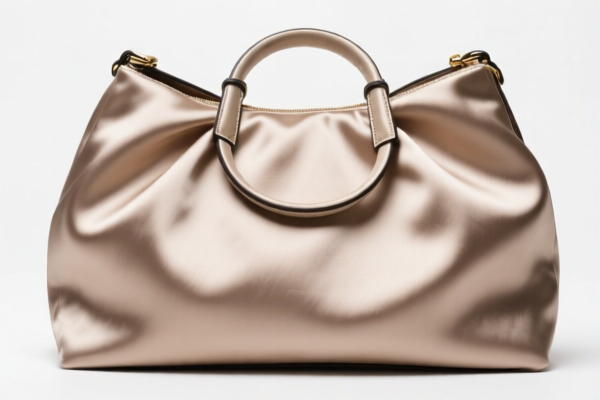
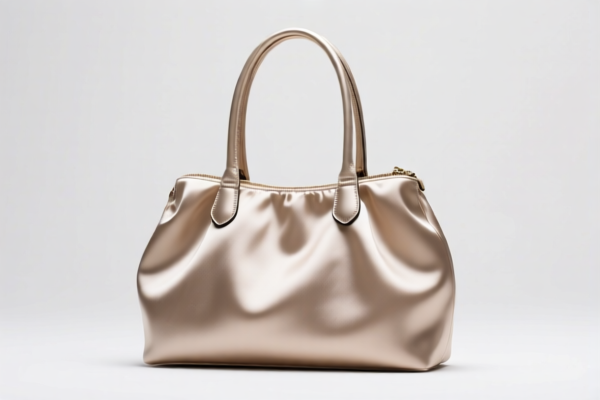
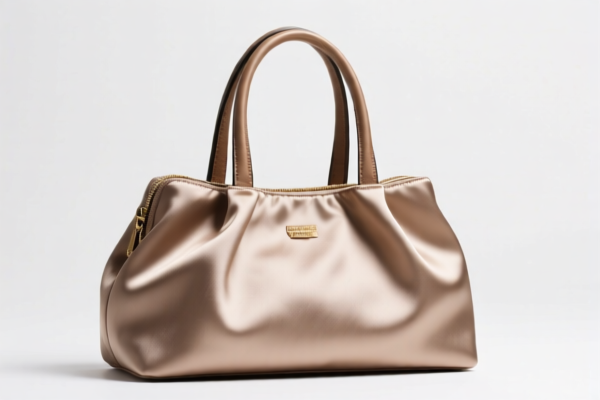
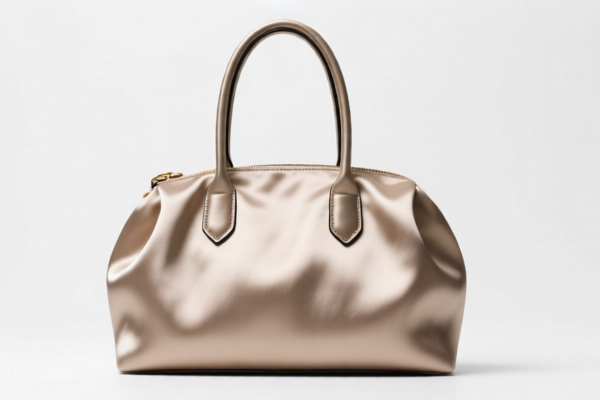
AI分析
👜 Silk Fabric Handbags (Patchwork Style)
🌐 HS Code Reference & Customs Clearance Guide | 2026 Latest Tariff Analysis | Professional Strategy for Leather vs. Plastic Mix-Ups
📌 I. Product Definition & Classification: Are They Leather or Plastic?
Silk fabric handbags with patchwork designs present a unique classification challenge in international trade. The key determinant for HS Code assignment is not the visible surface material (silk), but the core structural material that defines the item’s character. Customs authorities look at what gives the bag its shape and durability.
Based on general trade knowledge and the specific summaries provided in the data:
- Leather/Composite Leather Hypothesis: If the patchwork includes leather patches, or if the main body, straps, and base are made of leather (even if accented with silk), it falls under Chapter 42 (Articles of Leather).
- Plastic/Synthetic Hypothesis: If the bag is primarily made of plastic sheets, PVC, or synthetic rubber with silk merely as a decorative lining or patch, it falls under Chapter 39 (Articles of Plastic).
⚠️ Critical Distinction:
- If the bag has a leather exterior or significant leather components defining its form → HS 4205.
- If the bag is purely synthetic/plastic with no significant leather content → HS 3926.
- Misclassification Risk: Declaring a leather-based bag as plastic to avoid higher tariffs, or vice versa, can lead to severe penalties, seizure, or back-taxes.
📦 II. HS Code Classification Details (Based on Provided Data)
The following HS Codes are derived directly from the user's provided dataset. Note that the "Total Tax" includes base duties, additional tariffs (Section 301), and specific clauses (122).
| HS Code | Product Description | Material Basis | Total Tax Rate | Tax Detail Breakdown |
|---|---|---|---|---|
4205.00.80.00 |
Leather-Based Patchwork Bag | Inferred as Leather or Composite Leather based on common sense for high-end patchwork bags | 35.0% | Base: 0.0% Added Tariff: 25.0% Clause 122: 10% |
4205.00.60.00 |
Mixed Material Leather Bag | Leather or Synthetic Material conforming to leather goods category morphology | 39.9% | Base: 4.9% Added Tariff: 25.0% Clause 122: 10% |
3926.90.33.00 |
Plastic/Synthetic Patchwork Bag | Inferred as Plastic/Synthetic Material based on product name "fabric" implying non-leather synthetic base | 16.5% | Base: 6.5% Added Tariff: 0.0% Clause 122: 10% |
🔍 Key Insight:
- HS 4205.80.00 offers the lowest total tax (35%) if the bag is legally classified as leather.
- HS 3926.90.33 offers the lowest total tax (16.5%) if the bag is legally classified as plastic.
- HS 4205.60.00 is the most expensive (39.9%) due to the 4.9% base duty combined with the same surcharges.
💰 III. 2026 Latest Tariff Rate详解 (Detailed Breakdown)
✅ Applicable Market: United States (US)
✅ Origin: China (CN)
✅ 生效时间: Current rates apply for imports subject to Section 301 and Clause 122 penalties.
🎯 1. 4205.00.80.00 —— Leather/Composite Leather Bags (Total: 35.0%)
| Item | Content |
|---|---|
| Base Duty | 0.0% |
| Section 301 Tariff | +25.0% |
| Clause 122 Tariff | +10.0% |
| Total Effective Rate | 35.0% |
| Calculation | CIF Value × 35% |
| De Minimis Exemption | ❌ Not Applicable (High value goods excluded) |
📌 Explanation:
- The 0% base duty makes this attractive if the material is genuine leather.
- However, the 35% effective rate is still significant.
- Clause 122 (10%) is a punitive tariff often applied to specific Chinese imports, adding to the cost.
🎯 2. 4205.00.60.00 —— Leather Goods with Higher Base Duty (Total: 39.9%)
| Item | Content |
|---|---|
| Base Duty | 4.9% |
| Section 301 Tariff | +25.0% |
| Clause 122 Tariff | +10.0% |
| Total Effective Rate | 39.9% |
| Calculation | CIF Value × 39.9% |
| De Minimis Exemption | ❌ Not Applicable |
📌 Explanation:
- This code attracts a 4.9% base duty, which, when combined with the 25% and 10% surcharges, results in the highest total tax among the options.
- Avoid this code unless the bag explicitly falls into this specific sub-category of leather goods.
🎯 3. 3926.90.33.00 —— Plastic/Synthetic Bags (Total: 16.5%)
| Item | Content |
|---|---|
| Base Duty | 6.5% |
| Section 301 Tariff | 0.0% |
| Clause 122 Tariff | +10.0% |
| Total Effective Rate | 16.5% |
| Calculation | CIF Value × 16.5% |
| De Minimis Exemption | ❌ Not Applicable |
📌 Explanation:
- Lowest Total Tax (16.5%).
- No Section 301 Tariff (0%) is a massive advantage.
- However: This is only valid if the bag is NOT made of leather. If you use this code for a leather bag, you risk customs audits and fines.
- Clause 122 (10%) still applies, so it’s not entirely tariff-free.
🛠️ IV. Customs Clearance Practical Advice (Avoid Pitfalls)
✅ 1. Documentation Checklist (Must-Have)
| Document | Required? | Notes |
|---|---|---|
| ✅ Product Specification Sheet | ✔️ | Must clearly state material composition (e.g., "100% Silk Lining, PVC Exterior" vs. "Genuine Leather Body with Silk Patches"). |
| ✅ Material Test Report | ✔️ | Third-party lab report proving if the main structure is leather or synthetic. Crucial for HS 4205 vs. 3926. |
| ✅ Commercial Invoice | ✔️ | Describe as "Patchwork Handbag, Silk and [Material Name]" – Do NOT just write "Fabric Bag". |
| ✅ Photos | ✔️ | Show close-ups of seams, straps, and interior to identify the primary material. |
| ✅ Packing List | ✔️ | Standard requirement. |
✅ 2. Declaration Strategy
| Scenario | Correct Declaration | Risk if Incorrect |
|---|---|---|
| Bag is mostly Plastic/PVC | 3926.90.33.00 |
If declared as Leather → 35-40% tax instead of 16.5%. |
| Bag is mostly Leather | 4205.00.80.00 |
If declared as Plastic → Seizure/Fine for misclassification. Base tax 0% but risk of fraud penalties. |
| Mixed Materials | Determine Essential Character | If leather gives the bag its shape/identity → HS 4205. If plastic does → HS 3926. |
🔥 Golden Rule:
"Material dictates Code, Code dictates Tax. Prove your material with a test report!"
✅ 3. Special Considerations for Patchwork
- Patchwork Complexity: If the bag is made of many small pieces of different materials, customs may require a detailed material breakdown.
- Silk Lining: If silk is only used as a lining, it does not determine the HS Code. The outer structural material does.
- Composite Leather: If the bag is made of "composite leather" (leather fibers bonded with plastic), it may still fall under Chapter 42, but verify with your broker.
🌍 V. Global Market Comparison (2026)
| Country/Region | Recommended HS Code | Est. Duty | Notes |
|---|---|---|---|
| 🇺🇸 USA | 4205.00.80.00 or 3926.90.33.00 |
16.5% - 39.9% | Clause 122 (10%) applies to China-origin goods. Section 301 (25%) applies to Leather. |
| 🇨🇳 China | 4205.00.80.00 |
~10-15% | Lower base duties. No Section 301/Clause 122. |
| 🇪🇺 EU | 4202.12.90 / 4202.32.90 |
4% - 12% | EU uses different HS structure. Check Chapter 42. |
| 🇬🇧 UK | 4202.12.90 |
4% - 12% | Post-Brexit rules apply. |
📌 Conclusion:
- The USA is the most complex market due to multiple layers of punitive tariffs (Section 301 + Clause 122).
- Plastic-based bags (HS 3926) are significantly cheaper to import into the US (16.5%) than leather-based ones (35-40%).
- Accurate material declaration is non-negotiable to avoid legal risks.
📌 VI. Common Errors & Pitfalls
❌ Error 1: Declaring a leather bag as "Plastic Handbag" to get 16.5% tax.
👉 Consequence: Customs audit, back taxes of ~20%, and potential fraud charges.
❌ Error 2: Not providing a material test report.
👉 Consequence: Customs may reclassify the goods arbitrarily, often at a higher rate.
❌ Error 3: Ignoring Clause 122 (10%).
👉 Consequence: Underestimating landed cost. Clause 122 is not optional for China-origin goods in many cases.
✅ Correct Practice:
"Patchwork Handbag, Exterior: PVC/Synthetic Leather, Lining: Silk. HS Code: 3926.90.33.00. Material Test Report Attached."
🎯 VII. Conclusion: Smart Classification Saves Money
🎯 Remember:
🔹 "Plastic wins on tax (16.5%), Leather costs more (35-40%)."
🔹 "But never lie about material. Risk > Reward."
🔹 "Clause 122 (10%) is the hidden killer for China goods."
📌 Pro Tip:
If you have the option, design your patchwork bags using synthetic/leather-free materials to qualify for HS 3926.90.33.00 and save ~20% in total duties compared to leather options.
📣 Immediate Action:
📞 Consult a Customs Broker to verify material classification.
📄 Get a Material Test Report before shipping.
🚀 Optimize your supply chain to avoid high-tariff materials if possible.
✨ Professional Clearance Starts with Accurate Classification!
💼 Every Percent Saved is Profit Gained!
用户评价
关于 HS 编码归类
协调制度(HS)是由世界海关组织(WCO)制定的国际贸易商品分类标准。全球 200 多个国家采用 HS 系统作为海关关税、贸易统计和进出口监管的基础。
每个 HS 编码遵循以下层级结构:
- 章(2 位)——商品大类(例如:第 84 章:机器和机械设备)
- 品目(4 位)——章内的更具体分类
- 子目(6 位)——国际通用细分,所有 WCO 成员国统一使用
- 本国细分(8-10 位)——各国自行扩展的细分编码,如美国 HTSUS 10 位编码
正确的 HS 编码归类对于顺利通关、准确缴纳关税和遵守贸易法规至关重要。错误归类可能导致海关延误、多缴关税或罚款。
从CN进口到US时,适用的关税税率可能包括:
- 最惠国(MFN)税率——适用于 WTO 成员国的标准关税税率
- 普通税率——适用于无贸易协定国家
- 贸易救济关税——附加关税,如 301 条款(反倾销)、232 条款(国家安全)或反补贴税
本页内容仅供参考。如需正式归类,请咨询当地海关或持牌报关代理。