silk fabric handbags patchwork
CN → US| HS Code | Tariff Rate | Origin | Destination | Doc |
|---|---|---|---|---|
| 4205008000 | 35.0% | CN | US | Official Doc |
| 4205006000 | 39.9% | CN | US | Official Doc |
| 3926903300 | 16.5% | CN | US | Official Doc |
Product Images
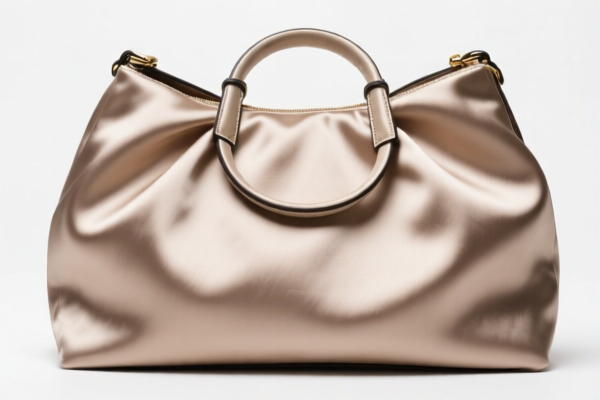
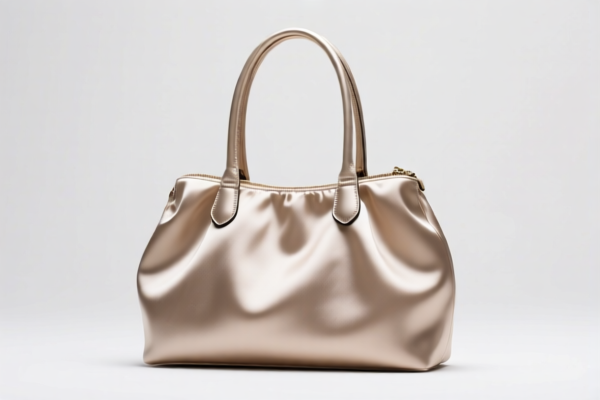
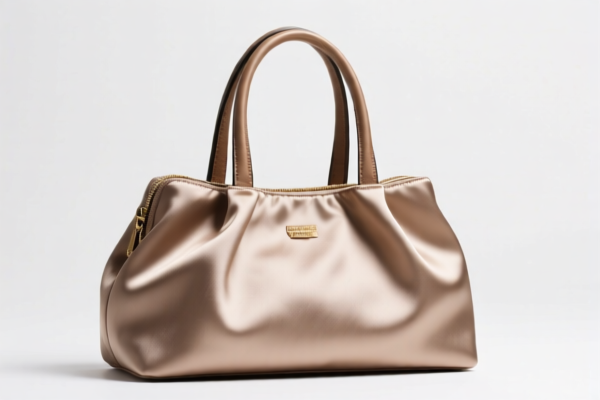
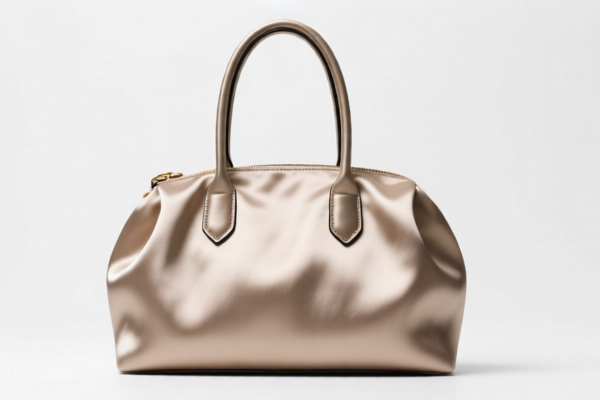
AI Analysis
👜 Silk Fabric Handbags (Patchwork Style)
🌐 HS Code Reference & Customs Clearance Guide | 2026 Latest Tariff Analysis | Professional Strategy for Leather vs. Plastic Mix-Ups
📌 I. Product Definition & Classification: Are They Leather or Plastic?
Silk fabric handbags with patchwork designs present a unique classification challenge in international trade. The key determinant for HS Code assignment is not the visible surface material (silk), but the core structural material that defines the item’s character. Customs authorities look at what gives the bag its shape and durability.
Based on general trade knowledge and the specific summaries provided in the data:
- Leather/Composite Leather Hypothesis: If the patchwork includes leather patches, or if the main body, straps, and base are made of leather (even if accented with silk), it falls under Chapter 42 (Articles of Leather).
- Plastic/Synthetic Hypothesis: If the bag is primarily made of plastic sheets, PVC, or synthetic rubber with silk merely as a decorative lining or patch, it falls under Chapter 39 (Articles of Plastic).
⚠️ Critical Distinction:
- If the bag has a leather exterior or significant leather components defining its form → HS 4205.
- If the bag is purely synthetic/plastic with no significant leather content → HS 3926.
- Misclassification Risk: Declaring a leather-based bag as plastic to avoid higher tariffs, or vice versa, can lead to severe penalties, seizure, or back-taxes.
📦 II. HS Code Classification Details (Based on Provided Data)
The following HS Codes are derived directly from the user's provided dataset. Note that the "Total Tax" includes base duties, additional tariffs (Section 301), and specific clauses (122).
| HS Code | Product Description | Material Basis | Total Tax Rate | Tax Detail Breakdown |
|---|---|---|---|---|
4205.00.80.00 |
Leather-Based Patchwork Bag | Inferred as Leather or Composite Leather based on common sense for high-end patchwork bags | 35.0% | Base: 0.0% Added Tariff: 25.0% Clause 122: 10% |
4205.00.60.00 |
Mixed Material Leather Bag | Leather or Synthetic Material conforming to leather goods category morphology | 39.9% | Base: 4.9% Added Tariff: 25.0% Clause 122: 10% |
3926.90.33.00 |
Plastic/Synthetic Patchwork Bag | Inferred as Plastic/Synthetic Material based on product name "fabric" implying non-leather synthetic base | 16.5% | Base: 6.5% Added Tariff: 0.0% Clause 122: 10% |
🔍 Key Insight:
- HS 4205.80.00 offers the lowest total tax (35%) if the bag is legally classified as leather.
- HS 3926.90.33 offers the lowest total tax (16.5%) if the bag is legally classified as plastic.
- HS 4205.60.00 is the most expensive (39.9%) due to the 4.9% base duty combined with the same surcharges.
💰 III. 2026 Latest Tariff Rate详解 (Detailed Breakdown)
✅ Applicable Market: United States (US)
✅ Origin: China (CN)
✅ 生效时间: Current rates apply for imports subject to Section 301 and Clause 122 penalties.
🎯 1. 4205.00.80.00 —— Leather/Composite Leather Bags (Total: 35.0%)
| Item | Content |
|---|---|
| Base Duty | 0.0% |
| Section 301 Tariff | +25.0% |
| Clause 122 Tariff | +10.0% |
| Total Effective Rate | 35.0% |
| Calculation | CIF Value × 35% |
| De Minimis Exemption | ❌ Not Applicable (High value goods excluded) |
📌 Explanation:
- The 0% base duty makes this attractive if the material is genuine leather.
- However, the 35% effective rate is still significant.
- Clause 122 (10%) is a punitive tariff often applied to specific Chinese imports, adding to the cost.
🎯 2. 4205.00.60.00 —— Leather Goods with Higher Base Duty (Total: 39.9%)
| Item | Content |
|---|---|
| Base Duty | 4.9% |
| Section 301 Tariff | +25.0% |
| Clause 122 Tariff | +10.0% |
| Total Effective Rate | 39.9% |
| Calculation | CIF Value × 39.9% |
| De Minimis Exemption | ❌ Not Applicable |
📌 Explanation:
- This code attracts a 4.9% base duty, which, when combined with the 25% and 10% surcharges, results in the highest total tax among the options.
- Avoid this code unless the bag explicitly falls into this specific sub-category of leather goods.
🎯 3. 3926.90.33.00 —— Plastic/Synthetic Bags (Total: 16.5%)
| Item | Content |
|---|---|
| Base Duty | 6.5% |
| Section 301 Tariff | 0.0% |
| Clause 122 Tariff | +10.0% |
| Total Effective Rate | 16.5% |
| Calculation | CIF Value × 16.5% |
| De Minimis Exemption | ❌ Not Applicable |
📌 Explanation:
- Lowest Total Tax (16.5%).
- No Section 301 Tariff (0%) is a massive advantage.
- However: This is only valid if the bag is NOT made of leather. If you use this code for a leather bag, you risk customs audits and fines.
- Clause 122 (10%) still applies, so it’s not entirely tariff-free.
🛠️ IV. Customs Clearance Practical Advice (Avoid Pitfalls)
✅ 1. Documentation Checklist (Must-Have)
| Document | Required? | Notes |
|---|---|---|
| ✅ Product Specification Sheet | ✔️ | Must clearly state material composition (e.g., "100% Silk Lining, PVC Exterior" vs. "Genuine Leather Body with Silk Patches"). |
| ✅ Material Test Report | ✔️ | Third-party lab report proving if the main structure is leather or synthetic. Crucial for HS 4205 vs. 3926. |
| ✅ Commercial Invoice | ✔️ | Describe as "Patchwork Handbag, Silk and [Material Name]" – Do NOT just write "Fabric Bag". |
| ✅ Photos | ✔️ | Show close-ups of seams, straps, and interior to identify the primary material. |
| ✅ Packing List | ✔️ | Standard requirement. |
✅ 2. Declaration Strategy
| Scenario | Correct Declaration | Risk if Incorrect |
|---|---|---|
| Bag is mostly Plastic/PVC | 3926.90.33.00 |
If declared as Leather → 35-40% tax instead of 16.5%. |
| Bag is mostly Leather | 4205.00.80.00 |
If declared as Plastic → Seizure/Fine for misclassification. Base tax 0% but risk of fraud penalties. |
| Mixed Materials | Determine Essential Character | If leather gives the bag its shape/identity → HS 4205. If plastic does → HS 3926. |
🔥 Golden Rule:
"Material dictates Code, Code dictates Tax. Prove your material with a test report!"
✅ 3. Special Considerations for Patchwork
- Patchwork Complexity: If the bag is made of many small pieces of different materials, customs may require a detailed material breakdown.
- Silk Lining: If silk is only used as a lining, it does not determine the HS Code. The outer structural material does.
- Composite Leather: If the bag is made of "composite leather" (leather fibers bonded with plastic), it may still fall under Chapter 42, but verify with your broker.
🌍 V. Global Market Comparison (2026)
| Country/Region | Recommended HS Code | Est. Duty | Notes |
|---|---|---|---|
| 🇺🇸 USA | 4205.00.80.00 or 3926.90.33.00 |
16.5% - 39.9% | Clause 122 (10%) applies to China-origin goods. Section 301 (25%) applies to Leather. |
| 🇨🇳 China | 4205.00.80.00 |
~10-15% | Lower base duties. No Section 301/Clause 122. |
| 🇪🇺 EU | 4202.12.90 / 4202.32.90 |
4% - 12% | EU uses different HS structure. Check Chapter 42. |
| 🇬🇧 UK | 4202.12.90 |
4% - 12% | Post-Brexit rules apply. |
📌 Conclusion:
- The USA is the most complex market due to multiple layers of punitive tariffs (Section 301 + Clause 122).
- Plastic-based bags (HS 3926) are significantly cheaper to import into the US (16.5%) than leather-based ones (35-40%).
- Accurate material declaration is non-negotiable to avoid legal risks.
📌 VI. Common Errors & Pitfalls
❌ Error 1: Declaring a leather bag as "Plastic Handbag" to get 16.5% tax.
👉 Consequence: Customs audit, back taxes of ~20%, and potential fraud charges.
❌ Error 2: Not providing a material test report.
👉 Consequence: Customs may reclassify the goods arbitrarily, often at a higher rate.
❌ Error 3: Ignoring Clause 122 (10%).
👉 Consequence: Underestimating landed cost. Clause 122 is not optional for China-origin goods in many cases.
✅ Correct Practice:
"Patchwork Handbag, Exterior: PVC/Synthetic Leather, Lining: Silk. HS Code: 3926.90.33.00. Material Test Report Attached."
🎯 VII. Conclusion: Smart Classification Saves Money
🎯 Remember:
🔹 "Plastic wins on tax (16.5%), Leather costs more (35-40%)."
🔹 "But never lie about material. Risk > Reward."
🔹 "Clause 122 (10%) is the hidden killer for China goods."
📌 Pro Tip:
If you have the option, design your patchwork bags using synthetic/leather-free materials to qualify for HS 3926.90.33.00 and save ~20% in total duties compared to leather options.
📣 Immediate Action:
📞 Consult a Customs Broker to verify material classification.
📄 Get a Material Test Report before shipping.
🚀 Optimize your supply chain to avoid high-tariff materials if possible.
✨ Professional Clearance Starts with Accurate Classification!
💼 Every Percent Saved is Profit Gained!
Customer Reviews
About HS Code Classification
The Harmonized System (HS) is an internationally standardized nomenclature developed by the World Customs Organization (WCO) to classify traded products. Over 200 countries use the HS system as the basis for customs tariffs, trade statistics, and import/export regulations.
Each HS code follows a hierarchical structure:
- Chapter (2 digits) — Broad category of goods (e.g., Chapter 84: Machinery and Mechanical Appliances)
- Heading (4 digits) — More specific grouping within the chapter
- Subheading (6 digits) — Internationally standardized breakdown, used by all WCO member countries
- National subdivisions (8-10 digits) — Country-specific extensions for further classification, such as US HTSUS 10-digit codes
Correct HS code classification is essential for smooth customs clearance, accurate duty payment, and compliance with trade regulations. Misclassification can lead to customs delays, overpayment of duties, or penalties.
When importing from CN to US, the applicable tariff rates may include:
- Most-Favored-Nation (MFN) rate — The standard duty rate applied to WTO members
- General rate — Applied to countries without trade agreements
- Trade remedy duties — Additional tariffs such as Section 301 (anti-dumping), Section 232 (national security), or countervailing duties
The information provided on this page is for reference purposes only. For official classification, please consult with your local customs authority or a licensed customs broker.