silk woven pillowcase
CN → US| HS编码 | 关税税率 | 原产国 | 目的国 | 文档 |
|---|---|---|---|---|
| 6307909891 | 24.5% | CN | US | 官方文档 |
| 5007903040 | 35.8% | CN | US | 官方文档 |
| 5007903020 | 35.8% | CN | US | 官方文档 |
| 6302319040 | 24.2% | CN | US | 官方文档 |
| 6302290010 | 22.0% | CN | US | 官方文档 |
商品图片
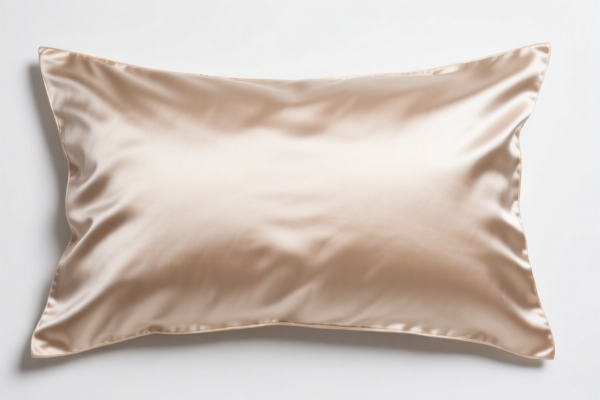
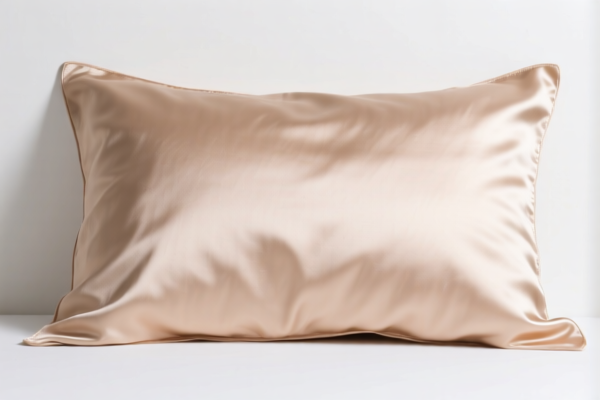
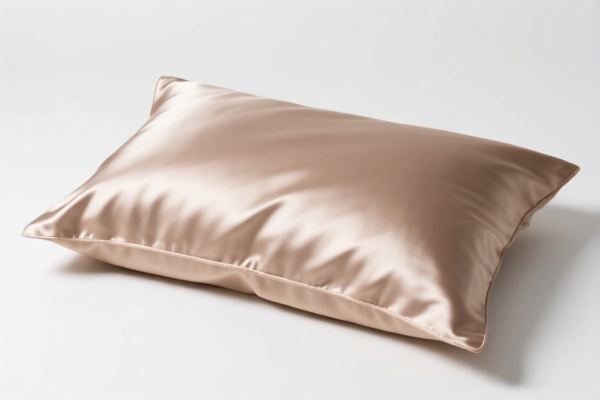
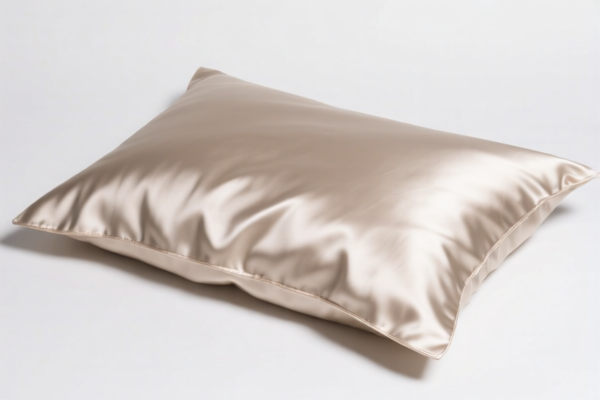
AI分析
🛌 Silk Woven Pillowcase (Silk Pillowcases)
🌐 HS Code Reference & Customs Clearance Guide | 2026 Latest Tariff Analysis | Professional Clearance Strategy for US Imports from China
📌 I. Product Definition: What is a "Silk Woven Pillowcase"?
A silk pillowcase is a bedding accessory primarily made from silk fabric (mulberry silk or other silk fibers). In international trade, classification depends heavily on two factors: 1. Material Composition: Is it pure silk (>85% silk)? 2. Form: Is it a raw fabric, a semi-finished textile, or a finished household article?
⚠️ Key Distinction for Classification:
- If classified as a Finished Article: It falls under "Household Textile Articles" (Chapter 63). This is the most common and often favorable path for finished pillowcases. - If classified as Fabric/Textile: It falls under "Silk Fabrics" (Chapter 50). This path is riskier for finished goods and may attract higher punitive tariffs depending on the specific sub-heading for "non-satin" vs "satin" and whether it is woven.
📦 II. HS Code Classification Matrix (Based on Provided Data)
Below are the 5 specific HS Codes identified in the data, ranked by Total Tax Liability (Lowest to Highest).
| HS Code | Product Description & Logic | Total Tax Rate | Tax Breakdown |
|---|---|---|---|
| 6302.29.00.10 | Best Option: Silk Bedding Article. Fits logic for silk content >85%. Classified as a finished bedding item. | 22.0% | Base: 4.5% Add-on: 7.5% 122 Clause: 10% |
| 6302.31.90.40 | Silk Bedding Article. Classified as "Other Bedding," specific silk pillowcase logic. | 24.2% | Base: 6.7% Add-on: 7.5% 122 Clause: 10% |
| 6307.90.98.91 | Other Made-Up Articles. Fallback category. Logic: Finished product, not strictly "bedding" in Chapter 62/63 main headings. | 24.5% | Base: 7.0% Add-on: 7.5% 122 Clause: 10% |
| 5007.90.30.20 | Silk Fabric (Sewn). Classified as "Fabric," specifically sewn textile products. | 35.8% | Base: 0.8% Add-on: 25.0% 122 Clause: 10% |
| 5007.90.30.40 | Silk Fabric (Non-Jacquard). Classified as "Non-woven/Jacquard other fabrics." | 35.8% | Base: 0.8% Add-on: 25.0% 122 Clause: 10% |
🔍 Critical Insight:
- Chapters 63 (Finished Articles) generally attract lower total tariffs (22-25%) compared to Chapter 50 (Fabrics), which suffer from a 25% USITC Section 301 Add-on Tax. - The difference between the best (22.0%) and worst (35.8%) classification is 13.8 percentage points. On a $10,000 shipment, this is a $1,380 difference.
💰 III. Detailed Tariff Analysis (2026 US Customs)
✅ Applicable Country: United States (US)
✅ Origin: China (CN)
✅ Policy Context: Includes Base Duty + USITC Section 301 Add-on (if applicable) + Section 122 Clause Tariff.
🎯 1. The "Gold Standard": Chapter 63 (Finished Bedding)
HS Codes: 6302.29.00.10 & 6302.31.90.40
| Component | Rate | Source/Logic |
|---|---|---|
| Base Duty | 4.5% - 6.7% | Standard MFN rate for silk bedding articles. |
| Section 301 Add-on | 0% | CRITICAL: Finished bedding articles (Chapter 63) are often exempt from the steep 25% Section 301 tariff that applies to raw silk fabrics (Chapter 50). |
| Section 122 Clause | 10% | Applies to certain textile/apparel categories from China. |
| TOTAL EFFECTIVE RATE | 22.0% - 24.2% | Significantly Lower Risk |
📌 Why this matters:
By classifying as a finished article (6302/6307), you avoid the heavy 25% penalty tax associated with "fabric" classifications. This is the primary cost-saving strategy.
🎯 2. The "High Risk" Category: Chapter 50 (Silk Fabrics)
HS Codes: 5007.90.30.40 & 5007.90.30.20
| Component | Rate | Source/Logic |
|---|---|---|
| Base Duty | 0.8% | Very low base rate for silk fabrics. |
| Section 301 Add-on | 25% | HEAVY PENALTY: Raw silk fabrics and certain textile intermediates face the maximum 25% Section 301 add-on. |
| Section 122 Clause | 10% | Standard clause application. |
| TOTAL EFFECTIVE RATE | 35.8% | High Cost |
📌 Why this matters:
Even though the base duty is near zero, the 25% add-on destroys profitability. Customs may reclassify a "pillowcase" as "fabric" if it is packed in a way that suggests it is raw material (e.g., rolled in bundles rather than individually bagged).
🛠️ IV. Customs Clearance Practical Advice (Avoiding Pitfalls)
✅ 1. Documentation Requirements (Non-Negotiable)
| Document | Requirement | Purpose |
|---|---|---|
| Product Description | Must state: "100% Mulberry Silk Pillowcase, Finished, Household Use" | Prevents misclassification as "fabric." |
| Composition Statement | Explicitly state silk content percentage (e.g., >85%) | Determines Chapter 50 vs 63 eligibility. |
| Commercial Invoice | Unit Price, Total Value, Country of Origin (China) | Customs valuation basis. |
| Packing List | Show individual packaging (polybags) per pillowcase | Proves it is a "finished good," not bulk fabric. |
| Material Test Report | Third-party lab test confirming Silk content | Validates "Silk" claim vs polyester blends. |
✅ 2. Classification Strategy: "Finished Article" vs. "Fabric"
| Scenario | Recommended HS Code | Reasoning |
|---|---|---|
| Pillowcases in individual polybags, ready for retail | 6302.29.00.10 (22.0%) | Clearly a finished household article. Avoids 25% penalty. |
| Pillowcases sold as "raw" or in bulk rolls | 5007.90.30.40 (35.8%) | High risk of being viewed as fabric. Avoid if possible. |
| Pillowcases with unique shapes/non-standard forms | 6307.90.98.91 (24.5%) | Fallback if it doesn't fit standard bedding definitions. |
🔥 Pro Tip:
Ensure your product images and invoice descriptions emphasize "Finished," "Sewn," "Household Use," and "Bedding." Do NOT use terms like "Silk Fabric," "Material," or "Yardage."
✅ 3. Section 122 Clause Awareness
- All HS Codes in the data include a 10% "122 Clause" tariff.
- This is likely related to specific trade remedies or recent policy updates for Chinese textiles.
- Note: This 10% is in addition to the base duty and any Section 301 tariffs. It cannot be avoided through standard HS code changes within these categories.
🌍 V. Global Market Comparison (2026)
| Market | Recommended HS Code | Est. Total Duty | Notes |
|---|---|---|---|
| 🇺🇸 USA | 6302.29.00.10 |
22.0% | Best option. Avoid Chapter 50 to escape 25% penalty. |
| 🇨🇳 China (Import) | 6302.29.00.00 |
~4.5% | Low base duty. No Section 301. |
| 🇪🇺 EU | 6302.29 |
0-4% | Generally low duties for silk bedding. No punitive tariffs. |
| 🇬🇧 UK | 6302.29 |
4% | Post-Brexit tariff structure similar to EU. |
📌 Conclusion:
The US market is the most complex due to Section 301 and Section 122 tariffs. Proper classification as a finished article (Ch 63) is critical to minimize costs.
📌 VI. Common Errors & Pitfalls (Lessons Learned)
❌ Error 1: Classifying finished pillowcases as "Silk Fabric" (5007...)
👉 Consequence: Pay 35.8% instead of 22.0%. Loss of $1,380 per $10k shipment.
❌ Error 2: Vague Product Description ("Silk Item")
👉 Consequence: Customs will choose the highest dutiable classification or require a formal ruling, causing delay and storage fees.
❌ Error 3: Not proving "Finished" status
👉 Consequence: If pillowcases are shipped in bulk without individual packaging, customs may argue they are "semi-finished" fabric. Result: Higher tax.
✅ Correct Approach:
"100% Silk Pillowcase, Finished, Sewn, for Household Bedding, Individually Packaged. Model: XYZ. Origin: China."
🎯 VII. Conclusion: Maximize Profit, Minimize Risk
🎯 Key Takeaway:
"Finish it, Package it, Classify it as Bedding (6302), NOT Fabric (5007)."
- Savings Potential: 13.8% tax difference between Ch 50 and Ch 63.
- Documentation is King: Prove it's a finished good with photos, invoices, and packing lists.
- Always Check: Ensure the "122 Clause" (10%) is accounted for in your landed cost calculations.
📌 Action Item:
Before shipping, obtain an Advance Ruling from US Customs and Border Protection (CBP) for HS Code 6302.29.00.10 to secure the lower 22.0% rate. This provides legal protection against reclassification.
✨ Smart Classification = Higher Margins.
💼 Don't let 13.8% slip away due to wrong HS Code!
用户评价
关于 HS 编码归类
协调制度(HS)是由世界海关组织(WCO)制定的国际贸易商品分类标准。全球 200 多个国家采用 HS 系统作为海关关税、贸易统计和进出口监管的基础。
每个 HS 编码遵循以下层级结构:
- 章(2 位)——商品大类(例如:第 84 章:机器和机械设备)
- 品目(4 位)——章内的更具体分类
- 子目(6 位)——国际通用细分,所有 WCO 成员国统一使用
- 本国细分(8-10 位)——各国自行扩展的细分编码,如美国 HTSUS 10 位编码
正确的 HS 编码归类对于顺利通关、准确缴纳关税和遵守贸易法规至关重要。错误归类可能导致海关延误、多缴关税或罚款。
从CN进口到US时,适用的关税税率可能包括:
- 最惠国(MFN)税率——适用于 WTO 成员国的标准关税税率
- 普通税率——适用于无贸易协定国家
- 贸易救济关税——附加关税,如 301 条款(反倾销)、232 条款(国家安全)或反补贴税
本页内容仅供参考。如需正式归类,请咨询当地海关或持牌报关代理。