silk woven pillowcase
CN → US| HS Code | Tariff Rate | Origin | Destination | Doc |
|---|---|---|---|---|
| 6307909891 | 24.5% | CN | US | Official Doc |
| 5007903040 | 35.8% | CN | US | Official Doc |
| 5007903020 | 35.8% | CN | US | Official Doc |
| 6302319040 | 24.2% | CN | US | Official Doc |
| 6302290010 | 22.0% | CN | US | Official Doc |
Product Images
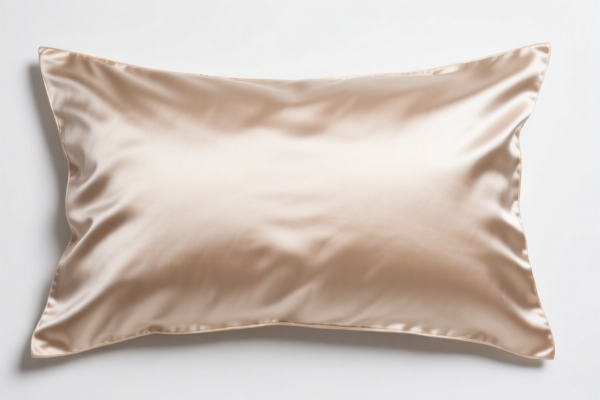
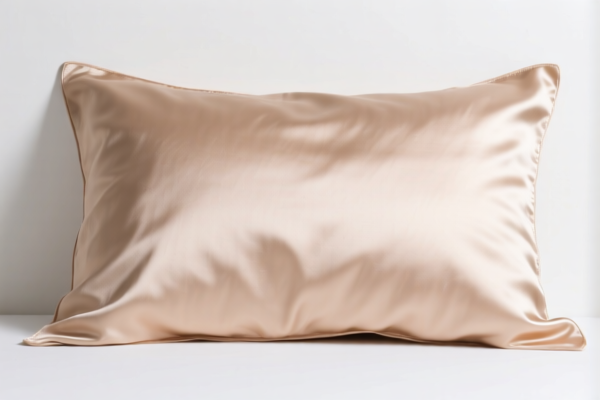
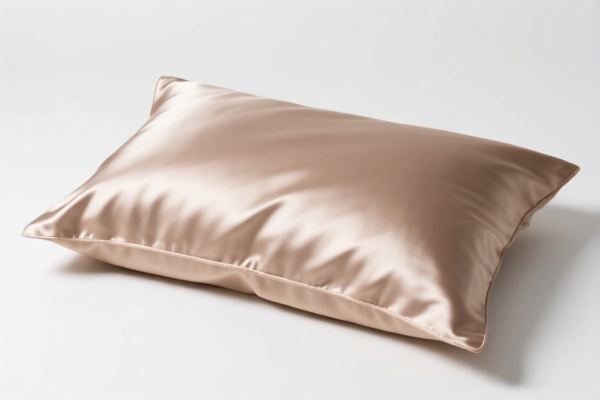
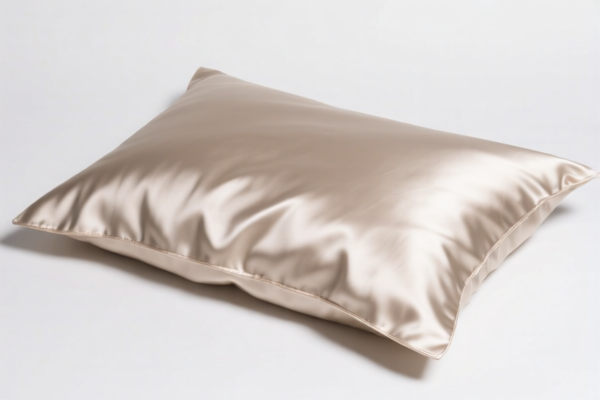
AI Analysis
🛌 Silk Woven Pillowcase (Silk Pillowcases)
🌐 HS Code Reference & Customs Clearance Guide | 2026 Latest Tariff Analysis | Professional Clearance Strategy for US Imports from China
📌 I. Product Definition: What is a "Silk Woven Pillowcase"?
A silk pillowcase is a bedding accessory primarily made from silk fabric (mulberry silk or other silk fibers). In international trade, classification depends heavily on two factors: 1. Material Composition: Is it pure silk (>85% silk)? 2. Form: Is it a raw fabric, a semi-finished textile, or a finished household article?
⚠️ Key Distinction for Classification:
- If classified as a Finished Article: It falls under "Household Textile Articles" (Chapter 63). This is the most common and often favorable path for finished pillowcases. - If classified as Fabric/Textile: It falls under "Silk Fabrics" (Chapter 50). This path is riskier for finished goods and may attract higher punitive tariffs depending on the specific sub-heading for "non-satin" vs "satin" and whether it is woven.
📦 II. HS Code Classification Matrix (Based on Provided Data)
Below are the 5 specific HS Codes identified in the data, ranked by Total Tax Liability (Lowest to Highest).
| HS Code | Product Description & Logic | Total Tax Rate | Tax Breakdown |
|---|---|---|---|
| 6302.29.00.10 | Best Option: Silk Bedding Article. Fits logic for silk content >85%. Classified as a finished bedding item. | 22.0% | Base: 4.5% Add-on: 7.5% 122 Clause: 10% |
| 6302.31.90.40 | Silk Bedding Article. Classified as "Other Bedding," specific silk pillowcase logic. | 24.2% | Base: 6.7% Add-on: 7.5% 122 Clause: 10% |
| 6307.90.98.91 | Other Made-Up Articles. Fallback category. Logic: Finished product, not strictly "bedding" in Chapter 62/63 main headings. | 24.5% | Base: 7.0% Add-on: 7.5% 122 Clause: 10% |
| 5007.90.30.20 | Silk Fabric (Sewn). Classified as "Fabric," specifically sewn textile products. | 35.8% | Base: 0.8% Add-on: 25.0% 122 Clause: 10% |
| 5007.90.30.40 | Silk Fabric (Non-Jacquard). Classified as "Non-woven/Jacquard other fabrics." | 35.8% | Base: 0.8% Add-on: 25.0% 122 Clause: 10% |
🔍 Critical Insight:
- Chapters 63 (Finished Articles) generally attract lower total tariffs (22-25%) compared to Chapter 50 (Fabrics), which suffer from a 25% USITC Section 301 Add-on Tax. - The difference between the best (22.0%) and worst (35.8%) classification is 13.8 percentage points. On a $10,000 shipment, this is a $1,380 difference.
💰 III. Detailed Tariff Analysis (2026 US Customs)
✅ Applicable Country: United States (US)
✅ Origin: China (CN)
✅ Policy Context: Includes Base Duty + USITC Section 301 Add-on (if applicable) + Section 122 Clause Tariff.
🎯 1. The "Gold Standard": Chapter 63 (Finished Bedding)
HS Codes: 6302.29.00.10 & 6302.31.90.40
| Component | Rate | Source/Logic |
|---|---|---|
| Base Duty | 4.5% - 6.7% | Standard MFN rate for silk bedding articles. |
| Section 301 Add-on | 0% | CRITICAL: Finished bedding articles (Chapter 63) are often exempt from the steep 25% Section 301 tariff that applies to raw silk fabrics (Chapter 50). |
| Section 122 Clause | 10% | Applies to certain textile/apparel categories from China. |
| TOTAL EFFECTIVE RATE | 22.0% - 24.2% | Significantly Lower Risk |
📌 Why this matters:
By classifying as a finished article (6302/6307), you avoid the heavy 25% penalty tax associated with "fabric" classifications. This is the primary cost-saving strategy.
🎯 2. The "High Risk" Category: Chapter 50 (Silk Fabrics)
HS Codes: 5007.90.30.40 & 5007.90.30.20
| Component | Rate | Source/Logic |
|---|---|---|
| Base Duty | 0.8% | Very low base rate for silk fabrics. |
| Section 301 Add-on | 25% | HEAVY PENALTY: Raw silk fabrics and certain textile intermediates face the maximum 25% Section 301 add-on. |
| Section 122 Clause | 10% | Standard clause application. |
| TOTAL EFFECTIVE RATE | 35.8% | High Cost |
📌 Why this matters:
Even though the base duty is near zero, the 25% add-on destroys profitability. Customs may reclassify a "pillowcase" as "fabric" if it is packed in a way that suggests it is raw material (e.g., rolled in bundles rather than individually bagged).
🛠️ IV. Customs Clearance Practical Advice (Avoiding Pitfalls)
✅ 1. Documentation Requirements (Non-Negotiable)
| Document | Requirement | Purpose |
|---|---|---|
| Product Description | Must state: "100% Mulberry Silk Pillowcase, Finished, Household Use" | Prevents misclassification as "fabric." |
| Composition Statement | Explicitly state silk content percentage (e.g., >85%) | Determines Chapter 50 vs 63 eligibility. |
| Commercial Invoice | Unit Price, Total Value, Country of Origin (China) | Customs valuation basis. |
| Packing List | Show individual packaging (polybags) per pillowcase | Proves it is a "finished good," not bulk fabric. |
| Material Test Report | Third-party lab test confirming Silk content | Validates "Silk" claim vs polyester blends. |
✅ 2. Classification Strategy: "Finished Article" vs. "Fabric"
| Scenario | Recommended HS Code | Reasoning |
|---|---|---|
| Pillowcases in individual polybags, ready for retail | 6302.29.00.10 (22.0%) | Clearly a finished household article. Avoids 25% penalty. |
| Pillowcases sold as "raw" or in bulk rolls | 5007.90.30.40 (35.8%) | High risk of being viewed as fabric. Avoid if possible. |
| Pillowcases with unique shapes/non-standard forms | 6307.90.98.91 (24.5%) | Fallback if it doesn't fit standard bedding definitions. |
🔥 Pro Tip:
Ensure your product images and invoice descriptions emphasize "Finished," "Sewn," "Household Use," and "Bedding." Do NOT use terms like "Silk Fabric," "Material," or "Yardage."
✅ 3. Section 122 Clause Awareness
- All HS Codes in the data include a 10% "122 Clause" tariff.
- This is likely related to specific trade remedies or recent policy updates for Chinese textiles.
- Note: This 10% is in addition to the base duty and any Section 301 tariffs. It cannot be avoided through standard HS code changes within these categories.
🌍 V. Global Market Comparison (2026)
| Market | Recommended HS Code | Est. Total Duty | Notes |
|---|---|---|---|
| 🇺🇸 USA | 6302.29.00.10 |
22.0% | Best option. Avoid Chapter 50 to escape 25% penalty. |
| 🇨🇳 China (Import) | 6302.29.00.00 |
~4.5% | Low base duty. No Section 301. |
| 🇪🇺 EU | 6302.29 |
0-4% | Generally low duties for silk bedding. No punitive tariffs. |
| 🇬🇧 UK | 6302.29 |
4% | Post-Brexit tariff structure similar to EU. |
📌 Conclusion:
The US market is the most complex due to Section 301 and Section 122 tariffs. Proper classification as a finished article (Ch 63) is critical to minimize costs.
📌 VI. Common Errors & Pitfalls (Lessons Learned)
❌ Error 1: Classifying finished pillowcases as "Silk Fabric" (5007...)
👉 Consequence: Pay 35.8% instead of 22.0%. Loss of $1,380 per $10k shipment.
❌ Error 2: Vague Product Description ("Silk Item")
👉 Consequence: Customs will choose the highest dutiable classification or require a formal ruling, causing delay and storage fees.
❌ Error 3: Not proving "Finished" status
👉 Consequence: If pillowcases are shipped in bulk without individual packaging, customs may argue they are "semi-finished" fabric. Result: Higher tax.
✅ Correct Approach:
"100% Silk Pillowcase, Finished, Sewn, for Household Bedding, Individually Packaged. Model: XYZ. Origin: China."
🎯 VII. Conclusion: Maximize Profit, Minimize Risk
🎯 Key Takeaway:
"Finish it, Package it, Classify it as Bedding (6302), NOT Fabric (5007)."
- Savings Potential: 13.8% tax difference between Ch 50 and Ch 63.
- Documentation is King: Prove it's a finished good with photos, invoices, and packing lists.
- Always Check: Ensure the "122 Clause" (10%) is accounted for in your landed cost calculations.
📌 Action Item:
Before shipping, obtain an Advance Ruling from US Customs and Border Protection (CBP) for HS Code 6302.29.00.10 to secure the lower 22.0% rate. This provides legal protection against reclassification.
✨ Smart Classification = Higher Margins.
💼 Don't let 13.8% slip away due to wrong HS Code!
Customer Reviews
About HS Code Classification
The Harmonized System (HS) is an internationally standardized nomenclature developed by the World Customs Organization (WCO) to classify traded products. Over 200 countries use the HS system as the basis for customs tariffs, trade statistics, and import/export regulations.
Each HS code follows a hierarchical structure:
- Chapter (2 digits) — Broad category of goods (e.g., Chapter 84: Machinery and Mechanical Appliances)
- Heading (4 digits) — More specific grouping within the chapter
- Subheading (6 digits) — Internationally standardized breakdown, used by all WCO member countries
- National subdivisions (8-10 digits) — Country-specific extensions for further classification, such as US HTSUS 10-digit codes
Correct HS code classification is essential for smooth customs clearance, accurate duty payment, and compliance with trade regulations. Misclassification can lead to customs delays, overpayment of duties, or penalties.
When importing from CN to US, the applicable tariff rates may include:
- Most-Favored-Nation (MFN) rate — The standard duty rate applied to WTO members
- General rate — Applied to countries without trade agreements
- Trade remedy duties — Additional tariffs such as Section 301 (anti-dumping), Section 232 (national security), or countervailing duties
The information provided on this page is for reference purposes only. For official classification, please consult with your local customs authority or a licensed customs broker.