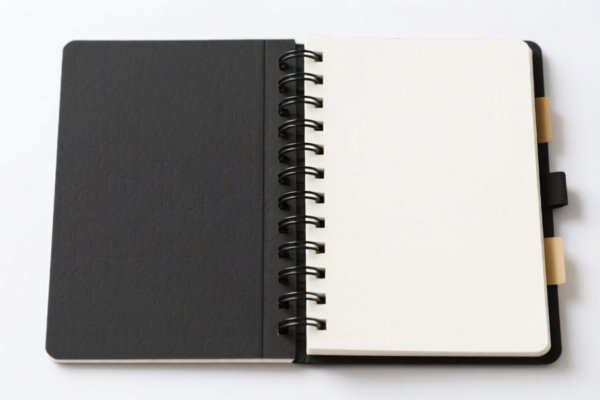
spiral bound notebook
CN → US| HS编码 | 关税税率 | 原产国 | 目的国 | 文档 |
|---|---|---|---|---|
| 4820102060 | 35.0% | CN | US | 官方文档 |
| 4820104000 | 10.0% | CN | US | 官方文档 |
商品图片



AI分析
📓 Spiral Bound Notebook (Paper Stationery)
🌐 HS Code Reference & Customs Clearance Guide | 2026 Latest Tariff Analysis | Professional Entry Strategy
📌 I. Product Definition & Classification: What is a "Spiral Bound Notebook"?
A Spiral Bound Notebook is a stationery item consisting of multiple sheets of paper (or paperboard) stacked and bound together using a plastic or metal coil/spiral, typically used for writing, note-taking, or sketching.
In international trade, these items fall under Chapter 48 (Paper and Paperboard) and specifically under Heading 4820. The classification hinges on the fact that it is a "similar article of stationery" made of paper/paperboard.
⚠️ Key Distinction:
- If the item is strictly for writing/recording (e.g., ruled pages, grids, blank paper bound in spiral) → It falls under 4820.
- If it is primarily a photographic album or a specialized technical drawing pad not considered standard stationery, it might fall elsewhere (e.g., 4901 or 4903).
- Note: The provided data focuses on standard stationery notebooks under HS Code 4820.10.
📦 II. HS Code Classification Details (2026 Latest Tariff Authority Comparison)
Based on the provided <DATA>, there are two specific sub-headings for spiral bound notebooks depending on their exact binding type and intended use (e.g., diary vs. general memo).
| HS Code | Product Description | Applicable Scenario | Binding Type |
|---|---|---|---|
4820.10.20.60 |
Diaries, notebooks and address books, bound | Standard spiral-bound notebooks, diaries, address books | ✅ Bound (Spiral/Thread) |
4820.10.40.00 |
Other registers, account books, notebooks, etc. | General memo pads, loose-leaf notebooks, or notebooks not specifically defined as "diaries/address books" | ✅ Bound/Looseleaf |
🔍 Important Note:
- Both codes fall under the broader category of "Registers, account books, notebooks... of paper or paperboard."
- The distinction between4820.10.20.60and4820.10.40.00often lies in whether the notebook is explicitly marketed as a diary or address book (often pre-printed with dates/names) versus a general-purpose notebook or memo pad.
- For most generic "Spiral Bound Notebooks" sold in retail,4820.10.20.60or4820.10.40.00are the primary candidates. Always check local customs interpretation, but both carry the same tax rate in this context.
💰 III. 2026 Latest Tariff Rate Breakdown (Including Additional Duties & Policy Surcharges)
✅ Applicable Country: United States (US)
✅ Origin: China (CN)
✅ Effective Date: 2025+ (Based on provided data)
🎯 1. 4820.10.20.60 —— Diaries, Notebooks, Address Books (Bound)
| Item | Detail |
|---|---|
| Base Tariff Rate | 0.0% (Ad Valorem) |
| Section 301 Additional Tariff | +25.0% |
| Total Tax Rate | 25.0% |
| Tax Calculation | CIF Value × 25% |
| De Minimis Exemption | ❌ Not Applicable (For shipments from China, Section 301 duties apply even to low-value items under $800 in many enforcement contexts, but specifically for this HS code, the 301 surcharge is mandatory.) |
| Legal Basis Path | USITC:4820.10.20.60 → Section 301: Footnote 9903.88.01 |
📌 Explanation:
- Although the Base Tariff is 0%, the 25% Section 301 tariff is heavily applied to Chinese-made stationery goods.
- This results in a total landed tax cost of 25% on the customs value.
- Do not assume 0% because the base rate is 0%! The 301 tariff is the dominant cost driver.
🎯 2. 4820.10.40.00 —— Other Notebooks (e.g., Memo Pads, General Use)
| Item | Detail |
|---|---|
| Base Tariff Rate | 0.0% (Ad Valorem) |
| Section 301 Additional Tariff | +25.0% |
| Total Tax Rate | 25.0% |
| Tax Calculation | CIF Value × 25% |
| De Minimis Exemption | ❌ Not Applicable |
| Legal Basis Path | USITC:4820.10.40.00 → Section 301: Footnote 9903.88.01 |
📌 Note:
- Identical tax treatment to4820.10.20.60.
- Even if the notebook is not a "diary" but a simple "memo pad," the 25% surcharge still applies.
🛠️ IV. Customs Clearance Practical Advice (Avoiding Pitfalls)
✅ 1. Required Documentation Checklist
| Document | Required? | Notes |
|---|---|---|
| ✅ Commercial Invoice | ✔️ | Must clearly state "Spiral Bound Notebook, Paper, Made in China" |
| ✅ Packing List | ✔️ | Include dimensions, weight, and quantity per box |
| ✅ Product Photos | ✔️ | Show the spiral binding, paper quality, and any printed covers |
| ✅ Materials Declaration | ✔️ | Confirm composition (e.g., "100% Paper, Plastic Spiral Binding") |
| ✅ Origin Certificate | ✔️ | Proves country of origin as China (triggers 301 tariff) |
✅ 2. Classification Tips
| Scenario | Correct HS Code | Why? |
|---|---|---|
| Standard School/Office Notebook | 4820.10.20.60 |
Falls under "Notebooks... bound" |
| Address Book / Diary | 4820.10.20.60 |
Explicitly listed in description |
| Loose-Leaf Binder with Paper | 4820.10.40.00 |
"Other" category for non-diary bound items |
| Leather-bound Journal | ❌ Not 4820 | If cover is leather, it may fall under Chapter 46 or 49, but paper-dominated items usually stay in 4820. Check with customs if cover is significant. |
🔥 Golden Rule:
"Spiral binding = Paper Stationery = 4820. 301 Tariff = 25%. Do not misdeclare as 'Plastic' to avoid taxes."
✅ 3. Special Considerations
| Situation | Advice |
|---|---|
| Low-Value Shipments (<$800) | While Section 321 (de minimis) often exempts goods under $800 from duties, recent enforcement actions have targeted Chinese-origin stationery for Section 301 violations. Assume 25% tax liability to be safe. |
| Mixed Containers | If shipping notebooks with other items (e.g., pens, bags), ensure the invoice clearly separates the HS codes to avoid cross-contamination of tariffs. |
| Branded vs. Generic | Brand name does not affect HS code or tariff rate. Focus on physical description (paper, binding). |
🌍 V. Global Market Comparison (2026 Overview)
| Country/Region | Recommended HS Code | Tariff Rate (China Origin) | Notes |
|---|---|---|---|
| 🇺🇸 USA | 4820.10.20.60 / 4820.10.40.00 |
25% (301 Tariff) | Base rate 0%, but 301 adds 25%. |
| 🇨🇳 China | 4820.10.20.20 (Approx.) |
0% (MFN) | Import duty is low; VAT applies. |
| 🇪🇺 EU | 4820.10.00 |
0% | No Section 301 equivalent. Standard EU duty is often 0% for notebooks. |
| 🇬🇧 UK | 4820.10.00.90 |
0% | Post-Brexit, many paper products have 0% duty. |
📌 Conclusion:
- The US market is the most expensive for Chinese-made spiral notebooks due to the 25% Section 301 tariff.
- EU and UK markets offer 0% duty, making them more cost-effective for direct imports.
📌 VI. Common Mistakes & Pitfalls (Lessons Learned)
❌ Mistake 1: Assuming 0% tax because the base rate is 0%.
👉 Consequence: Underpayment of 25% duty → Penalties + Back Taxes!
❌ Mistake 2: Declaring as "Plastic Products" to avoid Chapter 48.
👉 Consequence: Customs will reclassify based on essential character (paper), leading to delays and fines.
❌ Mistake 3: Mixing "Diaries" and "Blank Notebooks" without distinction.
👉 Consequence: While tax rates are the same, incorrect description may trigger audits for compliance.
❌ Mistake 4: Ignoring the "Made in China" label.
👉 Consequence: If origin is obscured, customs may apply higher punitive tariffs (e.g., 60%+) for transshipment or false origin.
✅ Correct Practice:
"Paper Spiral Notebook, Ruled Pages, A5 Size, Cover Cardboard, Binding Plastic Coil, Made in China"
🎯 VII. Conclusion: Professional Declaration, Cost Control, Efficient Clearance!
🎯 Remember the Mantra:
🔹 "Spiral Bound = Paper Stationery = 4820"
🔹 "China Origin = 25% 301 Tariff"
🔹 "Base 0% is a Trap – Plan for 25%!"
📌 Pro Tip:
- For large volumes, consider tariff engineering (e.g., combining with 0%-tariff items in a single shipment) but ensure compliance.
- Always keep sample photos and product specifications ready for customs inspections.
- Consult a licensed customs broker for Advance Rulings if uncertain about specific notebook types (e.g., sketchbooks vs. notebooks).
📣 Take Action Now:
📞 Verify your supplier's origin
📦 Label clearly: "Made in China"
💡 Budget for 25% duty in your cost model
🚀 Ensure smooth customs clearance and maximize profit margins!
✨ Professional clearance starts with accurate classification!
💼 Every cent counts in international trade!
用户评价
关于 HS 编码归类
协调制度(HS)是由世界海关组织(WCO)制定的国际贸易商品分类标准。全球 200 多个国家采用 HS 系统作为海关关税、贸易统计和进出口监管的基础。
每个 HS 编码遵循以下层级结构:
- 章(2 位)——商品大类(例如:第 84 章:机器和机械设备)
- 品目(4 位)——章内的更具体分类
- 子目(6 位)——国际通用细分,所有 WCO 成员国统一使用
- 本国细分(8-10 位)——各国自行扩展的细分编码,如美国 HTSUS 10 位编码
正确的 HS 编码归类对于顺利通关、准确缴纳关税和遵守贸易法规至关重要。错误归类可能导致海关延误、多缴关税或罚款。
从CN进口到US时,适用的关税税率可能包括:
- 最惠国(MFN)税率——适用于 WTO 成员国的标准关税税率
- 普通税率——适用于无贸易协定国家
- 贸易救济关税——附加关税,如 301 条款(反倾销)、232 条款(国家安全)或反补贴税
本页内容仅供参考。如需正式归类,请咨询当地海关或持牌报关代理。