surgical instruments hs 9018498080
CN → US| HS编码 | 关税税率 | 原产国 | 目的国 | 文档 |
|---|---|---|---|---|
| 9018140000 | 35.0% | CN | US | 官方文档 |
| 9018140000 | 35.0% | CN | US | 官方文档 |
| 9018130000 | 35.0% | CN | US | 官方文档 |
| 9033009000 | 39.4% | CN | US | 官方文档 |
| 9021904080 | 10.0% | CN | US | 官方文档 |
商品图片
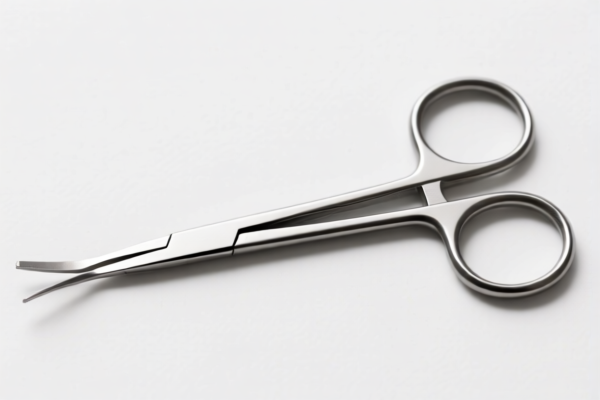
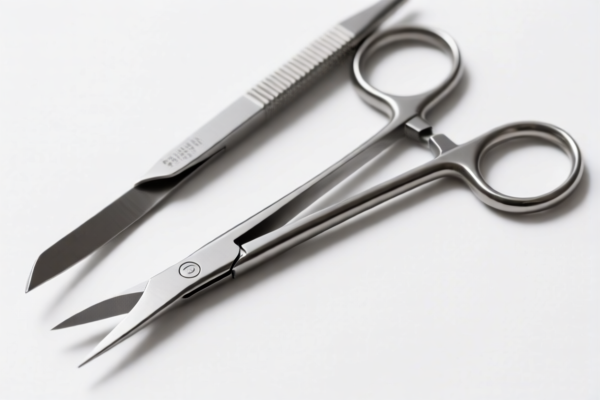
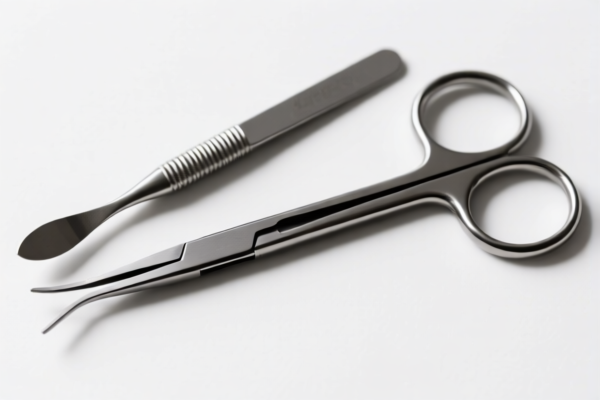
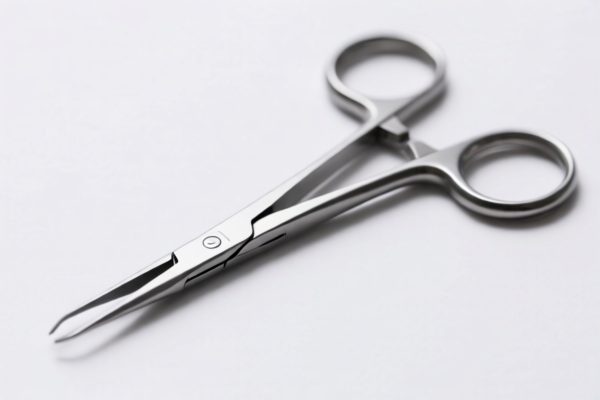
AI分析
🏥 Surgical Instruments & Medical Apparatus (HS Code 9018.49.80.80)
🌐 HS Code Reference & Customs Clearance Guide | Latest Tariff Analysis | Professional Strategy
📌 I. Product Definition: What Falls Under "Other Surgical Instruments"?
The HS Code 9018.49.80.80 belongs to the broader category of Surgical Instruments, Apparatus, and Accessories under Chapter 90. This specific subheading is often a "residual" or "catch-all" category for medical/surgical instruments not specified elsewhere.
In the context of the provided data (<DATA>), which focuses on Section 301 / IEEPA tariffs on Chinese imports to the US, it is crucial to distinguish between:
1. General Surgical Instruments (e.g., scalpels, forceps, clamps) – Often excluded from high tariffs or have lower rates.
2. Imaging/Diagnostic Devices (e.g., Scintigraphy equipment) – Heavily taxed.
3. Accessories/Parts – Heavily taxed.
⚠️ Critical Distinction for HS 9018.49.80.80:
While 9018.49.80.80 itself may have a lower base tariff, the total effective tax rate depends entirely on: - Is it a complete device or a part/attachment? - Is it excluded from Section 301 or IEEPA? - Does it fall under Section 122 (rare, but possible for specific dual-use items)?
📦 II. HS Code Classification & Tax Breakdown (Based on Provided <DATA>)
The provided data does not explicitly list 9018.49.80.80. However, it lists related HS codes under 9018 (Medical/Surgical Instruments) and 9033 (Parts).
Important: If your product is classified under 9018.49.80.80, you must verify if it is treated similarly to the high-tax items in <DATA> (like scintigraphy equipment) or if it has exemptions.
However, based on the <DATA> provided, here are the relevant medical instrument classifications and their tax implications:
| HS Code | Product Description | Total Tax Rate | Tax Detail |
|---|---|---|---|
| 9018.14.00.00 | Flashing Imaging Equipment (e.g., Scintigraphy) | 35.0% | Base: 0%, Sec 301: 25%, IEEPA: 10% |
| 9018140000 | Same as above (8-digit format) | 35.0% | Base: 0%, Sec 301: 25%, IEEPA: 10% |
| 9018.13.00.00 | Other Medical/Surgical Instruments | 35.0% | Base: 0%, Sec 301: 25%, IEEPA: 10% |
| 9033.00.90.00 | Parts & Accessories for Ch. 90 Instruments | 39.4% | Base: 4.4%, Sec 301: 25%, IEEPA: 10% |
| 9021.90.40.80 | Hearing Aids / Pacemaker Parts (Residual) | 10.0% | Base: 0%, Sec 301: 0%, IEEPA: 10% |
🔍 Key Insight:
- 9018.13 and 9018.14 are heavily taxed at 35% due to the combination of Section 301 (25%) and IEEPA (10%).
- 9033.00.90.00 (Parts) is taxed at 39.4% because it has a 4.4% base tariff + 25% + 10%.
- 9021.90.40.80 is an outlier with only 10% tax (IEEPA only), suggesting certain medical accessories are exempt from Section 301.
💰 III. Detailed Tariff Analysis for Surgical Instruments (US-China Trade)
Assuming your 9018.49.80.80 is classified as a Surgical Instrument (not an imaging device or part), here is how the tariffs apply based on the patterns in <DATA>:
🎯 Scenario A: If Classified as "Other Surgical Instruments" (Like 9018.13)
| Item | Detail |
|---|---|
| Base Tariff | 0% (Typical for many medical instruments) |
| Section 301 Tariff | +25% (If not excluded) |
| IEEPA Tariff | +10% (On Chinese origin goods) |
| Total Effective Rate | 35% |
| Legal Basis | USITC Section 301 + IEEPA Proclamation |
| De Minimis Exemption | ❌ Not Eligible for Section 301/IEEPA |
📌 Note: Many surgical instruments (like scalpels, sutures, forceps) are excluded from Section 301 tariffs under specific HTS codes. However, if
9018.49.80.80is not explicitly excluded, it may fall under the general 35% rate.
🎯 Scenario B: If Classified as "Parts/Accessories" (Like 9033.00.90.00)
| Item | Detail |
|---|---|
| Base Tariff | 4.4% |
| Section 301 Tariff | +25% |
| IEEPA Tariff | +10% |
| Total Effective Rate | 39.4% |
| Calculation | (CIF Value × 4.4%) + (CIF Value × 25%) + (CIF Value × 10%) |
| De Minimis Exemption | ❌ Not Eligible |
📌 Warning: If your product is considered a part of a surgical device (e.g., a specific blade holder for a powered instrument), it may be classified under 9033, leading to a higher tax burden.
🎯 Scenario C: If Eligible for Exemption (Like 9021.90.40.80)
| Item | Detail |
|---|---|
| Base Tariff | 0% |
| Section 301 Tariff | 0% (Excluded) |
| IEEPA Tariff | +10% |
| Total Effective Rate | 10% |
| Eligibility | Must prove it falls under specific excluded medical categories |
🛠️ IV. Customs Clearance Recommendations
✅ 1. Product Documentation Checklist
| Document | Purpose |
|---|---|
| Product Specification Sheet | Clearly define if it is a complete instrument or a part. |
| Function Description | Explain its use in surgery (e.g., "Hand-held forceps" vs. "Component for robotic surgical system"). |
| Technical Drawings | Show structure to avoid misclassification as a "part" (9033). |
| Certificates | FDA 510(k), CE Mark, ISO 13485 (Critical for medical imports to the US). |
| Commercial Invoice | Must clearly state "Surgical Instrument" and origin. |
| Exclusion List Check | Verify if the specific HTS code is on the USTR Exclusion List for Section 301. |
✅ 2. Classification Strategy
| Strategy | Action |
|---|---|
| Avoid "Part" Classification | If possible, classify as a complete instrument (9018) rather than a part (9033) to potentially avoid the 4.4% base tariff. |
| Check Exclusions | Search the USTR Section 301 Exclusion List for 9018.49.80.80. If excluded, the rate drops to 10% (IEEPA only). |
| Precise Naming | Use specific names like "Surgical Forceps, Stainless Steel" instead of generic "Medical Tool". |
✅ 3. Special Considerations for Medical Devices
- FDA Regulatory Approval: Ensure the device is FDA-listed/registered. Non-compliance can lead to detention even if tariffs are paid.
- Labeling: US labeling requirements (FDA) must be met. Incorrect labeling can cause customs holds.
- Section 122 Tariffs: Check if any Section 122 tariffs apply (usually for national security items, rare for surgical instruments).
🌍 V. Global Market Comparison
| Region | Typical Base Tariff | US-Specific Add-ons | Notes |
|---|---|---|---|
| 🇺🇸 USA | 0–4.4% | +25% (Sec 301) +10% (IEEPA) | High total cost for Chinese goods unless excluded. |
| 🇪🇺 EU | 0–6% | None (WTO rates) | CE marking required. No Section 301/IEEPA. |
| 🇨🇳 China | 0–5% | None | CCC certification may be needed. |
| 🇬🇧 UK | 0–6% | None | UKCA marking required post-Brexit. |
📌 VI. Common Pitfalls & Solutions
❌ Pitfall 1: Misclassifying a complete surgical robot as a part.
👉 Solution: Provide assembly diagrams. Complete robots are classified under 9018.90 (possibly lower tax if excluded), while parts go to 9033 (39.4%).
❌ Pitfall 2: Assuming all medical instruments are exempt from Section 301.
👉 Solution: Verify each HTS code individually. Only specific exclusions apply.
❌ Pitfall 3: Ignoring IEEPA 10% tariff.
👉 Solution: IEEPA tariffs apply to all Chinese-origin goods unless explicitly exempted. Do not budget only for Section 301.
🎯 VII. Conclusion & Action Plan
🎯 Key Takeaway:
For HS 9018.49.80.80 surgical instruments imported from China to the US:
- Base Tariff: Likely 0% (for complete instruments).
- Section 301: 25% (unless excluded).
- IEEPA: 10% (mandatory for Chinese origin).
- Total Rate: 35% (standard) or 45% (if parts with base tariff).
- Best Case: If excluded from Section 301, 10% (IEEPA only).
✅ Immediate Actions:
1. Verify Exclusion: Check if 9018.49.80.80 is on the USTR Exclusion List.
2. Confirm Product Type: Ensure it is classified as a complete instrument (9018) and not a part (9033).
3. Calculate Landed Cost: Include 35% (or 39.4%) in your cost model.
4. Consult a Broker: Use a licensed customs broker to confirm classification and apply for any applicable exclusions.
📣 Pro Tip:
"In medical exports, classification is destiny. A $10 tool can become a $35 burden if misclassified. Verify exclusions, document thoroughly, and declare accurately."
✨ Precise Classification = Predictable Costs = Successful Clearance
💼 Contact your customs broker today to audit your HTS code and exclusions!
用户评价
关于 HS 编码归类
协调制度(HS)是由世界海关组织(WCO)制定的国际贸易商品分类标准。全球 200 多个国家采用 HS 系统作为海关关税、贸易统计和进出口监管的基础。
每个 HS 编码遵循以下层级结构:
- 章(2 位)——商品大类(例如:第 84 章:机器和机械设备)
- 品目(4 位)——章内的更具体分类
- 子目(6 位)——国际通用细分,所有 WCO 成员国统一使用
- 本国细分(8-10 位)——各国自行扩展的细分编码,如美国 HTSUS 10 位编码
正确的 HS 编码归类对于顺利通关、准确缴纳关税和遵守贸易法规至关重要。错误归类可能导致海关延误、多缴关税或罚款。
从CN进口到US时,适用的关税税率可能包括:
- 最惠国(MFN)税率——适用于 WTO 成员国的标准关税税率
- 普通税率——适用于无贸易协定国家
- 贸易救济关税——附加关税,如 301 条款(反倾销)、232 条款(国家安全)或反补贴税
本页内容仅供参考。如需正式归类,请咨询当地海关或持牌报关代理。