surgical instruments hs 9018498080
CN → US| HS Code | Tariff Rate | Origin | Destination | Doc |
|---|---|---|---|---|
| 9018140000 | 35.0% | CN | US | Official Doc |
| 9018140000 | 35.0% | CN | US | Official Doc |
| 9018130000 | 35.0% | CN | US | Official Doc |
| 9033009000 | 39.4% | CN | US | Official Doc |
| 9021904080 | 10.0% | CN | US | Official Doc |
Product Images
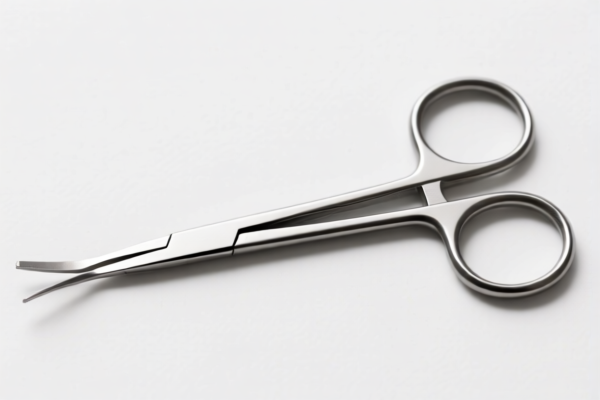
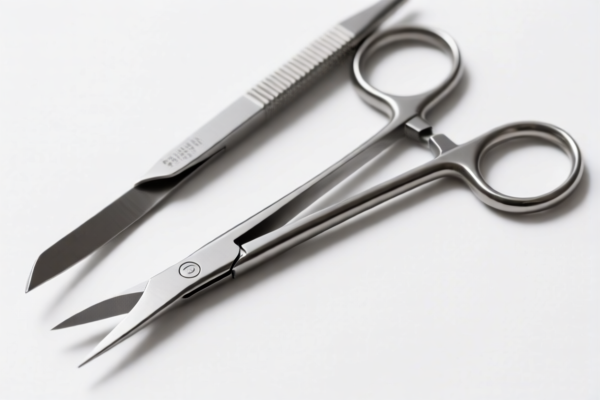
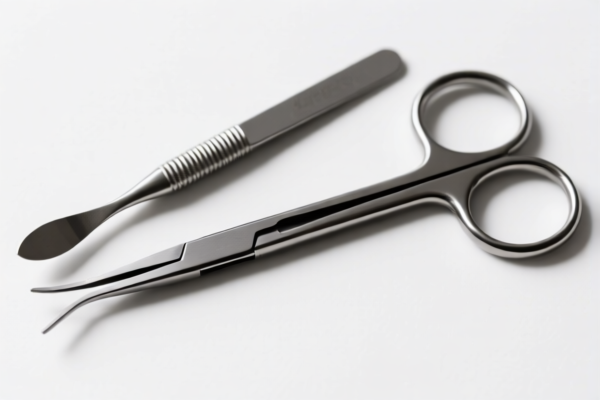
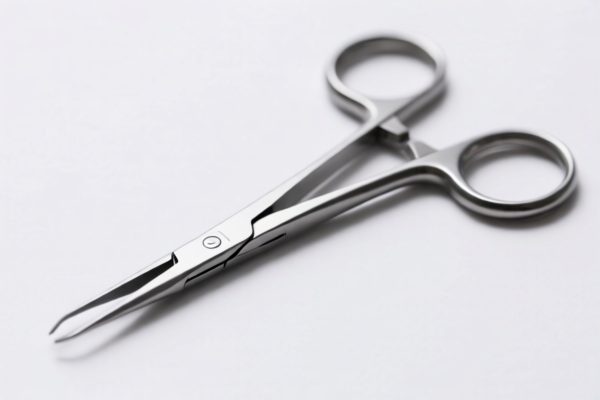
AI Analysis
🏥 Surgical Instruments & Medical Apparatus (HS Code 9018.49.80.80)
🌐 HS Code Reference & Customs Clearance Guide | Latest Tariff Analysis | Professional Strategy
📌 I. Product Definition: What Falls Under "Other Surgical Instruments"?
The HS Code 9018.49.80.80 belongs to the broader category of Surgical Instruments, Apparatus, and Accessories under Chapter 90. This specific subheading is often a "residual" or "catch-all" category for medical/surgical instruments not specified elsewhere.
In the context of the provided data (<DATA>), which focuses on Section 301 / IEEPA tariffs on Chinese imports to the US, it is crucial to distinguish between:
1. General Surgical Instruments (e.g., scalpels, forceps, clamps) – Often excluded from high tariffs or have lower rates.
2. Imaging/Diagnostic Devices (e.g., Scintigraphy equipment) – Heavily taxed.
3. Accessories/Parts – Heavily taxed.
⚠️ Critical Distinction for HS 9018.49.80.80:
While 9018.49.80.80 itself may have a lower base tariff, the total effective tax rate depends entirely on: - Is it a complete device or a part/attachment? - Is it excluded from Section 301 or IEEPA? - Does it fall under Section 122 (rare, but possible for specific dual-use items)?
📦 II. HS Code Classification & Tax Breakdown (Based on Provided <DATA>)
The provided data does not explicitly list 9018.49.80.80. However, it lists related HS codes under 9018 (Medical/Surgical Instruments) and 9033 (Parts).
Important: If your product is classified under 9018.49.80.80, you must verify if it is treated similarly to the high-tax items in <DATA> (like scintigraphy equipment) or if it has exemptions.
However, based on the <DATA> provided, here are the relevant medical instrument classifications and their tax implications:
| HS Code | Product Description | Total Tax Rate | Tax Detail |
|---|---|---|---|
| 9018.14.00.00 | Flashing Imaging Equipment (e.g., Scintigraphy) | 35.0% | Base: 0%, Sec 301: 25%, IEEPA: 10% |
| 9018140000 | Same as above (8-digit format) | 35.0% | Base: 0%, Sec 301: 25%, IEEPA: 10% |
| 9018.13.00.00 | Other Medical/Surgical Instruments | 35.0% | Base: 0%, Sec 301: 25%, IEEPA: 10% |
| 9033.00.90.00 | Parts & Accessories for Ch. 90 Instruments | 39.4% | Base: 4.4%, Sec 301: 25%, IEEPA: 10% |
| 9021.90.40.80 | Hearing Aids / Pacemaker Parts (Residual) | 10.0% | Base: 0%, Sec 301: 0%, IEEPA: 10% |
🔍 Key Insight:
- 9018.13 and 9018.14 are heavily taxed at 35% due to the combination of Section 301 (25%) and IEEPA (10%).
- 9033.00.90.00 (Parts) is taxed at 39.4% because it has a 4.4% base tariff + 25% + 10%.
- 9021.90.40.80 is an outlier with only 10% tax (IEEPA only), suggesting certain medical accessories are exempt from Section 301.
💰 III. Detailed Tariff Analysis for Surgical Instruments (US-China Trade)
Assuming your 9018.49.80.80 is classified as a Surgical Instrument (not an imaging device or part), here is how the tariffs apply based on the patterns in <DATA>:
🎯 Scenario A: If Classified as "Other Surgical Instruments" (Like 9018.13)
| Item | Detail |
|---|---|
| Base Tariff | 0% (Typical for many medical instruments) |
| Section 301 Tariff | +25% (If not excluded) |
| IEEPA Tariff | +10% (On Chinese origin goods) |
| Total Effective Rate | 35% |
| Legal Basis | USITC Section 301 + IEEPA Proclamation |
| De Minimis Exemption | ❌ Not Eligible for Section 301/IEEPA |
📌 Note: Many surgical instruments (like scalpels, sutures, forceps) are excluded from Section 301 tariffs under specific HTS codes. However, if
9018.49.80.80is not explicitly excluded, it may fall under the general 35% rate.
🎯 Scenario B: If Classified as "Parts/Accessories" (Like 9033.00.90.00)
| Item | Detail |
|---|---|
| Base Tariff | 4.4% |
| Section 301 Tariff | +25% |
| IEEPA Tariff | +10% |
| Total Effective Rate | 39.4% |
| Calculation | (CIF Value × 4.4%) + (CIF Value × 25%) + (CIF Value × 10%) |
| De Minimis Exemption | ❌ Not Eligible |
📌 Warning: If your product is considered a part of a surgical device (e.g., a specific blade holder for a powered instrument), it may be classified under 9033, leading to a higher tax burden.
🎯 Scenario C: If Eligible for Exemption (Like 9021.90.40.80)
| Item | Detail |
|---|---|
| Base Tariff | 0% |
| Section 301 Tariff | 0% (Excluded) |
| IEEPA Tariff | +10% |
| Total Effective Rate | 10% |
| Eligibility | Must prove it falls under specific excluded medical categories |
🛠️ IV. Customs Clearance Recommendations
✅ 1. Product Documentation Checklist
| Document | Purpose |
|---|---|
| Product Specification Sheet | Clearly define if it is a complete instrument or a part. |
| Function Description | Explain its use in surgery (e.g., "Hand-held forceps" vs. "Component for robotic surgical system"). |
| Technical Drawings | Show structure to avoid misclassification as a "part" (9033). |
| Certificates | FDA 510(k), CE Mark, ISO 13485 (Critical for medical imports to the US). |
| Commercial Invoice | Must clearly state "Surgical Instrument" and origin. |
| Exclusion List Check | Verify if the specific HTS code is on the USTR Exclusion List for Section 301. |
✅ 2. Classification Strategy
| Strategy | Action |
|---|---|
| Avoid "Part" Classification | If possible, classify as a complete instrument (9018) rather than a part (9033) to potentially avoid the 4.4% base tariff. |
| Check Exclusions | Search the USTR Section 301 Exclusion List for 9018.49.80.80. If excluded, the rate drops to 10% (IEEPA only). |
| Precise Naming | Use specific names like "Surgical Forceps, Stainless Steel" instead of generic "Medical Tool". |
✅ 3. Special Considerations for Medical Devices
- FDA Regulatory Approval: Ensure the device is FDA-listed/registered. Non-compliance can lead to detention even if tariffs are paid.
- Labeling: US labeling requirements (FDA) must be met. Incorrect labeling can cause customs holds.
- Section 122 Tariffs: Check if any Section 122 tariffs apply (usually for national security items, rare for surgical instruments).
🌍 V. Global Market Comparison
| Region | Typical Base Tariff | US-Specific Add-ons | Notes |
|---|---|---|---|
| 🇺🇸 USA | 0–4.4% | +25% (Sec 301) +10% (IEEPA) | High total cost for Chinese goods unless excluded. |
| 🇪🇺 EU | 0–6% | None (WTO rates) | CE marking required. No Section 301/IEEPA. |
| 🇨🇳 China | 0–5% | None | CCC certification may be needed. |
| 🇬🇧 UK | 0–6% | None | UKCA marking required post-Brexit. |
📌 VI. Common Pitfalls & Solutions
❌ Pitfall 1: Misclassifying a complete surgical robot as a part.
👉 Solution: Provide assembly diagrams. Complete robots are classified under 9018.90 (possibly lower tax if excluded), while parts go to 9033 (39.4%).
❌ Pitfall 2: Assuming all medical instruments are exempt from Section 301.
👉 Solution: Verify each HTS code individually. Only specific exclusions apply.
❌ Pitfall 3: Ignoring IEEPA 10% tariff.
👉 Solution: IEEPA tariffs apply to all Chinese-origin goods unless explicitly exempted. Do not budget only for Section 301.
🎯 VII. Conclusion & Action Plan
🎯 Key Takeaway:
For HS 9018.49.80.80 surgical instruments imported from China to the US:
- Base Tariff: Likely 0% (for complete instruments).
- Section 301: 25% (unless excluded).
- IEEPA: 10% (mandatory for Chinese origin).
- Total Rate: 35% (standard) or 45% (if parts with base tariff).
- Best Case: If excluded from Section 301, 10% (IEEPA only).
✅ Immediate Actions:
1. Verify Exclusion: Check if 9018.49.80.80 is on the USTR Exclusion List.
2. Confirm Product Type: Ensure it is classified as a complete instrument (9018) and not a part (9033).
3. Calculate Landed Cost: Include 35% (or 39.4%) in your cost model.
4. Consult a Broker: Use a licensed customs broker to confirm classification and apply for any applicable exclusions.
📣 Pro Tip:
"In medical exports, classification is destiny. A $10 tool can become a $35 burden if misclassified. Verify exclusions, document thoroughly, and declare accurately."
✨ Precise Classification = Predictable Costs = Successful Clearance
💼 Contact your customs broker today to audit your HTS code and exclusions!
Customer Reviews
About HS Code Classification
The Harmonized System (HS) is an internationally standardized nomenclature developed by the World Customs Organization (WCO) to classify traded products. Over 200 countries use the HS system as the basis for customs tariffs, trade statistics, and import/export regulations.
Each HS code follows a hierarchical structure:
- Chapter (2 digits) — Broad category of goods (e.g., Chapter 84: Machinery and Mechanical Appliances)
- Heading (4 digits) — More specific grouping within the chapter
- Subheading (6 digits) — Internationally standardized breakdown, used by all WCO member countries
- National subdivisions (8-10 digits) — Country-specific extensions for further classification, such as US HTSUS 10-digit codes
Correct HS code classification is essential for smooth customs clearance, accurate duty payment, and compliance with trade regulations. Misclassification can lead to customs delays, overpayment of duties, or penalties.
When importing from CN to US, the applicable tariff rates may include:
- Most-Favored-Nation (MFN) rate — The standard duty rate applied to WTO members
- General rate — Applied to countries without trade agreements
- Trade remedy duties — Additional tariffs such as Section 301 (anti-dumping), Section 232 (national security), or countervailing duties
The information provided on this page is for reference purposes only. For official classification, please consult with your local customs authority or a licensed customs broker.