vinyl acetate emulsion
CN → US| HS编码 | 关税税率 | 原产国 | 目的国 | 文档 |
|---|---|---|---|---|
| 3506915000 | 37.1% | CN | US | 官方文档 |
| 3506990000 | 37.1% | CN | US | 官方文档 |
| 3905120000 | 39.0% | CN | US | 官方文档 |
| 3905210000 | 39.0% | CN | US | 官方文档 |
| 3506915000 | 37.1% | CN | US | 官方文档 |
商品图片

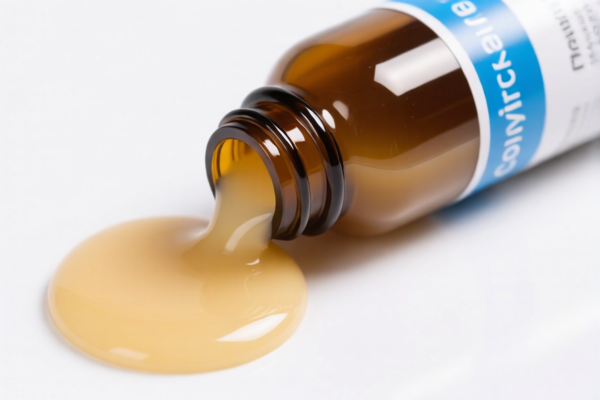
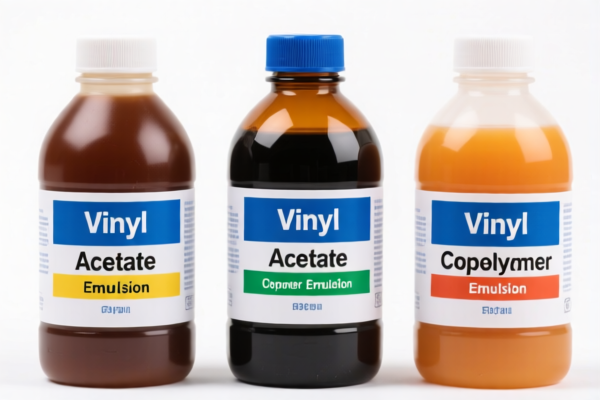
AI分析
🧪 Vinyl Acetate Emulsion (Polyvinyl Acetate Adhesives)
🌐 HS Code Reference & Customs Clearance Guide | 2026 Latest Tariff Analysis | Professional Clearance Strategy
📌 Part I: Product Definition & Classification: Do You Really Understand "Vinyl Acetate Emulsion"?
Vinyl Acetate Emulsion, primarily composed of Polyvinyl Acetate (PVAc), is a water-dispersible polymer widely used in adhesives, paints, and coatings. In international trade, its classification hinges on its chemical nature and physical state.
Key Distinctions: 1. Pure Polymer Dispersions: Classified under Chapter 39 (Plastics and articles thereof). Specifically, emulsions of polyvinyl acetate in water. 2. Prepared Adhesives: Classified under Chapter 35 (Albuminoidal substances; modified starches; glues; enzymes). Specifically, if the product is a "prepared glue" or "adhesive" already formulated for specific bonding applications.
⚠️ Critical Classification Point:
- If the product is a raw polymer dispersion (Polyvinyl Acetate in water) →归入 3905.12.00.00 / 3905.21.00.00 (High Risk: 39% Total Tax).
- If the product is a prepared adhesive/glue (Formulated for use) →归入 3506.91.50.00 / 3506.99.00.00 (Slightly Lower Risk: 37.1% Total Tax).
📦 Part II: HS Code Classification Details (2026 Latest Tariff Authority)
| HS Code | Product Description | Application Scenario | Chemical Nature | Total Tax Rate |
|---|---|---|---|---|
3905.12.00.00 |
Polyvinyl acetate emulsions, in water, as primary forms | Raw PVAc polymer dispersion | Polymer (Chapter 39) | 39.0% |
3905.21.00.00 |
Other vinyl acetate emulsions, in water, as primary forms | Vinyl acetate-based water dispersion | Polymer (Chapter 39) | 39.0% |
3506.91.50.00 |
Other prepared glues, whether or not heated: Other; other; other; wood glue | Prepared PVAc polymer adhesive (e.g., Wood Glue) | Prepared Glue (Chapter 35) | 37.1% |
3506.99.00.00 |
Other prepared glues and other prepared adhesives | Other prepared polymer adhesives | Prepared Glue (Chapter 35) | 37.1% |
🔍 Key Reminder:
- Chapter 39 (3905): Focuses on the polymer itself in emulsion form. Higher tax burden.
- Chapter 35 (3506): Focuses on the prepared adhesive function. Slightly lower tax burden.
- Misclassification Risk: Declaring a prepared wood glue as a "raw polymer dispersion" under 3905 can lead to underpayment penalties. Conversely, declaring raw resin as "prepared glue" under 3506 may be rejected if no adhesive modifiers are present.
💰 Part III: 2026 Latest Tariff Rate Breakdown (Including Surcharges & Policy Add-ons)
✅ Applicable Country: United States (US)
✅ Origin: China (CN)
✅ Effective Date: 2025/2026 (Current Trade War Measures)
🎯 1. 3905.12.00.00 & 3905.21.00.00 —— Polyvinyl Acetate Emulsions (Chapter 39)
| Item | Content |
|---|---|
| Base Duty | 4.0% |
| Section 301 Surcharge | +25.0% |
| Section 122 Surcharge | +10.0% |
| Total Tax Rate | 39.0% |
| Calculation Basis | CIF Value × 39.0% |
| De Minimis Exemption? | ❌ NO (High-risk category for trade enforcement) |
| Legal Basis | HTSUS 3905 + USITC Footnotes + IEEPA 122/301 provisions |
📌 Explanation:
- The 4.0% is the standard Most Favored Nation (MFN) rate for PVC/PVAc emulsions.
- The 25.0% is the standard Section 301 tariff on Chinese plastics/polymer products.
- The 10.0% is the Section 122 tariff (national security/emergency provision), often applied to critical raw materials or chemical inputs.
- Total 39% is a significant cost driver. Importers must budget for this high landed cost.
🎯 2. 3506.91.50.00 & 3506.99.00.00 —— Prepared Adhesives (Chapter 35)
| Item | Content |
|---|---|
| Base Duty | 2.1% |
| Section 301 Surcharge | +25.0% |
| Section 122 Surcharge | +10.0% |
| Total Tax Rate | 37.1% |
| Calculation Basis | CIF Value × 37.1% |
| De Minimis Exemption? | ❌ NO |
| Legal Basis | HTSUS 3506 + USITC Footnotes + IEEPA 122/301 provisions |
📌 Note:
- While the base duty is lower (2.1% vs 4.0%), the same surcharges (301 + 122) apply.
- Total 37.1% is the most competitive rate for this product line.
- Strategy: If the product is chemically a "prepared adhesive" (contains thickeners, additives, or is marketed specifically as glue), insist on 3506 classification to save 1.9% on every dollar. However, be prepared to provide Technical Data Sheets (TDS) proving it is a "prepared glue" and not just raw polymer.
🛠️ Part IV: Customs Clearance Practical Advice (Battle-Tested Pitfall Guide)
✅ 1. Documentation Checklist (Non-Negotiable)
| Document | Required | Purpose |
|---|---|---|
| ✅ Technical Data Sheet (TDS) | ✔️ | CRITICAL: Proves if it’s raw polymer (3905) or prepared glue (3506). Must list ingredients, viscosity, solids content. |
| ✅ Safety Data Sheet (SDS) | ✔️ | Shows hazard classification, transport mode, and chemical identity. |
| ✅ Commercial Invoice | ✔️ | Must clearly state: "Vinyl Acetate Emulsion" or "PVAc Wood Glue". Avoid vague terms like "Chemical Raw Material". |
| ✅ Certificate of Origin (CO) | ✔️ | For country of origin determination (China origin triggers 301+122 tariffs). |
| ✅ Packaging List | ✔️ | Detail net/gross weight, drum sizes (e.g., 55-gallon drums vs. IBC totes). |
| ✅ Labeling Photos | ✔️ | Show labels clearly indicating "Adhesive" or "Polymer Dispersion". |
✅ 2. Declaration Strategy (Key Mantra)
🔥 "Know Your Form: Raw Polymer vs. Prepared Glue. 3506 Saves Money, 3905 is Safer for Raw Resins."
| Scenario | Recommended HS Code | Reason |
|---|---|---|
| Raw PVAc Resin in Water | 3905.12.00.00 / 3905.21.00.00 |
Chemically a polymer. Hard to argue as "prepared". |
| Wood Glue (PVA) | 3506.91.50.00 |
Specifically designed for wood bonding. "Prepared glue". |
| Paint Binder (PVAc Latex) | 3506.99.00.00 |
Used in paints, often classified as prepared adhesive/coating component. |
| Generic "Vinyl Emulsion" | Avoid | Ambiguous! Customs will likely audit and assign highest duty. Specify use. |
✅ 3. Special Case Handling
| Situation | Handling Advice |
|---|---|
| High-Solids Emulsion | If solids content >50%, still classified by chemical nature. Check TDS. |
| Cross-Docking/Transshipment | If transshipped through Vietnam/Mexico, ensure Substantial Transformation occurs. Otherwise, US Customs will trace back to CN origin and apply 39%. |
| Small Sample Imports | No De Minimis Exemption. Even under $800, high-tariff chemical products are often scrutinized. Pay duty upfront to avoid delays. |
| Dispute with CBP | If CBP assesses 39%, provide a Ruling Request or Pre-Ruling with TDS showing adhesive additives to争取 37.1%. |
🌍 Part V: Global Market Comparison (2026 Update)
| Country/Region | Recommended HS Code | Base Tariff | Additional Tariffs (China) | Total Est. | Notes |
|---|---|---|---|---|---|
| 🇺🇸 USA | 3905.12.00.00 |
4.0% | 301: +25%, 122: +10% | 39.0% | High compliance cost. |
| 🇨🇳 China | 3905.12.00.00 |
5.0%-7% | None | ~5-7% | Lower import cost for Chinese buyers. |
| 🇪🇺 EU | 3905.12.00.00 |
6.5% | Anti-dumping (if applicable) | ~6.5%+ | Check for anti-dumping duties on Chinese PVAc. |
| 🇬🇧 UK | 3905.12.00.00 |
6.5% | None (Post-Brexit) | 6.5% | No Section 301/122. |
| 🇯🇵 Japan | 3905.12.00.00 |
5.5% | None | 5.5% | Low tariff, stable market. |
📌 Conclusion:
- USA is the most expensive market due to layered tariffs (Base + 301 + 122).
- EU may have anti-dumping duties on Chinese PVAc, which need separate investigation.
- Asia-Pacific (China, Japan) offers lower landed costs.
📌 Part VI: Common Mistakes & Pitfalls (Lessons Learned)
❌ Mistake 1: Declaring "Wood Glue" as "Plastic Raw Material"
👉 Result: If it’s actually a prepared adhesive, Customs may reject 3905 and demand 3506 (or vice versa if misidentified), leading to penalties for misdeclaration.
❌ Mistake 2: Ignoring Section 122 Tariff
👉 Result: Many importers only account for 301 (25%). Forgetting the 10% Section 122 leads to underpayment and future audits.
❌ Mistake 3: Using "Latex" or "Emulsion" Without Specification
👉 Result: Customs asks for clarification. Delays of 2-4 weeks. Always specify: "Polyvinyl Acetate Emulsion, 50% solids, for wood bonding".
❌ Mistake 4: Assuming De Minimis ($800) Applies
👉 Result: Chemical products are often excluded from de minimis if they are high-tariff or restricted. Always pay duty for B2B shipments.
✅ Correct Practice:
"Polyvinyl Acetate Emulsion (Wood Glue), 50% Solids, Water-Based, Non-Hazardous, HS Code 3506.91.50.00, Origin: China, Subject to 301 & 122 Tariffs."
🎯 Part VII: Conclusion: Precision Classification, Cost Optimization
🎯 Remember the Mantra:
🔹 "Raw Polymer = 3905 (39%); Prepared Glue = 3506 (37.1%)."
🔹 "TDS is King: Provide Technical Data Sheet to justify classification."
🔹 "Don’t forget Section 122: 10% is not optional."
📌 Pro Tip:
If your supplier can modify the product to include specific adhesive agents or thickeners, argue for 3506 classification to save 1.9% on the total CIF value. For large volumes, this is significant.
📣 Immediate Action:
📞 Contact a Customs Broker: Provide TDS + SDS.
📄 Apply for Pre-Ruling: If volume is high, get a CBP Pre-Ruling on the correct HS Code.
📉 Audit Your Landed Cost: Ensure 39.0% or 37.1% is accurately calculated in your quotes.
✨ Professional Clearance Starts with Accurate Classification!
💼 Your Bottom Line Depends on the Digits.
用户评价
关于 HS 编码归类
协调制度(HS)是由世界海关组织(WCO)制定的国际贸易商品分类标准。全球 200 多个国家采用 HS 系统作为海关关税、贸易统计和进出口监管的基础。
每个 HS 编码遵循以下层级结构:
- 章(2 位)——商品大类(例如:第 84 章:机器和机械设备)
- 品目(4 位)——章内的更具体分类
- 子目(6 位)——国际通用细分,所有 WCO 成员国统一使用
- 本国细分(8-10 位)——各国自行扩展的细分编码,如美国 HTSUS 10 位编码
正确的 HS 编码归类对于顺利通关、准确缴纳关税和遵守贸易法规至关重要。错误归类可能导致海关延误、多缴关税或罚款。
从CN进口到US时,适用的关税税率可能包括:
- 最惠国(MFN)税率——适用于 WTO 成员国的标准关税税率
- 普通税率——适用于无贸易协定国家
- 贸易救济关税——附加关税,如 301 条款(反倾销)、232 条款(国家安全)或反补贴税
本页内容仅供参考。如需正式归类,请咨询当地海关或持牌报关代理。