vinyl acetate emulsion
CN → US| HS Code | Tariff Rate | Origin | Destination | Doc |
|---|---|---|---|---|
| 3506915000 | 37.1% | CN | US | Official Doc |
| 3506990000 | 37.1% | CN | US | Official Doc |
| 3905120000 | 39.0% | CN | US | Official Doc |
| 3905210000 | 39.0% | CN | US | Official Doc |
| 3506915000 | 37.1% | CN | US | Official Doc |
Product Images

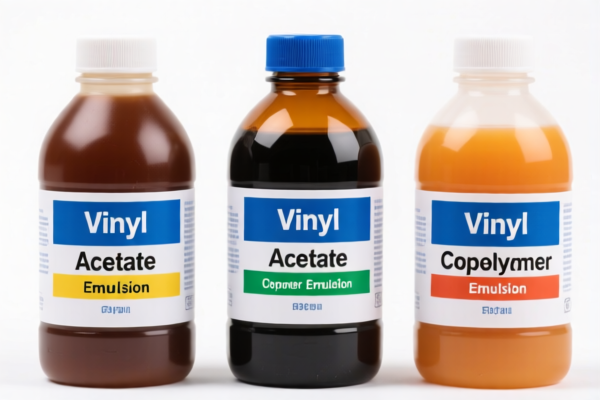

AI Analysis
🧪 Vinyl Acetate Emulsion (Polyvinyl Acetate Adhesives)
🌐 HS Code Reference & Customs Clearance Guide | 2026 Latest Tariff Analysis | Professional Clearance Strategy
📌 Part I: Product Definition & Classification: Do You Really Understand "Vinyl Acetate Emulsion"?
Vinyl Acetate Emulsion, primarily composed of Polyvinyl Acetate (PVAc), is a water-dispersible polymer widely used in adhesives, paints, and coatings. In international trade, its classification hinges on its chemical nature and physical state.
Key Distinctions: 1. Pure Polymer Dispersions: Classified under Chapter 39 (Plastics and articles thereof). Specifically, emulsions of polyvinyl acetate in water. 2. Prepared Adhesives: Classified under Chapter 35 (Albuminoidal substances; modified starches; glues; enzymes). Specifically, if the product is a "prepared glue" or "adhesive" already formulated for specific bonding applications.
⚠️ Critical Classification Point:
- If the product is a raw polymer dispersion (Polyvinyl Acetate in water) →归入 3905.12.00.00 / 3905.21.00.00 (High Risk: 39% Total Tax).
- If the product is a prepared adhesive/glue (Formulated for use) →归入 3506.91.50.00 / 3506.99.00.00 (Slightly Lower Risk: 37.1% Total Tax).
📦 Part II: HS Code Classification Details (2026 Latest Tariff Authority)
| HS Code | Product Description | Application Scenario | Chemical Nature | Total Tax Rate |
|---|---|---|---|---|
3905.12.00.00 |
Polyvinyl acetate emulsions, in water, as primary forms | Raw PVAc polymer dispersion | Polymer (Chapter 39) | 39.0% |
3905.21.00.00 |
Other vinyl acetate emulsions, in water, as primary forms | Vinyl acetate-based water dispersion | Polymer (Chapter 39) | 39.0% |
3506.91.50.00 |
Other prepared glues, whether or not heated: Other; other; other; wood glue | Prepared PVAc polymer adhesive (e.g., Wood Glue) | Prepared Glue (Chapter 35) | 37.1% |
3506.99.00.00 |
Other prepared glues and other prepared adhesives | Other prepared polymer adhesives | Prepared Glue (Chapter 35) | 37.1% |
🔍 Key Reminder:
- Chapter 39 (3905): Focuses on the polymer itself in emulsion form. Higher tax burden.
- Chapter 35 (3506): Focuses on the prepared adhesive function. Slightly lower tax burden.
- Misclassification Risk: Declaring a prepared wood glue as a "raw polymer dispersion" under 3905 can lead to underpayment penalties. Conversely, declaring raw resin as "prepared glue" under 3506 may be rejected if no adhesive modifiers are present.
💰 Part III: 2026 Latest Tariff Rate Breakdown (Including Surcharges & Policy Add-ons)
✅ Applicable Country: United States (US)
✅ Origin: China (CN)
✅ Effective Date: 2025/2026 (Current Trade War Measures)
🎯 1. 3905.12.00.00 & 3905.21.00.00 —— Polyvinyl Acetate Emulsions (Chapter 39)
| Item | Content |
|---|---|
| Base Duty | 4.0% |
| Section 301 Surcharge | +25.0% |
| Section 122 Surcharge | +10.0% |
| Total Tax Rate | 39.0% |
| Calculation Basis | CIF Value × 39.0% |
| De Minimis Exemption? | ❌ NO (High-risk category for trade enforcement) |
| Legal Basis | HTSUS 3905 + USITC Footnotes + IEEPA 122/301 provisions |
📌 Explanation:
- The 4.0% is the standard Most Favored Nation (MFN) rate for PVC/PVAc emulsions.
- The 25.0% is the standard Section 301 tariff on Chinese plastics/polymer products.
- The 10.0% is the Section 122 tariff (national security/emergency provision), often applied to critical raw materials or chemical inputs.
- Total 39% is a significant cost driver. Importers must budget for this high landed cost.
🎯 2. 3506.91.50.00 & 3506.99.00.00 —— Prepared Adhesives (Chapter 35)
| Item | Content |
|---|---|
| Base Duty | 2.1% |
| Section 301 Surcharge | +25.0% |
| Section 122 Surcharge | +10.0% |
| Total Tax Rate | 37.1% |
| Calculation Basis | CIF Value × 37.1% |
| De Minimis Exemption? | ❌ NO |
| Legal Basis | HTSUS 3506 + USITC Footnotes + IEEPA 122/301 provisions |
📌 Note:
- While the base duty is lower (2.1% vs 4.0%), the same surcharges (301 + 122) apply.
- Total 37.1% is the most competitive rate for this product line.
- Strategy: If the product is chemically a "prepared adhesive" (contains thickeners, additives, or is marketed specifically as glue), insist on 3506 classification to save 1.9% on every dollar. However, be prepared to provide Technical Data Sheets (TDS) proving it is a "prepared glue" and not just raw polymer.
🛠️ Part IV: Customs Clearance Practical Advice (Battle-Tested Pitfall Guide)
✅ 1. Documentation Checklist (Non-Negotiable)
| Document | Required | Purpose |
|---|---|---|
| ✅ Technical Data Sheet (TDS) | ✔️ | CRITICAL: Proves if it’s raw polymer (3905) or prepared glue (3506). Must list ingredients, viscosity, solids content. |
| ✅ Safety Data Sheet (SDS) | ✔️ | Shows hazard classification, transport mode, and chemical identity. |
| ✅ Commercial Invoice | ✔️ | Must clearly state: "Vinyl Acetate Emulsion" or "PVAc Wood Glue". Avoid vague terms like "Chemical Raw Material". |
| ✅ Certificate of Origin (CO) | ✔️ | For country of origin determination (China origin triggers 301+122 tariffs). |
| ✅ Packaging List | ✔️ | Detail net/gross weight, drum sizes (e.g., 55-gallon drums vs. IBC totes). |
| ✅ Labeling Photos | ✔️ | Show labels clearly indicating "Adhesive" or "Polymer Dispersion". |
✅ 2. Declaration Strategy (Key Mantra)
🔥 "Know Your Form: Raw Polymer vs. Prepared Glue. 3506 Saves Money, 3905 is Safer for Raw Resins."
| Scenario | Recommended HS Code | Reason |
|---|---|---|
| Raw PVAc Resin in Water | 3905.12.00.00 / 3905.21.00.00 |
Chemically a polymer. Hard to argue as "prepared". |
| Wood Glue (PVA) | 3506.91.50.00 |
Specifically designed for wood bonding. "Prepared glue". |
| Paint Binder (PVAc Latex) | 3506.99.00.00 |
Used in paints, often classified as prepared adhesive/coating component. |
| Generic "Vinyl Emulsion" | Avoid | Ambiguous! Customs will likely audit and assign highest duty. Specify use. |
✅ 3. Special Case Handling
| Situation | Handling Advice |
|---|---|
| High-Solids Emulsion | If solids content >50%, still classified by chemical nature. Check TDS. |
| Cross-Docking/Transshipment | If transshipped through Vietnam/Mexico, ensure Substantial Transformation occurs. Otherwise, US Customs will trace back to CN origin and apply 39%. |
| Small Sample Imports | No De Minimis Exemption. Even under $800, high-tariff chemical products are often scrutinized. Pay duty upfront to avoid delays. |
| Dispute with CBP | If CBP assesses 39%, provide a Ruling Request or Pre-Ruling with TDS showing adhesive additives to争取 37.1%. |
🌍 Part V: Global Market Comparison (2026 Update)
| Country/Region | Recommended HS Code | Base Tariff | Additional Tariffs (China) | Total Est. | Notes |
|---|---|---|---|---|---|
| 🇺🇸 USA | 3905.12.00.00 |
4.0% | 301: +25%, 122: +10% | 39.0% | High compliance cost. |
| 🇨🇳 China | 3905.12.00.00 |
5.0%-7% | None | ~5-7% | Lower import cost for Chinese buyers. |
| 🇪🇺 EU | 3905.12.00.00 |
6.5% | Anti-dumping (if applicable) | ~6.5%+ | Check for anti-dumping duties on Chinese PVAc. |
| 🇬🇧 UK | 3905.12.00.00 |
6.5% | None (Post-Brexit) | 6.5% | No Section 301/122. |
| 🇯🇵 Japan | 3905.12.00.00 |
5.5% | None | 5.5% | Low tariff, stable market. |
📌 Conclusion:
- USA is the most expensive market due to layered tariffs (Base + 301 + 122).
- EU may have anti-dumping duties on Chinese PVAc, which need separate investigation.
- Asia-Pacific (China, Japan) offers lower landed costs.
📌 Part VI: Common Mistakes & Pitfalls (Lessons Learned)
❌ Mistake 1: Declaring "Wood Glue" as "Plastic Raw Material"
👉 Result: If it’s actually a prepared adhesive, Customs may reject 3905 and demand 3506 (or vice versa if misidentified), leading to penalties for misdeclaration.
❌ Mistake 2: Ignoring Section 122 Tariff
👉 Result: Many importers only account for 301 (25%). Forgetting the 10% Section 122 leads to underpayment and future audits.
❌ Mistake 3: Using "Latex" or "Emulsion" Without Specification
👉 Result: Customs asks for clarification. Delays of 2-4 weeks. Always specify: "Polyvinyl Acetate Emulsion, 50% solids, for wood bonding".
❌ Mistake 4: Assuming De Minimis ($800) Applies
👉 Result: Chemical products are often excluded from de minimis if they are high-tariff or restricted. Always pay duty for B2B shipments.
✅ Correct Practice:
"Polyvinyl Acetate Emulsion (Wood Glue), 50% Solids, Water-Based, Non-Hazardous, HS Code 3506.91.50.00, Origin: China, Subject to 301 & 122 Tariffs."
🎯 Part VII: Conclusion: Precision Classification, Cost Optimization
🎯 Remember the Mantra:
🔹 "Raw Polymer = 3905 (39%); Prepared Glue = 3506 (37.1%)."
🔹 "TDS is King: Provide Technical Data Sheet to justify classification."
🔹 "Don’t forget Section 122: 10% is not optional."
📌 Pro Tip:
If your supplier can modify the product to include specific adhesive agents or thickeners, argue for 3506 classification to save 1.9% on the total CIF value. For large volumes, this is significant.
📣 Immediate Action:
📞 Contact a Customs Broker: Provide TDS + SDS.
📄 Apply for Pre-Ruling: If volume is high, get a CBP Pre-Ruling on the correct HS Code.
📉 Audit Your Landed Cost: Ensure 39.0% or 37.1% is accurately calculated in your quotes.
✨ Professional Clearance Starts with Accurate Classification!
💼 Your Bottom Line Depends on the Digits.
Customer Reviews
About HS Code Classification
The Harmonized System (HS) is an internationally standardized nomenclature developed by the World Customs Organization (WCO) to classify traded products. Over 200 countries use the HS system as the basis for customs tariffs, trade statistics, and import/export regulations.
Each HS code follows a hierarchical structure:
- Chapter (2 digits) — Broad category of goods (e.g., Chapter 84: Machinery and Mechanical Appliances)
- Heading (4 digits) — More specific grouping within the chapter
- Subheading (6 digits) — Internationally standardized breakdown, used by all WCO member countries
- National subdivisions (8-10 digits) — Country-specific extensions for further classification, such as US HTSUS 10-digit codes
Correct HS code classification is essential for smooth customs clearance, accurate duty payment, and compliance with trade regulations. Misclassification can lead to customs delays, overpayment of duties, or penalties.
When importing from CN to US, the applicable tariff rates may include:
- Most-Favored-Nation (MFN) rate — The standard duty rate applied to WTO members
- General rate — Applied to countries without trade agreements
- Trade remedy duties — Additional tariffs such as Section 301 (anti-dumping), Section 232 (national security), or countervailing duties
The information provided on this page is for reference purposes only. For official classification, please consult with your local customs authority or a licensed customs broker.