washing pump
CN → US| HS编码 | 关税税率 | 原产国 | 目的国 | 文档 |
|---|---|---|---|---|
| 8413702090 | 35.0% | CN | US | 官方文档 |
| 8413810040 | 35.0% | CN | US | 官方文档 |
| 3923900080 | 38.0% | CN | US | 官方文档 |
| 3923500000 | 40.3% | CN | US | 官方文档 |
商品图片
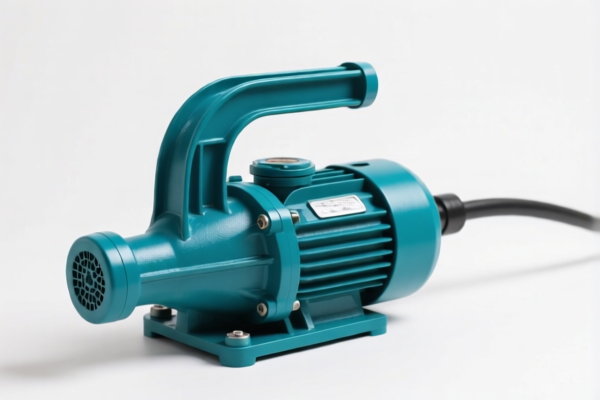
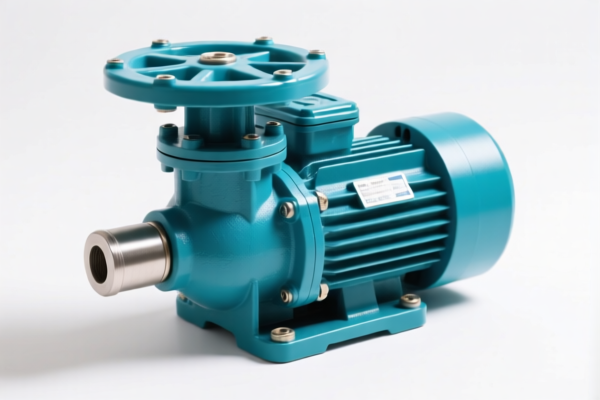
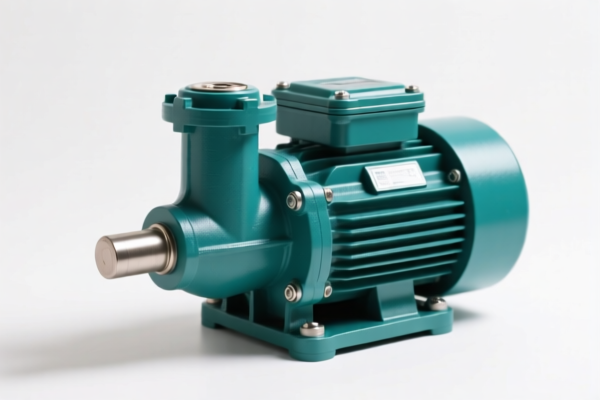
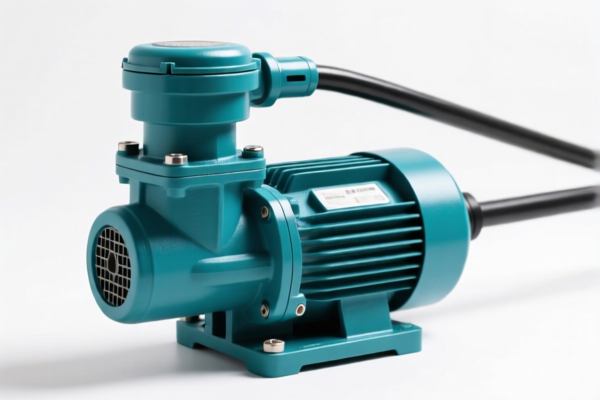
AI分析
🚿 Washing Pump (High-Pressure/Low-Pressure Liquid Pumps)
🌐 HS Code Reference & Clearance Guide | 2026 Latest Tariff Analysis | Professional Customs Strategy
📌 I. Product Definition: What Exactly Is a "Washing Pump"?
In international trade, "Washing Pump" is a generic term that usually refers to pumps used for cleaning applications (e.g., pressure washers, car wash systems, industrial cleaning). However, from a customs classification perspective, the specific mechanical structure determines the HS Code, not just the "washing" purpose.
There are two primary classification paths based on the pump type:
1. Centrifugal Pumps: Most common in high-pressure washers. They use a rotating impeller to increase liquid velocity.
2. Other Pumps (e.g., Reciprocating/Positive Displacement): Used in specific industrial cleaning setups or older pressure washer models.
⚠️ Critical Distinction:
- If the pump works by centrifugal force (impeller spinning) → Goes to 8413.70
- If the pump works by other mechanical means (piston, gear, lobe, etc.) → Goes to 8413.81
- Note: The "washing" application does not change the core pump classification unless it is a specific measuring device (which is rare for general washing pumps).
📦 II. HS Code Classification Details (2026 Authoritative对照)
Based on the provided data, here are the exact HS Codes and their descriptions:
| HS Code | Product Description | Key Characteristics | Typical Application |
|---|---|---|---|
8413.70.20.90 |
Other centrifugal pumps: Other Other: Other | Uses centrifugal force (impeller); not fitted with a measuring device; specific sub-category for "Other" centrifugal pumps. | Standard pressure washer pumps, industrial fluid transfer, circulating systems. |
8413.81.00.40 |
Other pumps; liquid elevators: Pumps Other | Non-centrifugal pumps (e.g., reciprocating, rotary, positive displacement); specific sub-category for "Other" pumps. | High-pressure cleaning units using piston/plunger mechanisms, specialized industrial cleaners. |
🔍 Key Insight:
- Both codes fall under Chapter 84 (Nuclear reactors, boilers, machinery and mechanical appliances).
- The primary differentiator is the pumping mechanism. Most modern "washing pumps" are centrifugal (8413.70), but if it’s a plunger pump, it may fall under8413.81.
- Always check the technical datasheet to confirm if it is "centrifugal" or "other."
💰 III. 2026 Latest Tariff Rate Breakdown (Detailed Tax Clauses)
✅ Applicable Country: United States (US)
✅ Origin: China (CN)
✅ Effective Time: Current rates apply (Subject to Section 301 & IEEPA measures)
🎯 1. 8413.70.20.90 – Centrifugal Pumps (Most Common for Washing)
| Item | Content |
|---|---|
| Base Tariff | 0.0% (ad valorem) |
| Additional Tariff (Section 301) | +25.0% |
| Total Tax Rate | 25.0% |
| Tax Calculation | CIF Value × 25% |
| De Minimis Exemption | ❌ Not Applicable (High value threshold not met for small parcels due to high tariff burden; typically excluded from 8042 exemption if valued over $800 but subject to 301) |
| Legal Basis Path | USITC:8413.70.20.90 → FOOTNOTE:301.8413.70.20.90 (25% surcharge) |
📌 Explanation:
- Base Rate 0%: Centrifugal pumps generally have low base tariffs in the US HTSUS.
- Section 301 Surcharge 25%: This is the critical cost driver. Pumps are often classified under subheadings that attract a 25% additional duty on Chinese goods.
- Total Impact: You pay 25% extra on top of the CIF value. This significantly affects profit margins for washing pump imports.
🎯 2. 8413.81.00.40 – Other Pumps (Non-Centrifugal)
| Item | Content |
|---|---|
| Base Tariff | 0.0% (ad valorem) |
| Additional Tariff (Section 301) | +25.0% |
| Total Tax Rate | 25.0% |
| Tax Calculation | CIF Value × 25% |
| De Minimis Exemption | ❌ Not Applicable |
| Legal Basis Path | USITC:8413.81.00.40 → FOOTNOTE:301.8413.81.00.40 (25% surcharge) |
📌 Explanation:
- Similar to centrifugal pumps, this "Other Pumps" category also faces a 25% additional duty under US Trade Law Section 301.
- No Base Tax: Like the centrifugal type, the base tariff is 0%, so the entire tax burden comes from the additional duty.
- Result: Same 25% total tax rate as the centrifugal pump.⚠️ Critical Note:
- Both8413.70.20.90and8413.81.00.40have the same total tax rate of 25%.
- However, misclassification can lead to penalties. If you declare a centrifugal pump as "other pump" to try to avoid scrutiny, it may trigger an audit.
- Plastic Packaging Items (e.g., hoses, nozzles) are NOT included in these pump codes. See below for separate classification.
📦 IV. What About Plastic Packing Articles? (HS 3923)
⚠️ Important: If your "Washing Pump" shipment includes plastic tanks, hoses, caps, or closures shipped separately or as accessories, they may fall under HS Code 3923.
| HS Code | Product Description | Base Tariff | Additional Tariff | Total Tax |
|---|---|---|---|---|
3923.90.00.80 |
Articles for conveyance/packing of goods, of plastics; other other | 3.0% | 25.0% | 28.0% |
3923.50.00.00 |
Stoppers, lids, caps and other closures, of plastics | 0.0% | 0.0% | 0.0% |
📌 Strategy:
- Caps/Lids/Closures (3923.50.00.00) have 0% total tax! If you can separate caps from the main pump and declare them separately, you can save on tax for these small items.
- Plastic Tanks/Containers (3923.90.00.80) are taxed at 28% (3% base + 25% additional). This is 3% higher than the pump tax (25%).
- Recommendation: Do not bundle plastic tanks with pumps unless necessary. Declare them separately to avoid overpaying if they are classified as "other articles."
🛠️ V. Customs Clearance Practical Advice (Avoid Pitfalls)
✅ 1. Preparation Checklist
| Document | Required? | Notes |
|---|---|---|
| ✅ Product Specifications | ✔️ | Must clearly state: "Centrifugal" or "Reciprocating/Positive Displacement" |
| ✅ Technical Drawings | ✔️ | Show impeller design or piston mechanism to prove pump type |
| ✅ Commercial Invoice | ✔️ | Clearly describe as "Centrifugal Washing Pump" or "Plunger Washing Pump" |
| ✅ HS Code Justification | ✔️ | Explain why it falls under 8413.70 vs 8413.81 |
| ✅ Original/CoC | ✔️ | If claiming any exemptions or verifying origin |
✅ 2. Declaration Tips (Golden Rules)
🔥 "Mechanism Determines Code, Not Purpose!"
| Scenario | Correct Declaration | Wrong Declaration | Consequence |
|---|---|---|---|
| Centrifugal Pump | 8413.70.20.90 |
8413.81.00.40 |
Risk of audit, potential misclassification penalty |
| Plunger Pump | 8413.81.00.40 |
8413.70.20.90 |
Risk of audit, potential misclassification penalty |
| Plastic Cap (Separate) | 3923.50.00.00 |
3923.90.00.80 |
Pay 28% instead of 0% for caps! |
| Plastic Tank (Separate) | 3923.90.00.80 |
Bundled with Pump | May be taxed at 28% instead of 25% |
✅ 3. Special Considerations
- Measuring Devices: If the pump has a flow meter attached, it might still be classified as a pump (
8413) if the meter is integral. However, if it’s a standalone measuring device, it could fall under 9028. Do not assume – check with a customs broker. - Complete Units: If the pump is part of a complete washing machine system, the entire system might be classified under a different code (e.g., 8422 for dishwashing machines). Ensure you are importing just the pump unit, not the whole machine.
- Origin Marking: All pumps must be clearly marked with "Made in China" to avoid seizure under Country of Origin laws.
🌍 VI. Global Market Comparison (2026)
| Country/Region | Recommended HS Code | Base Tariff | Additional Tariff | Total Tax | Notes |
|---|---|---|---|---|---|
| 🇺🇸 USA | 8413.70.20.90 / 8413.81.00.40 |
0% | 25% | 25% | Section 301 applies to Chinese origin |
| 🇨🇳 China | 8413.70 / 8413.81 |
~5-10% | 0% | 5-10% | Lower entry barrier for import |
| 🇪🇺 EU | 8413.70 / 8413.81 |
~2-4% | 0% | 2-4% | No Section 301 equivalent; EORI required |
| 🇦🇺 Australia | 8413.70 / 8413.81 |
5% | 0% | 5% | GSP may apply for some origins |
📌 Conclusion:
- USA is the highest-cost market due to the 25% additional tariff.
- EU and Australia are more favorable with only base tariffs.
- For US imports, cost optimization is critical. Consider if the pump is essential vs. if a non-Chinese origin alternative is viable for large volumes.
📌 VII. Common Errors & Pitfalls (Learn from Others' Mistakes)
❌ Error 1: Declaring a centrifugal pump as "liquid elevator" or generic "pump" without specifying type.
👉 Result: Customs may reclassify and assess penalties, or delay shipment for clarification.
❌ Error 2: Bundling plastic caps with the pump and declaring everything under one HS Code.
👉 Result: You pay 25% on the caps instead of 0%. Separate the caps!
❌ Error 3: Importing complete washing machines but declaring only the pump.
👉 Result: Major violation. The machine is a different product. Misdeclaration leads to seizures and fines.
❌ Error 4: Ignoring Section 301 impact.
👉 Result: Underestimating landed cost. A $10,000 pump shipment costs $2,500 extra in US duties.
✅ Correct Approach:
"Centrifugal Water Pump, Model XYZ, 1000W, For Commercial Washing Use, Without Measuring Device"
HS Code:8413.70.20.90
Tax: 25%
🎯 VIII. Conclusion: Precision Saves Money!
🎯 Key Takeaway:
🔹 "Centrifugal = 8413.70.20.90 (25%)"
🔹 "Other Pump = 8413.81.00.40 (25%)"
🔹 "Plastic Caps = 3923.50.00.00 (0%)"
🔹 "Plastic Tanks = 3923.90.00.80 (28%)"📌 Pro Tip:
If you are importing large volumes of washing pumps to the US, consider:
1. Supplier Diversification: Source from Vietnam/Mexico to avoid 301 tariffs.
2. Component Separation: Declare caps and closures separately to save on their small value.
3. Pre-Ruling: Request a US Customs Ruling before shipping to confirm the exact HS Code for your specific model.
📣 Immediate Action:
📞 Contact your freight forwarder with the pump’s technical datasheet.
📄 Request an HS Code confirmation for both centrifugal and non-centrifugal options.
💰 Calculate Landed Cost including the 25% US tariff + freight + insurance.
✨ Smart Customs, Smarter Profits!
💼 Every percentage point matters in global trade!
用户评价
关于 HS 编码归类
协调制度(HS)是由世界海关组织(WCO)制定的国际贸易商品分类标准。全球 200 多个国家采用 HS 系统作为海关关税、贸易统计和进出口监管的基础。
每个 HS 编码遵循以下层级结构:
- 章(2 位)——商品大类(例如:第 84 章:机器和机械设备)
- 品目(4 位)——章内的更具体分类
- 子目(6 位)——国际通用细分,所有 WCO 成员国统一使用
- 本国细分(8-10 位)——各国自行扩展的细分编码,如美国 HTSUS 10 位编码
正确的 HS 编码归类对于顺利通关、准确缴纳关税和遵守贸易法规至关重要。错误归类可能导致海关延误、多缴关税或罚款。
从CN进口到US时,适用的关税税率可能包括:
- 最惠国(MFN)税率——适用于 WTO 成员国的标准关税税率
- 普通税率——适用于无贸易协定国家
- 贸易救济关税——附加关税,如 301 条款(反倾销)、232 条款(国家安全)或反补贴税
本页内容仅供参考。如需正式归类,请咨询当地海关或持牌报关代理。