washing pump
CN → US| HS Code | Tariff Rate | Origin | Destination | Doc |
|---|---|---|---|---|
| 8413702090 | 35.0% | CN | US | Official Doc |
| 8413810040 | 35.0% | CN | US | Official Doc |
| 3923900080 | 38.0% | CN | US | Official Doc |
| 3923500000 | 40.3% | CN | US | Official Doc |
Product Images
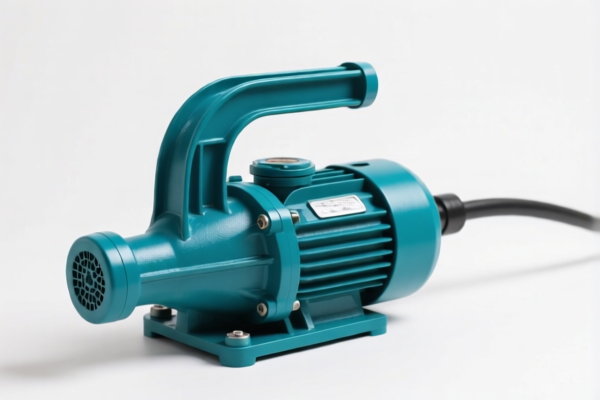
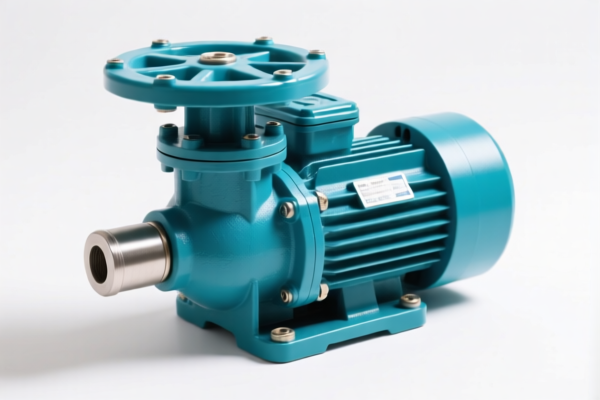
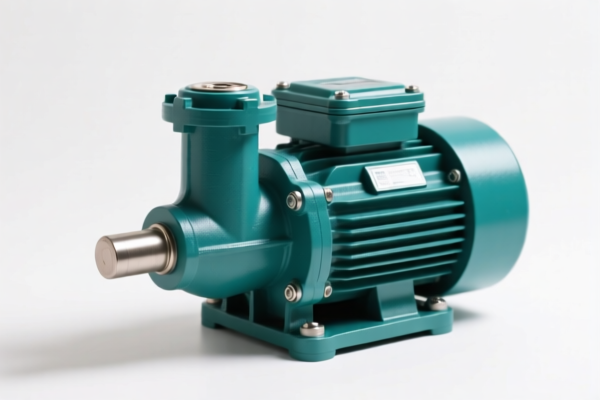
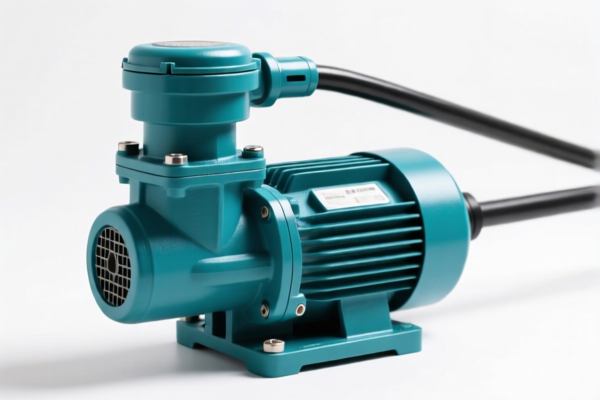
AI Analysis
🚿 Washing Pump (High-Pressure/Low-Pressure Liquid Pumps)
🌐 HS Code Reference & Clearance Guide | 2026 Latest Tariff Analysis | Professional Customs Strategy
📌 I. Product Definition: What Exactly Is a "Washing Pump"?
In international trade, "Washing Pump" is a generic term that usually refers to pumps used for cleaning applications (e.g., pressure washers, car wash systems, industrial cleaning). However, from a customs classification perspective, the specific mechanical structure determines the HS Code, not just the "washing" purpose.
There are two primary classification paths based on the pump type:
1. Centrifugal Pumps: Most common in high-pressure washers. They use a rotating impeller to increase liquid velocity.
2. Other Pumps (e.g., Reciprocating/Positive Displacement): Used in specific industrial cleaning setups or older pressure washer models.
⚠️ Critical Distinction:
- If the pump works by centrifugal force (impeller spinning) → Goes to 8413.70
- If the pump works by other mechanical means (piston, gear, lobe, etc.) → Goes to 8413.81
- Note: The "washing" application does not change the core pump classification unless it is a specific measuring device (which is rare for general washing pumps).
📦 II. HS Code Classification Details (2026 Authoritative对照)
Based on the provided data, here are the exact HS Codes and their descriptions:
| HS Code | Product Description | Key Characteristics | Typical Application |
|---|---|---|---|
8413.70.20.90 |
Other centrifugal pumps: Other Other: Other | Uses centrifugal force (impeller); not fitted with a measuring device; specific sub-category for "Other" centrifugal pumps. | Standard pressure washer pumps, industrial fluid transfer, circulating systems. |
8413.81.00.40 |
Other pumps; liquid elevators: Pumps Other | Non-centrifugal pumps (e.g., reciprocating, rotary, positive displacement); specific sub-category for "Other" pumps. | High-pressure cleaning units using piston/plunger mechanisms, specialized industrial cleaners. |
🔍 Key Insight:
- Both codes fall under Chapter 84 (Nuclear reactors, boilers, machinery and mechanical appliances).
- The primary differentiator is the pumping mechanism. Most modern "washing pumps" are centrifugal (8413.70), but if it’s a plunger pump, it may fall under8413.81.
- Always check the technical datasheet to confirm if it is "centrifugal" or "other."
💰 III. 2026 Latest Tariff Rate Breakdown (Detailed Tax Clauses)
✅ Applicable Country: United States (US)
✅ Origin: China (CN)
✅ Effective Time: Current rates apply (Subject to Section 301 & IEEPA measures)
🎯 1. 8413.70.20.90 – Centrifugal Pumps (Most Common for Washing)
| Item | Content |
|---|---|
| Base Tariff | 0.0% (ad valorem) |
| Additional Tariff (Section 301) | +25.0% |
| Total Tax Rate | 25.0% |
| Tax Calculation | CIF Value × 25% |
| De Minimis Exemption | ❌ Not Applicable (High value threshold not met for small parcels due to high tariff burden; typically excluded from 8042 exemption if valued over $800 but subject to 301) |
| Legal Basis Path | USITC:8413.70.20.90 → FOOTNOTE:301.8413.70.20.90 (25% surcharge) |
📌 Explanation:
- Base Rate 0%: Centrifugal pumps generally have low base tariffs in the US HTSUS.
- Section 301 Surcharge 25%: This is the critical cost driver. Pumps are often classified under subheadings that attract a 25% additional duty on Chinese goods.
- Total Impact: You pay 25% extra on top of the CIF value. This significantly affects profit margins for washing pump imports.
🎯 2. 8413.81.00.40 – Other Pumps (Non-Centrifugal)
| Item | Content |
|---|---|
| Base Tariff | 0.0% (ad valorem) |
| Additional Tariff (Section 301) | +25.0% |
| Total Tax Rate | 25.0% |
| Tax Calculation | CIF Value × 25% |
| De Minimis Exemption | ❌ Not Applicable |
| Legal Basis Path | USITC:8413.81.00.40 → FOOTNOTE:301.8413.81.00.40 (25% surcharge) |
📌 Explanation:
- Similar to centrifugal pumps, this "Other Pumps" category also faces a 25% additional duty under US Trade Law Section 301.
- No Base Tax: Like the centrifugal type, the base tariff is 0%, so the entire tax burden comes from the additional duty.
- Result: Same 25% total tax rate as the centrifugal pump.⚠️ Critical Note:
- Both8413.70.20.90and8413.81.00.40have the same total tax rate of 25%.
- However, misclassification can lead to penalties. If you declare a centrifugal pump as "other pump" to try to avoid scrutiny, it may trigger an audit.
- Plastic Packaging Items (e.g., hoses, nozzles) are NOT included in these pump codes. See below for separate classification.
📦 IV. What About Plastic Packing Articles? (HS 3923)
⚠️ Important: If your "Washing Pump" shipment includes plastic tanks, hoses, caps, or closures shipped separately or as accessories, they may fall under HS Code 3923.
| HS Code | Product Description | Base Tariff | Additional Tariff | Total Tax |
|---|---|---|---|---|
3923.90.00.80 |
Articles for conveyance/packing of goods, of plastics; other other | 3.0% | 25.0% | 28.0% |
3923.50.00.00 |
Stoppers, lids, caps and other closures, of plastics | 0.0% | 0.0% | 0.0% |
📌 Strategy:
- Caps/Lids/Closures (3923.50.00.00) have 0% total tax! If you can separate caps from the main pump and declare them separately, you can save on tax for these small items.
- Plastic Tanks/Containers (3923.90.00.80) are taxed at 28% (3% base + 25% additional). This is 3% higher than the pump tax (25%).
- Recommendation: Do not bundle plastic tanks with pumps unless necessary. Declare them separately to avoid overpaying if they are classified as "other articles."
🛠️ V. Customs Clearance Practical Advice (Avoid Pitfalls)
✅ 1. Preparation Checklist
| Document | Required? | Notes |
|---|---|---|
| ✅ Product Specifications | ✔️ | Must clearly state: "Centrifugal" or "Reciprocating/Positive Displacement" |
| ✅ Technical Drawings | ✔️ | Show impeller design or piston mechanism to prove pump type |
| ✅ Commercial Invoice | ✔️ | Clearly describe as "Centrifugal Washing Pump" or "Plunger Washing Pump" |
| ✅ HS Code Justification | ✔️ | Explain why it falls under 8413.70 vs 8413.81 |
| ✅ Original/CoC | ✔️ | If claiming any exemptions or verifying origin |
✅ 2. Declaration Tips (Golden Rules)
🔥 "Mechanism Determines Code, Not Purpose!"
| Scenario | Correct Declaration | Wrong Declaration | Consequence |
|---|---|---|---|
| Centrifugal Pump | 8413.70.20.90 |
8413.81.00.40 |
Risk of audit, potential misclassification penalty |
| Plunger Pump | 8413.81.00.40 |
8413.70.20.90 |
Risk of audit, potential misclassification penalty |
| Plastic Cap (Separate) | 3923.50.00.00 |
3923.90.00.80 |
Pay 28% instead of 0% for caps! |
| Plastic Tank (Separate) | 3923.90.00.80 |
Bundled with Pump | May be taxed at 28% instead of 25% |
✅ 3. Special Considerations
- Measuring Devices: If the pump has a flow meter attached, it might still be classified as a pump (
8413) if the meter is integral. However, if it’s a standalone measuring device, it could fall under 9028. Do not assume – check with a customs broker. - Complete Units: If the pump is part of a complete washing machine system, the entire system might be classified under a different code (e.g., 8422 for dishwashing machines). Ensure you are importing just the pump unit, not the whole machine.
- Origin Marking: All pumps must be clearly marked with "Made in China" to avoid seizure under Country of Origin laws.
🌍 VI. Global Market Comparison (2026)
| Country/Region | Recommended HS Code | Base Tariff | Additional Tariff | Total Tax | Notes |
|---|---|---|---|---|---|
| 🇺🇸 USA | 8413.70.20.90 / 8413.81.00.40 |
0% | 25% | 25% | Section 301 applies to Chinese origin |
| 🇨🇳 China | 8413.70 / 8413.81 |
~5-10% | 0% | 5-10% | Lower entry barrier for import |
| 🇪🇺 EU | 8413.70 / 8413.81 |
~2-4% | 0% | 2-4% | No Section 301 equivalent; EORI required |
| 🇦🇺 Australia | 8413.70 / 8413.81 |
5% | 0% | 5% | GSP may apply for some origins |
📌 Conclusion:
- USA is the highest-cost market due to the 25% additional tariff.
- EU and Australia are more favorable with only base tariffs.
- For US imports, cost optimization is critical. Consider if the pump is essential vs. if a non-Chinese origin alternative is viable for large volumes.
📌 VII. Common Errors & Pitfalls (Learn from Others' Mistakes)
❌ Error 1: Declaring a centrifugal pump as "liquid elevator" or generic "pump" without specifying type.
👉 Result: Customs may reclassify and assess penalties, or delay shipment for clarification.
❌ Error 2: Bundling plastic caps with the pump and declaring everything under one HS Code.
👉 Result: You pay 25% on the caps instead of 0%. Separate the caps!
❌ Error 3: Importing complete washing machines but declaring only the pump.
👉 Result: Major violation. The machine is a different product. Misdeclaration leads to seizures and fines.
❌ Error 4: Ignoring Section 301 impact.
👉 Result: Underestimating landed cost. A $10,000 pump shipment costs $2,500 extra in US duties.
✅ Correct Approach:
"Centrifugal Water Pump, Model XYZ, 1000W, For Commercial Washing Use, Without Measuring Device"
HS Code:8413.70.20.90
Tax: 25%
🎯 VIII. Conclusion: Precision Saves Money!
🎯 Key Takeaway:
🔹 "Centrifugal = 8413.70.20.90 (25%)"
🔹 "Other Pump = 8413.81.00.40 (25%)"
🔹 "Plastic Caps = 3923.50.00.00 (0%)"
🔹 "Plastic Tanks = 3923.90.00.80 (28%)"📌 Pro Tip:
If you are importing large volumes of washing pumps to the US, consider:
1. Supplier Diversification: Source from Vietnam/Mexico to avoid 301 tariffs.
2. Component Separation: Declare caps and closures separately to save on their small value.
3. Pre-Ruling: Request a US Customs Ruling before shipping to confirm the exact HS Code for your specific model.
📣 Immediate Action:
📞 Contact your freight forwarder with the pump’s technical datasheet.
📄 Request an HS Code confirmation for both centrifugal and non-centrifugal options.
💰 Calculate Landed Cost including the 25% US tariff + freight + insurance.
✨ Smart Customs, Smarter Profits!
💼 Every percentage point matters in global trade!
Customer Reviews
About HS Code Classification
The Harmonized System (HS) is an internationally standardized nomenclature developed by the World Customs Organization (WCO) to classify traded products. Over 200 countries use the HS system as the basis for customs tariffs, trade statistics, and import/export regulations.
Each HS code follows a hierarchical structure:
- Chapter (2 digits) — Broad category of goods (e.g., Chapter 84: Machinery and Mechanical Appliances)
- Heading (4 digits) — More specific grouping within the chapter
- Subheading (6 digits) — Internationally standardized breakdown, used by all WCO member countries
- National subdivisions (8-10 digits) — Country-specific extensions for further classification, such as US HTSUS 10-digit codes
Correct HS code classification is essential for smooth customs clearance, accurate duty payment, and compliance with trade regulations. Misclassification can lead to customs delays, overpayment of duties, or penalties.
When importing from CN to US, the applicable tariff rates may include:
- Most-Favored-Nation (MFN) rate — The standard duty rate applied to WTO members
- General rate — Applied to countries without trade agreements
- Trade remedy duties — Additional tariffs such as Section 301 (anti-dumping), Section 232 (national security), or countervailing duties
The information provided on this page is for reference purposes only. For official classification, please consult with your local customs authority or a licensed customs broker.