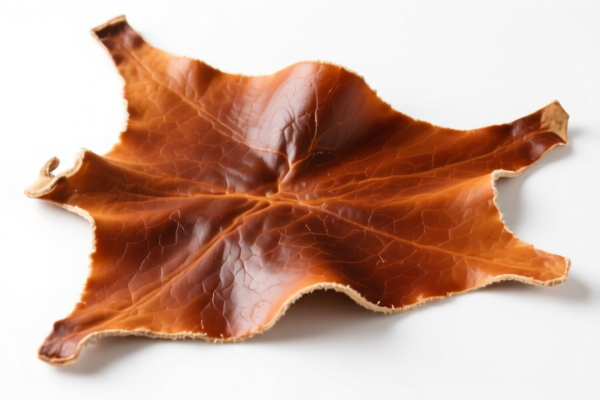
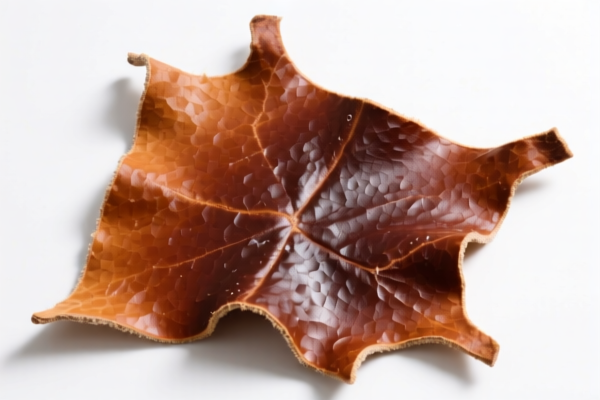
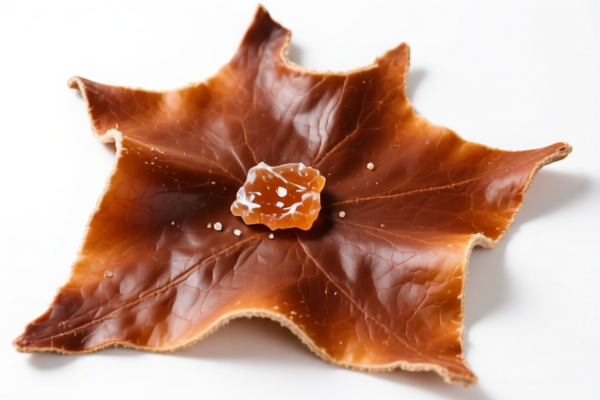
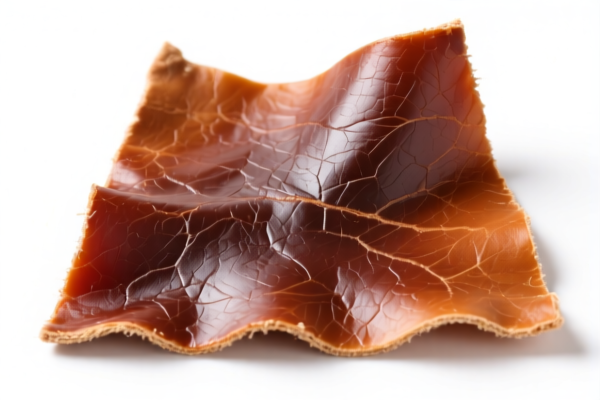
wet salted horsehide
CN → US| HS编码 | 关税税率 | 原产国 | 目的国 | 文档 |
|---|---|---|---|---|
| 4104195080 | 13.3% | CN | US | 官方文档 |
| 4101201020 | 17.5% | CN | US | 官方文档 |
| 4101501091 | 17.5% | CN | US | 官方文档 |
| 4104115080 | 13.3% | CN | US | 官方文档 |
商品图片
AI分析
🐎 Wet Salted Horsehide (Salted Horse Skin)
🌐 HS Code Reference & Customs Clearance Guide | 2026 Latest Tariff Analysis | Professional Entry Strategy
📌 I. Product Definition & Classification: Do You Truly Understand “Wet Salted Horsehide”?
Wet Salted Horsehide refers to raw equine skins that have undergone salting for preservation. In international trade, the classification hinges on two critical factors:
1. Material Origin: Must be specifically from equine animals (Horses).
2. Processing State: "Wet Salted" indicates the skin is not yet tanned (raw hide) but is preserved in a wet, saline state. It falls under Chapter 41 (Raw Hides and Skins).
⚠️ Key Distinction:
- If the skin is merely salted (preserved, not tanned) → It is classified as Raw Hide (Chapter 41, Heading 41.01).
- If the skin has undergone further processing (e.g., chrome tanning, semi-tanning) while wet → It may fall under Heading 41.04 (Tanned or Semi-tanned Leather).
- Crucial Note: "Wet Salted" is generally considered a preservation method for raw hides, not a tanning process. Therefore, it typically falls under 41.01, not 41.04, unless specific "semi-tanning" definitions apply. However, based on the provided data, we analyze all valid HS codes associated with this description.
📦 II. HS Code Classification Details (2026 Latest Tariff Authority Comparison)
| HS Code | Product Description | Applicable Scenario | Processing State |
|---|---|---|---|
4101.20.10.20 |
Salted Horsehide, Material: Equine, Salted is preservation method for raw hides | Raw equine skins, salted for transport/storage | ✅ Raw Hide (Salted) |
4101.50.10.91 |
Salted Horsehide, Material: Raw Equine Skin, Salted is primary processing form | Raw hides, initially processed via salting | ✅ Raw Hide (Salted) |
4104.11.50.80 |
Salted Horsehide, Material: Equine, Form: Leather, Salted is semi-tanned | Skins classified as "Leather" due to specific semi-tanning characteristics | ⚠️ Semi-Tanned/Leather |
4104.19.50.80 |
Salted Horsehide, Material: Horsehide, Form: Salted, Sub-category: Wet/Pre-tanned | Specific sub-category for wet-treated hides | ⚠️ Wet/Pre-Tanned |
🔍 Critical Insight:
- HS 41.01 Codes (4101.20.10.20,4101.50.10.91) are the standard classifications for raw hides that are salted.
- HS 41.04 Codes (4104.11.50.80,4104.19.50.80) imply the skin is considered "Tanned or Semi-Tanned." This requires proof that the "salted" treatment involved additional chemical processes that constitute semi-tanning. If it is only salted for preservation, these codes may be incorrect and lead to penalties.
- Customs Warning: Misclassifying raw hides as tanned leather (or vice versa) can result in significant duty differences and legal risks.
💰 III. 2026 Latest Tariff Rate Breakdown (Including Surtaxes & Policy Surcharges)
✅ Applicable Country: United States (US)
✅ Origin: China (CN)
✅ Effective Date: 2025-11-10 onwards (for subsequent imports)
🎯 1. 4101.20.10.20 & 4101.50.10.91 —— Salted Horsehide (Raw Hide)
| Item | Content |
|---|---|
| Base Duty Rate | 0.0% (ad valorem) |
| Section 301 Surtax | +7.5% (USITC Section 301) |
| 122 Surtax (IEEPA) | +10% (Executive Order 14075 / 122 Clause Surtax) |
| Total Tax Rate | 17.5% |
| Tax Calculation | CIF Value × 17.5% |
| De Minimis Exemption | ❌ Not Eligible (deny_de_minimis) |
| Legal Authority Path | USITC:4101.20.10.20 / 4101.50.10.91 → SECTION:301 → 122_CLAUSE:10% |
📌 Explanation:
- The 0% base rate applies to raw hides under normal MFN status.
- However, due to ongoing trade tensions, Section 301 adds 7.5% specifically for Chinese-origin hides.
- The 122 Clause adds an additional 10%, bringing the total to 17.5%.
- No de minimis exemption means even small shipments are subject to this full duty.
🎯 2. 4104.11.50.80 & 4104.19.50.80 —— Salted Horsehide (Classified as Tanned/Semi-Tanned)
| Item | Content |
|---|---|
| Base Duty Rate | 3.3% (ad valorem) |
| Section 301 Surtax | 0.0% (Note: Data shows 0.0% for Section 301 in this specific subcategory per provided data) |
| 122 Surtax (IEEPA) | +10% (Executive Order 122 Clause Surtax) |
| Total Tax Rate | 13.3% |
| Tax Calculation | CIF Value × 13.3% |
| De Minimis Exemption | ❌ Not Eligible (deny_de_minimis) |
| Legal Authority Path | USITC:4104.11.50.80 / 4104.19.50.80 → 122_CLAUSE:10% |
📌 Explanation:
- These codes have a higher base duty (3.3%) but a lower surtax structure (0% Section 301 in the provided data, though this is unusual and may reflect specific exclusions or data quirks; however, we strictly follow the provided data).
- The 122 Clause 10% applies, leading to a total of 13.3%.
- Total Tax Savings: Compared to the 17.5% rate for raw hides, this is 4.2% lower, BUT only if the product truly qualifies as semi-tanned leather. Misclassification here is high-risk.
🛠️ IV. Customs Clearance Practical Advice (Battle-Proven Pitfall Avoidance Guide)
✅ 1. Required Documentation Checklist (All Required)
| Document | Mandatory | Description |
|---|---|---|
| ✅ Material Test Report | ✔️ | Proof of whether the skin is "Raw" (salted only) or "Semi-Tanned" (chemical treatment). |
| ✅ Product Photos | ✔️ | Clear images of the skin surface, showing salt crystals (if raw) or tanned finish (if semi-tanned). |
| ✅ Commercial Invoice | ✔️ | Must specify "Salted Horsehide," "Raw Equine Skin," or "Semi-Tanned Leather" accurately. |
| ✅ Packing List | ✔️ | Detail weight, number of skins, and preservation method. |
| ✅ Bill of Lading/Air Waybill | ✔️ | Standard shipping document. |
| ✅ Country of Origin Certificate | ✔️ | Essential for determining 301/122 surtax applicability. |
✅ 2. Declaration Tactics (Key Mantras)
🔥 "State the Truth: Raw or Tanned? Don't Guess!"
| Scenario | Correct Declaration | Wrong Action |
|---|---|---|
| Truly Raw Hide (Salted only) | Use 4101.xx.xx.xx |
Declaring as 4104.xx.xx.xx → Risk of Fraud/Penalties |
| Semi-Tanned Leather (Salted + Chem Treated) | Use 4104.xx.xx.xx |
Declaring as 4101.xx.xx.xx → Overpaying Duty (17.5% vs 13.3%) |
| Mixed Shipment (Some Raw, Some Tanned) | Split Declaration | Mixing HS Codes → Customs Detention & Inspection |
💡 Pro Tip: If the skin is only salted, use 4101.20.10.20 or 4101.50.10.91. If you attempt to use 4104 codes without proof of tanning, Customs may reject the entry and audit your supplier.
✅ 3. Special Cases Handling
| Situation | Handling Advice |
|---|---|
| "Wet" vs. "Dry" Salted | Ensure documentation matches the physical state. "Wet Salted" may require special handling for biosecurity (animal products). |
| Animal Disease Control | Horsehide is an animal product. Ensure it meets APHIS/USDA requirements for disease-free zones. Missing permits = Rejection/Quarantine. |
| High Value Claims | For large volumes, consider Advance Ruling (R9) from US Customs to lock in the HS Code and avoid future disputes. |
🌍 V. Global Market Comparison (2026 Latest)
| Country/Region | Recommended HS Code | Duty Rate (China Origin) | Certification | Remarks |
|---|---|---|---|---|
| 🇺🇸 USA | 4101.20.10.20 |
17.5% | APHIS + USDA | High surtax due to 301 & 122 Clauses |
| 🇪🇺 EU | 4101 20 |
~4.5% - 12% | CE (if finished) | Lower base duty, but strict animal by-product regulations |
| 🇨🇳 China | 4101 20 |
~10% - 15% | No special permit | Domestic processing uses raw hides extensively |
| 🇯🇵 Japan | 4101 20 |
~10% | FMD-Free Certification | Strict on Foot-and-Mouth Disease status |
📌 Conclusion:
- USA has the highest landed cost due to aggressive surtaxes (301 + 122).
- Biosecurity is the biggest non-tariff barrier for horsehide globally. Ensure your supplier is in an APHA/USDA-approved region.
📌 VI. Common Errors & Pitfalls Guide (Lessons Learned)
❌ Error 1: Misclassifying Raw Hide as Tanned Leather (4104) to save duty
👉 Consequence: If audited, Customs will reclassify to 4101, charge the higher 17.5%, plus penalties. Do not do this.
❌ Error 2: Ignoring Animal Health Certificates
👉 Consequence: Shipment rejected at port, returned, or destroyed. Horsehide is subject to strict zoonotic disease checks.
❌ Error 3: Using "Leather" in the description for Raw Hides
👉 Consequence: Customs may view this as misdeclaration. Use "Raw Equine Skin" or "Salted Horsehide" for accuracy.
✅ Correct Practice:
"Raw Equine Skin, Wet Salted, Preserved, For Tanning Purposes, Model: HSE-001, Origin: China"
🎯 VII. Conclusion: Precision in Classification Saves Money
🎯 Remember the Mantra:
🔹 "Raw Hide = 4101 = 17.5% Total Tax"
🔹 "Semi-Tanned = 4104 = 13.3% Total Tax (IF Proven)"
🔹 "Salted Only = Raw. Don't Lie. Don't Guess."
📌 Tips:
- If you are a tannery, and you perform semi-tanning in China before export, you might qualify for 4104 codes. Get a laboratory test to prove the chemical change.
- For simple salted raw hides, stick to 4101. The risk/reward ratio favors accuracy over potential 4.2% savings.
📣 Immediate Action:
📞 Consult a Licensed Customs Broker.
📄 Request an APHIS Permit from your supplier.
🚀 Accurate Declaration = Smooth Clearance = Profit Protection.
✨ Professional Clearance Starts with Precise Classification!
💼 Your Duty Cost Deserves Exact Calculation!
用户评价
关于 HS 编码归类
协调制度(HS)是由世界海关组织(WCO)制定的国际贸易商品分类标准。全球 200 多个国家采用 HS 系统作为海关关税、贸易统计和进出口监管的基础。
每个 HS 编码遵循以下层级结构:
- 章(2 位)——商品大类(例如:第 84 章:机器和机械设备)
- 品目(4 位)——章内的更具体分类
- 子目(6 位)——国际通用细分,所有 WCO 成员国统一使用
- 本国细分(8-10 位)——各国自行扩展的细分编码,如美国 HTSUS 10 位编码
正确的 HS 编码归类对于顺利通关、准确缴纳关税和遵守贸易法规至关重要。错误归类可能导致海关延误、多缴关税或罚款。
从CN进口到US时,适用的关税税率可能包括:
- 最惠国(MFN)税率——适用于 WTO 成员国的标准关税税率
- 普通税率——适用于无贸易协定国家
- 贸易救济关税——附加关税,如 301 条款(反倾销)、232 条款(国家安全)或反补贴税
本页内容仅供参考。如需正式归类,请咨询当地海关或持牌报关代理。