wet salted horsehide
CN → US| HS Code | Tariff Rate | Origin | Destination | Doc |
|---|---|---|---|---|
| 4104195080 | 13.3% | CN | US | Official Doc |
| 4101201020 | 17.5% | CN | US | Official Doc |
| 4101501091 | 17.5% | CN | US | Official Doc |
| 4104115080 | 13.3% | CN | US | Official Doc |
Product Images
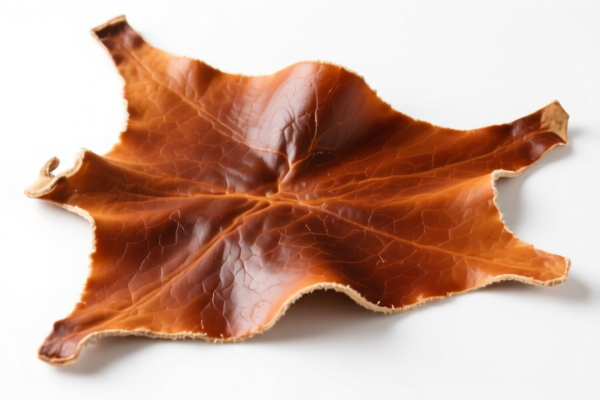
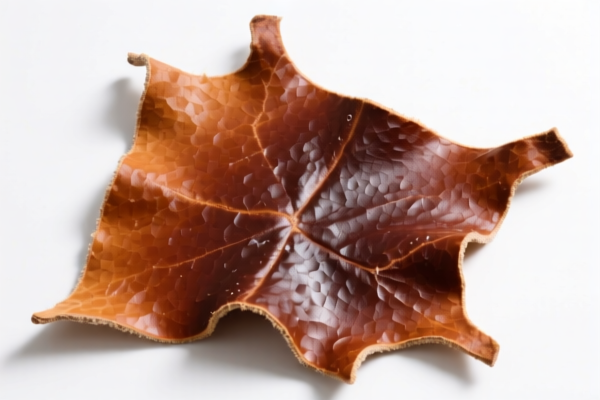
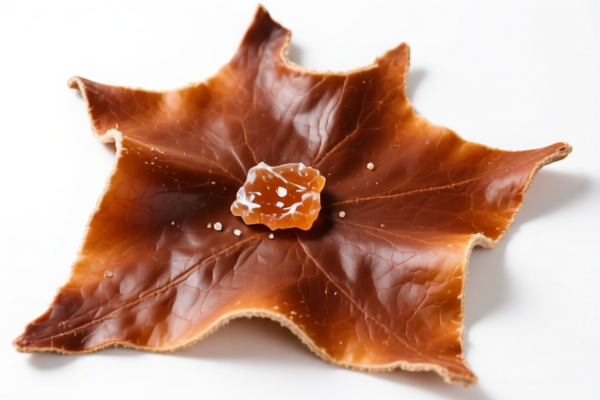
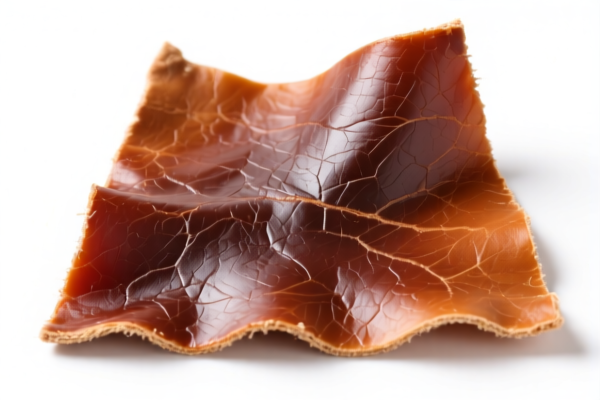
AI Analysis
🐎 Wet Salted Horsehide (Salted Horse Skin)
🌐 HS Code Reference & Customs Clearance Guide | 2026 Latest Tariff Analysis | Professional Entry Strategy
📌 I. Product Definition & Classification: Do You Truly Understand “Wet Salted Horsehide”?
Wet Salted Horsehide refers to raw equine skins that have undergone salting for preservation. In international trade, the classification hinges on two critical factors:
1. Material Origin: Must be specifically from equine animals (Horses).
2. Processing State: "Wet Salted" indicates the skin is not yet tanned (raw hide) but is preserved in a wet, saline state. It falls under Chapter 41 (Raw Hides and Skins).
⚠️ Key Distinction:
- If the skin is merely salted (preserved, not tanned) → It is classified as Raw Hide (Chapter 41, Heading 41.01).
- If the skin has undergone further processing (e.g., chrome tanning, semi-tanning) while wet → It may fall under Heading 41.04 (Tanned or Semi-tanned Leather).
- Crucial Note: "Wet Salted" is generally considered a preservation method for raw hides, not a tanning process. Therefore, it typically falls under 41.01, not 41.04, unless specific "semi-tanning" definitions apply. However, based on the provided data, we analyze all valid HS codes associated with this description.
📦 II. HS Code Classification Details (2026 Latest Tariff Authority Comparison)
| HS Code | Product Description | Applicable Scenario | Processing State |
|---|---|---|---|
4101.20.10.20 |
Salted Horsehide, Material: Equine, Salted is preservation method for raw hides | Raw equine skins, salted for transport/storage | ✅ Raw Hide (Salted) |
4101.50.10.91 |
Salted Horsehide, Material: Raw Equine Skin, Salted is primary processing form | Raw hides, initially processed via salting | ✅ Raw Hide (Salted) |
4104.11.50.80 |
Salted Horsehide, Material: Equine, Form: Leather, Salted is semi-tanned | Skins classified as "Leather" due to specific semi-tanning characteristics | ⚠️ Semi-Tanned/Leather |
4104.19.50.80 |
Salted Horsehide, Material: Horsehide, Form: Salted, Sub-category: Wet/Pre-tanned | Specific sub-category for wet-treated hides | ⚠️ Wet/Pre-Tanned |
🔍 Critical Insight:
- HS 41.01 Codes (4101.20.10.20,4101.50.10.91) are the standard classifications for raw hides that are salted.
- HS 41.04 Codes (4104.11.50.80,4104.19.50.80) imply the skin is considered "Tanned or Semi-Tanned." This requires proof that the "salted" treatment involved additional chemical processes that constitute semi-tanning. If it is only salted for preservation, these codes may be incorrect and lead to penalties.
- Customs Warning: Misclassifying raw hides as tanned leather (or vice versa) can result in significant duty differences and legal risks.
💰 III. 2026 Latest Tariff Rate Breakdown (Including Surtaxes & Policy Surcharges)
✅ Applicable Country: United States (US)
✅ Origin: China (CN)
✅ Effective Date: 2025-11-10 onwards (for subsequent imports)
🎯 1. 4101.20.10.20 & 4101.50.10.91 —— Salted Horsehide (Raw Hide)
| Item | Content |
|---|---|
| Base Duty Rate | 0.0% (ad valorem) |
| Section 301 Surtax | +7.5% (USITC Section 301) |
| 122 Surtax (IEEPA) | +10% (Executive Order 14075 / 122 Clause Surtax) |
| Total Tax Rate | 17.5% |
| Tax Calculation | CIF Value × 17.5% |
| De Minimis Exemption | ❌ Not Eligible (deny_de_minimis) |
| Legal Authority Path | USITC:4101.20.10.20 / 4101.50.10.91 → SECTION:301 → 122_CLAUSE:10% |
📌 Explanation:
- The 0% base rate applies to raw hides under normal MFN status.
- However, due to ongoing trade tensions, Section 301 adds 7.5% specifically for Chinese-origin hides.
- The 122 Clause adds an additional 10%, bringing the total to 17.5%.
- No de minimis exemption means even small shipments are subject to this full duty.
🎯 2. 4104.11.50.80 & 4104.19.50.80 —— Salted Horsehide (Classified as Tanned/Semi-Tanned)
| Item | Content |
|---|---|
| Base Duty Rate | 3.3% (ad valorem) |
| Section 301 Surtax | 0.0% (Note: Data shows 0.0% for Section 301 in this specific subcategory per provided data) |
| 122 Surtax (IEEPA) | +10% (Executive Order 122 Clause Surtax) |
| Total Tax Rate | 13.3% |
| Tax Calculation | CIF Value × 13.3% |
| De Minimis Exemption | ❌ Not Eligible (deny_de_minimis) |
| Legal Authority Path | USITC:4104.11.50.80 / 4104.19.50.80 → 122_CLAUSE:10% |
📌 Explanation:
- These codes have a higher base duty (3.3%) but a lower surtax structure (0% Section 301 in the provided data, though this is unusual and may reflect specific exclusions or data quirks; however, we strictly follow the provided data).
- The 122 Clause 10% applies, leading to a total of 13.3%.
- Total Tax Savings: Compared to the 17.5% rate for raw hides, this is 4.2% lower, BUT only if the product truly qualifies as semi-tanned leather. Misclassification here is high-risk.
🛠️ IV. Customs Clearance Practical Advice (Battle-Proven Pitfall Avoidance Guide)
✅ 1. Required Documentation Checklist (All Required)
| Document | Mandatory | Description |
|---|---|---|
| ✅ Material Test Report | ✔️ | Proof of whether the skin is "Raw" (salted only) or "Semi-Tanned" (chemical treatment). |
| ✅ Product Photos | ✔️ | Clear images of the skin surface, showing salt crystals (if raw) or tanned finish (if semi-tanned). |
| ✅ Commercial Invoice | ✔️ | Must specify "Salted Horsehide," "Raw Equine Skin," or "Semi-Tanned Leather" accurately. |
| ✅ Packing List | ✔️ | Detail weight, number of skins, and preservation method. |
| ✅ Bill of Lading/Air Waybill | ✔️ | Standard shipping document. |
| ✅ Country of Origin Certificate | ✔️ | Essential for determining 301/122 surtax applicability. |
✅ 2. Declaration Tactics (Key Mantras)
🔥 "State the Truth: Raw or Tanned? Don't Guess!"
| Scenario | Correct Declaration | Wrong Action |
|---|---|---|
| Truly Raw Hide (Salted only) | Use 4101.xx.xx.xx |
Declaring as 4104.xx.xx.xx → Risk of Fraud/Penalties |
| Semi-Tanned Leather (Salted + Chem Treated) | Use 4104.xx.xx.xx |
Declaring as 4101.xx.xx.xx → Overpaying Duty (17.5% vs 13.3%) |
| Mixed Shipment (Some Raw, Some Tanned) | Split Declaration | Mixing HS Codes → Customs Detention & Inspection |
💡 Pro Tip: If the skin is only salted, use 4101.20.10.20 or 4101.50.10.91. If you attempt to use 4104 codes without proof of tanning, Customs may reject the entry and audit your supplier.
✅ 3. Special Cases Handling
| Situation | Handling Advice |
|---|---|
| "Wet" vs. "Dry" Salted | Ensure documentation matches the physical state. "Wet Salted" may require special handling for biosecurity (animal products). |
| Animal Disease Control | Horsehide is an animal product. Ensure it meets APHIS/USDA requirements for disease-free zones. Missing permits = Rejection/Quarantine. |
| High Value Claims | For large volumes, consider Advance Ruling (R9) from US Customs to lock in the HS Code and avoid future disputes. |
🌍 V. Global Market Comparison (2026 Latest)
| Country/Region | Recommended HS Code | Duty Rate (China Origin) | Certification | Remarks |
|---|---|---|---|---|
| 🇺🇸 USA | 4101.20.10.20 |
17.5% | APHIS + USDA | High surtax due to 301 & 122 Clauses |
| 🇪🇺 EU | 4101 20 |
~4.5% - 12% | CE (if finished) | Lower base duty, but strict animal by-product regulations |
| 🇨🇳 China | 4101 20 |
~10% - 15% | No special permit | Domestic processing uses raw hides extensively |
| 🇯🇵 Japan | 4101 20 |
~10% | FMD-Free Certification | Strict on Foot-and-Mouth Disease status |
📌 Conclusion:
- USA has the highest landed cost due to aggressive surtaxes (301 + 122).
- Biosecurity is the biggest non-tariff barrier for horsehide globally. Ensure your supplier is in an APHA/USDA-approved region.
📌 VI. Common Errors & Pitfalls Guide (Lessons Learned)
❌ Error 1: Misclassifying Raw Hide as Tanned Leather (4104) to save duty
👉 Consequence: If audited, Customs will reclassify to 4101, charge the higher 17.5%, plus penalties. Do not do this.
❌ Error 2: Ignoring Animal Health Certificates
👉 Consequence: Shipment rejected at port, returned, or destroyed. Horsehide is subject to strict zoonotic disease checks.
❌ Error 3: Using "Leather" in the description for Raw Hides
👉 Consequence: Customs may view this as misdeclaration. Use "Raw Equine Skin" or "Salted Horsehide" for accuracy.
✅ Correct Practice:
"Raw Equine Skin, Wet Salted, Preserved, For Tanning Purposes, Model: HSE-001, Origin: China"
🎯 VII. Conclusion: Precision in Classification Saves Money
🎯 Remember the Mantra:
🔹 "Raw Hide = 4101 = 17.5% Total Tax"
🔹 "Semi-Tanned = 4104 = 13.3% Total Tax (IF Proven)"
🔹 "Salted Only = Raw. Don't Lie. Don't Guess."
📌 Tips:
- If you are a tannery, and you perform semi-tanning in China before export, you might qualify for 4104 codes. Get a laboratory test to prove the chemical change.
- For simple salted raw hides, stick to 4101. The risk/reward ratio favors accuracy over potential 4.2% savings.
📣 Immediate Action:
📞 Consult a Licensed Customs Broker.
📄 Request an APHIS Permit from your supplier.
🚀 Accurate Declaration = Smooth Clearance = Profit Protection.
✨ Professional Clearance Starts with Precise Classification!
💼 Your Duty Cost Deserves Exact Calculation!
Customer Reviews
About HS Code Classification
The Harmonized System (HS) is an internationally standardized nomenclature developed by the World Customs Organization (WCO) to classify traded products. Over 200 countries use the HS system as the basis for customs tariffs, trade statistics, and import/export regulations.
Each HS code follows a hierarchical structure:
- Chapter (2 digits) — Broad category of goods (e.g., Chapter 84: Machinery and Mechanical Appliances)
- Heading (4 digits) — More specific grouping within the chapter
- Subheading (6 digits) — Internationally standardized breakdown, used by all WCO member countries
- National subdivisions (8-10 digits) — Country-specific extensions for further classification, such as US HTSUS 10-digit codes
Correct HS code classification is essential for smooth customs clearance, accurate duty payment, and compliance with trade regulations. Misclassification can lead to customs delays, overpayment of duties, or penalties.
When importing from CN to US, the applicable tariff rates may include:
- Most-Favored-Nation (MFN) rate — The standard duty rate applied to WTO members
- General rate — Applied to countries without trade agreements
- Trade remedy duties — Additional tariffs such as Section 301 (anti-dumping), Section 232 (national security), or countervailing duties
The information provided on this page is for reference purposes only. For official classification, please consult with your local customs authority or a licensed customs broker.