yoga wear sets
CN → US| HS编码 | 关税税率 | 原产国 | 目的国 | 文档 |
|---|---|---|---|---|
| 6211420530 | 25.6% | CN | US | 官方文档 |
| 6211420540 | 25.6% | CN | US | 官方文档 |
| 6211492540 | 24.8% | CN | US | 官方文档 |
| 6112120040 | 45.7% | CN | US | 官方文档 |
| 6211430550 | 33.5% | CN | US | 官方文档 |
商品图片
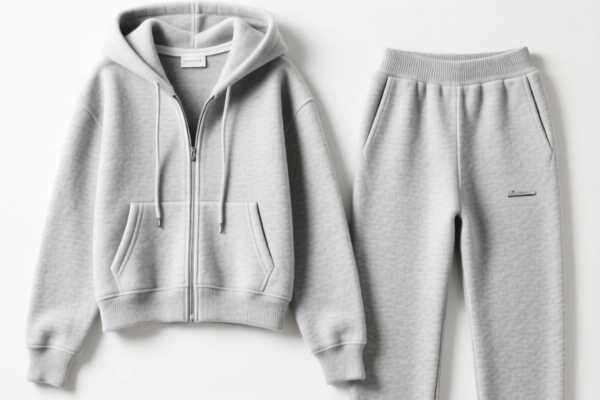
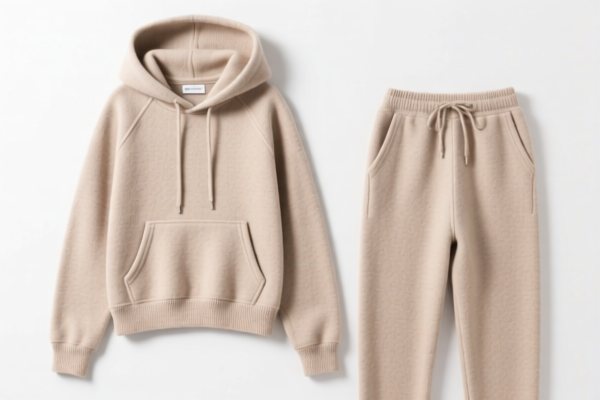
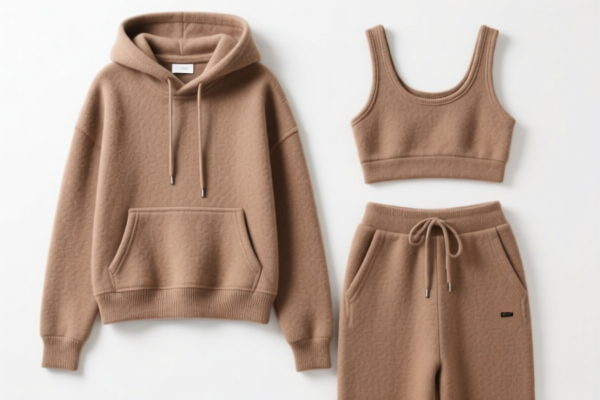
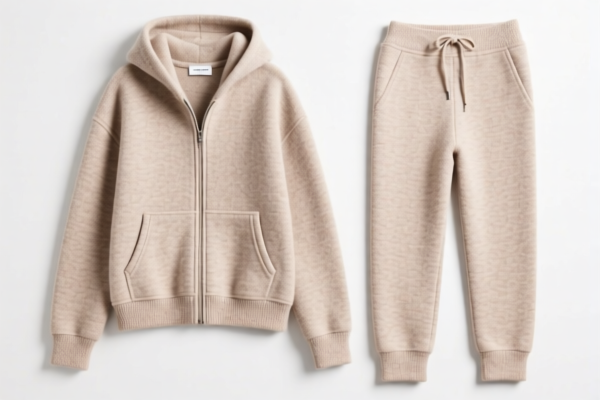
AI分析
🧘♀️ Yoga Wear Sets: Strategic HS Code Classification & US Customs Clearance Guide (2026 Update)
🌐 HS Code Reference & Clearance Strategy | Tax Optimization for Activewear | Professional Compliance Guide
📌 One. Product Definition: What Defines "Yoga Wear Sets"?
In international trade, "Yoga Wear" is not a single entity but a category spanning knitted and woven textiles. The critical differentiator lies in the manufacturing technique (knit vs. woven) and material composition (synthetic vs. man-made fibers). Misclassification leads to drastic tariff discrepancies—from 24.8% to 49.5%.
⚠️ Key Distinction:
- Knitted/Yarn-dyed: Soft, stretchy, looped fabric structure (e.g., Spandex/Polyester blends) → Typically Chapter 61.
- Woven: Interlaced threads, often structured or part of a "suit" (top + bottom) → Typically Chapter 62.
- Set Definition: If sold together as a matching set, customs may classify based on the primary fabric or specific "suit" definitions.
📦 Two. HS Code Classification Matrix (2026 Latest Tax Data)
Based on the provided data, here is the precise breakdown of the 5 potential HS Codes for Yoga Wear Sets, ranked by total tax efficiency.
| Rank | HS Code | Summary Description | Total Tax Rate | Tax Breakdown Details |
|---|---|---|---|---|
| 🥇 Best | 6211.49.25.40 |
Non-specific Outdoor/Casual Wear Set Material: Textile (General) Category: Non-specific catch-all for sports casual wear |
24.8% | Base: 7.3% + Section 301 (Add-on): 7.5% + Section 122 Tariff: 10% |
| 🥈 Option 2 | 6211.43.05.50 |
Man-Made Fiber Sports Suit Material: Man-made fibers Form: Sports Suit Set |
33.5% | Base: 16.0% + Section 301 (Add-on): 7.5% + Section 122 Tariff: 10% |
| 🥉 Option 3 | 6211.43.05.40 |
Man-Made Fiber Pants/Suit Contains Pants Material: Man-made fibers |
33.5% | Base: 16.0% + Section 301 (Add-on): 7.5% + Section 122 Tariff: 10% |
| 4 | 6112.12.00.40 |
Knitted Sports Attire Material: Synthetic Fibers Form: Knitted/Hooked |
45.7% | Base: 28.2% + Section 301 (Add-on): 7.5% + Section 122 Tariff: 10% |
| 5 | 6109.90.10.90 |
Knitted/ Crocheted Garment Material: Man-made (Spandex/Polyester) Form: Knitted Apparel |
49.5% | Base: 32.0% + Section 301 (Add-on): 7.5% + Section 122 Tariff: 10% |
🔍 Critical Insight:
- The lowest tax rate (24.8%) applies to6211.49.25.40, classified as "Non-specific category catch-all" for textile sports casual wear.
- Knitted items (Chapter 61) attract significantly higher base tariffs (28.2%–32.0%) compared to Woven items (Chapter 62) (7.3%–16.0%).
- Section 122 Tariff (10%) and Section 301 Add-on (7.5%) are constant across all categories for Chinese-origin goods. The variable is the Base Tariff.
💰 Three. Detailed Tariff Analysis & Cost Calculation
✅ Applicable Jurisdiction: United States (US)
✅ Origin: China (CN)
✅ Effective Date: Post-2025 policies included
🎯 1. 6211.49.25.40 – The Strategic Low-Tax Choice (24.8% Total)
| Item | Detail |
|---|---|
| Base Tariff | 7.3% |
| Section 301 Add-on | +7.5% |
| Section 122 Tariff | +10.0% |
| Total Effective Rate | 24.8% |
| Tax Calculation | CIF Value × 24.8% |
| Legal Basis | Non-specific textile category for sports casual wear |
📌 Why this is optimal:
- The base tariff of 7.3% is the lowest among all options.
- It leverages the "Non-specific category" definition, avoiding the higher base rates associated with specific synthetic fiber classifications in Chapter 61.
- Savings: Compared to the 49.5% bracket, this saves 24.7% of the CIF value. On a $10,000 shipment, that’s a $2,470 saving.
🎯 2. 6211.43.05.50 & 6211.43.05.40 – Mid-Range Options (33.5% Total)
| Item | Detail |
|---|---|
| Base Tariff | 16.0% |
| Section 301 Add-on | +7.5% |
| Section 122 Tariff | +10.0% |
| Total Effective Rate | 33.5% |
| Condition | Must be clearly identified as "Man-made fibers" and "Sports Suit" |
📌 Explanation:
- Higher base rate (16.0%) because it specifies man-made fibers.
- Requires strict documentation proving the material composition.
- Suitable if the product is distinctly a "suit" (top+bottom) made of synthetic blends.
🎯 3. 6112.12.00.40 & 6109.90.10.90 – High-Tax Knitted Options (45.7% - 49.5%)
| Item | Detail |
|---|---|
| Base Tariff | 28.2% to 32.0% |
| Section 301 Add-on | +7.5% |
| Section 122 Tariff | +10.0% |
| Total Effective Rate | 45.7% - 49.5% |
| Condition | Knitted or Crocheted structure |
📌 Warning:
- Knitted yoga wear (e.g., leggings made of spandex/polyester knit) falls here.
- High risk: If customs determines the item is knitted, you cannot claim the 24.8% rate.
- Material Trap: Even if it looks like "yoga wear," if it’s knitted, the base tariff jumps to ~28-32%.
🛠️ Four. Customs Clearance Strategy & Action Plan
✅ 1. Documentation Checklist (Mandatory for US Entry)
| Document | Requirement | Purpose |
|---|---|---|
| Commercial Invoice | Must specify: "Yoga Wear Set, Woven, Non-Specific Category" | Aligns with 6211.49.25.40 |
| Fabric Content Label | Must clearly state: "100% Polyester, Woven" or similar | Proves it is Woven, not Knitted |
| Product Photos | Show flat lay and worn state | Visual proof of "Set" (Top+Bottom) |
| Bill of Lading | Consistent description with Invoice | Prevents holds |
| Origin Certificate | If applicable for any potential FTZ benefits | Though limited for CN, still required |
✅ 2. Classification Strategy: How to Secure 24.8%
🔥 "Woven over Knit, General over Specific!"
| Scenario | Recommended HS Code | Tax Rate | Action |
|---|---|---|---|
| Woven Yoga Set (e.g., polyester woven top + leggings) | 6211.49.25.40 |
24.8% | ✅ Use this. Emphasize "Woven" and "Casual Sports." |
| Knitted Leggings & Top (Standard Spandex/Poly Knit) | 6109.90.10.90 |
49.5% | ❌ Avoid if possible. If unavoidable, prepare for high tax. |
| Mixed Material (Woven Top + Knitted Bottom) | Complex | Variable | ⚠️ Risk of audit. Try to harmonize or declare the higher value item. |
📌 Crucial Tip:
- Ensure your supplier’s fabric swatches are Woven. If the fabric is knit (looped structure), you cannot use6211.49.25.40.
- If you must import knitted items, consider if the product can be redesigned as woven (e.g., using woven polyester instead of knit spandex) to save 24.7% in tax.
✅ 3. Clearance Pitfalls & Solutions
| Pitfall | Consequence | Solution |
|---|---|---|
| Mislabeling Knit as Woven | Customs audit, back-taxes, penalties | Provide fabric test results proving woven structure |
| Incomplete Set Description | Single item taxed, set taxed differently | Clearly label as "Set" (2 pieces) on invoice |
| Ignoring Section 122 | Underpayment, seizure | Always include 10% Section 122 in cost calculation |
| Vague Material Description | "Textile" is too vague | Specify: "100% Polyester, Woven Fabric" |
🌍 Five. Global Market Comparison (2026)
| Country | Recommended HS Code | Est. Total Tax | Notes |
|---|---|---|---|
| 🇺🇸 USA | 6211.49.25.40 |
24.8% | Best rate for Woven. High Section 122/301 tariffs. |
| 🇪🇺 EU | 6211.43 / 6112.12 |
~4-12% | No Section 122. Lower base tariffs. No 301/122 add-ons. |
| 🇨🇦 Canada | 6211.49 |
~0-5% | CUSMA benefits may apply if sourced properly. |
| 🇬🇧 UK | 6211.49 |
~12% | Post-Brexit tariffs. No Section 122. |
📌 Conclusion:
- The US market is the most challenging due to Section 122 (10%) and Section 301 (7.5%) add-ons.
- Optimization is critical: Choosing6211.49.25.40(24.8%) over6109.90.10.90(49.5%) is a major cost-saving strategy.
📌 Six. Common Errors & Blood-Lesson Guide
❌ Error 1: Assuming "Yoga Wear" automatically means Knitted (6112.12.00.40).
👉 Reality: Many yoga tops are woven. If you can source woven fabric, you save 20.9%.
❌ Error 2: Failing to separate "Base Tariff" from "Add-on Tariffs."
👉 Reality: The base tariff varies widely (7.3% vs 32.0%). The add-ons are fixed. Focus on minimizing the base tariff.
❌ Error 3: Incorrectly labeling a Knitted Set as Woven.
👉 Reality: Customs will test the fabric. If found knitted, you owe back taxes + interest. Be honest about fabric structure.
❌ Error 4: Ignoring Section 122 Tariff.
👉 Reality: This 10% is mandatory for many textile imports. If not budgeted, your profit margin vanishes.
✅ Correct Declaration Example:
"Yoga Wear Set, Woven, 100% Polyester, 2-Piece (Top & Bottom), Non-Specific Category, Model YW-2026"
🎯 Seven. Final Recommendation: Maximize Profit, Minimize Tax
🎯 Action Plan:
1. Audit Your Supply Chain: Can you switch from Knitted to Woven fabric?
2. Declare Correctly: Use 6211.49.25.40 if woven.
3. Budget for Add-ons: Always include 17.5% (7.5% + 10%) in your landed cost calculation.
4. Pre-Clearance: Submit samples to a customs broker for Advance Ruling if unsure.
🔹 "Woven saves, Knit taxes. 24.8% is the goal. 49.5% is the trap."
🔹 "Section 122 is non-negotiable. Plan for 10%."
📣 Immediate Action:
📞 Contact Your Customs Broker: Provide fabric swatches.
📊 Recalculate Landed Cost: Use 24.8% for woven, 49.5% for knitted.
🚀 Optimize Your BOM: Shift to woven materials where possible to secure the 24.8% rate.
✨ Smart Classification, Higher Margins!
💼 Every 1% in tariff is 1% in profit. Don’t leave money on the table.
用户评价
关于 HS 编码归类
协调制度(HS)是由世界海关组织(WCO)制定的国际贸易商品分类标准。全球 200 多个国家采用 HS 系统作为海关关税、贸易统计和进出口监管的基础。
每个 HS 编码遵循以下层级结构:
- 章(2 位)——商品大类(例如:第 84 章:机器和机械设备)
- 品目(4 位)——章内的更具体分类
- 子目(6 位)——国际通用细分,所有 WCO 成员国统一使用
- 本国细分(8-10 位)——各国自行扩展的细分编码,如美国 HTSUS 10 位编码
正确的 HS 编码归类对于顺利通关、准确缴纳关税和遵守贸易法规至关重要。错误归类可能导致海关延误、多缴关税或罚款。
从CN进口到US时,适用的关税税率可能包括:
- 最惠国(MFN)税率——适用于 WTO 成员国的标准关税税率
- 普通税率——适用于无贸易协定国家
- 贸易救济关税——附加关税,如 301 条款(反倾销)、232 条款(国家安全)或反补贴税
本页内容仅供参考。如需正式归类,请咨询当地海关或持牌报关代理。