yoga wear sets
CN → US| HS Code | Tariff Rate | Origin | Destination | Doc |
|---|---|---|---|---|
| 6211420530 | 25.6% | CN | US | Official Doc |
| 6211420540 | 25.6% | CN | US | Official Doc |
| 6211492540 | 24.8% | CN | US | Official Doc |
| 6112120040 | 45.7% | CN | US | Official Doc |
| 6211430550 | 33.5% | CN | US | Official Doc |
Product Images
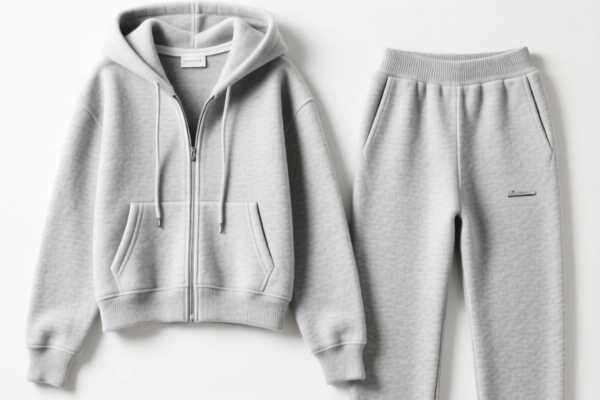
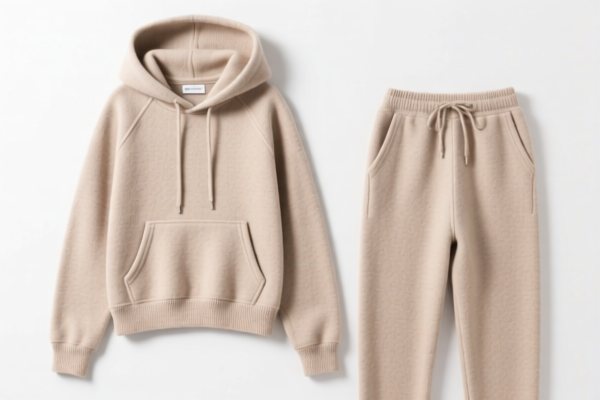
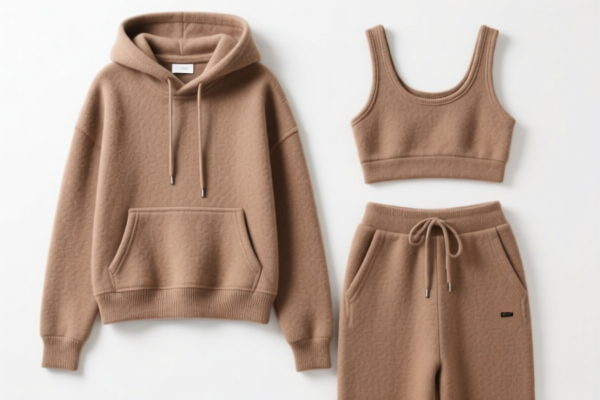
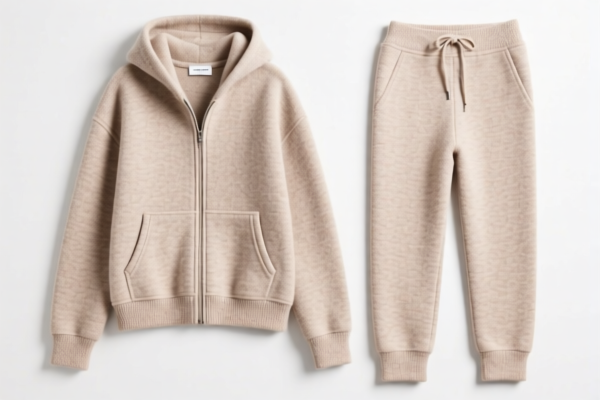
AI Analysis
🧘♀️ Yoga Wear Sets: Strategic HS Code Classification & US Customs Clearance Guide (2026 Update)
🌐 HS Code Reference & Clearance Strategy | Tax Optimization for Activewear | Professional Compliance Guide
📌 One. Product Definition: What Defines "Yoga Wear Sets"?
In international trade, "Yoga Wear" is not a single entity but a category spanning knitted and woven textiles. The critical differentiator lies in the manufacturing technique (knit vs. woven) and material composition (synthetic vs. man-made fibers). Misclassification leads to drastic tariff discrepancies—from 24.8% to 49.5%.
⚠️ Key Distinction:
- Knitted/Yarn-dyed: Soft, stretchy, looped fabric structure (e.g., Spandex/Polyester blends) → Typically Chapter 61.
- Woven: Interlaced threads, often structured or part of a "suit" (top + bottom) → Typically Chapter 62.
- Set Definition: If sold together as a matching set, customs may classify based on the primary fabric or specific "suit" definitions.
📦 Two. HS Code Classification Matrix (2026 Latest Tax Data)
Based on the provided data, here is the precise breakdown of the 5 potential HS Codes for Yoga Wear Sets, ranked by total tax efficiency.
| Rank | HS Code | Summary Description | Total Tax Rate | Tax Breakdown Details |
|---|---|---|---|---|
| 🥇 Best | 6211.49.25.40 |
Non-specific Outdoor/Casual Wear Set Material: Textile (General) Category: Non-specific catch-all for sports casual wear |
24.8% | Base: 7.3% + Section 301 (Add-on): 7.5% + Section 122 Tariff: 10% |
| 🥈 Option 2 | 6211.43.05.50 |
Man-Made Fiber Sports Suit Material: Man-made fibers Form: Sports Suit Set |
33.5% | Base: 16.0% + Section 301 (Add-on): 7.5% + Section 122 Tariff: 10% |
| 🥉 Option 3 | 6211.43.05.40 |
Man-Made Fiber Pants/Suit Contains Pants Material: Man-made fibers |
33.5% | Base: 16.0% + Section 301 (Add-on): 7.5% + Section 122 Tariff: 10% |
| 4 | 6112.12.00.40 |
Knitted Sports Attire Material: Synthetic Fibers Form: Knitted/Hooked |
45.7% | Base: 28.2% + Section 301 (Add-on): 7.5% + Section 122 Tariff: 10% |
| 5 | 6109.90.10.90 |
Knitted/ Crocheted Garment Material: Man-made (Spandex/Polyester) Form: Knitted Apparel |
49.5% | Base: 32.0% + Section 301 (Add-on): 7.5% + Section 122 Tariff: 10% |
🔍 Critical Insight:
- The lowest tax rate (24.8%) applies to6211.49.25.40, classified as "Non-specific category catch-all" for textile sports casual wear.
- Knitted items (Chapter 61) attract significantly higher base tariffs (28.2%–32.0%) compared to Woven items (Chapter 62) (7.3%–16.0%).
- Section 122 Tariff (10%) and Section 301 Add-on (7.5%) are constant across all categories for Chinese-origin goods. The variable is the Base Tariff.
💰 Three. Detailed Tariff Analysis & Cost Calculation
✅ Applicable Jurisdiction: United States (US)
✅ Origin: China (CN)
✅ Effective Date: Post-2025 policies included
🎯 1. 6211.49.25.40 – The Strategic Low-Tax Choice (24.8% Total)
| Item | Detail |
|---|---|
| Base Tariff | 7.3% |
| Section 301 Add-on | +7.5% |
| Section 122 Tariff | +10.0% |
| Total Effective Rate | 24.8% |
| Tax Calculation | CIF Value × 24.8% |
| Legal Basis | Non-specific textile category for sports casual wear |
📌 Why this is optimal:
- The base tariff of 7.3% is the lowest among all options.
- It leverages the "Non-specific category" definition, avoiding the higher base rates associated with specific synthetic fiber classifications in Chapter 61.
- Savings: Compared to the 49.5% bracket, this saves 24.7% of the CIF value. On a $10,000 shipment, that’s a $2,470 saving.
🎯 2. 6211.43.05.50 & 6211.43.05.40 – Mid-Range Options (33.5% Total)
| Item | Detail |
|---|---|
| Base Tariff | 16.0% |
| Section 301 Add-on | +7.5% |
| Section 122 Tariff | +10.0% |
| Total Effective Rate | 33.5% |
| Condition | Must be clearly identified as "Man-made fibers" and "Sports Suit" |
📌 Explanation:
- Higher base rate (16.0%) because it specifies man-made fibers.
- Requires strict documentation proving the material composition.
- Suitable if the product is distinctly a "suit" (top+bottom) made of synthetic blends.
🎯 3. 6112.12.00.40 & 6109.90.10.90 – High-Tax Knitted Options (45.7% - 49.5%)
| Item | Detail |
|---|---|
| Base Tariff | 28.2% to 32.0% |
| Section 301 Add-on | +7.5% |
| Section 122 Tariff | +10.0% |
| Total Effective Rate | 45.7% - 49.5% |
| Condition | Knitted or Crocheted structure |
📌 Warning:
- Knitted yoga wear (e.g., leggings made of spandex/polyester knit) falls here.
- High risk: If customs determines the item is knitted, you cannot claim the 24.8% rate.
- Material Trap: Even if it looks like "yoga wear," if it’s knitted, the base tariff jumps to ~28-32%.
🛠️ Four. Customs Clearance Strategy & Action Plan
✅ 1. Documentation Checklist (Mandatory for US Entry)
| Document | Requirement | Purpose |
|---|---|---|
| Commercial Invoice | Must specify: "Yoga Wear Set, Woven, Non-Specific Category" | Aligns with 6211.49.25.40 |
| Fabric Content Label | Must clearly state: "100% Polyester, Woven" or similar | Proves it is Woven, not Knitted |
| Product Photos | Show flat lay and worn state | Visual proof of "Set" (Top+Bottom) |
| Bill of Lading | Consistent description with Invoice | Prevents holds |
| Origin Certificate | If applicable for any potential FTZ benefits | Though limited for CN, still required |
✅ 2. Classification Strategy: How to Secure 24.8%
🔥 "Woven over Knit, General over Specific!"
| Scenario | Recommended HS Code | Tax Rate | Action |
|---|---|---|---|
| Woven Yoga Set (e.g., polyester woven top + leggings) | 6211.49.25.40 |
24.8% | ✅ Use this. Emphasize "Woven" and "Casual Sports." |
| Knitted Leggings & Top (Standard Spandex/Poly Knit) | 6109.90.10.90 |
49.5% | ❌ Avoid if possible. If unavoidable, prepare for high tax. |
| Mixed Material (Woven Top + Knitted Bottom) | Complex | Variable | ⚠️ Risk of audit. Try to harmonize or declare the higher value item. |
📌 Crucial Tip:
- Ensure your supplier’s fabric swatches are Woven. If the fabric is knit (looped structure), you cannot use6211.49.25.40.
- If you must import knitted items, consider if the product can be redesigned as woven (e.g., using woven polyester instead of knit spandex) to save 24.7% in tax.
✅ 3. Clearance Pitfalls & Solutions
| Pitfall | Consequence | Solution |
|---|---|---|
| Mislabeling Knit as Woven | Customs audit, back-taxes, penalties | Provide fabric test results proving woven structure |
| Incomplete Set Description | Single item taxed, set taxed differently | Clearly label as "Set" (2 pieces) on invoice |
| Ignoring Section 122 | Underpayment, seizure | Always include 10% Section 122 in cost calculation |
| Vague Material Description | "Textile" is too vague | Specify: "100% Polyester, Woven Fabric" |
🌍 Five. Global Market Comparison (2026)
| Country | Recommended HS Code | Est. Total Tax | Notes |
|---|---|---|---|
| 🇺🇸 USA | 6211.49.25.40 |
24.8% | Best rate for Woven. High Section 122/301 tariffs. |
| 🇪🇺 EU | 6211.43 / 6112.12 |
~4-12% | No Section 122. Lower base tariffs. No 301/122 add-ons. |
| 🇨🇦 Canada | 6211.49 |
~0-5% | CUSMA benefits may apply if sourced properly. |
| 🇬🇧 UK | 6211.49 |
~12% | Post-Brexit tariffs. No Section 122. |
📌 Conclusion:
- The US market is the most challenging due to Section 122 (10%) and Section 301 (7.5%) add-ons.
- Optimization is critical: Choosing6211.49.25.40(24.8%) over6109.90.10.90(49.5%) is a major cost-saving strategy.
📌 Six. Common Errors & Blood-Lesson Guide
❌ Error 1: Assuming "Yoga Wear" automatically means Knitted (6112.12.00.40).
👉 Reality: Many yoga tops are woven. If you can source woven fabric, you save 20.9%.
❌ Error 2: Failing to separate "Base Tariff" from "Add-on Tariffs."
👉 Reality: The base tariff varies widely (7.3% vs 32.0%). The add-ons are fixed. Focus on minimizing the base tariff.
❌ Error 3: Incorrectly labeling a Knitted Set as Woven.
👉 Reality: Customs will test the fabric. If found knitted, you owe back taxes + interest. Be honest about fabric structure.
❌ Error 4: Ignoring Section 122 Tariff.
👉 Reality: This 10% is mandatory for many textile imports. If not budgeted, your profit margin vanishes.
✅ Correct Declaration Example:
"Yoga Wear Set, Woven, 100% Polyester, 2-Piece (Top & Bottom), Non-Specific Category, Model YW-2026"
🎯 Seven. Final Recommendation: Maximize Profit, Minimize Tax
🎯 Action Plan:
1. Audit Your Supply Chain: Can you switch from Knitted to Woven fabric?
2. Declare Correctly: Use 6211.49.25.40 if woven.
3. Budget for Add-ons: Always include 17.5% (7.5% + 10%) in your landed cost calculation.
4. Pre-Clearance: Submit samples to a customs broker for Advance Ruling if unsure.
🔹 "Woven saves, Knit taxes. 24.8% is the goal. 49.5% is the trap."
🔹 "Section 122 is non-negotiable. Plan for 10%."
📣 Immediate Action:
📞 Contact Your Customs Broker: Provide fabric swatches.
📊 Recalculate Landed Cost: Use 24.8% for woven, 49.5% for knitted.
🚀 Optimize Your BOM: Shift to woven materials where possible to secure the 24.8% rate.
✨ Smart Classification, Higher Margins!
💼 Every 1% in tariff is 1% in profit. Don’t leave money on the table.
Customer Reviews
About HS Code Classification
The Harmonized System (HS) is an internationally standardized nomenclature developed by the World Customs Organization (WCO) to classify traded products. Over 200 countries use the HS system as the basis for customs tariffs, trade statistics, and import/export regulations.
Each HS code follows a hierarchical structure:
- Chapter (2 digits) — Broad category of goods (e.g., Chapter 84: Machinery and Mechanical Appliances)
- Heading (4 digits) — More specific grouping within the chapter
- Subheading (6 digits) — Internationally standardized breakdown, used by all WCO member countries
- National subdivisions (8-10 digits) — Country-specific extensions for further classification, such as US HTSUS 10-digit codes
Correct HS code classification is essential for smooth customs clearance, accurate duty payment, and compliance with trade regulations. Misclassification can lead to customs delays, overpayment of duties, or penalties.
When importing from CN to US, the applicable tariff rates may include:
- Most-Favored-Nation (MFN) rate — The standard duty rate applied to WTO members
- General rate — Applied to countries without trade agreements
- Trade remedy duties — Additional tariffs such as Section 301 (anti-dumping), Section 232 (national security), or countervailing duties
The information provided on this page is for reference purposes only. For official classification, please consult with your local customs authority or a licensed customs broker.