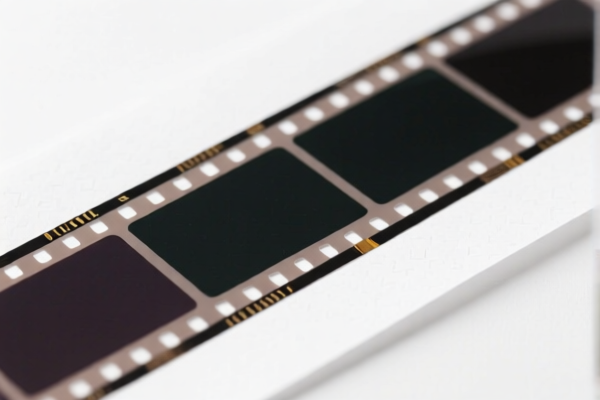
无冲孔航空摄影胶片
CN → US| HS编码 | 关税税率 | 原产国 | 目的国 | 文档 |
|---|---|---|---|---|
| 3701300000 | 35.0% | CN | US | 官方文档 |
| 3702440130 | 38.7% | CN | US | 官方文档 |
| 3701996060 | 35.0% | CN | US | 官方文档 |
| 3702440160 | 38.7% | CN | US | 官方文档 |
商品图片


AI分析
🎥 Unperforated Aerial Photographic Film: Global HS Code Guide & Clearance Strategy (2026 Edition)
🌍 HS Code Reference & Clearance Guide | 2026 Latest Tariff Analysis | Professional Entry Strategy
Product Name: Unperforated Aerial Photographic Film (No Punch Holes)
Key Characteristics: Light-sensitive material, non-paper/non-textile, unexposed, available in both roll (unperforated) and sheet (plate) formats.
Primary Application: High-altitude aerial surveying, cartography, remote sensing, and defense imaging.
⚠️ Critical Distinction:
Aerial film is not standard consumer film. It falls under Chapter 37 (Photographic). The absence of perforations (holes for sprocket wheels) is the primary differentiator from standard movie or still photography film, pushing it into specific "Other" subcategories.
📦 II. HS Code Classification Details (2026 Tariff Authority)
Based on the material state (unexposed), shape (sheet vs. roll), and lack of perforations, the product can be classified into Four distinct HS Codes. The classification depends strictly on the physical form: Sheet (Plate) or Roll (Strip).
| HS Code | Product Description | Physical Form | Tax Rate (Total) | Tax Detail Breakdown |
|---|---|---|---|---|
| 3701.99.60.60 | Unperforated Aerial Film classified as "Photographic Plates & Film" (Non-paper/non-textile), Category: Other. | Sheet / Plate | 35.0% | Base: 0% + Add-on: 25% + Sec. 122: 10% |
| 3702.44.01.60 | Unperforated Aerial Film matching "No Hole" characteristics. Sensitized, unexposed roll film, "Other" catch-all. | Roll / Strip | 38.7% | Base: 3.7% + Add-on: 25% + Sec. 122: 10% |
| 3701.30.00.00 | Unperforated Aerial Film in Flat Plate shape. Non-paper/non-textile sensitized material. | Sheet / Plate | 35.0% | Base: 0% + Add-on: 25% + Sec. 122: 10% |
| 3702.44.01.30 | Unperforated Aerial Film (No perforations). Sensitized, unexposed, fits "Artistic Image Film" use case. | Roll / Strip | 38.7% | Base: 3.7% + Add-on: 25% + Sec. 122: 10% |
🔍 Key Logic for Classification: * If it is a Flat Sheet (Plate): Use 3701 series (
3701.30.00.00or3701.99.60.60). * If it is a Roll (Unperforated): Use 3702 series (3702.44.01.60or3702.44.01.30). * The "No Hole" Factor: This is the defining feature that separates it from standard perforated motion picture film (which has a lower base tax in some jurisdictions but different duty structures).
💰 III. 2026 Tariff Rate Deep Dive (Detailed Tax Clauses)
✅ Applicable Jurisdiction: China Export / US Import Context (Based on provided tax details)
✅ Tax Components Explained: 1. Base Tariff (基础关税): The standard WTO MFN tariff rate. 2. Additional Tariff (加征关税 - 25%): Typically refers to Section 301 tariffs or retaliatory duties against specific imports. 3. Section 122 Tariff (122条款关税 - 10%): A specific trade measure (often related to specific country origin or product restrictions) applied on top of the base.
🎯 1. Classification: 3701.30.00.00 & 3701.99.60.60 (Sheet/Plate Form)
| Tax Component | Rate | Legal/Policy Basis |
|---|---|---|
| Base Tariff | 0.0% | Standard MFN rate for certain photographic plates. |
| Additional Tariff | +25.0% | Section 301 / Retaliatory Measures (China origin specific). |
| Sec. 122 Tariff | +10.0% | Specific Trade Remedy / Section 122 Clause. |
| TOTAL DUTY | 35.0% | 0% + 25% + 10% = 35% |
| Calculation | CIF Value × 35% |
📌 Interpretation:
Even though the base tax is 0%, the 25% + 10% surcharges make this product highly taxed. The "0% base" is a trap if the surcharges are ignored.
🎯 2. Classification: 3702.44.01.60 & 3702.44.01.30 (Roll/Strip Form)
| Tax Component | Rate | Legal/Policy Basis |
|---|---|---|
| Base Tariff | 3.7% | Standard MFN rate for other sensitized film. |
| Additional Tariff | +25.0% | Section 301 / Retaliatory Measures. |
| Sec. 122 Tariff | +10.0% | Specific Trade Remedy / Section 122 Clause. |
| TOTAL DUTY | 38.7% | 3.7% + 25% + 10% = 38.7% |
| Calculation | CIF Value × 38.7% |
📌 Interpretation:
Roll film pays a slightly higher total rate (38.7%) because the base tax is not zero. Crucial for budgeting: The difference between Sheet (35%) and Roll (38.7%) is small but significant for large volume shipments.
🛠️ IV. Professional Clearance Advice (Practical Strategy)
✅ 1. Documentation Checklist (Must-Haves)
| Document | Requirement | Why it matters |
|---|---|---|
| Product Spec Sheet | ✔️ Critical | Must explicitly state "No Perforations" (无冲孔) and "Aerial Use". |
| Technical Drawing | ✔️ Critical | Show the edge of the film roll/plate to prove the absence of sprocket holes. |
| Photographic Demo | ✔️ Highly Recommended | Photos of the film edge (macro shot) proving the lack of holes. |
| Safety Data Sheet (SDS) | ✔️ | Film is light-sensitive and often contains chemical emulsions; required for hazardous goods transport. |
| End-User Certificate | ✔️ | Aerial film often has export controls; proving the end-user (e.g., government surveyor) prevents seizure. |
| Commercial Invoice | ✔️ | Must match the HS Code exactly. Use English description: "Unperforated Aerial Photographic Film, Unexposed." |
✅ 2. Declaration Strategy (The "No Hole" Rule)
🔥 Golden Rule for Clearing:
"Define the Shape First: Plate vs. Roll. Prove No Holes!"
| Scenario | Correct Declaration | Wrong Declaration (Risk) |
|---|---|---|
| Flat Sheet | HS: 3701.30.00.00 Desc: "Unperforated Aerial Photo Plate" |
Declaring as "Roll" → Risk of misclassification audit. |
| Roll Film | HS: 3702.44.01.60 Desc: "Unperforated Aerial Film Roll" |
Declaring as "Perforated Movie Film" → 100% Inspection & Rejection. |
| Mixed Shipment | Split Declaration | Mixing Sheet and Roll in one line item → Customs Seizure. |
⚠️ Warning: Do not simply write "Aerial Film." You must specify: 1. Unexposed (感光未曝光) 2. No Perforations (无冲孔/无孔) 3. Shape (Sheet/Plate vs. Roll)
✅ 3. Special Handling & Compliance
- Chemical Sensitivity: Unperforated aerial film is often very sensitive to light and vibration. Ensure packaging is light-tight and shock-absorbent.
- Export Controls: Since this is for Aerial use, it may be subject to dual-use technology controls (military/civilian overlap). Check if your destination requires a license for high-resolution imaging sensors/film.
- Tax Savings Tip: There is no de minimis exemption for this product due to the high total tax (35% - 38.7%). Budget for the full amount.
🌍 V. Global Market Comparison (2026)
| Market | Recommended HS Code | Effective Tax Rate | Key Constraint |
|---|---|---|---|
| 🇺🇸 USA | 3701.30.00.00 (Sheet) / 3702.44.01.60 (Roll) |
35% - 38.7% | High surcharges (25% + 10%) apply strictly. |
| 🇪🇺 EU | 3701.30.00.00 / 3702.44.00.00 |
~0% - 6% (Base) | No Section 122; check for REACH compliance on emulsions. |
| 🇨🇳 China | 3701.30.00.00 / 3702.44.01.30 |
Base + 25% (if applicable) | Requires specific import licenses for high-sensitivity film. |
| 🇯🇵 Japan | 3701.30.00.00 / 3702.44.00.00 |
~4% | Strict safety standards for chemical coatings. |
📌 Conclusion: The US market is the most expensive due to the "Section 122" and "Additional Tariff" clauses. EU and Japan have significantly lower barriers but require strict chemical safety compliance.
📌 VI. Common Pitfalls & Avoidance Guide
❌ Mistake 1: Declaring as "Standard Photographic Film" (3702.50)
👉 Consequence: Customs will reject because standard film is perforated. Aerial film is unperforated. Mismatch leads to 100% Inspection.
❌ Mistake 2: Ignoring the "Sheet" vs. "Roll" distinction
👉 Consequence: Wrong HS Code (3701 vs 3702). Leads to underpayment (if declaring 3701 for roll) or overpayment (if declaring 3702 for sheet), resulting in fines or delays.
❌ Mistake 3: Assuming Base Tax = Total Tax
👉 Consequence: Believing 3702.44.01.60 is only 3.7%. The 38.7% total (including 35% surcharges) is what you must pay. Budgeting errors here can kill profit margins.
✅ Correct Action:
"Always declare: 'Unperforated Aerial Photographic Film, Unexposed, [Shape], [Material]'." Ensure the packaging and invoices clearly state "No Perforations" to avoid any suspicion of it being movie film.
🎯 VII. Final Verdict: Professional Strategy for Success
🎯 Key Takeaway:
Unperforated Aerial Photographic Film is a highly regulated, high-tax product due to its dual-use nature and specific trade measures (Section 122 + 25% Add-on).
The Formula for Success:
1. Identify Shape: Sheet (3701) vs. Roll (3702).
2. Prove No Holes: Provide macro photos and technical specs.
3. Calculate Full Duty: Plan for 35.0% (Sheet) or 38.7% (Roll).
4. Check Licenses: Verify if the aerial film requires a defense/trade license for the destination country.
🚀 Pro Tip: If shipping to the USA, apply for an Advance Ruling (CBP Ruling) before shipping. Given the complex 122/301 tariff structure, getting a written classification ruling saves thousands in potential duty disputes.
✨ Precision in Classification = Savings in Time & Money!
💼 Your aerial film deserves the right HS Code and a smooth clearance!
用户评价
关于 HS 编码归类
协调制度(HS)是由世界海关组织(WCO)制定的国际贸易商品分类标准。全球 200 多个国家采用 HS 系统作为海关关税、贸易统计和进出口监管的基础。
每个 HS 编码遵循以下层级结构:
- 章(2 位)——商品大类(例如:第 84 章:机器和机械设备)
- 品目(4 位)——章内的更具体分类
- 子目(6 位)——国际通用细分,所有 WCO 成员国统一使用
- 本国细分(8-10 位)——各国自行扩展的细分编码,如美国 HTSUS 10 位编码
正确的 HS 编码归类对于顺利通关、准确缴纳关税和遵守贸易法规至关重要。错误归类可能导致海关延误、多缴关税或罚款。
从CN进口到US时,适用的关税税率可能包括:
- 最惠国(MFN)税率——适用于 WTO 成员国的标准关税税率
- 普通税率——适用于无贸易协定国家
- 贸易救济关税——附加关税,如 301 条款(反倾销)、232 条款(国家安全)或反补贴税
本页内容仅供参考。如需正式归类,请咨询当地海关或持牌报关代理。