无冲孔航空摄影胶片
CN → US| HS Code | Tariff Rate | Origin | Destination | Doc |
|---|---|---|---|---|
| 3701300000 | 35.0% | CN | US | Official Doc |
| 3702440130 | 38.7% | CN | US | Official Doc |
| 3701996060 | 35.0% | CN | US | Official Doc |
| 3702440160 | 38.7% | CN | US | Official Doc |
Product Images
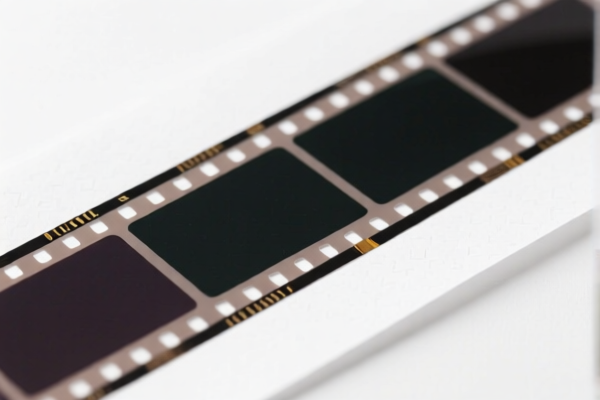


AI Analysis
🎥 Unperforated Aerial Photographic Film: Global HS Code Guide & Clearance Strategy (2026 Edition)
🌍 HS Code Reference & Clearance Guide | 2026 Latest Tariff Analysis | Professional Entry Strategy
Product Name: Unperforated Aerial Photographic Film (No Punch Holes)
Key Characteristics: Light-sensitive material, non-paper/non-textile, unexposed, available in both roll (unperforated) and sheet (plate) formats.
Primary Application: High-altitude aerial surveying, cartography, remote sensing, and defense imaging.
⚠️ Critical Distinction:
Aerial film is not standard consumer film. It falls under Chapter 37 (Photographic). The absence of perforations (holes for sprocket wheels) is the primary differentiator from standard movie or still photography film, pushing it into specific "Other" subcategories.
📦 II. HS Code Classification Details (2026 Tariff Authority)
Based on the material state (unexposed), shape (sheet vs. roll), and lack of perforations, the product can be classified into Four distinct HS Codes. The classification depends strictly on the physical form: Sheet (Plate) or Roll (Strip).
| HS Code | Product Description | Physical Form | Tax Rate (Total) | Tax Detail Breakdown |
|---|---|---|---|---|
| 3701.99.60.60 | Unperforated Aerial Film classified as "Photographic Plates & Film" (Non-paper/non-textile), Category: Other. | Sheet / Plate | 35.0% | Base: 0% + Add-on: 25% + Sec. 122: 10% |
| 3702.44.01.60 | Unperforated Aerial Film matching "No Hole" characteristics. Sensitized, unexposed roll film, "Other" catch-all. | Roll / Strip | 38.7% | Base: 3.7% + Add-on: 25% + Sec. 122: 10% |
| 3701.30.00.00 | Unperforated Aerial Film in Flat Plate shape. Non-paper/non-textile sensitized material. | Sheet / Plate | 35.0% | Base: 0% + Add-on: 25% + Sec. 122: 10% |
| 3702.44.01.30 | Unperforated Aerial Film (No perforations). Sensitized, unexposed, fits "Artistic Image Film" use case. | Roll / Strip | 38.7% | Base: 3.7% + Add-on: 25% + Sec. 122: 10% |
🔍 Key Logic for Classification: * If it is a Flat Sheet (Plate): Use 3701 series (
3701.30.00.00or3701.99.60.60). * If it is a Roll (Unperforated): Use 3702 series (3702.44.01.60or3702.44.01.30). * The "No Hole" Factor: This is the defining feature that separates it from standard perforated motion picture film (which has a lower base tax in some jurisdictions but different duty structures).
💰 III. 2026 Tariff Rate Deep Dive (Detailed Tax Clauses)
✅ Applicable Jurisdiction: China Export / US Import Context (Based on provided tax details)
✅ Tax Components Explained: 1. Base Tariff (基础关税): The standard WTO MFN tariff rate. 2. Additional Tariff (加征关税 - 25%): Typically refers to Section 301 tariffs or retaliatory duties against specific imports. 3. Section 122 Tariff (122条款关税 - 10%): A specific trade measure (often related to specific country origin or product restrictions) applied on top of the base.
🎯 1. Classification: 3701.30.00.00 & 3701.99.60.60 (Sheet/Plate Form)
| Tax Component | Rate | Legal/Policy Basis |
|---|---|---|
| Base Tariff | 0.0% | Standard MFN rate for certain photographic plates. |
| Additional Tariff | +25.0% | Section 301 / Retaliatory Measures (China origin specific). |
| Sec. 122 Tariff | +10.0% | Specific Trade Remedy / Section 122 Clause. |
| TOTAL DUTY | 35.0% | 0% + 25% + 10% = 35% |
| Calculation | CIF Value × 35% |
📌 Interpretation:
Even though the base tax is 0%, the 25% + 10% surcharges make this product highly taxed. The "0% base" is a trap if the surcharges are ignored.
🎯 2. Classification: 3702.44.01.60 & 3702.44.01.30 (Roll/Strip Form)
| Tax Component | Rate | Legal/Policy Basis |
|---|---|---|
| Base Tariff | 3.7% | Standard MFN rate for other sensitized film. |
| Additional Tariff | +25.0% | Section 301 / Retaliatory Measures. |
| Sec. 122 Tariff | +10.0% | Specific Trade Remedy / Section 122 Clause. |
| TOTAL DUTY | 38.7% | 3.7% + 25% + 10% = 38.7% |
| Calculation | CIF Value × 38.7% |
📌 Interpretation:
Roll film pays a slightly higher total rate (38.7%) because the base tax is not zero. Crucial for budgeting: The difference between Sheet (35%) and Roll (38.7%) is small but significant for large volume shipments.
🛠️ IV. Professional Clearance Advice (Practical Strategy)
✅ 1. Documentation Checklist (Must-Haves)
| Document | Requirement | Why it matters |
|---|---|---|
| Product Spec Sheet | ✔️ Critical | Must explicitly state "No Perforations" (无冲孔) and "Aerial Use". |
| Technical Drawing | ✔️ Critical | Show the edge of the film roll/plate to prove the absence of sprocket holes. |
| Photographic Demo | ✔️ Highly Recommended | Photos of the film edge (macro shot) proving the lack of holes. |
| Safety Data Sheet (SDS) | ✔️ | Film is light-sensitive and often contains chemical emulsions; required for hazardous goods transport. |
| End-User Certificate | ✔️ | Aerial film often has export controls; proving the end-user (e.g., government surveyor) prevents seizure. |
| Commercial Invoice | ✔️ | Must match the HS Code exactly. Use English description: "Unperforated Aerial Photographic Film, Unexposed." |
✅ 2. Declaration Strategy (The "No Hole" Rule)
🔥 Golden Rule for Clearing:
"Define the Shape First: Plate vs. Roll. Prove No Holes!"
| Scenario | Correct Declaration | Wrong Declaration (Risk) |
|---|---|---|
| Flat Sheet | HS: 3701.30.00.00 Desc: "Unperforated Aerial Photo Plate" |
Declaring as "Roll" → Risk of misclassification audit. |
| Roll Film | HS: 3702.44.01.60 Desc: "Unperforated Aerial Film Roll" |
Declaring as "Perforated Movie Film" → 100% Inspection & Rejection. |
| Mixed Shipment | Split Declaration | Mixing Sheet and Roll in one line item → Customs Seizure. |
⚠️ Warning: Do not simply write "Aerial Film." You must specify: 1. Unexposed (感光未曝光) 2. No Perforations (无冲孔/无孔) 3. Shape (Sheet/Plate vs. Roll)
✅ 3. Special Handling & Compliance
- Chemical Sensitivity: Unperforated aerial film is often very sensitive to light and vibration. Ensure packaging is light-tight and shock-absorbent.
- Export Controls: Since this is for Aerial use, it may be subject to dual-use technology controls (military/civilian overlap). Check if your destination requires a license for high-resolution imaging sensors/film.
- Tax Savings Tip: There is no de minimis exemption for this product due to the high total tax (35% - 38.7%). Budget for the full amount.
🌍 V. Global Market Comparison (2026)
| Market | Recommended HS Code | Effective Tax Rate | Key Constraint |
|---|---|---|---|
| 🇺🇸 USA | 3701.30.00.00 (Sheet) / 3702.44.01.60 (Roll) |
35% - 38.7% | High surcharges (25% + 10%) apply strictly. |
| 🇪🇺 EU | 3701.30.00.00 / 3702.44.00.00 |
~0% - 6% (Base) | No Section 122; check for REACH compliance on emulsions. |
| 🇨🇳 China | 3701.30.00.00 / 3702.44.01.30 |
Base + 25% (if applicable) | Requires specific import licenses for high-sensitivity film. |
| 🇯🇵 Japan | 3701.30.00.00 / 3702.44.00.00 |
~4% | Strict safety standards for chemical coatings. |
📌 Conclusion: The US market is the most expensive due to the "Section 122" and "Additional Tariff" clauses. EU and Japan have significantly lower barriers but require strict chemical safety compliance.
📌 VI. Common Pitfalls & Avoidance Guide
❌ Mistake 1: Declaring as "Standard Photographic Film" (3702.50)
👉 Consequence: Customs will reject because standard film is perforated. Aerial film is unperforated. Mismatch leads to 100% Inspection.
❌ Mistake 2: Ignoring the "Sheet" vs. "Roll" distinction
👉 Consequence: Wrong HS Code (3701 vs 3702). Leads to underpayment (if declaring 3701 for roll) or overpayment (if declaring 3702 for sheet), resulting in fines or delays.
❌ Mistake 3: Assuming Base Tax = Total Tax
👉 Consequence: Believing 3702.44.01.60 is only 3.7%. The 38.7% total (including 35% surcharges) is what you must pay. Budgeting errors here can kill profit margins.
✅ Correct Action:
"Always declare: 'Unperforated Aerial Photographic Film, Unexposed, [Shape], [Material]'." Ensure the packaging and invoices clearly state "No Perforations" to avoid any suspicion of it being movie film.
🎯 VII. Final Verdict: Professional Strategy for Success
🎯 Key Takeaway:
Unperforated Aerial Photographic Film is a highly regulated, high-tax product due to its dual-use nature and specific trade measures (Section 122 + 25% Add-on).
The Formula for Success:
1. Identify Shape: Sheet (3701) vs. Roll (3702).
2. Prove No Holes: Provide macro photos and technical specs.
3. Calculate Full Duty: Plan for 35.0% (Sheet) or 38.7% (Roll).
4. Check Licenses: Verify if the aerial film requires a defense/trade license for the destination country.
🚀 Pro Tip: If shipping to the USA, apply for an Advance Ruling (CBP Ruling) before shipping. Given the complex 122/301 tariff structure, getting a written classification ruling saves thousands in potential duty disputes.
✨ Precision in Classification = Savings in Time & Money!
💼 Your aerial film deserves the right HS Code and a smooth clearance!
Customer Reviews
About HS Code Classification
The Harmonized System (HS) is an internationally standardized nomenclature developed by the World Customs Organization (WCO) to classify traded products. Over 200 countries use the HS system as the basis for customs tariffs, trade statistics, and import/export regulations.
Each HS code follows a hierarchical structure:
- Chapter (2 digits) — Broad category of goods (e.g., Chapter 84: Machinery and Mechanical Appliances)
- Heading (4 digits) — More specific grouping within the chapter
- Subheading (6 digits) — Internationally standardized breakdown, used by all WCO member countries
- National subdivisions (8-10 digits) — Country-specific extensions for further classification, such as US HTSUS 10-digit codes
Correct HS code classification is essential for smooth customs clearance, accurate duty payment, and compliance with trade regulations. Misclassification can lead to customs delays, overpayment of duties, or penalties.
When importing from CN to US, the applicable tariff rates may include:
- Most-Favored-Nation (MFN) rate — The standard duty rate applied to WTO members
- General rate — Applied to countries without trade agreements
- Trade remedy duties — Additional tariffs such as Section 301 (anti-dumping), Section 232 (national security), or countervailing duties
The information provided on this page is for reference purposes only. For official classification, please consult with your local customs authority or a licensed customs broker.