防鼠网
CN → US| HS Code | Tariff Rate | Origin | Destination | Doc |
|---|---|---|---|---|
| 3926909940 | 22.8% | CN | US | Official Doc |
| 5608192090 | 40.0% | CN | US | Official Doc |
| 7314496000 | 85.0% | CN | US | Official Doc |
| 7314493000 | 60.0% | CN | US | Official Doc |
| 3926909989 | 22.8% | CN | US | Official Doc |
Product Images


AI Analysis
🐭 Rodent Proof Netting (Rodent Guards & Fencing)
🌐 HS Code Reference & Clearance Guide | 2026 Taxation Analysis | Professional Clearance Strategy
📌 I. Product Definition & Classification: What Exactly is a "Rodent Net"?
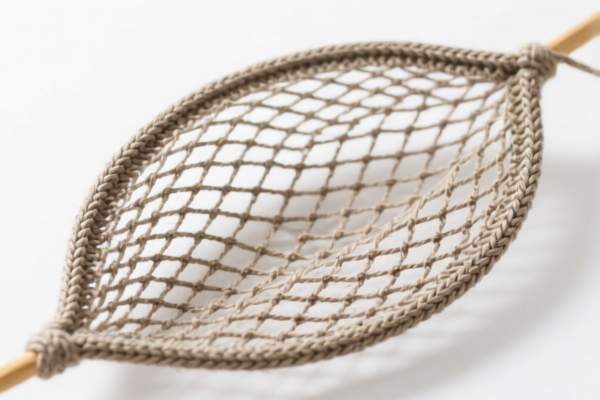
Rodent Proof Netting (often called "Rat Mesh," "Mousetrap Net," or "Exclusion Net") is a critical bio-security and structural protection material used to seal gaps in buildings, warehouses, agricultural facilities, and shipping containers.
In international trade, it is NOT a single product but is strictly classified based on its Material Composition and Manufacturing State:
- Iron/Steel Wire Mesh (Metal): Made of welded or knotted steel/iron wire. Used for heavy-duty industrial fencing or structural sealing.
- Key Characteristic: Rigid, high tensile strength, rust-resistant coating.
- Textile/Synthetic Mesh (Plastic/Fiber): Made of knotted twine, cordage, or man-made fibers (Polyester, Polypropylene). Used for lighter agricultural or temporary sealing.
- Key Characteristic: Flexible, woven or knotted, often UV-treated.
- Plastic Articles (Molded): Rigid frames, pre-cut shapes, or complex assemblies made of plastics (e.g., catch basins with integrated mesh).
- Key Characteristic: Injected molded plastic, complex shapes.
⚠️ Critical Distinction: * Metal Mesh → Classify under Chapter 73. * Textile/Knotted Net → Classify under Chapter 56. * Plastic Assemblies → Classify under Chapter 39. * Cut vs. Uncut: "Uncut" (rolls) often has different duties than "Cut to shape" (finished panels).
📦 II. HS Code Classification Details (Based on Your Provided Data)
| HS Code | Product Description | Material | State | Tax Rate (Total) |
|---|---|---|---|---|
| 7314.49.30.00 | Other grill, netting & fencing of iron/steel wire | Iron/Steel | Not Cut to Shape (Rolls/Bands) | 75.0% |
| 7314.49.60.00 | Other grill, netting & fencing of iron/steel wire | Iron/Steel | Cut to Shape (Finished Panels) | 75.0% |
| 5608.19.20.90 | Knotted netting of twine/cordage; made up fishing nets | Man-made Textile | Other Other | 0.0% |
| 5608.90.30.00 | Other knotted netting & made up nets | Other Textile | Other | 0.0% |
| 3926.90.99.89 | Other articles of plastics; covers, rings, frames | Plastic | Other Other | 12.8% |
| 3926.90.99.40 | Covers, rings, frames for manholes; drainage gates | Plastic | Specific Assemblies | 0.0% |
🔍 Key Clarification: * 7314 Series: This covers Steel Wire Rodent Guards. Whether you ship it as a large roll (uncut) or a pre-cut panel, the duty is identical (75%). * 5608 Series: This covers Rope/Knotted Synthetic Nets. If your "rat net" is made of knotted polypropylene rope (like a fishing net), it is 0%. * 3926 Series: This covers Plastic Frames/Covers. If your rodent guard is a molded plastic frame with a mesh insert, check if it's a generic "other article" (12.8%) or a specific "manhole/drainage frame" (0%).
💰 III. 2026 Taxation Detail Breakdown (High Impact!)
✅ Applicable Region: Likely USA (Based on "Steel/Aluminum/Copper" surcharges) ✅ Origin: China (CN) ✅ Policy: Section 301 Tariffs + Base Tariff
🎯 1. Iron/Steel Wire Netting (HS 7314.49.30.00 / 7314.49.60.00)
- The "75% Tax" Trap!
- Base Tariff: 0.0%
- Section 301 Surcharge (Steel): +25.0%
- Steel/Aluminum/Copper Product Surcharge: +50.0%
- TOTAL DUTY: 75.0%
📌 Explanation: * This is an extremely high duty. It applies to ALL iron or steel wire products under this heading, regardless of whether it is "cut to shape" or "uncut." * Strategy: If your rodent net is steel, the cost of goods increases by 75%. You must verify if the supplier can provide a product made of Galvanized Steel (still steel, still 75%) or if a Plastic-Coated Steel product changes classification (usually still 7314).
🎯 2. Textile/Synthetic Rodent Nets (HS 5608.19.20.90 / 5608.90.30.00)
- The "0% Tax" Opportunity!
- Base Tariff: 0.0%
- Surcharge: 0.0%
- TOTAL DUTY: 0.0%
📌 Explanation: * If the rodent net is made of knotted man-made fiber (e.g., Polyester rope) or other textile materials, it falls under Chapter 56. * Strategy: Switch to Synthetic! If the steel net is too expensive to clear, consider switching to heavy-duty knotted synthetic mesh (non-steel). This saves 75% in duties!
🎯 3. Plastic Rodent Guards (HS 3926.90.99.89 vs 3926.90.99.40)
- Variable Taxation:
- Generic Plastic Articles (99.89):
- Base: 5.3% + Surcharge: 7.5% = 12.8%
- Specific Drainage/Manhole Frames (99.40):
- Base: 0.0% + Surcharge: 0.0% = 0.0%
- Generic Plastic Articles (99.89):
📌 Explanation: * If your product is a specifically named "Catch Basin Cover" or "Manhole Frame with net," try to classify under 3926.90.99.40 to get 0%. * If it is just a generic "Plastic Rodent Barrier," it will likely fall under 3926.90.99.89 (12.8%).
🛠️ IV. Clearance Practical Advice (Avoiding the 75% Pitfall)
✅ 1. Material Strategy (The Golden Rule)
- ❌ Avoid Steel for High-Duty Markets: If shipping to the US, DO NOT ship Steel Wire Rodent Nets unless you absorb the 75% cost.
- ✅ Switch to Synthetic: Replace steel wire with High-Density Polyethylene (HDPE) or Polypropylene Knotted Nets.
- Result: Tax drops from 75% → 0%.
- ✅ Switch to Plastic Assemblies: If the design allows, use molded plastic frames (Check if they qualify for the "Drainage/Manhole" subheading for 0%).
✅ 2. Declaration Precision
- Don't just write "Rodent Net":
- Bad: "Iron Wire Rodent Net" → Auto-qualifies for 7314 (75%).
- Good: "Man-made Fibre Knotted Netting for Rodent Exclusion, Not Cut to Shape" → Qualifies for 5608 (0%).
- Material Specification: Ensure the Commercial Invoice explicitly states "100% Man-made Textile" or "HDPE" to distinguish from steel.
✅ 3. Cut vs. Uncut (For Steel Products Only)
- If you MUST use steel:
- Shipping as Rolls (Not Cut) = 7314.49.30.00 (75%)
- Shipping as Pre-cut Panels = 7314.49.60.00 (75%)
- Note: There is no tax difference between cut and uncut for steel in this dataset. Focus on Material Change instead.
🌍 V. Market Comparison (2026 Estimates)
| Market | Steel Net (7314) | Synthetic Net (5608) | Plastic Frame (3926) |
|---|---|---|---|
| 🇺🇸 USA | 75.0% (Heavy Surcharge) | 0.0% (No Surcharge) | 12.8% or 0.0% |
| 🇪🇺 EU | ~4-6% (No 301 Tariffs) | ~0-2% | ~0-3% |
| 🇨🇳 CN | ~5-10% | ~0-2% | ~5-8% |
📌 Conclusion: The USA is the most aggressive market regarding steel wire products (75% duty). The best clearance strategy for the US market is to avoid steel entirely and use Synthetic (5608) or Specific Plastic (3926.99.40) alternatives to achieve 0% duty.
🎯 VI. Common Mistakes & Pitfalls
❌ Mistake 1: Assuming "Net" = Textile. * Consequence: Declaring a steel net as "textile net" → Customs Seizure + Fraud penalty. * Fix: Always inspect the material. If it's magnetic or rusts, it's steel.
❌ Mistake 2: Ignoring the "Surcharge". * Consequence: Calculating duty as 25% (Section 301) only, forgetting the extra 50% "Steel/Copper/Aluminum" surcharge. * Fix: For steel wire, always assume 75% unless a specific exemption applies.
❌ Mistake 3: Vague Description. * Consequence: "Rodent Guard" is too vague. * Fix: Use precise terms: "Knotted netting of man-made textile materials" or "Expanded metal of iron or steel."
🚀 VII. Final Action Plan
- Audit Material: Is your rodent net Steel? If YES, the 75% tax applies.
- Re-engineer: Can you switch to Knotted Synthetic Rope (Polyester/PP)?
- New HS Code:
5608.19.20.90or5608.90.30.00 - New Tax: 0%
- New HS Code:
- Document: Prepare a Material Safety Data Sheet (MSDS) or Fiber Composition Report to prove it is not steel.
- Clearance: Ship with the invoice description: "Rodent Exclusion Netting, 100% Man-made Textile, Knotted, Not Cut to Shape."
✨ Pro Tip:
"Steel Rodent Nets = 75% Tax Nightmare."
"Synthetic Rodent Nets = 0% Tax Dream."
Change your material, save your profit!
💼 Your Customs Cost is Calculated per Gram of Material. Choose Wisely!
Customer Reviews
About HS Code Classification
The Harmonized System (HS) is an internationally standardized nomenclature developed by the World Customs Organization (WCO) to classify traded products. Over 200 countries use the HS system as the basis for customs tariffs, trade statistics, and import/export regulations.
Each HS code follows a hierarchical structure:
- Chapter (2 digits) — Broad category of goods (e.g., Chapter 84: Machinery and Mechanical Appliances)
- Heading (4 digits) — More specific grouping within the chapter
- Subheading (6 digits) — Internationally standardized breakdown, used by all WCO member countries
- National subdivisions (8-10 digits) — Country-specific extensions for further classification, such as US HTSUS 10-digit codes
Correct HS code classification is essential for smooth customs clearance, accurate duty payment, and compliance with trade regulations. Misclassification can lead to customs delays, overpayment of duties, or penalties.
When importing from CN to US, the applicable tariff rates may include:
- Most-Favored-Nation (MFN) rate — The standard duty rate applied to WTO members
- General rate — Applied to countries without trade agreements
- Trade remedy duties — Additional tariffs such as Section 301 (anti-dumping), Section 232 (national security), or countervailing duties
The information provided on this page is for reference purposes only. For official classification, please consult with your local customs authority or a licensed customs broker.