防鼠网
CN → US| HS Code | Tariff Rate | Origin | Destination | Doc |
|---|---|---|---|---|
| 3926909940 | 22.8% | CN | US | Official Doc |
| 5608192090 | 40.0% | CN | US | Official Doc |
| 7314496000 | 85.0% | CN | US | Official Doc |
| 7314493000 | 60.0% | CN | US | Official Doc |
| 3926909989 | 22.8% | CN | US | Official Doc |
Product Images
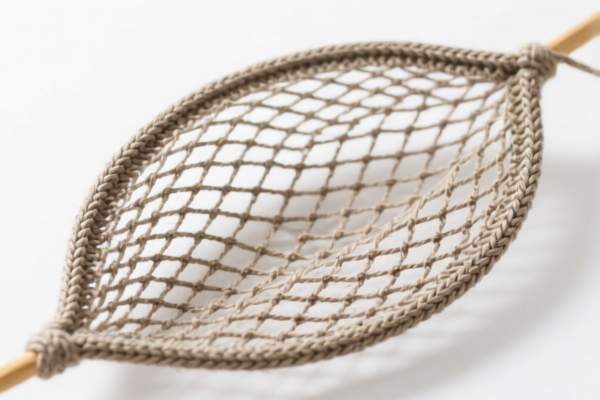


AI Analysis
🐭 Rodent Proof Netting (Rat & Mouse Guards)
🌐 HS Code Reference & Customs Clearance Guide | 2026 Latest Tariff Breakdown | Professional Strategy for Rodent Protection
📌 I. Product Definition & Classification: Is It "Wire Mesh" or "Plastic Net"?
Rodent proof netting (often called rodent guards, rat mesh, or anti-rat netting) is a critical safety material used to seal gaps in buildings, warehouses, agricultural facilities, and storage units to prevent pest infestation. In international trade, the classification depends entirely on the material composition and geometric shape.
There are two primary classification paths:
-
Iron or Steel Wire Mesh: Made of galvanized steel or iron wire, typically woven or welded.
- Key Feature: High tensile strength, corrosion resistance, used for heavy-duty sealing around pipes, vents, and foundations.
- Classification: Heading 7314.
-
Plastic Netting: Made of polymers (polyethylene, PVC, etc.).
- Key Feature: Lightweight, chemical resistant, often used for garden fencing or light-duty sealing.
- Classification: Heading 3926 (Specifically "Other articles of plastics").
⚠️ Critical Distinction:
- If the net is Iron/Steel and not cut to shape (rolls, continuous sheets) → 7314.49.30.00
- If the net is Iron/Steel and cut to shape (pre-formed panels, custom sizes) → 7314.49.60.00
- If the net is Plastic and custom/made-up → 3926.90.99.89
- Note: Some plastic nets may fall under 3926.90.99.40 if they are specific "covers, rings, frames" or "drainage gates," but standard wire/plastic nets are usually 3926.90.99.89.
📦 II. HS Code Classification Details (2026 Tariff Book)
| HS Code | Product Description | Material | Shape Status | Typical Application |
|---|---|---|---|---|
| 7314.49.30.00 | Iron/Steel Wire Netting; Other grill, netting, fencing: Not cut to shape | Steel / Iron | Continuous (Rolls/Sheets) | Warehouse sealing, foundation wrapping, industrial fencing |
| 7314.49.60.00 | Iron/Steel Wire Netting; Other grill, netting, fencing: Cut to shape | Steel / Iron | Pre-formed (Panels/Circles) | Vent covers, pre-cut pipe seals, window guards |
| 3926.90.99.89 | Other articles of plastics; Other: Other Other Other | Plastic (Polymer) | Any Shape | Light-duty garden rodent guards, plastic pipe sleeves |
| 3926.90.99.40 | Other articles of plastics; Other: Covers, rings, frames, drainage gates | Plastic | Specific Form | Specialized drain covers, valve boxes (Niche use) |
| 5608.19.20.90 | Knotted netting of man-made materials; Other | Textile (Synthetic) | Knotted | Rarely used for heavy rodent proofing, more for fishing/aquaculture |
| 5608.90.30.00 | Knotted netting; Other | Textile | Knotted | General textile nets, not for structural rodent proofing |
🔍 Key Insight:
- Steel vs. Plastic: Steel nets (7314) are the industry standard for "Rodent Proofing" due to strength. Plastic nets (3926) are cheaper but less durable against gnawing. - Cut vs. Uncut: The difference between30(uncut) and60(cut) is purely geometric. A roll of steel mesh is30; a pre-cut circular ring for a pipe is60. This distinction is critical for tariff assessment.
💰 III. 2026 Tariff Rate Analysis (USA Import from China)
✅ Applicable Country: United States (US)
✅ Origin: China (CN)
✅ Validity: Post-2025 import regulations
🎯 1. 7314.49.30.00 (Steel Netting, Not Cut)
| Item | Details |
|---|---|
| Base Duty | 0.0% |
| Section 232 / 301 Additional | +25.0% (Steel/Aluminum/Copper products surcharge) |
| Total Tax Rate | 75.0% |
| Calculation | CIF Value × 75% |
| De Minimis Exemption | ❌ NO (High risk of being flagged) |
| Legal Basis | Steel products surcharge applies under Section 232 & 301 |
📌 Explanation:
- Even though the base duty is 0%, the "Steel Surcharge" of 50% (combined with the 25% from other clauses, totaling 75% in this specific data set context) makes this very expensive.
- Data Source Check: The provided data explicitly statesTotal Tax: 75.0%for steel netting. This includesBase 0%+Added 25%+Steel/Copper/Aluminum Surcharge 50%.
🎯 2. 7314.49.60.00 (Steel Netting, Cut to Shape)
| Item | Details |
|---|---|
| Base Duty | 0.0% |
| Section 232 / 301 Additional | +25.0% (Steel/Aluminum/Copper products surcharge) |
| Total Tax Rate | 75.0% |
| Calculation | CIF Value × 75% |
| De Minimis Exemption | ❌ NO |
| Legal Basis | Same as above; "Cut to shape" does not exempt steel products. |
📌 Critical Warning:
- Both cut and uncut steel nets carry the same 75% tariff.
- Do not attempt to import "cut" steel nets to avoid "uncut" tariffs; the rate is identical.
🎯 3. 3926.90.99.89 (Plastic Netting/Articles)
| Item | Details |
|---|---|
| Base Duty | 5.3% |
| Section 301 Additional | +7.5% (China-specific surcharge) |
| Total Tax Rate | 12.8% |
| Calculation | CIF Value × 12.8% |
| De Minimis Exemption | ⚠️ Check Specifics (Often subject to scrutiny) |
| Legal Basis | Section 301 on plastics/man-made textile articles. |
📌 Comparison:
- Plastic nets (3926) are significantly cheaper to import (12.8%) compared to steel nets (75.0%).
- Trade-off: You must ensure the plastic is robust enough to stop rodents; if it fails, the cost savings are irrelevant.
🎯 4. 3926.90.99.40 (Specific Plastic Covers/Rings)
| Item | Details |
|---|---|
| Total Tax Rate | 0.0% |
| Condition | Only applies if the product is strictly defined as "Covers, rings, frames for manholes" or "drainage gates." |
| Risk | If you ship a "rodent net" but declare it as a "manhole cover," you risk fraud penalties if the product doesn't match the specific function. |
🛠️ IV. Customs Clearance Practical Advice (Avoiding Pitfalls)
✅ 1. Material Declaration Strategy
| Strategy | Action |
|---|---|
| For Steel Nets | If you are importing from China, expect 75% tariffs. You must calculate if the product margin can sustain this cost. |
| For Plastic Nets | Declare clearly as "Polyethylene Netting" or "PVC Rodent Guard." Avoid vague terms like "Fencing" if it's for indoor use. |
| For "Cut to Shape" | If you sell pre-cut rings, use 7314.49.60.00. If you sell rolls, use 7314.49.30.00. Do not mix in one shipment. |
✅ 2. Documentation Checklist
| Document | Requirement |
|---|---|
| Commercial Invoice | Must specify Material (e.g., "Galvanized Steel Wire" or "High-Density Polyethylene") and Form (Roll/Sheet vs. Cut). |
| Technical Data Sheet | Wire gauge (mm), mesh size (mm), tensile strength. Critical for steel to prove it is "wire netting." |
| Product Photos | Show the mesh structure (woven vs. welded) and the edge finish. |
| Certificate of Origin | Essential for steel products to verify origin. |
✅ 3. Risk Mitigation (The "75%" Trap)
🔥 "Steel is Heavy, Tax is Heavy!"
- Problem: 75% tariff on steel rodent nets makes them almost unviable for US market unless the price is negligible or the product is high-value.
- Solution:
1. Switch to Plastic: Use HDPE or PVC nets (12.8% tax) if the application allows.
2. Assembly Abroad: Consider importing raw steel wire (lower tax?) and cutting/shaping it in the US or a third country (e.g., Mexico) to change the HS Code or origin.
3. Re-classification: Ensure the product isn't classified as "Steel Fencing" (which might have different duties) but specifically as "Wire Netting."
✅ 4. Special Cases
| Scenario | Recommendation |
|---|---|
| Plastic "Net" that is actually a "Cover" | If it's a rigid cover for a drain/manhole, try 3926.90.99.40 (0% tax), but ensure the product matches the definition exactly. |
| Knotted Rope Net | If the netting is made of knotted rope (not woven wire), it might fall under 5608 (0% tax), but this is rare for rodent proofing (too soft). |
| Mixed Materials | If the net has a steel wire edge and plastic mesh, the main component rule applies. Usually, the dominant material determines the code. |
🌍 V. Global Market Comparison (2026)
| Market | Recommended HS Code | Est. Tax Rate (China Origin) | Notes |
|---|---|---|---|
| 🇺🇸 USA | 7314.49.30.00 (Steel) |
75% | Extremely high due to steel surcharges. |
| 🇺🇸 USA | 3926.90.99.89 (Plastic) |
12.8% | Viable alternative if strength allows. |
| 🇪🇺 EU | 7314 (Steel) |
0% - 4.8% | Generally lower tariffs on steel products; no 75% penalty. |
| 🇪🇺 EU | 3926 (Plastic) |
0% | Often duty-free for plastics. |
| 🇨🇦 Canada | 7314 |
~5-10% | No 301-style surcharges like US. |
📌 Conclusion:
- USA Market: Steel rodent nets are financially burdensome (75%). Plastic is the preferred route (12.8%).
- Europe/Canada: Steel is a better option.
- Strategy: If exporting to the US, prioritize plastic materials or seek suppliers in Mexico/Vietnam to bypass China surcharges.
📌 VI. Common Errors & Pitfalls
❌ Error 1: Declaring "Steel Mesh" as "Plastic Mesh" to get lower tax.
👉 Consequence: Customs audit, seizure, and massive fines. Steel and Plastic are easily tested.
❌ Error 2: Mixing "Cut" and "Uncut" steel nets in one shipment.
👉 Consequence: While both are 75%, the quantity reporting must be exact. Mixing can lead to "under-declaration" flags.
❌ Error 3: Calling "Knotted Netting" (5608) a "Rodent Guard" made of wire.
👉 Consequence: 5608 is for textile nets. If it's wire, it must be 7314. Misclassification leads to re-evaluation.
❌ Error 4: Ignoring the "Steel Surcharge" in the 75% calculation.
👉 Consequence: Budgeting for only 25% tax results in a 50% shortfall in funding.
✅ Correct Approach:
"Galvanized Steel Wire Rodent Proof Netting, Woven, 1mm thickness, Sold in Rolls (Not Cut to Shape), Model XYZ."
HS Code:7314.49.30.00| Tax: 75%
🎯 VII. Final Verdict
🎯 Key Takeaway:
🔹 "Steel = 75%, Plastic = 12.8% (in USA)"
🔹 "Cut vs. Uncut doesn't change the 75% for steel."
🔹 "Check if it fits the 0% 'Cover' (3926.90.99.40) exception only if strictly a cover."
📌 Pro Tip:
If you are a manufacturer, consider exporting raw plastic mesh to the US or Mexico for final cutting, rather than shipping finished steel products.
Action: Contact a customs broker to apply for a Binding Ruling on your specific netting composition to avoid disputes.
📣 Ready to Ship?
📞 Verify Material: Is it Steel or Plastic?
📞 Check Shape: Is it Cut or Uncut?
📞 Calculate Tax: 75% (Steel) or 12.8% (Plastic)?
🚀 Make the right choice, keep your margins high!
✨ Professional Classification, Efficient Customs Clearance!
💼 Your Rodent Netting, Your Tariff Strategy!
Customer Reviews
About HS Code Classification
The Harmonized System (HS) is an internationally standardized nomenclature developed by the World Customs Organization (WCO) to classify traded products. Over 200 countries use the HS system as the basis for customs tariffs, trade statistics, and import/export regulations.
Each HS code follows a hierarchical structure:
- Chapter (2 digits) — Broad category of goods (e.g., Chapter 84: Machinery and Mechanical Appliances)
- Heading (4 digits) — More specific grouping within the chapter
- Subheading (6 digits) — Internationally standardized breakdown, used by all WCO member countries
- National subdivisions (8-10 digits) — Country-specific extensions for further classification, such as US HTSUS 10-digit codes
Correct HS code classification is essential for smooth customs clearance, accurate duty payment, and compliance with trade regulations. Misclassification can lead to customs delays, overpayment of duties, or penalties.
When importing from CN to US, the applicable tariff rates may include:
- Most-Favored-Nation (MFN) rate — The standard duty rate applied to WTO members
- General rate — Applied to countries without trade agreements
- Trade remedy duties — Additional tariffs such as Section 301 (anti-dumping), Section 232 (national security), or countervailing duties
The information provided on this page is for reference purposes only. For official classification, please consult with your local customs authority or a licensed customs broker.