1 Switch Organizer (Black)
CN → US| HS Code | Tariff Rate | Origin | Destination | Doc |
|---|---|---|---|---|
| 3926909989 | 22.8% | CN | US | Official Doc |
| 4202329300 | 52.6% | CN | US | Official Doc |
| 7326903500 | 92.8% | CN | US | Official Doc |
| 7326908688 | 87.9% | CN | US | Official Doc |
| 3926909989 | 22.8% | CN | US | Official Doc |
Product Images
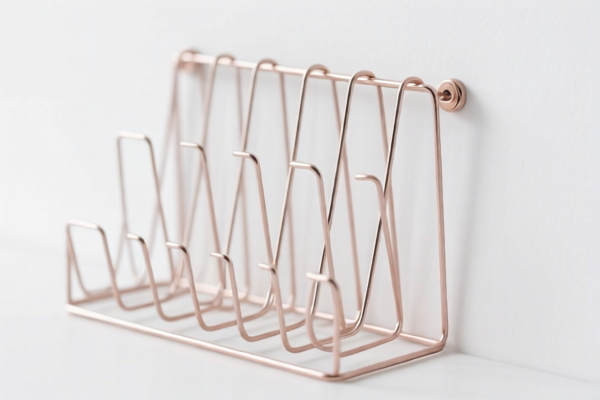
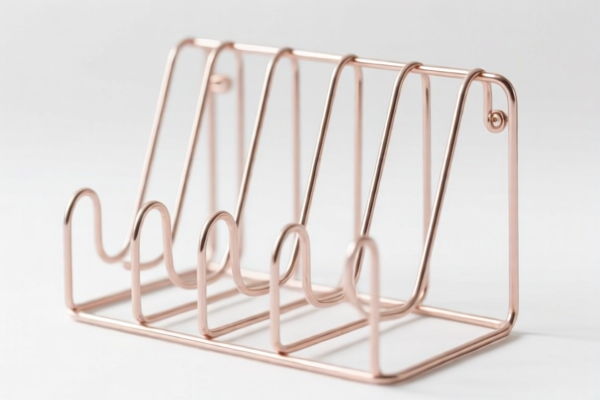
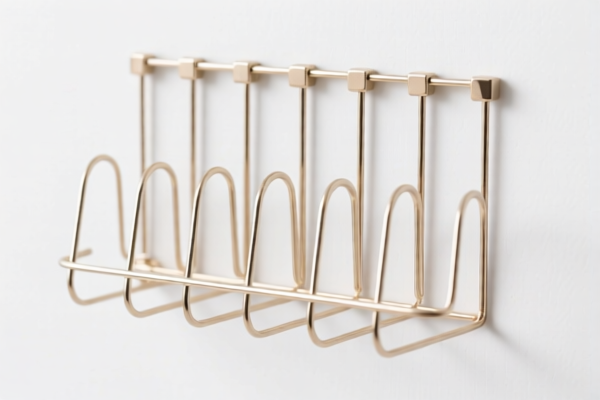
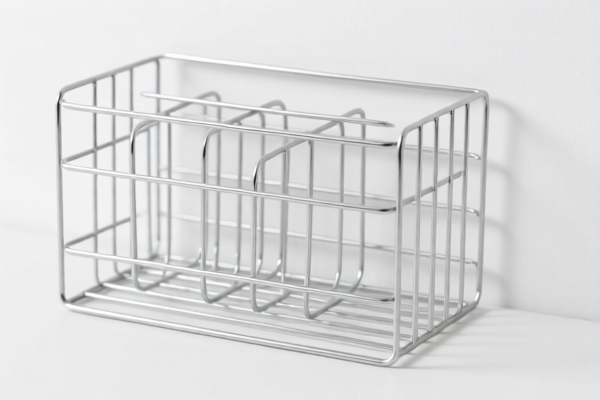
AI Analysis
🖥️ 1 Switch Organizer (Black)
Product Category: Storage & Organization Accessories for Home Automation / Electronics
🌐 HS Code Reference & Customs Clearance Guide | 2024/2025 Latest Tariff Analysis | Professional Compliance Strategy
📌 One product, multiple potential classifications. The "Switch Organizer" is a ambiguous item. Its classification depends entirely on its Material, Function, and Physical Form. Below are the 4 most likely HS Codes based on the provided data, with detailed tax breakdowns.
⚠️ Critical Warning: The total tax rate varies from 22.8% to 92.8% depending on the material and specific design. Misclassification can lead to severe penalties, delays, or massive cost overruns.
📦 二、HS Code Classification Matrix (Based on Provided Data)
| HS Code | Material/Form | Summary Description | Total Tax Rate |
|---|---|---|---|
3926.90.99.89 |
Plastic / Composite | "Other Plastic Articles" - Catch-all category for small plastic accessories | 22.8% |
4202.32.93.00 |
Textile / Plastic Sheeting | "Similar Containers" - Storage/Organization items made of textile or plastic sheeting | 52.6% |
7326.90.35.00 |
Metal (Steel/Aluminum) | "Other Iron/Steel Articles" - Container-like organizers for carry-hands bags | 92.8% |
7326.90.86.88 |
Metal (Iron/Steel) | "Other Iron Articles" - Non-specific metal storage/organization items | 87.9% |
💰 三、Detailed Tariff Breakdown & Tax Logic (2024/2025 Context)
✅ Applicable Country: United States (US)
✅ Origin: China (CN)
✅ Key Tariff Components: Base Duty + Section 301 Surcharge + Section 122 Tariffs (if applicable)
🎯 1. 3926.90.99.89 – The "Lowest Cost" Option (Plastic)
Scenario: The organizer is made entirely of plastic or plastic-composite materials and does not fit the specific definition of a bag or case.
| Item | Details |
|---|---|
| Base Duty | 5.3% |
| Section 301 Surcharge | 7.5% (Note: Some plastics may face 25%, but data indicates 7.5% here) |
| Section 122 Tariff | 10% |
| Total Effective Rate | 22.8% |
| Legal Basis | Classified as "Other Plastic Articles" (Catch-all). |
📌 Explanation:
- This is the most favorable classification if the item is clearly plastic and not considered a "container" for goods in transit.
- Risk: If customs determines it is a "container" (like a pouch), they may reclassify it to4202, jumping the tax to 52.6%.
🎯 2. 4202.32.93.00 – The "Bag/Case" Classification (Textile/Plastic Sheeting)
Scenario: The organizer resembles a pouch, sleeve, or small bag made of textile materials or plastic sheeting, used for organizing items (like switches/remote controls).
| Item | Details |
|---|---|
| Base Duty | 17.6% |
| Section 301 Surcharge | 25.0% |
| Section 122 Tariff | 10% |
| Total Effective Rate | 52.6% |
| Legal Basis | Classified as "Similar Containers" made of textile materials or plastic sheeting. |
📌 Explanation:
- The key factor is "Similar Container". If your organizer has an opening, closure (zipper/button), and is designed to hold other items, it likely falls here.
- High Risk: Many "organizers" are misclassified as simple "articles" to avoid this tax. Customs audits often target this discrepancy.
🎯 3. 7326.90.35.00 – The "Metal Container" (Highest Cost)
Scenario: The organizer is made of metal (Steel/Aluminum/Copper) and is shaped like a container or tray, potentially for use in handbags or as a standalone storage unit.
| Item | Details |
|---|---|
| Base Duty | 7.8% |
| Section 301 Surcharge | 25.0% |
| Section 122 Tariff | 10% |
| Steel/Aluminum/Copper Surcharge | 50% (Note: Data indicates total 92.8%, implying additional surcharges on base material) |
| Total Effective Rate | 92.8% |
| Legal Basis | "Other Iron/Steel Articles" – Specifically container-like items. |
📌 Explanation:
- Metal products face extremely high tariffs due to Section 232 (Steel/Aluminum) and Section 301.
- Warning: A simple plastic organizer should NEVER be misclassified as metal to save costs, as physical inspections will reveal the material mismatch.
🎯 4. 7326.90.86.88 – The "Other Metal Article"
Scenario: The organizer is metal but does not fit the specific "container" description, falling into a "catch-all" for other iron/steel articles.
| Item | Details |
|---|---|
| Base Duty | 2.9% |
| Section 301 Surcharge | 25.0% |
| Section 122 Tariff | 10% |
| Steel/Aluminum/Copper Surcharge | 50% |
| Total Effective Rate | 87.9% |
| Legal Basis | "Other Iron Articles" – Non-specific listed categories. |
📌 Explanation:
- Still prohibitively expensive (87.9%).
- Strategy: Avoid metal for this product type unless it is a high-value industrial component. For consumer electronics accessories, plastic is the industry standard.
🛠️ 四、Customs Clearance Recommendations (Actionable Advice)
✅ 1. Documentation & Product Description Strategy
To secure the lowest tax rate (3926.90.99.89 at 22.8%), your declaration must clearly support Plastic Material and Non-Container status.
| Document | Required Content | Why It Matters |
|---|---|---|
| Product Specification Sheet | - Material: 100% ABS Plastic / PC Plastic - No textiles, no metal frames - Dimensions, Weight |
Proves it is not a textile/plastic sheeting container (4202) or metal (7326). |
| Commercial Invoice | - Description: "Plastic Wall Switch Cover Organizer / Accessory" - Avoid words: "Bag", "Case", "Pouch", "Container" |
Using "Container" or "Bag" triggers 4202 (52.6%). Use "Accessory" or "Cover". |
| Photos | - Clear view of material texture - No visible zippers, fabric, or metal hinges |
Visual proof for customs brokers. |
| Material Composition Statement | Signed statement confirming 100% plastic composition | Prevents reclassification to metal or textile. |
✅ 2. Declaration "Tricks" (Legitimate Optimization)
| Strategy | Correct Approach | Incorrect Approach |
|---|---|---|
| Naming | "Plastic Switch Plate Organizer" | "Switch Storage Bag" or "Switch Case" |
| Function | Emphasize it is a decorative cover or wall-mounted accessory | Emphasize it is for transport/storage of items |
| Material | State "ABS Plastic" explicitly | State "Plastic-like material" or omit material |
✅ 3. Risk Mitigation
| Risk | Mitigation Plan |
|---|---|
| Customs Audit | Keep samples in your warehouse. If CBP asks, provide a sample that clearly matches 3926 (hard plastic, no closure). |
| Material Change | If your supplier switches from Plastic to a Fabric-lined Plastic, you must update the HS Code to 4202 to avoid fraud allegations. |
| High Value | For shipments over $2,500, consider filing an Advance Ruling with CBP to get a binding determination on the HS Code before shipping. |
🌍 五、Global Market Context (Quick Comparison)
| Market | Recommended HS Code | Est. Total Duty (China Origin) | Notes |
|---|---|---|---|
| 🇺🇸 USA | 3926.90.99.89 |
22.8% | Best option. Avoids high Section 301 rates on textiles/metals. |
| 🇺🇸 USA | 4202.32.93.00 |
52.6% | High cost if classified as "bag". |
| 🇪🇺 EU | 3926.90.97 |
~5-7% | EU has lower base duties and no Section 122/301 tariffs. |
| 🇨🇳 China | 3926.90.90 |
~5-10% | Low duty, but irrelevant for US imports. |
📌 Conclusion for US Importers:
The Plastic classification (3926) is the only viable option for cost-effective importation of switch organizers.
- Target Tax: 22.8%
- Avoid: Metal (87-92%) and Textile/Bag classifications (52.6%).
- Key: Ensure the product is hard plastic, rigid, and not a flexible pouch/bag.
📌 六、Common Pitfalls & Blood-Teaching Lessons
❌ Pitfall 1: Describing the product as a "Bag" or "Case"
👉 Result: Classifies under 4202 → Tax jumps from 22.8% to 52.6%.
💡 Fix: Use "Organizer," "Holder," or "Cover."
❌ Pitfall 2: Ignoring Material Composition
👉 Result: Customs assumes "Textile" if fabric lining is present → 52.6% Tax.
💡 Fix: Ensure no fabric parts. If there is a fabric insert, declare the primary material as plastic but be prepared for 4202.
❌ Pitfall 3: Assuming all Organizers are "Containers"
👉 Result: Misunderstanding "Container" definition.
💡 Fix: A "container" implies holding goods for transport. A wall-mounted switch cover is an accessory, not a container for transport.
🎯 七、Final Verdict: The Smart Way to Import
🎯 Strategy Summary:
1. Material: Use Hard Plastic (ABS/PC).
2. Form: Rigid, wall-mountable, or desktop stand.
3. Description: "Plastic Switch Accessory Organizer."
4. HS Code: 3926.90.99.89.
5. Total Tax: 22.8%.
🔥 Mantra:
"Plastic Rigid, Low Tax. Bag Soft, High Cost. Metal Heavy, Costly Death!"
📣 Immediate Action Steps:
1. Verify Material: Confirm with supplier that the organizer is 100% Plastic.
2. Update Invoice: Change description from "Switch Case" to "Plastic Switch Organizer Accessory."
3. File Entry: Use HS Code 3926.90.99.89.
4. Backup: Keep product samples ready for CBP examination.
✨ Professional Clearance Starts with Precise Classification!
💼 Save 30%+ in Taxes by Choosing the Right HS Code!
Customer Reviews
About HS Code Classification
The Harmonized System (HS) is an internationally standardized nomenclature developed by the World Customs Organization (WCO) to classify traded products. Over 200 countries use the HS system as the basis for customs tariffs, trade statistics, and import/export regulations.
Each HS code follows a hierarchical structure:
- Chapter (2 digits) — Broad category of goods (e.g., Chapter 84: Machinery and Mechanical Appliances)
- Heading (4 digits) — More specific grouping within the chapter
- Subheading (6 digits) — Internationally standardized breakdown, used by all WCO member countries
- National subdivisions (8-10 digits) — Country-specific extensions for further classification, such as US HTSUS 10-digit codes
Correct HS code classification is essential for smooth customs clearance, accurate duty payment, and compliance with trade regulations. Misclassification can lead to customs delays, overpayment of duties, or penalties.
When importing from CN to US, the applicable tariff rates may include:
- Most-Favored-Nation (MFN) rate — The standard duty rate applied to WTO members
- General rate — Applied to countries without trade agreements
- Trade remedy duties — Additional tariffs such as Section 301 (anti-dumping), Section 232 (national security), or countervailing duties
The information provided on this page is for reference purposes only. For official classification, please consult with your local customs authority or a licensed customs broker.