10 S shaped hooks
CN → US| HS Code | Tariff Rate | Origin | Destination | Doc |
|---|---|---|---|---|
| 7326908688 | 87.9% | CN | US | Official Doc |
| 3926909989 | 22.8% | CN | US | Official Doc |
| 7326200090 | 88.9% | CN | US | Official Doc |
| 7616109090 | 91.0% | CN | US | Official Doc |
| 3926908500 | 24.0% | CN | US | Official Doc |
Product Images
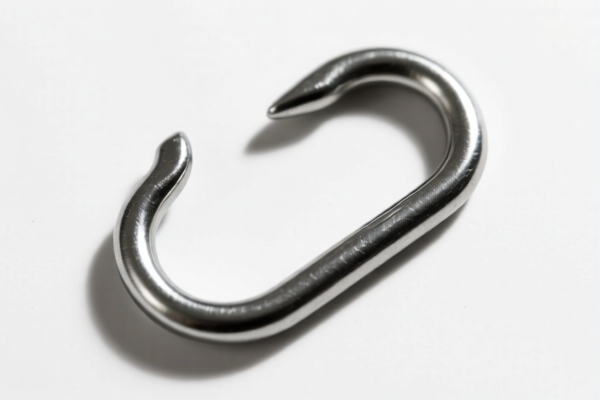
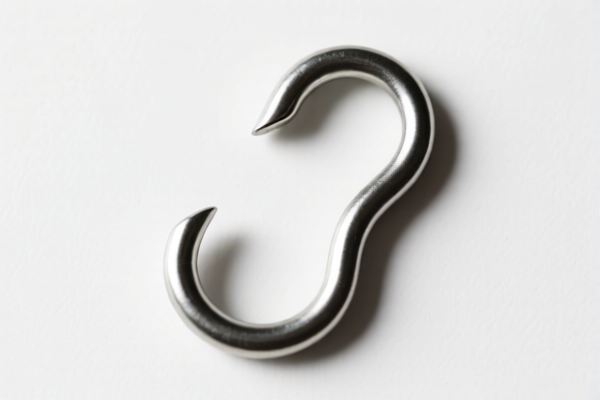


AI Analysis
🎣 S-Shaped Hooks (Metal & Plastic Fixtures)
🌐 HS Code Reference & Customs Clearance Guide | 2026 Latest Tariff Analysis | Professional Clearance Strategy
📌 I. Product Definition & Classification: What are "S-Shaped Hooks"?
S-shaped hooks are versatile hanging fixtures used in hardware, textiles, industrial storage, and household organization. In international trade, they are primarily classified based on material composition, which drastically affects their HS Code and tariff burden.
Metal Hooks (Iron/Steel/Aluminum): Heavy-duty or standard metallic hooks. These are heavily scrutinized under Section 232 (Steel/Aluminum) and Section 301 tariffs. Plastic/Polymer Hooks: Lightweight, non-metallic hooks. These face significantly lower tariff rates but require careful material declaration to avoid misclassification as metal.
⚠️ Critical Distinction Point:
- If made of Iron/Steel → Classified under Chapter 73 (Articles of Iron or Steel).
- If made of Aluminum → Classified under Chapter 76 (Articles of Aluminum).
- If made of Plastic → Classified under Chapter 39 (Articles of Plastics).
- Do NOT mix materials in one HS Code declaration. Separate declarations are required for mixed shipments to avoid customs penalties.
📦 II. HS Code Classification Details (2026 Latest Tariff对照)
Based on the provided data, here are the specific classifications for S-shaped hooks:
| HS Code | Product Description | Material Assumption | Key Feature |
|---|---|---|---|
7326.90.86.88 |
Metal hooks and other articles of iron or steel | Iron / Steel | Standard metal hooks, likely steel or iron based. |
7326.20.00.90 |
Other articles of iron or steel (Wire products) | Iron / Steel | Specifically wire or steel rod bent into shape. |
7616.10.90.90 |
Screws, hooks, bolts, etc. | Aluminum / Steel | Explicitly covers "hooks"; material could be aluminum or steel. |
3926.90.99.89 |
Other articles of plastics (Not elsewhere specified) | Plastic | Plastic S-hooks not specifically listed elsewhere. |
3926.90.85.00 |
Fasteners and fittings of plastics | Plastic | Plastic hooks used as fasteners/fixing accessories. |
🔍 Key Reminder:
- Metal Hooks (73xxand76xx) carry very high combined tariffs (87.9% - 91.0%) due to Section 232 and Section 301 measures.
- Plastic Hooks (39xx) have moderate tariffs (22.8% - 24.0%) but still include Section 301 add-ons.
- Misclassification Risk: Declaring an aluminum hook as "steel" to avoid Section 232 tariffs is illegal and high-risk. Material must match the physical product.
💰 III. 2026 Latest Tariff Rate Breakdown (Including Surtaxes)
✅ Applicable Country: United States (US)
✅ Origin: China (CN)
✅ Effective Date: 2025/2026 (Current Active Policies)
🎯 1. 7326.90.86.88 —— Metal Hooks (Iron/Steel)
| Item | Details |
|---|---|
| Base Duty | 2.9% |
| Section 301 Surcharge | +25.0% |
| Section 232 Surcharge (Steel) | +50.0% |
| Total Effective Rate | 87.9% |
| Tax Calculation | CIF Value × 87.9% |
| De Minimis Exemption | ❌ Not Eligible (High risk of seizure if < $800) |
| Legal Basis | USITC:7326.90.86.88 + Section 232: Steel + Section 301 |
📌 Explanation:
- Steel Surcharge (50%): Applies because the hook is made of steel/iron. This is the heaviest burden.
- Section 301 (25%): Standard retaliatory tariff on Chinese goods.
- Result: Nearly 90% tax cost. Not suitable for low-value items.
🎯 2. 7326.20.00.90 —— Wire Products (Iron/Steel)
| Item | Details |
|---|---|
| Base Duty | 3.9% |
| Section 301 Surcharge | +25.0% |
| Section 232 Surcharge (Steel) | +50.0% |
| Total Effective Rate | 88.9% |
| Tax Calculation | CIF Value × 88.9% |
| De Minimis Exemption | ❌ Not Eligible |
| Legal Basis | USITC:7326.20.00.90 + Section 232: Steel + Section 301 |
📌 Note:
- Slightly higher than7326.90.86.88due to a higher base rate (3.9% vs 2.9%).
- Applies if the hook is specifically defined as a "wire article."
🎯 3. 7616.10.90.90 —— Screws, Hooks, etc. (Aluminum/Steel)
| Item | Details |
|---|---|
| Base Duty | 6.0% |
| Section 301 Surcharge | +25.0% |
| Section 232 Surcharge (Steel/Aluminum) | +50.0% |
| Total Effective Rate | 91.0% |
| Tax Calculation | CIF Value × 91.0% |
| De Minimis Exemption | ❌ Not Eligible |
| Legal Basis | USITC:7616.10.90.90 + Section 232 + Section 301 |
📌 Warning:
- Highest Tax Rate (91.0%).
- Even if the hook is Aluminum, it still faces the 50% Section 232 surcharge.
- This HS Code explicitly mentions "Hooks," so it is the most accurate for S-hooks if metal, but the cost is prohibitive.
🎯 4. 3926.90.99.89 —— Other Plastic Articles
| Item | Details |
|---|---|
| Base Duty | 5.3% |
| Section 301 Surcharge | +7.5% |
| Section 232 Surcharge | N/A (Plastic is not metal) |
| Total Effective Rate | 22.8% |
| Tax Calculation | CIF Value × 22.8% |
| De Minimis Exemption | ❌ Not Eligible (Section 301 applies to de minimis from China) |
| Legal Basis | USITC:3926.90.99.89 + Section 301: 7.5% |
📌 Comparison:
- Much lower than metal hooks (22.8% vs >87%).
- Ideal if the S-hooks are plastic-coated or fully plastic.
- Ensure the product is 100% plastic; any metal core may reclassify it as metal.
🎯 5. 3926.90.85.00 —— Plastic Fasteners/Fittings
| Item | Details |
|---|---|
| Base Duty | 6.5% |
| Section 301 Surcharge | +7.5% |
| Section 232 Surcharge | N/A |
| Total Effective Rate | 24.0% |
| Tax Calculation | CIF Value × 24.0% |
| De Minimis Exemption | ❌ Not Eligible |
| Legal Basis | USITC:3926.90.85.00 + Section 301: 7.5% |
📌 Usage:
- Best if the S-hooks are marketed as "fasteners" or "fixing accessories" rather than just "hooks."
- Rate is similar to general plastic articles (24.0%vs22.8%).
🛠️ IV. Customs Clearance Practical Advice (Pitfall Avoidance)
✅ 1. Material Verification is Key
| Material | Recommended HS Code | Total Tax | Strategy |
|---|---|---|---|
| Steel/Iron | 7326.90.86.88 or 7326.20.00.90 |
~88-89% | High Cost. Consider if value justifies import. |
| Aluminum | 7616.10.90.90 |
~91% | Highest Cost. Avoid if possible. |
| Plastic | 3926.90.99.89 or 3926.90.85.00 |
~23-24% | Optimal Choice. Use if design allows plastic. |
🔥 Rule of Thumb:
"Plastic saves, Metal taxes. If it's metal, expect ~90% duty."
✅ 2. Declaration Techniques
| Situation | Correct Declaration | Wrong Practice |
|---|---|---|
| Plastic S-Hook | "Plastic S-Shaped Hook, Fastener" → 3926.90.85.00 |
Declaring as "Metal Hook" → 88% tax |
| Steel S-Hook | "Steel S-Hook, Hardware" → 7326.90.86.88 |
Declaring as "Plastic Hook" → Fraud Risk |
| Mixed Material | Separate lines in invoice; declare each material correctly | Mixing in one line → Customs Rejection |
| Aluminum S-Hook | "Aluminum Hook, 7616.10.90.90" → 91% tax | Ignoring Section 232 → Penalty |
⚠️ Warning:
- Do NOT declare a steel hook as plastic to save tax. Customs can perform material tests (XRF) and will impose heavy fines.
- If the hook has a plastic coating but is metal core, it is still considered Metal.
✅ 3. Special Cases & Mitigation
| Situation | Recommendation |
|---|---|
| OEM Custom Hooks | Provide material test reports (RoHS, Material Composition) to prove plastic content. |
| Small Sample Shipments (< $800) | ❌ Not Exempt. Section 301 taxes apply to de minimis from China since 2025/2026. |
| Supply Chain Diversification | Consider sourcing from Vietnam, Thailand, or Mexico to avoid Section 301 & 232 tariffs. |
| Pre-Ruling Application | Apply for an Advance Ruling from CBP to confirm HS Code before shipment. |
🌍 V. Global Market Clearance Comparison (2026)
| Country/Region | Recommended HS Code | Estimated Tax (China Origin) | Certification | Note |
|---|---|---|---|---|
| 🇺🇸 USA | 3926.90.85.00 (Plastic) |
24.0% | N/A | Metal hooks face ~90% tax. |
| 🇺🇸 USA | 7326.90.86.88 (Steel) |
87.9% | N/A | Prohibitively expensive. |
| 🇪🇺 EU | 7326.90 (Steel) |
~5-7% | CE (if applicable) | No Section 232/301 in EU. |
| 🇨🇳 China | 7326.90 (Steel) |
~5-10% | CCC (if applicable) | Export duty may apply. |
| 🇨🇦 Canada | 7326.90 (Steel) |
~5-10% | N/A | No Section 232. |
📌 Conclusion:
- USA is the most challenging market due to Section 232 (Steel/Aluminum) and Section 301 tariffs.
- Plastic hooks are the only viable option for profitable import into the USA from China.
- Metal hooks should be sourced from non-China countries (e.g., Vietnam) to avoid surcharges.
📌 VI. Common Errors & Pitfalls (Lessons Learned)
❌ Error 1: Declaring Steel Hooks as Plastic Hooks
👉 Consequence: Customs penalty, seizure, and blacklisting. Material tests will reveal steel content.
❌ Error 2: Ignoring Section 232 for Aluminum Hooks
👉 Consequence: Missing the 50% surcharge leads to underpayment and audits.
❌ Error 3: Assuming De Minimis (<$800) applies
👉 Consequence: In 2026, Section 301 taxes apply to all Chinese goods, regardless of value. No exemption!
❌ Error 4: Using "General Hardware" as Description
👉 Consequence: Vague descriptions trigger manual review. Use specific material and function.
✅ Correct Practice:
"S-Shaped Hook, 2-inch, Plastic, White, Fastener, Model XYZ"
or
"S-Shaped Hook, 2-inch, Steel, Zinc-Plated, Hardware, Model XYZ"
🎯 VII. Conclusion: Smart Classification, Cost Optimization
🎯 Key Takeaway:
🔹 "Plastic hooks = 23% tax. Metal hooks = 90% tax."
🔹 "Do not hide steel content. The risk is not worth the savings."
🔹 "If you must import metal hooks, consider non-China sourcing."
📌 Pro Tip:
- If your S-hooks are partially plastic (e.g., coated), ensure the base material is declared correctly.
- For high-volume imports, apply for a Section 232 Exclusion (if available) or seek HTSUS duty-free treatment for specific industrial uses.
📣 Immediate Action:
📞 Contact a Customs Broker to verify material composition.
📋 Request a Pre-Ruling from CBP if unsure about classification.
🚀 Consider Supply Chain Shift: Move metal hook production to Vietnam/Thailand to save ~90% in tariffs.
✨ Professional Clearance Starts with Accurate Classification!
💼 Your Margin Depends on Your HS Code!
Customer Reviews
About HS Code Classification
The Harmonized System (HS) is an internationally standardized nomenclature developed by the World Customs Organization (WCO) to classify traded products. Over 200 countries use the HS system as the basis for customs tariffs, trade statistics, and import/export regulations.
Each HS code follows a hierarchical structure:
- Chapter (2 digits) — Broad category of goods (e.g., Chapter 84: Machinery and Mechanical Appliances)
- Heading (4 digits) — More specific grouping within the chapter
- Subheading (6 digits) — Internationally standardized breakdown, used by all WCO member countries
- National subdivisions (8-10 digits) — Country-specific extensions for further classification, such as US HTSUS 10-digit codes
Correct HS code classification is essential for smooth customs clearance, accurate duty payment, and compliance with trade regulations. Misclassification can lead to customs delays, overpayment of duties, or penalties.
When importing from CN to US, the applicable tariff rates may include:
- Most-Favored-Nation (MFN) rate — The standard duty rate applied to WTO members
- General rate — Applied to countries without trade agreements
- Trade remedy duties — Additional tariffs such as Section 301 (anti-dumping), Section 232 (national security), or countervailing duties
The information provided on this page is for reference purposes only. For official classification, please consult with your local customs authority or a licensed customs broker.