100 Christmas Ornament Hanging Strings 20cm Silver
CN → US| HS Code | Tariff Rate | Origin | Destination | Doc |
|---|---|---|---|---|
| 3926909989 | 22.8% | CN | US | Official Doc |
| 3926400010 | 15.3% | CN | US | Official Doc |
| 5607901500 | 35.0% | CN | US | Official Doc |
| 5607909000 | 41.3% | CN | US | Official Doc |
| 3926909989 | 22.8% | CN | US | Official Doc |
Product Images



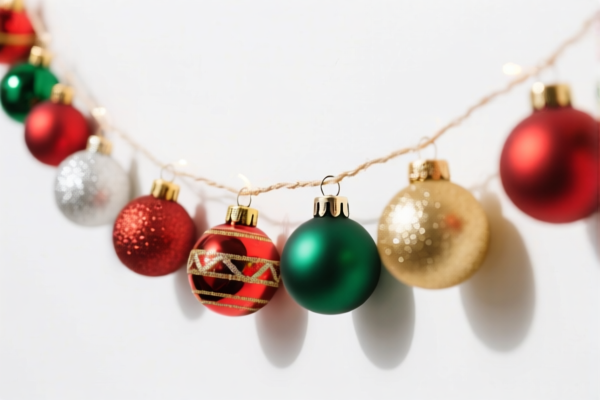
AI Analysis
🎄 100 Christmas Ornament Hanging Strings 20cm Silver
🌐 HS Code Reference & Customs Clearance Guide | 2026 Latest Tariff Analysis | Professional Clearance Strategy
📌 I. Product Definition and Classification: Do You Really Understand "Hanging Strings"?
These are 20cm silver decorative strings specifically designed for hanging Christmas ornaments. In international trade, the classification hinges on two critical factors: Material Composition and Intended Use.
Based on common industry standards, these strings are typically made of: 1. Plastic/Synthetic Fibers (e.g., PET, nylon ribbon, or metallic-coated plastic). 2. Textile Fibers (e.g., twisted polyester or cotton cords with silver foil coating).
⚠️ Key Distinction Point:
- If the string is essentially a plastic ribbon or synthetic fiber strip used purely for decoration → It falls under Chapter 39 (Plastics).
- If the string is a twisted cord or rope made of textile fibers → It falls under Chapter 56 (Textile Cords/Ropes).
- Note: Even if "silver" in appearance, if the base material is not metal wire, it is not classified as metal goods.
📦 II. HS Code Classification Details (2026 Latest Tariff Authoritative Comparison)
| HS Code | Product Description | Application Scenario | Material Inference |
|---|---|---|---|
3926.90.99.89 |
Other articles of plastics and articles of other materials of heading 3901 to 3914 | Christmas decoration accessories; decorative plastic ribbons/strings | ✅ Plastic/Synthetic Fiber |
3926.40.00.10 |
Ornamental articles of glass, plastic, etc. (Specifically "Bows and similar ornamental articles") | Decorative bows, loops, or ribbon-like strings for Christmas | ✅ Plastic/Non-metallic |
5607.90.15.00 |
Other cords, ropes, and twines, of other textile materials | Hanging strings classified as textile cords/ropes | ✅ Textile Fiber |
5607.90.90.00 |
Other cords, ropes, and twines, not impregnated, coated, covered or sheathed with rubber or plastic | Textile strings without heavy plastic coating | ✅ Textile Fiber (Non-plastic coated) |
🔍 Important Reminder:
- The material determines the chapter. "Silver" usually implies a metallic finish (foil/coating), not solid metal content.
- If the string is a simple ribbon, it is often classified under 3926 (Plastic articles) or 5607 (Textile cords) depending on the weave/coating.
- De Minimis Threshold: Many of these classifications are subject to strict IEEPA sanctions, meaning the $800 de minimis exemption may not apply depending on the specific HS code interpretation and current trade war policies.
💰 III. 2026 Latest Tariff Rate Details (Including Additional Taxes, Policy Add-ons)
✅ Applicable Country: USA (US)
✅ Country of Origin: China (CN)
✅ Effective Date: November 10, 2025 (and subsequent imports)
🎯 1. 3926.90.99.89 — Articles of Plastics (Decorative)
| Item | Content |
|---|---|
| Base Duty | 5.3% |
| Section 301 Additional Duty | +7.5% |
| Section 122 Duty (IEEPA) | +10% |
| Total Duty Rate | 22.8% |
| Tax Calculation | CIF Value × 22.8% |
| De Minimis Eligibility | ❌ Likely Denied (High risk of audit; check specific ruling) |
| Legal Basis Path | USITC:3926.90.99.89 → FOOTNOTE:301 → IEEPA:122 |
📌 Explanation:
- This code captures plastic decorative accessories. If your strings are made of PET ribbon or metallic-coated plastic film, this is the most common classification.
- 22.8% is the effective duty rate. While lower than textile codes, it is still significant for low-value items.
🎯 2. 3926.40.00.10 — Ornamental Articles (Bows/Loops)
| Item | Content |
|---|---|
| Base Duty | 5.3% |
| Section 301 Additional Duty | 0.0% |
| Section 122 Duty (IEEPA) | +10% |
| Total Duty Rate | 15.3% |
| Tax Calculation | CIF Value × 15.3% |
| De Minimis Eligibility | ❌ Likely Denied |
| Legal Basis Path | USITC:3926.40.00.10 → IEEPA:122 |
📌 Note:
- If the strings are formed into bows, loops, or decorative knots specifically for ornamentation, this code may apply.
- 15.3% is the lowest effective rate among the plastic options due to the 0% Section 301 tariff on this specific subheading.
- Strategy: If the product is sold as "decorative bows/loops," argue for this classification to save 7.5% in Section 301 duties.
🎯 3. 5607.90.15.00 — Textile Cords/Ropes
| Item | Content |
|---|---|
| Base Duty | 0.0% |
| Section 301 Additional Duty | +25.0% |
| Section 122 Duty (IEEPA) | +10% |
| Total Duty Rate | 35.0% |
| Tax Calculation | CIF Value × 35.0% |
| De Minimis Eligibility | ❌ Denied |
| Legal Basis Path | USITC:5607.90.15.00 → FOOTNOTE:301 → IEEPA:122 |
📌 Explanation:
- If customs determines the strings are twisted textile fibers (even if silver-coated), they may classify them as "cords/ropes."
- The 25% Section 301 tariff makes this a high-cost classification.
- Risk: Misclassifying plastic strings as textile can lead to penalties if the material is proven to be synthetic polymer.
🎯 4. 5607.90.90.00 — Other Textile Cords (Non-plastic coated)
| Item | Content |
|---|---|
| Base Duty | 6.3% |
| Section 301 Additional Duty | +25.0% |
| Section 122 Duty (IEEPA) | +10% |
| Total Duty Rate | 41.3% |
| Tax Calculation | CIF Value × 41.3% |
| De Minimis Eligibility | ❌ Denied |
| Legal Basis Path | USITC:5607.90.90.00 → FOOTNOTE:301 → IEEPA:122 |
📌 Note:
- This is the highest cost option (41.3%).
- It applies to textile strings that are not heavily coated with rubber/plastic.
- Recommendation: Avoid this classification if your product has any plastic coating or is made of synthetic fibers, as it offers no tax advantage and highest risk.
🛠️ IV. Customs Clearance Practical Advice (Battle-Tested Pitfall Avoidance)
✅ 1. Required Documentation Checklist (Non-Negotiable)
| Document | Mandatory? | Description |
|---|---|---|
| ✅ Product Specification Sheet | ✔️ | Must state: Length (20cm), Material (e.g., "PET Ribbon" or "Polyester Cord"), Color ("Silver"), Usage ("Ornament Hanger"). |
| ✅ Material Certificate | ✔️ | Critical to prove if it is Plastic or Textile. If "Silver" is a coating, specify: "Silver foil on PET base." |
| ✅ Product Photos | ✔️ | Clear images of the string texture (ribbon-like vs. twisted rope-like). |
| ✅ Commercial Invoice | ✔️ | Description: "20cm Silver Decorative Hanging Strings for Christmas Ornaments." Avoid vague terms like "Accessories." |
| ✅ Packing List | ✔️ | Confirm quantity (100 pcs) and weight. |
✅ 2. Declaration Tips (Key Mnemonic)
🔥 “Material is King, Form Defines Form, Silver is Finish, Not Metal!”
| Scenario | Correct Declaration | Incorrect Practice |
|---|---|---|
| Plastic Ribbon/String | HS: 3926.90.99.89 or 3926.40.00.10Desc: "Plastic Decorative String" |
Declaring as "Metal Wire" → Smuggling Risk |
| Textile Cord | HS: 5607.90.15.00Desc: "Textile Hanging Cord" |
Declaring as "Plastic" → Misclassification Penalty |
| Bow-shaped String | HS: 3926.40.00.10Desc: "Decorative Bow/String" |
Declaring as "Cord" → Higher Duty (7.5% diff) |
| Silver Coating | Explicitly state: "Silver Plastic" or "Metal-coated Textile" | Stating only "Silver" → Customs doubts Metal Content |
✅ 3. Special Case Handling
| Case | Handling Advice |
|---|---|
| OEM Private Label | Provide authorization letter if branding is involved, but it does not change HS Code. |
| Bundles/Kits | If sold as "100 pcs" but packaged in bulk, declare as "Lot of 100." Ensure unit price reflects the single string. |
| Pre-cut Lengths | Specify "Pre-cut 20cm." This supports "Decorative Accessory" classification (3926) over raw material (5607). |
| Sample Shipments | Even for samples, declare correctly. Misdeclaration leads to records that affect future shipments. |
🌍 V. Global Market Comparison (2026 Latest)
| Country/Region | Recommended HS Code | Estimated Duty | Notes |
|---|---|---|---|
| 🇺🇸 USA | 3926.40.00.10 |
15.3% | Best rate for plastic decorative strings. |
| 🇨🇳 China | 3926.90.99.89 |
5.3% | No additional Section 301/122 taxes. |
| 🇪🇺 EU | 3926.90 |
4.7% | Standard MFN rate. No US-style trade wars. |
| 🇬🇧 UK | 3926.90 |
4.7% | Post-Brexit tariffs align closely with EU. |
📌 Conclusion:
- The US market is the most complex due to Section 301 and IEEPA tariffs.
- Optimize for3926.40.00.10if the product can be described as "ornamental bows/loops" to save 7.5%.
- Avoid5607codes unless the product is unequivocally textile and uncoated, as the 25% Section 301 tax is prohibitive.
📌 VI. Common Mistakes & Pitfall Guide (Lessons from Blood and Tears)
❌ Mistake 1: Declaring "Silver Strings" as "Metal Wire"
👉 Consequence: Customs rejects because it’s not metal → Delay + Return.
✅ Fix: Always specify base material (Plastic/Textile) + Finish (Silver Coated).
❌ Mistake 2: Using HS Code 3926.90.99.89 when 3926.40.00.10 applies
👉 Consequence: Paying 7.5% extra in Section 301 duties unnecessarily.
✅ Fix: If the string is shaped into bows/loops, use 3926.40.00.10.
❌ Mistake 3: Assuming "De Minimis" ($800) applies automatically
👉 Consequence: Package seized because IEEPA (Section 122) often overrides de minimis for Chinese goods.
✅ Fix: Plan for duty payment in B2B shipments. For B2C, verify carrier policies.
❌ Mistake 4: Mixing Plastic and Textile in one shipment without separate declarations
👉 Consequence: Customs audits entire shipment → Delay + Fines.
✅ Fix: Separate shipments by material type.
🎯 VII. Conclusion: Professional Declaration, Save Time, Cut Costs!
🎯 Remember the Mantra:
🔹 "Plastic Ribbon? Use 3926.40.10 (15.3%).
🔹 Twisted Rope? Use 5607 (35%+).
🔹 Silver is Coating, Not Metal.
🔹 Check IEEPA, Don’t Trust De Minimis Blindly!"
📌 Pro Tip:
If your strings are manufactured in Vietnam or Mexico, you may qualify for IEEPA exemptions and lower duties.
For US imports, consider applying for an Advance Ruling (Customs Ruling) if volume is high, to lock in the correct HS Code and tax rate.
📣 Take Action Now:
📞 Contact a licensed customs broker.
🖼️ Provide clear photos showing the texture (ribbon vs. cord).
📝 Label clearly: "20cm Silver Plastic Decorative String for Christmas Ornaments."
🚀 Ensure smooth clearance, maximize profit!
✨ Professional clearance starts with precise classification!
💼 Every cent saved counts!
Customer Reviews
About HS Code Classification
The Harmonized System (HS) is an internationally standardized nomenclature developed by the World Customs Organization (WCO) to classify traded products. Over 200 countries use the HS system as the basis for customs tariffs, trade statistics, and import/export regulations.
Each HS code follows a hierarchical structure:
- Chapter (2 digits) — Broad category of goods (e.g., Chapter 84: Machinery and Mechanical Appliances)
- Heading (4 digits) — More specific grouping within the chapter
- Subheading (6 digits) — Internationally standardized breakdown, used by all WCO member countries
- National subdivisions (8-10 digits) — Country-specific extensions for further classification, such as US HTSUS 10-digit codes
Correct HS code classification is essential for smooth customs clearance, accurate duty payment, and compliance with trade regulations. Misclassification can lead to customs delays, overpayment of duties, or penalties.
When importing from CN to US, the applicable tariff rates may include:
- Most-Favored-Nation (MFN) rate — The standard duty rate applied to WTO members
- General rate — Applied to countries without trade agreements
- Trade remedy duties — Additional tariffs such as Section 301 (anti-dumping), Section 232 (national security), or countervailing duties
The information provided on this page is for reference purposes only. For official classification, please consult with your local customs authority or a licensed customs broker.