100 General Office Supplies
CN → US| HS Code | Tariff Rate | Origin | Destination | Doc |
|---|---|---|---|---|
| 8472906000 | 35.0% | CN | US | Official Doc |
| 4820104000 | 10.0% | CN | US | Official Doc |
| 4820300040 | 35.0% | CN | US | Official Doc |
| 8472909080 | 35.0% | CN | US | Official Doc |
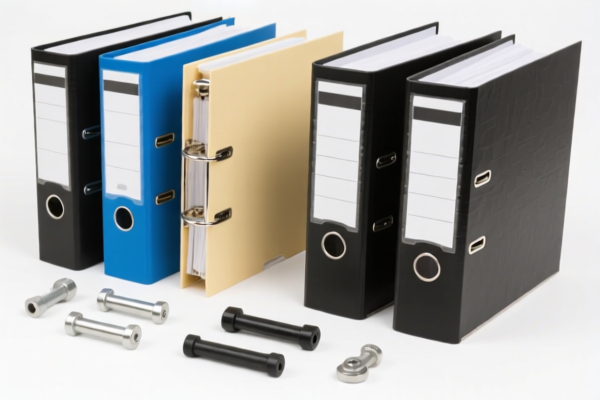
Product Images


AI Analysis
📂 100 General Office Supplies: The Ultimate HS Code & Tariff Guide (2026 Edition)
🌐 HS Code Reference & Clearance Strategy | Deep Dive into US Tariffs & 122-Clause Regulations | Professional Compliance Protocol
⚠️ CRITICAL ALERT: "General Office Supplies" is a high-risk classification in US Customs. Many paper-based items face 10% extra tariffs, while mechanical items face a staggering 35% (0% Base + 25% Section 301 + 10% 122-Clause). Misclassification = Costly Penalties & Seizures.
📦 I. Product Definition: What Are "General Office Supplies"?
In international trade, "General Office Supplies" is NOT a single HS Code. It is a broad category covering: 1. Paper-Based Documents: Folders, notebooks, ledgers, binders (Classified under Chapter 48). 2. Office Machinery: Shredders, hole punchers, staplers, sorters, time clocks (Classified under Chapter 84).
🔑 Key Distinction: * Is it Paper/Cardboard? → Chapter 48 (Low base tariff, but watch the 122-Clause). * Is it a Machine with moving parts? → Chapter 84 (High risk: 25% Section 301 + 10% 122-Clause).
📋 II. HS Code Classification Breakdown (Authoritative 2026 Reference)
Based on the provided data, here are the 4 specific HS Codes covering your "100 General Office Supplies":
| HS Code | Product Category | Summary & Logic |
|---|---|---|
8472.90.60.00 |
Office Machinery | General office equipment falling under "Other" office machines. Matches "Catch-all" category for non-specific machinery. |
4820.10.40.00 |
Paper Stationery | Ledgers, account books, notebooks. Matches usage with registers/notebooks. Material inferred as Paper/Cardboard. |
4820.30.00.40 |
Paper Folders | File folders, covers, document holders. Matches usage with paper/cardboard materials. |
8472.90.90.80 |
Office Machinery | General office equipment falling under "Other" office machines. Matches "Catch-all" category for other office machines. |
🔍 Logic Check: * Paper Items (
4820...): Rely on "Ledger", "Folder", "Notebook". * Machine Items (8472...): Rely on "Office Machine", "Equipment", "Catch-all".
💰 III. 2026 Tariff Rate Deep Dive (China → USA)
✅ Applicable Country: United States (US)
✅ Origin: China (CN)
✅ Regulations: Base Tariff + Section 301 (Add-on) + 122-Clause (Section 301 List 1)
🎯 1. Machinery Class (8472.90.60.00 & 8472.90.90.80)
🚨 DANGER ZONE: 35% Total Tariff!
| Tariff Component | Rate | Legal Source |
|---|---|---|
| Base Tariff | 0.0% | General Harmonized System Rate |
| Section 301 (Add-on) | +25.0% | "China Trade Action" (List 3/4) |
| 122-Clause (List 1) | +10.0% | Specific exclusion for certain office machinery |
| TOTAL RATE | 35.0% | Highest Risk Category |
- 💡 Explanation:
- These items are classified as "Office Machines."
- They incur the standard 25% Section 301 tariff.
- PLUS the specific 10% "122-Clause" tariff (often applied to items listed in the original China tariffs that were not fully excluded).
- Result: Even if the base is 0%, you pay 35 cents on every dollar.
🎯 2. Paper Stationery Class (4820.10.40.00)
✅ Low Risk: 10% Total Tariff!
| Tariff Component | Rate | Legal Source |
|---|---|---|
| Base Tariff | 0.0% | General Harmonized System Rate |
| Section 301 (Add-on) | 0.0% | Paper notebooks/ledgers often excluded from high Section 301 lists |
| 122-Clause | +10.0% | Specific tariff applied to this paper sub-category |
| TOTAL RATE | 10.0% | Most Cost-Effective |
- 💡 Explanation:
- Items like Ledgers and Notebooks escape the heavy 25% machinery tax.
- However, they are still hit by the 10% 122-Clause tariff.
- Total: Only 10% added to the CIF value.
🎯 3. Paper Folders Class (4820.30.00.40)
🚨 High Risk: 35% Total Tariff!
| Tariff Component | Rate | Legal Source |
|---|---|---|
| Base Tariff | 0.0% | General Harmonized System Rate |
| Section 301 (Add-on) | +25.0% | Specific paper products (folders) may be subject to add-ons |
| 122-Clause | +10.0% | Specific tariff applied to this folder sub-category |
| TOTAL RATE | 35.0% | High Risk for Paper |
- 💡 Explanation:
- Unlike notebooks, Folders (
4820.30.00.40) are sometimes grouped with machinery or higher-risk paper products. - They suffer the 25% add-on (unlike the notebooks) PLUS the 10% 122-Clause.
- Total: 35%.
- Unlike notebooks, Folders (
🛠️ IV. Customs Clearance Practical Advice (Action Plan)
✅ 1. Documentation Checklist (Mandatory)
| Document | Requirement | Why? |
|---|---|---|
| Product Specification | Detail: "Machine" vs. "Paper" | To distinguish between 8472 (Machine) and 4820 (Paper). |
| Material Certificate | Confirm: Cardboard/Paper vs. Plastic/Metal | Crucial for 4820 classification. |
| Commercial Invoice | Must state "Ledger," "Folder," or "Office Machine" | Prevents "General Supplies" vague declaration. |
| 122-Clause Proof | Verify HS Code matches "122-Clause" lists | To confirm the exact 10% application. |
✅ 2. Declaration Strategy (The "Golden Rules")
🔥 Rule #1: Be Specific, Don't Say "Supplies" ❌ Bad: "100 General Office Supplies" → Result: Customs will reclassify to the highest tax rate (35%) and delay shipment. ✅ Good: * "10x Accounting Ledgers (Paper)" →
4820.10.40.00(10%) * "10x Document Folders (Cardboard)" →4820.30.00.40(35%) * "10x Hole Punch Machines" →8472.90.60.00(35%)
✅ 3. Cost Optimization Tips
- Check Exclusions: Verify if your specific "Folders" or "Notebooks" are eligible for exclusion from the 25% Section 301 tariff.
- Bundle Wisely: If shipping mixed items, separate them. Do not mix a 10% item with a 35% item in one HS Code declaration.
- Pre-Audit: If the value is high, request a Binding Ruling from US Customs (CBP) to lock in the 10% vs 35% classification.
📌 V. Common Pitfalls & Avoidance (Red Flags)
| ❌ Mistake | ⚠️ Consequence | ✅ Correct Action |
|---|---|---|
| Vague Description | "General Office Supplies" on invoice | Must specify "Ledger," "Folder," or "Machine." |
| Wrong Material Claim | Claiming "Plastic" for a Paper Folder | If paper is suspected, 4820 applies; if plastic, 39 (different tax). |
| Ignoring 122-Clause | Assuming 0% or 25% only | Always calculate for the 10% 122-Clause add-on for these specific codes. |
| Mixing Categories | Packing Machines & Folders together | Split shipments or separate line items to avoid cross-contamination of rates. |
🌍 VI. Market Comparison (China → USA)
| Item Type | HS Code | Tariff Rate | Strategy |
|---|---|---|---|
| Notebooks/Ledgers | 4820.10.40.00 |
10% | ✅ Lowest Cost - Best for high-volume paper goods. |
| Folders/Covers | 4820.30.00.40 |
35% | ⚠️ High Cost - Verify if a different HS Code (e.g., plastic folders) applies. |
| Office Machines | 8472.90.60.00 |
35% | ⚠️ High Cost - Check for exclusion lists; consider manufacturing outside China. |
🎯 VII. Conclusion: Precision is Profit
💡 The Golden Rule: "General Office Supplies" is a trap. * Paper Notebooks = 10% (Safe). * Paper Folders = 35% (Danger). * Office Machines = 35% (Danger).
🚀 Final Call to Action: 1. Audit your inventory immediately. 2. Re-classify any "Folder" or "Machine" items. 3. Update your commercial invoices to reflect the exact HS Code. 4. Calculate the 35% cost for machinery/folders; budget accordingly.
✨ Your clearance success depends on specificity, not generalization! 📞 Contact your broker NOW to confirm if
4820.30.00.40can be re-optimized.
Disclaimer: This guide is based on the provided data and current US tariff regulations (Section 301 & 122-Clause). Tariff rates are subject to change. Always consult with a licensed Customs Broker for final clearance.
Customer Reviews
About HS Code Classification
The Harmonized System (HS) is an internationally standardized nomenclature developed by the World Customs Organization (WCO) to classify traded products. Over 200 countries use the HS system as the basis for customs tariffs, trade statistics, and import/export regulations.
Each HS code follows a hierarchical structure:
- Chapter (2 digits) — Broad category of goods (e.g., Chapter 84: Machinery and Mechanical Appliances)
- Heading (4 digits) — More specific grouping within the chapter
- Subheading (6 digits) — Internationally standardized breakdown, used by all WCO member countries
- National subdivisions (8-10 digits) — Country-specific extensions for further classification, such as US HTSUS 10-digit codes
Correct HS code classification is essential for smooth customs clearance, accurate duty payment, and compliance with trade regulations. Misclassification can lead to customs delays, overpayment of duties, or penalties.
When importing from CN to US, the applicable tariff rates may include:
- Most-Favored-Nation (MFN) rate — The standard duty rate applied to WTO members
- General rate — Applied to countries without trade agreements
- Trade remedy duties — Additional tariffs such as Section 301 (anti-dumping), Section 232 (national security), or countervailing duties
The information provided on this page is for reference purposes only. For official classification, please consult with your local customs authority or a licensed customs broker.