100 pcs general office supplies
CN → US| HS Code | Tariff Rate | Origin | Destination | Doc |
|---|---|---|---|---|
| 4820104000 | 10.0% | CN | US | Official Doc |
| 3926100000 | 15.3% | CN | US | Official Doc |
| 8472909080 | 35.0% | CN | US | Official Doc |
Product Images
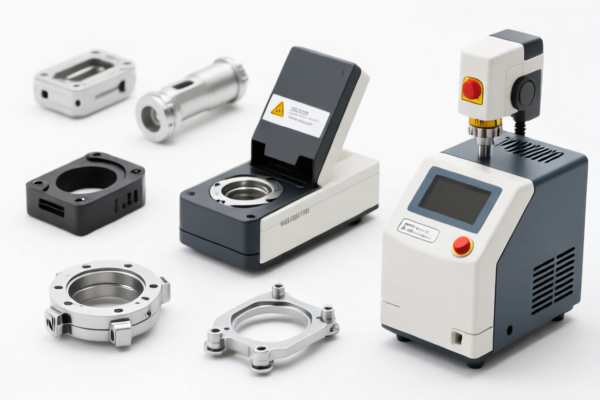
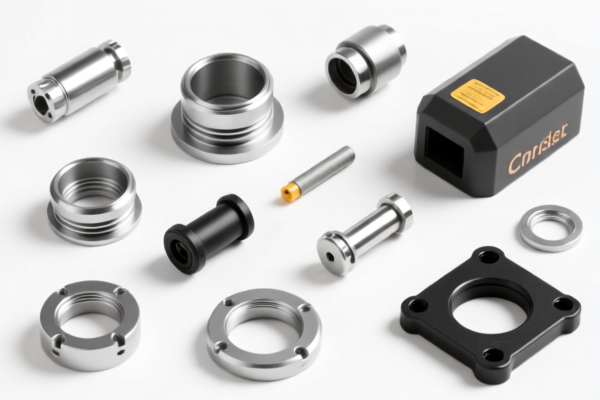
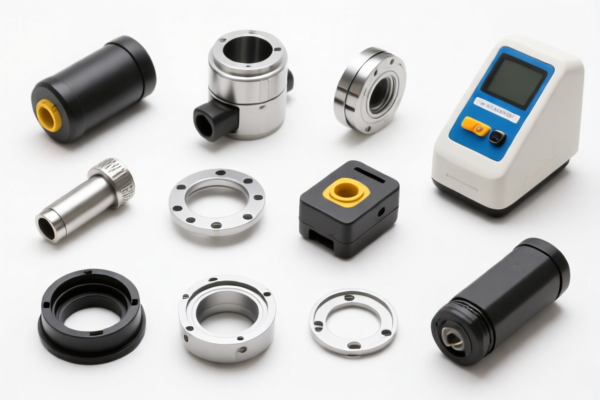

AI Analysis
📝 General Office Supplies (Generic Office Items)
🌐 HS Code Reference & Customs Clearance Guide | 2026 Latest Tariff Analysis | Professional Clearance Strategy
📌 1. Product Definition & Classification: What Are "General Office Supplies"?
"General Office Supplies" is a broad, non-specific term in international trade. It typically refers to consumable or semi-durable goods used in daily administrative work. Common items include: - Paper-based goods: Notebooks, notepads, folders, sticky notes, address books. - Plastic-based goods: Staplers, paper clips, desk organizers, plastic binders. - Miscellaneous items: Simple electronic organizers, basic desktop accessories.
⚠️ Critical Classification Point:
Because the description is generic, the material composition and specific function determine the HS Code.
- If primarily paper/cardboard → Likely falls under Chapter 48.
- If primarily plastic (and no machinery/electronics) → Likely falls under Chapter 39.
- If it involves mechanical/electronic components (e.g., automatic staplers, calculators) → Likely falls under Chapter 84/85.
📦 2. HS Code Classification Details (Based on Provided Data)
| HS Code | Product Description | Application Scenario | Material/Function Basis |
|---|---|---|---|
4820.10.40.00 |
Notebooks, Address Books, and Similar Articles of Paper | Paper-based stationery like notebooks, records, logbooks | ✅ Paper/Cardboard |
3926.10.00.00 |
Articles of Plastic for Office Supplies | Plastic desk organizers, staplers, clips, binders | ✅ Plastic |
8472.90.90.80 |
Other Office Machines/Equipment (General) | Mechanical or electronic office items (e.g., automatic staplers, sorters) | ✅ Mechanical/Electronic |
🔍 Key Insight:
-4820.10.40.00is inferred based on common stationery (notebooks) being paper-based.
-3926.10.00.00is inferred based on "office supplies" often containing plastic items like staplers or organizers.
-8472.90.90.80is a "catch-all" for office machines. It is used when items have mechanical/electronic functions but don’t fit specific machine categories.
💰 3. 2026 Latest Tariff Rate Breakdown (Including Surcharges & Policy Add-ons)
✅ Applicable Country: United States (US)
✅ Origin: China (CN)
✅ Effective Time: Includes imports from 2025 onwards
🎯 1. 4820.10.40.00 —— Paper Notebooks/Stationery
| Item | Content |
|---|---|
| Base Tariff | 0.0% (ad valorem) |
| Section 301 Surcharge | 0.0% |
| Section 122 Tariff | +10% (Specific to this category in data) |
| Total Tariff | 10.0% |
| Tax Calculation | CIF Value × 10% |
| De Minimis Exemption | ❌ Not Applicable (Standard for most non-exempt goods) |
| Legal Basis | Based on HS Code 4820.10.40.00 + Section 122 provision |
📌 Explanation:
- This code applies to paper-based stationery like notebooks.
- While the base tariff is low, the 10% Section 122 tariff applies, resulting in a 10% total rate.
- No Section 301 tariff is applied here in the provided data.
🎯 2. 3926.10.00.00 —— Plastic Office Articles
| Item | Content |
|---|---|
| Base Tariff | 5.3% (ad valorem) |
| Section 301 Surcharge | 0.0% |
| Section 122 Tariff | +10% |
| Total Tariff | 15.3% |
| Tax Calculation | CIF Value × 15.3% |
| De Minimis Exemption | ❌ Not Applicable |
| Legal Basis | Based on HS Code 3926.10.00.00 + Section 122 provision |
📌 Explanation:
- This code applies to plastic office items (e.g., plastic staplers, organizers).
- The base tariff is 5.3%, plus a 10% Section 122 tariff, totaling 15.3%.
- No Section 301 tariff is applied in this specific data set.
🎯 3. 8472.90.90.80 —— Other Office Machines/Equipment
| Item | Content |
|---|---|
| Base Tariff | 0.0% (ad valorem) |
| Section 301 Surcharge | +25% |
| Section 122 Tariff | +10% |
| Total Tariff | 35.0% |
| Tax Calculation | CIF Value × 35.0% |
| De Minimis Exemption | ❌ Not Applicable |
| Legal Basis | IEEPA:9903.01.25 → USITC:8472.90.90.80 → FOOTNOTE:301 → Section 122 |
📌 Explanation:
- This code is a fallback category for office machines/equipment not specified elsewhere.
- It attracts the full Section 301 tariff of 25% AND a 10% Section 122 tariff.
- Total rate: 35%. This is a high-cost classification.
- Only apply if the item has mechanical/electronic functionality (e.g., an automatic paper punch, electric stapler).
🛠️ 4. Customs Clearance Practical Advice (Actionable Tips)
✅ 1. Documentation Checklist (Must-Have)
| Document | Required? | Notes |
|---|---|---|
| ✅ Commercial Invoice | ✔️ | Must specify "General Office Supplies" and list individual items (e.g., "50 pcs Plastic Staplers, 50 pcs Paper Notebooks"). |
| ✅ Packing List | ✔️ | Detail contents per box to allow customs to verify material composition. |
| ✅ Product Photos | ✔️ | Clear images showing material (plastic/paper) and function. |
| ✅ Material Composition Statement | ✔️ | Explicitly state: "Made of 100% Plastic" or "Made of Paper/Cardboard". |
| ✅ Country of Origin Certificate | ✔️ | Required for Section 122/301 determination. |
✅ 2. Classification Strategy (Key Rules)
🔥 “Material Dictates Code, Function Defines Category, Generic Descriptions Risk Penalties!”
| Scenario | Correct HS Code | Incorrect HS Code | Consequence |
|---|---|---|---|
| Paper Notebooks | 4820.10.40.00 (10%) |
3926.10.00.00 (15.3%) |
Overpayment of 5.3% |
| Plastic Staplers | 3926.10.00.00 (15.3%) |
8472.90.90.80 (35%) |
Overpayment of 19.7% |
| Electric Desk Organizer | 8472.90.90.80 (35%) |
3926.10.00.00 (15.3%) |
Underpayment → Penalty + Interest |
| Mixed Shipment | Split Declaration | Single "Office Supplies" line | Customs May Reject or Re-classify All Items |
✅ 3. Special Cases & Mitigation
| Situation | Advice |
|---|---|
| Mixed Materials | If a product has both plastic and paper parts (e.g., a plastic clip on a paper notebook), declare the primary material or split the shipment. |
| Generic "Office Supplies" Box | Do NOT declare as one line item. Break down by material/function. Example: "10 Plastic Staplers, 90 Paper Notepads." |
| Section 122 Eligibility | Verify if your specific product line is exempt from Section 122 tariffs. Some small office items may have exclusions. |
| Pre-Ruling Application | For large shipments, apply for an Advance Ruling from CBP to confirm the HS Code and tariff rate. |
🌍 5. Global Market Comparison (2026)
| Market | Recommended HS Code | Tariff Rate (China Origin) | Notes |
|---|---|---|---|
| 🇺🇸 USA | 4820.10.40.00 / 3926.10.00.00 / 8472.90.90.80 |
10% / 15.3% / 35% | Includes Section 122 (10%) and 301 (25% for machines). |
| 🇪🇺 EU | 4820.10.40 / 3926.10.00 |
~0-6.5% | No Section 122/301. Standard MFN rates apply. |
| 🇨🇳 China | 4820.10.40 / 3926.10.00 |
0-6.5% | Standard import duties. No retaliatory tariffs. |
| 🇯🇵 Japan | 4820.10.40 / 3926.10.00 |
~0-6.5% | No Section 122/301. |
📌 Conclusion:
- The USA has the highest tariffs due to Section 122 and 301.
- Paper items (10%) are cheaper than Plastic items (15.3%), which are far cheaper than Mechanical Items (35%).
- Strategy: Minimize mechanical/electronic components in "office supplies" to avoid the 35% rate.
📌 6. Common Mistakes & Pitfalls
❌ Mistake 1: Declaring all items as "Office Supplies" without detail.
👉 Result: Customs will inspect, delay clearance, and potentially misclassify everything, leading to higher duties.
❌ Mistake 2: Using 8472.90.90.80 for simple plastic staplers.
👉 Result: Paying 35% instead of 15.3% → 19.7% overpayment.
❌ Mistake 3: Ignoring Section 122 tariffs.
👉 Result: Underpaying duties by 10% on paper/plastic items, leading to back-taxes + penalties.
❌ Mistake 4: Mixing materials in one line item.
👉 Result: Customs may apply the highest tariff rate to the entire shipment.
✅ Correct Approach:
“50 pcs Plastic Staplers (HS: 3926.10.00.00), 50 pcs Paper Notebooks (HS: 4820.10.40.00)”
→ Transparent, accurate, and cost-efficient.
🎯 7. Final Recommendations for "100 pcs General Office Supplies"
- Break Down the Shipment:
- If you have paper notebooks, use
4820.10.40.00(10% tariff). - If you have plastic staplers/clips, use
3926.10.00.00(15.3% tariff). -
If you have electronic devices, use
8472.90.90.80(35% tariff). -
Avoid the 35% Trap:
-
Do not classify simple items as "office machines." Use
4820or3926whenever possible. -
Prepare Accurate Documentation:
- Clearly state material composition and function.
-
Provide photos and invoices that match the HS Code description.
-
Calculate Total Landed Cost:
- Include 10% (paper) or 15.3% (plastic) in your cost model.
- If using
8472, factor in 35%.
📌 Pro Tip:
📞 Consult a Customs Broker for pre-clearance if your shipment contains mixed materials.
📄 Request a Binding Ruling from CBP if you are unsure about the classification of complex office items.
✨ Professional clearance starts with precise classification!
💼 Every dollar saved in tariffs is pure profit.
Customer Reviews
About HS Code Classification
The Harmonized System (HS) is an internationally standardized nomenclature developed by the World Customs Organization (WCO) to classify traded products. Over 200 countries use the HS system as the basis for customs tariffs, trade statistics, and import/export regulations.
Each HS code follows a hierarchical structure:
- Chapter (2 digits) — Broad category of goods (e.g., Chapter 84: Machinery and Mechanical Appliances)
- Heading (4 digits) — More specific grouping within the chapter
- Subheading (6 digits) — Internationally standardized breakdown, used by all WCO member countries
- National subdivisions (8-10 digits) — Country-specific extensions for further classification, such as US HTSUS 10-digit codes
Correct HS code classification is essential for smooth customs clearance, accurate duty payment, and compliance with trade regulations. Misclassification can lead to customs delays, overpayment of duties, or penalties.
When importing from CN to US, the applicable tariff rates may include:
- Most-Favored-Nation (MFN) rate — The standard duty rate applied to WTO members
- General rate — Applied to countries without trade agreements
- Trade remedy duties — Additional tariffs such as Section 301 (anti-dumping), Section 232 (national security), or countervailing duties
The information provided on this page is for reference purposes only. For official classification, please consult with your local customs authority or a licensed customs broker.