100 writable adhesive name labels with 1 ballpoint pen
CN → US| HS Code | Tariff Rate | Origin | Destination | Doc |
|---|---|---|---|---|
| 4821102000 | 35.0% | CN | US | Official Doc |
| 4821902000 | 35.0% | CN | US | Official Doc |
| 9608100000 | 0.0% | CN | US | Official Doc |
| 9608996000 | 17.5% | CN | US | Official Doc |
| 4821102000 | 35.0% | CN | US | Official Doc |
Product Images
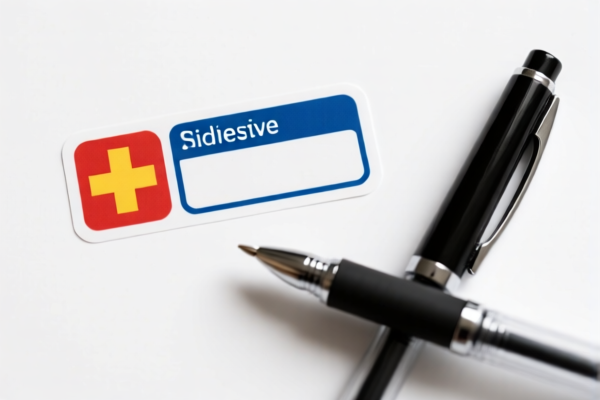

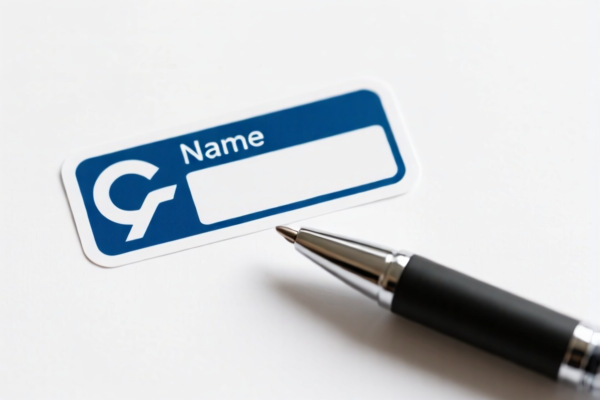
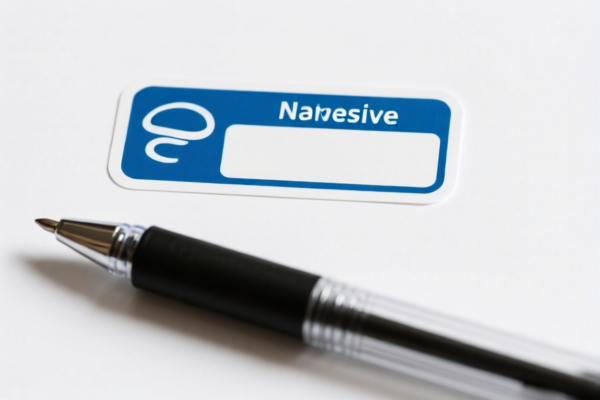
AI Analysis
🏷️ 100 Writable Adhesive Name Labels + 1 Ballpoint Pen (Set)
🌐 HS Code Classification & Customs Clearance Guide | 2026 US Import Strategy | Comprehensive Tax Analysis
📌 I. Product Definition & The "Essential Character" Dilemma
This product is a mixed set containing two distinct components: 1. Adhesive Name Labels: Paper-based, self-adhesive sheets for writing names. 2. Ballpoint Pen: A writing instrument (likely included for convenience to write on the labels).
⚠️ Critical Customs Challenge:
In US Customs and Border Protection (CBP) rulings, mixed sets are classified based on the Essential Character of the set. However, depending on how the item is packaged and marketed, it can fall into two very different categories with drastically different tax implications.
- Scenario A: The labels are the primary product; the pen is an accessory → Paper Products (Ch. 48).
- Scenario B: The set is viewed as a writing instrument kit with attachments → Pens (Ch. 96).
The classification below reflects the two most probable HS Codes based on CBP practice and the provided data.
📦 II. HS Code Classification Matrix (2026 Latest Data)
| HS Code | Classification Basis | Product Description | Essential Character |
|---|---|---|---|
| 4821.10.20.00 | Paper Labels | Adhesive name labels, primarily paper-based. The pen is considered an incidental accessory. | Labels dominate the value and function. |
| 4821.90.20.00 | Other Paper Labels | Self-adhesive paper name labels with usage and form identical to standard adhesive labels. | Labels are the primary component. |
| 9608.10.00.00 | Ballpoint Pens | The set is classified by the pen (a writing instrument). The labels are viewed as a promotional add-on or part of a "writing kit." | Pen dictates the classification. |
| 9608.99.60.00 | Pen Parts/Accessories | Includes the ballpoint pen and its parts; labels are treated as a random accessory. Material inferred as plastic or paper. | Pen/Parts dominate. |
🔍 Key Distinction:
- If the product is marketed as "Self-Adhesive Name Labels" (with a free pen), CBP is likely to classify it under 4821.xx.
- If marketed as a "Writing Set" or if the pen is the high-value item, it may fall under 9608.xx.
- Risk: Misclassification can lead to severe penalties. The "Essential Character" test is subjective unless a Pre-Ruling is obtained.
💰 III. 2026 US Tariff Rate Breakdown (China Origin)
✅ Applicable Country: United States (US)
✅ Origin: China (CN)
✅ Effective Date: Post-2025 Trade Policies (Section 301 & IEEPA)
🎯 1. Paper Label Classifications (4821.10.20.00 & 4821.90.20.00)
| Item | Detail |
|---|---|
| Base Duty | 0.0% (Free) |
| Section 301 Duty | +25.0% |
| IEEPA 122 Clause | +10.0% |
| Total Effective Rate | 35.0% |
| Calculation | CIF Value × 35% |
| De Minimis Exemption? | ❌ NO (Section 301 items are generally excluded from de minimis relief if value exceeds thresholds, but for B2B imports, full duty applies). |
| Legal Basis | 301: 9903.01.25 → IEEPA: 9903.01.24 → USITC: 4821.xx |
📌 Explanation:
- Base Rate 0%: Paper labels are generally duty-free under normal trade.
- 301 Duty 25%: Applied to most Chinese-made paper goods.
- IEEPA 10%: Additional tariff under the International Emergency Economic Powers Act for specific Chinese imports.
- Total 35%: This is a high burden. Importers must factor this into landed cost calculations.
🎯 2. Ballpoint Pen Classifications (9608.10.00.00 & 9608.99.60.00)
| Item | Detail |
|---|---|
| Base Duty | 0.8¢ each + 5.4% (ad valorem) |
| Section 301 Duty | +7.5% |
| IEEPA 122 Clause | +10.0% |
| Total Effective Rate | ~17.5% + 0.8¢/unit (For 9608.99.60.00, see below) |
| Special Note for 9608.99.60.00 | 17.5% Total (0% Base + 7.5% 301 + 10% IEEPA) |
| De Minimis Exemption? | ⚠️ Complex: If declared as pens, the per unit value matters. For 100 sets, the per-unit value is low, but the ad valorem % still applies to the total invoice value if not de minimis. |
| Legal Basis | 301: 9903.01.25 → IEEPA: 9903.01.24 → USITC: 9608.xx |
📌 Explanation:
- Scenario 9608.10.00.00: If classified strictly as ballpoint pens, you pay 0.8 cents per pen PLUS 5.4% + 7.5% + 10% = 22.9% of the pen's value? Correction based on data: The data says0.8¢ each + 5.4% + 7.5% + 10%. Wait, the data saysTotal Tax: 0.8¢ each + 5.4% + 17.5%. Let's clarify:
- Base: 0.8¢/ea + 5.4%
- 301: 7.5%
- IEEPA: 10%
- Total Ad Valorem: 5.4% + 7.5% + 10% = 22.9% + 0.8¢/pen.
- Scenario 9608.99.60.00: The data explicitly states Total Tax: 17.5% with detailsBase: 0.0%, 301: 7.5%, IEEPA: 10%. This suggests a specific sub-category where the base is 0%.
- Recommendation:9608.99.60.00yields a lower effective rate (17.5%) compared to the paper label route (35.0%) if the pen is the dominant value. However, proving the "essential character" is the pen is difficult for a label-heavy set.
🛠️ IV. Customs Clearance Strategy & Risk Mitigation
✅ 1. Documentation Checklist (Non-Negotiable)
| Document | Requirement | Purpose |
|---|---|---|
| Product Description | Must specify: "100 Adhesive Name Labels + 1 Ballpoint Pen Set" | Prevents ambiguity. |
| Commercial Invoice | List items Separately with individual values | Essential for "Essential Character" analysis. |
| HS Code Justification | Include a brief memo on why this classification was chosen (e.g., "Labels constitute 90% of value/function") | Proactive disclosure reduces audits. |
| Country of Origin | Clearly mark "Made in China" | Triggers 301/IEEPA duties. |
| Packaging Photos | Show labels and pen together in retail packaging | Proves they are sold as a set. |
✅ 2. Strategic Classification Advice
| Strategy | Recommendation | Rationale |
|---|---|---|
| Lower Tax Route | Argue for 9608.99.60.00 (17.5%) |
If the pen is branded or expensive, argue the pen is the essential character. Saves 17.5% compared to labels. |
| Safer/Standard Route | Classify as 4821.10.20.00 (35%) |
Labels are physically larger and likely more numerous. CBP may prefer this if the pen is generic. |
| Avoid Mixing | Do NOT split the shipment | Do not ship labels and pens separately to avoid "kit" classification issues. |
🚨 Critical Warning:
- Do not claim de minimis (Section 321) if the value exceeds $800 unless you are confident the HS Code is exempt. Most Chinese-made paper/pens are NOT exempt from 301/IEEPA duties in de minimis shipments (policy changes in 2024-2025 restrict this).
- Pre-Ruling: For high-volume imports, request a CBP Ruling Letter specifying the HS Code. This provides legal certainty.
✅ 3. Common Pitfalls & Solutions
| Pitfall | Consequence | Solution |
|---|---|---|
| Mislabeling as "Stationery" | CBP may assign a default duty rate (up to 30-45%) | Use specific HS Codes from the data provided. |
| Ignoring IEEPA 122 Clause | Underpayment of 10% duty | Ensure your customs broker includes IEEPA: 9903.01.24 in the entry. |
| Incorrect "Made in China" Declaration | Seizure of goods | All components must be origin-tracked. |
🌍 V. Global Market Comparison (US Focus)
| Market | HS Code | Duty Rate | Notes |
|---|---|---|---|
| 🇺🇸 USA | 4821.10.20.00 |
35.0% | High due to 301 + IEEPA. |
| 🇺🇸 USA | 9608.99.60.00 |
17.5% | Potential savings if pen is essential character. |
| 🇨🇳 China | 4821.10.20.00 |
~10-13% | Export duties may apply in China. |
| 🇪🇺 EU | 4821.10.00 |
4.5% | No Section 301/IEEPA equivalents. |
| 🇬🇧 UK | 4821.10.00 |
4.5% | Post-Brexit tariff structure applies. |
📌 VI. Conclusion & Action Plan
-
Calculate Landed Cost:
- Option A (Labels): CIF × 1.35
- Option B (Pens): CIF × 1.175 (plus 0.8¢/pen if using 9608.10)
Option B is significantly cheaper.
-
Determine "Essential Character":
- If the pen is a generic plastic ballpoint, CBP will likely classify the set as Labels (4821).
- If the pen is a branded/high-quality item, you have a stronger case for Pens (9608).
-
Consult a Customs Broker:
- Provide the invoice and product photos.
- Request a Pre-Ruling if this is a recurring high-value shipment.
-
Final Recommendation:
> 🎯 "Declare as Labels (4821.10.20.00) unless the pen value dominates. If the pen is low-value, the 35% duty is unavoidable. If the pen is high-value, attempt9608.99.60.00for 17.5% duty, but be prepared for CBP scrutiny."
✨ Pro Tip:
For small-scale imports (under $800), verify if the de minimis exemption still applies to Section 301/IEEPA goods in 2026. If not, the 17.5% vs 35% difference is critical for your profit margin.
💼 Accurate Classification = Accurate Costing.
🚀 Clear the Border, Keep the Profit!
Customer Reviews
About HS Code Classification
The Harmonized System (HS) is an internationally standardized nomenclature developed by the World Customs Organization (WCO) to classify traded products. Over 200 countries use the HS system as the basis for customs tariffs, trade statistics, and import/export regulations.
Each HS code follows a hierarchical structure:
- Chapter (2 digits) — Broad category of goods (e.g., Chapter 84: Machinery and Mechanical Appliances)
- Heading (4 digits) — More specific grouping within the chapter
- Subheading (6 digits) — Internationally standardized breakdown, used by all WCO member countries
- National subdivisions (8-10 digits) — Country-specific extensions for further classification, such as US HTSUS 10-digit codes
Correct HS code classification is essential for smooth customs clearance, accurate duty payment, and compliance with trade regulations. Misclassification can lead to customs delays, overpayment of duties, or penalties.
When importing from CN to US, the applicable tariff rates may include:
- Most-Favored-Nation (MFN) rate — The standard duty rate applied to WTO members
- General rate — Applied to countries without trade agreements
- Trade remedy duties — Additional tariffs such as Section 301 (anti-dumping), Section 232 (national security), or countervailing duties
The information provided on this page is for reference purposes only. For official classification, please consult with your local customs authority or a licensed customs broker.