10W Connector
CN → US| HS Code | Tariff Rate | Origin | Destination | Doc |
|---|---|---|---|---|
| 8538908140 | 38.5% | CN | US | Official Doc |
| 8544429010 | 87.6% | CN | US | Official Doc |
| 8544429090 | 87.6% | CN | US | Official Doc |
| 8536694010 | 35.0% | CN | US | Official Doc |
| 8538908160 | 38.5% | CN | US | Official Doc |
Product Images
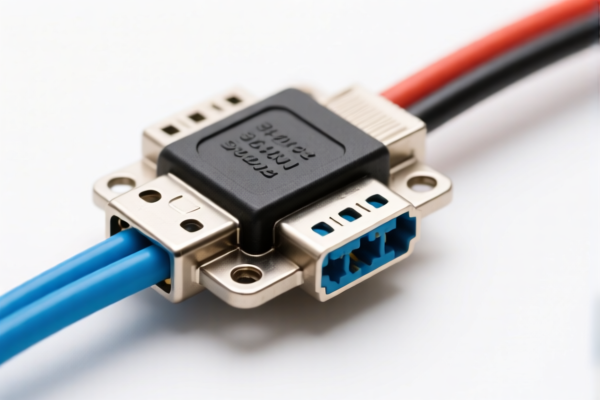
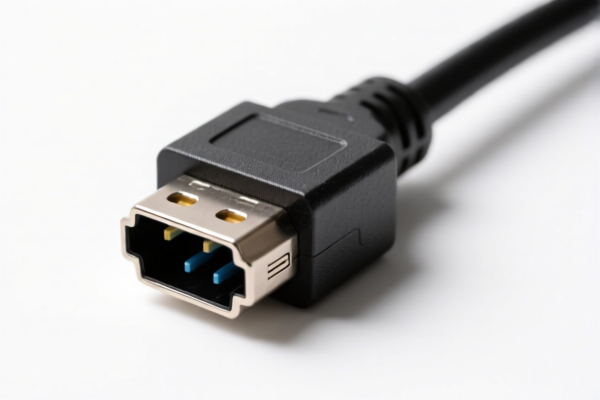
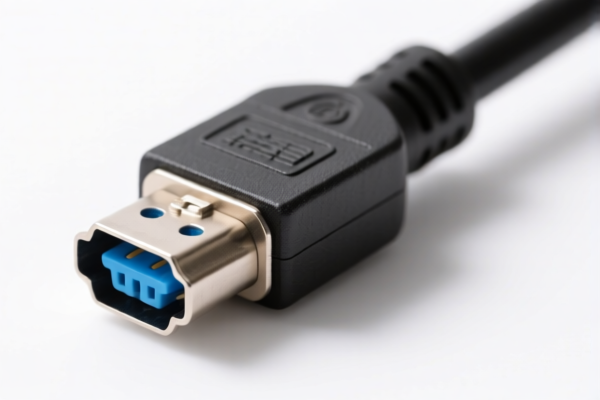

AI Analysis
🔌 10W Connector (Power Connectors)
🌐 HS Code Reference & Customs Clearance Guide | 2026 Latest Tariff Analysis | Strategic通关 Strategy for High-Tax Items
📌 1. Product Definition & Classification: Do You Really Understand "Connectors"?
Connectors are essential electronic components used to join electrical circuits. In international trade, the classification of a "10W Connector" depends heavily on its physical form (with/without terminals), material composition, and specific application.
⚠️ Key Distinction:
- If it is a bare component or a part of a switch/control panel → It is often classified under 8538 (Parts).
- If it includes terminals/contacts and is used for transmitting power (even low power like 10W) → It may be classified under 8544 (Insulated Conductors).
- If it functions specifically as a switch mechanism → It may fall under 8536 (Electrical Circuits).
📦 2. HS Code Classification Details (Based on Provided Data)
| HS Code | Summary Logic | Total Tax Rate | Key Tax Components |
|---|---|---|---|
8538.90.81.40 |
Connectors as electronic connection parts, matching metal contact usage and spare parts logic. | 38.5% | Base: 3.5%, Add-on: 25%, Section 122: 10% |
8544.42.90.10 |
10W falls under power category; connector matches "electrical conductor with terminals." | 87.6% | Base: 2.6%, Add-on: 25%, Section 122: 10%, Steel/Alu/Cu Add-on: 50% |
8544.42.90.90 |
Connector matches "with terminals" description; 10W is power spec, no material conflict. | 87.6% | Base: 2.6%, Add-on: 25%, Section 122: 10%, Steel/Alu/Cu Add-on: 50% |
8536.69.40.10 |
Connector matches form and usage; no material or form conflict, highly likely to fit. | 35.0% | Base: 0.0%, Add-on: 25%, Section 122: 10% |
8538.90.81.60 |
Connectors belong to switch equipment/control panel parts, fitting "other parts" catch-all. | 38.5% | Base: 3.5%, Add-on: 25%, Section 122: 10% |
🔍 Critical Note:
- The 8544 codes carry a staggering 87.6% tax rate due to the additional 50% tariff on Steel/Aluminum/Copper products. This is the most expensive option if the connector contains these metals. - The 8536 code offers the lowest base burden (0%) but still incies high total tariffs. - The 8538 codes are moderate (~38.5%) and treat the connector as a generic part.
💰 3. 2026 Latest Tariff Rate Breakdown (Including Surcharges & Policy Add-ons)
✅ Applicable Country: USA (US)
✅ Origin: China (CN)
✅ Effective Time: 2025/2026 Regulations
🎯 1. 8538.90.81.40 & 8538.90.81.60 —— Connector Parts (General/Switch Parts)
| Item | Details |
|---|---|
| Base Tariff | 3.5% (ad valorem) |
| Section 301 Add-on | +25.0% (Standard USITC Footnote) |
| Section 122 Tariff | +10.0% (Specific Chinese Import Add-on) |
| Total Tax Rate | 38.5% |
| Tax Calculation | CIF Value × 38.5% |
| De Minimis Exemption | ❌ Not Eligible (High tax rates usually block de minimis) |
📌 Explanation:
- These codes classify the connector as a part of electrical machinery or switches, rather than the electrical conductor itself. - The total rate is significantly lower than the 8544 codes, making this a preferred classification if the physical description allows.
🎯 2. 8544.42.90.10 & 8544.42.90.90 —— Insulated Conductors with Terminals
| Item | Details |
|---|---|
| Base Tariff | 2.6% (ad valorem) |
| Section 301 Add-on | +25.0% |
| Section 122 Tariff | +10.0% |
| Steel/Alu/Cu Add-on | +50.0% (Critical!) |
| Total Tax Rate | 87.6% |
| Tax Calculation | CIF Value × 87.6% |
| De Minimis Exemption | ❌ Not Eligible |
📌 Warning:
- If the connector is made of Steel, Aluminum, or Copper and classified as an "insulated conductor," the 50% metal surcharge applies on top of the standard 35% (3.5+25+10). - This results in an 87.6% total tax, which is extremely costly and likely to erode profit margins completely.
🎯 3. 8536.69.40.10 —— Electrical Switching Apparatus
| Item | Details |
|---|---|
| Base Tariff | 0.0% (ad valorem) |
| Section 301 Add-on | +25.0% |
| Section 122 Tariff | +10.0% |
| Total Tax Rate | 35.0% |
| Tax Calculation | CIF Value × 35.0% |
| De Minimis Exemption | ❌ Not Eligible |
📌 Strategy:
- This code has the lowest base rate (0%) and no metal surcharge. - If the connector can be argued as a component of a switching apparatus, this is the most tax-efficient option provided in the data.
🛠️ 4. Customs Clearance Practical Advice (Avoiding Pitfalls)
✅ 1. Document Checklist (Must-Have)
| Document | Required? | Purpose |
|---|---|---|
| Product Specification Sheet | ✔️ | Defines 10W rating, material (Plastic vs. Metal), and terminal type. |
| Material Composition Report | ✔️ | Critical: To prove if Steel/Alu/Cu triggers the 50% surcharge under 8544. |
| Circuit Diagram/Structure | ✔️ | To distinguish between "Connector Part" (8538/8536) vs. "Conductor" (8544). |
| Commercial Invoice | ✔️ | Clearly state "Electrical Connector" and HS Code. |
| Packing List | ✔️ | Ensure no mixed shipments that could trigger scrutiny. |
✅ 2. Declaration Strategy (Key Mantras)
🔥 "Metal triggers 50%, Part vs. Conductor is the key!"
| Scenario | Recommended HS Code | Tax Rate | Reason |
|---|---|---|---|
| Connector is a spare part for switch/panel | 8538.90.81.40 or 8538.90.81.60 |
38.5% | Classified as "Parts," avoiding conductor rules. |
| Connector is a switch component | 8536.69.40.10 |
35.0% | Lowest base rate, no metal surcharge. |
| Connector is a wire with terminals (Metal) | 8544.42.90.10/90 |
87.6% | ❌ AVOID if possible due to 50% metal tax. |
| Connector is a wire with terminals (Non-Metal) | 8544.42.90.10/90 |
87.6% | ⚠️ Still High: Base + 25% + 10% = 37.6%? Note: Data states 87.6% total, implying metal surcharge might be broadly applied or data reflects specific high-tariff scenario. Treat as HIGH TIER. |
✅ 3. Special Handling
| Situation | Advice |
|---|---|
| Material is Plastic/Ceramic | Argue for 8538 or 8536 to avoid "Steel/Alu/Cu" surcharge. |
| Material is Metal | Try to classify as Part (8538) rather than Conductor (8544) to mitigate risk, though 8544 may still apply if it's a finished wiring harness. |
| Pre-Ruling | Strongly Recommended: File for an Advance Ruling from US Customs (CBP) to confirm if your specific 10W connector is a "Part" or "Conductor." |
🌍 5. Global Market Comparison (Contextual Insight)
| Market | Recommended Approach | Note |
|---|---|---|
| 🇺🇸 USA | Aim for 8536 (35%) or 8538 (38.5%). Avoid 8544 (87.6%). | High Section 301 + Section 122 tariffs make precision vital. |
| 🇨🇳 China (Export) | Standard Export Declaration. | Focus on accuracy to avoid customs holds. |
| 🇪🇺 EU | Check CN Code 8536 or 8538. | EU tariffs are generally lower than US "add-on" structure, but rules of origin apply. |
📌 6. Common Errors & Pitfalls (Lessons Learned)
❌ Mistake 1: Classifying a metal connector as 8544 without checking for the 50% metal surcharge.
👉 Consequence: Tax jumps from ~38% to 87.6% → Profit destroyed.
❌ Mistake 2: Calling it a "Wire" when it's a "Connector Part."
👉 Consequence: Misclassification → Delays, audits, or back-taxes.
❌ Mistake 3: Ignoring Section 122.
👉 Consequence: Missing the 10% specific Chinese import tax, leading to underpayment penalties.
✅ Correct Approach:
"Electrical Connector, 10W, for use in Switchgear, Model XYZ, Material: [Specify Plastic/Metal], FCC Compliant."
🎯 7. Conclusion: Precision Saves Money!
🎯 Key Takeaway:
🔹 Lowest Tax:
8536.69.40.10(35.0%) – If it fits "Switching Apparatus."
🔹 Moderate Tax:8538.90.81.40/60(38.5%) – If it fits "Parts."
🔹 Highest Tax:8544.42.90.10/90(87.6%) – Avoid if possible due to 50% Metal Surcharge.
📌 Pro Tip:
If your connector is made of Steel, Aluminum, or Copper, the difference between 38.5% and 87.6% is massive. Work with a customs broker to argue for Part (8538) classification rather than Conductor (8544) if the design allows.
📣 Immediate Action:
📞 Consult a Customs Broker: Provide product photos and material specs.
📄 Request an Advance Ruling: Protect your supply chain from sudden 50% tax shocks.
🚀 Optimize HS Code: Choose 8536 or 8538 to keep taxes manageable!
✨ Professional Clearance, Start with Accurate Classification!
💼 Every percentage point saved is pure profit!
Customer Reviews
About HS Code Classification
The Harmonized System (HS) is an internationally standardized nomenclature developed by the World Customs Organization (WCO) to classify traded products. Over 200 countries use the HS system as the basis for customs tariffs, trade statistics, and import/export regulations.
Each HS code follows a hierarchical structure:
- Chapter (2 digits) — Broad category of goods (e.g., Chapter 84: Machinery and Mechanical Appliances)
- Heading (4 digits) — More specific grouping within the chapter
- Subheading (6 digits) — Internationally standardized breakdown, used by all WCO member countries
- National subdivisions (8-10 digits) — Country-specific extensions for further classification, such as US HTSUS 10-digit codes
Correct HS code classification is essential for smooth customs clearance, accurate duty payment, and compliance with trade regulations. Misclassification can lead to customs delays, overpayment of duties, or penalties.
When importing from CN to US, the applicable tariff rates may include:
- Most-Favored-Nation (MFN) rate — The standard duty rate applied to WTO members
- General rate — Applied to countries without trade agreements
- Trade remedy duties — Additional tariffs such as Section 301 (anti-dumping), Section 232 (national security), or countervailing duties
The information provided on this page is for reference purposes only. For official classification, please consult with your local customs authority or a licensed customs broker.