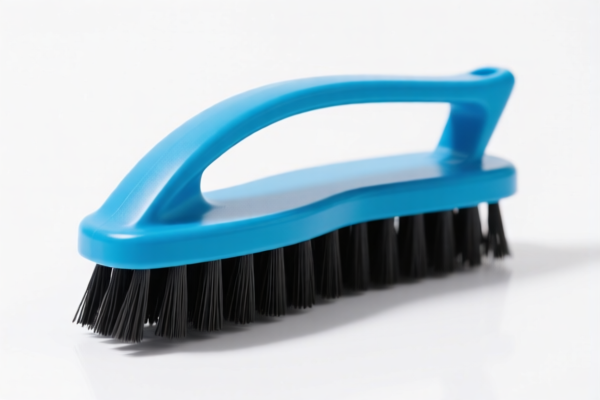
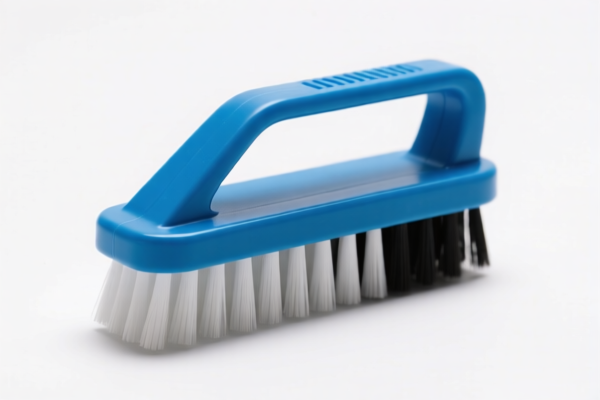
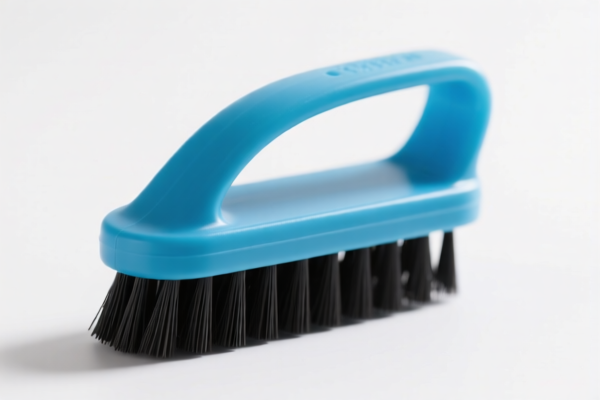
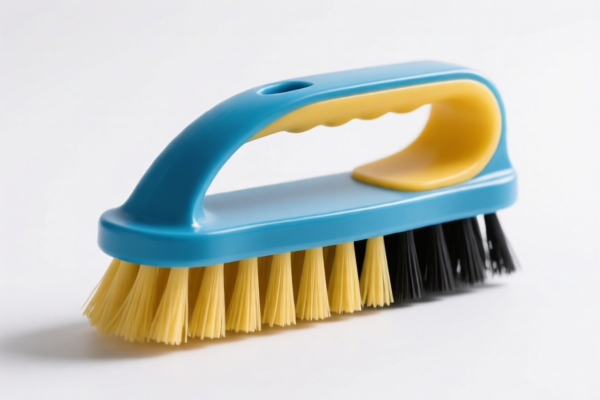
10pcs Car Cleaning Brush
CN → US| HS Code | Tariff Rate | Origin | Destination | Doc |
|---|---|---|---|---|
| 9603294090 | 0.0% | CN | US | Official Doc |
| 9603500000 | 17.5% | CN | US | Official Doc |
Product Images
AI Analysis
🚗 Car Cleaning Brushes (Automotive Detailing Tools)
🌐 HS Code Reference & Customs Clearance Guide | 2026 Latest Tariff Analysis | Professional Compliance Strategy
📌 I. Product Definition & Classification: Do You Really Understand "Car Cleaning Brushes"?
Car cleaning brushes are specialized tools used for automotive detailing, washing, and maintenance. In international trade, they are not treated as a single homogeneous product. They are strictly divided based on their function, size, and constituent parts.
Hand-Held Detailing Brushes: Small brushes for wheels, grilles, vents, and crevices (typically < 6 inches).
Long-Handled/Accessories Brushes: Brushes constituting parts of larger washing machines or specific vehicle maintenance appliances.
⚠️ Key Distinction Point:
- If the brush is a general-purpose cleaning tool (e.g., for scrubbing car exteriors, wheels, or interiors) → It falls under General Cleaning Brushes.
- If the brush is explicitly constituting a part of a machine or appliance (e.g., a brush head for an automated car wash machine or a specialized industrial cleaner) → It falls under Parts of Machines.
📦 II. HS Code Classification Details (2026 Latest Tariff Authority Comparison)
| HS Code | Product Description | Applicable Scenario | Tax Rate (China Origin → US) |
|---|---|---|---|
9603.29.40.90 |
Other brushes (valued not over 40¢ each) | Small hand-held detailing brushes, wheel brushes, vent brushes, tire brushes. Most common for "Car Cleaning Brush" sets. | 0.0% |
9603.50.00.00 |
Other brushes constituting parts of machines, appliances or vehicles | Brush heads for automated car wash systems; industrial cleaning brushes attached to machinery. | 7.5% |
🔍 Key Reminder:
- 99% of retail car cleaning brushes (handheld, plastic handle, synthetic bristles) used by consumers or detailers will be classified under 9603.29.40.90.
- Do NOT classify standard hand-held brushes as "parts of vehicles" (9603.50.00.00) unless they are integral components of a mechanical washing device. Misclassification leads to under-declaration penalties.
💰 III. 2026 Latest Tariff Rate Details (Including Surcharges & Policy Add-ons)
✅ Applicable Country: United States (US)
✅ Origin: China (CN)
✅ Effective Time: 2025/2026 (Current Trade Regime)
🎯 1. 9603.29.40.90 —— Hand-Held Car Cleaning Brushes (Value ≤ 40¢ each)
| Item | Content |
|---|---|
| Base Tariff | 0.0% (ad valorem) |
| Section 301 Surcharge (USITC) | 0.0% |
| IEEPA Surcharge (China-specific) | 0.0% |
| Total Tariff Rate | 0.0% |
| Tax Calculation | CIF Value × 0% = $0 Tax |
| De Minimis Eligibility | ✅ Yes (If ≤ $800 per shipment, may enter duty-free under Section 321, subject to current US CBP rules) |
| Legal Basis Path | USITC:9603.29.40.90 → Note: No additional 301/IEEPA tariffs for this specific subheading |
📌 Explanation:
- This is a highly favorable classification. Unlike electronics or steel, most plastic/rubber cleaning brushes valued under $0.40 per unit are exempt from the heavy Section 301 and IEEPA tariffs.
- Critical Condition: The unit value must be demonstrably not over 40¢. For a 10-piece set, the total invoice value must allow for an average unit price ≤ $0.40, or you must itemize the value of each brush clearly.
- Warning: If your brush is premium (e.g., natural boar hair, branded luxury detailing brush) and priced at $5.00 each, this HS Code may be challenged by Customs if they deem the description "valued not over 40¢" inapplicable to the specific unit. In such cases, alternative subheadings may apply with higher tariffs.
🎯 2. 9603.50.00.00 —— Parts of Machines/Appliances (If Misclassified or Correctly Applied to Industrial Tools)
| Item | Content |
|---|---|
| Base Tariff | 0.0% |
| Section 301 Surcharge | 7.5% |
| IEEPA Surcharge | 0.0% (Note: Some parts may be exempt, but general rule for Chinese origin often attracts surcharges unless specifically excluded) |
| Total Tariff Rate | 7.5% |
| Tax Calculation | CIF Value × 7.5% |
| De Minimis Eligibility | ❌ No (Parts of machines often excluded from de minimis if they trigger specific trade remedies) |
| Legal Basis Path | USITC:9603.50.00.00 → Section 301 Footnote: 9603.50.00.00 |
📌 Note:
- This rate applies only if the brush is technically a "part of a machine."
- For standard consumer car wash brushes, avoid this code unless you are importing brush heads for commercial automatic car washes.
- If applied incorrectly to retail brushes, it may result in audits for misclassification.
🛠️ IV. Customs Clearance Practical Advice (Real-World Pitfall Avoidance)
✅ 1. Required Documentation Checklist (No Exceptions)
| Document | Mandatory | Explanation |
|---|---|---|
| ✅ Product Description | ✔️ | Must state: "Plastic Hand-Held Cleaning Brush for Automobiles, Synthetic Bristles." Avoid vague terms like "Tool." |
| ✅ Unit Price Declaration | ✔️ | Critical: Ensure the invoice clearly shows unit value ≤ $0.40 if using 9603.29.40.90. For 10pcs, if total is $3.00 ($0.30/pc), it qualifies. |
| ✅ Material Composition | ✔️ | e.g., "PP Plastic Handle, Nylon Bristles." Helps customs verify it’s not a "wire brush" (which may have different codes/tariffs). |
| ✅ Commercial Invoice | ✔️ | Must match packing list and bill of lading. |
| ✅ Packing List | ✔️ | Clearly list "10 pcs Car Cleaning Brush." |
✅ 2. Declaration Tips (Key Mantra)
🔥 "Hand-Held, Small, Cheap → 0% Tax! Big, Machine-Part → 7.5%!"
| Scenario | Correct Declaration | Wrong Practice |
|---|---|---|
| 10pcs assorted small brushes (wheel, tire, vent) | 9603.29.40.90 |
Declaring as "Parts of Cars" → 7.5% + Risk of Audit |
| Brush head for a robotic car washer | 9603.50.00.00 |
Declaring as "Hand-Held" → 0% but Misclassification Penalty |
| Luxury Boar-Hair Brush ($10/unit) | Challenging: May need different subheading | Using 9603.29.40.90 → Customs may reject due to "Valued not over 40¢" clause |
✅ 3. Special Case Handling
| Situation | Handling Advice |
|---|---|
| Mixed Kits (Brush + Sponge + Soap) | Declare separately! Do not bundle. Sponges may have different codes. |
| Branded vs. Unbranded | No impact on HS Code, but ensure "Country of Origin" is marked as China on packaging for accurate tariff application. |
| High-Value Premium Brushes | If unit price > $0.40, consult a broker. You may need to use 9603.29.80.xx (other brushes) which might carry different tariffs. |
🌍 V. Global Market Customs Comparison (2026 Latest)
| Country/Region | Recommended HS Code | Tariff (China Origin) | Certification | Note |
|---|---|---|---|---|
| 🇺🇸 USA | 9603.29.40.90 |
0.0% | None | Best market for low-value brushes |
| 🇨🇳 China | 9603.29.40.90 |
0% (Import) | None | Low tariff entry |
| 🇪🇺 EU | 9603.29.00 |
4.0% | CE (if plastic) | No major surcharges |
| 🇦🇺 Australia | 9603.29.00 |
5.0% | None | GST applies on CIF+Duty |
📌 Conclusion:
- The USA is the most tariff-friendly market for standard car cleaning brushes under $0.40/unit.
- Zero Duty is a significant competitive advantage.
📌 VI. Common Errors & Pitfall Guide (Blood & Tears Lessons)
❌ Error 1: Bundling expensive brushes ($5/unit) with the code "Valued not over 40¢"
👉 Consequence: CBP will audit the value. If found, you may owe back-tariffs + penalties.
✅ Fix: For high-value items, verify the correct subheading for "Other Brushes" which may have different rates.
❌ Error 2: Calling them "Parts of Automobiles" to confuse customs
👉 Consequence: Misclassification. Parts of automobiles (Chapter 87) have different rules. Brush are Chapter 96.
✅ Fix: Use accurate chapter 96 descriptions.
❌ Error 3: Ignoring the "40¢" limit
👉 Consequence: If your 10pc set is $10.00 ($1.00/pc), you do not qualify for 9603.29.40.90.
✅ Fix: Calculate average unit price. If > $0.40, use a different HS Code (e.g., 9603.29.80.00) and check its tariff.
🎯 VII. Conclusion: Professional Declaration, Save Money, Avoid Delays!
🎯 Remember the Mantra:
🔹 "Under 40 Cents, Hand-Held, Zero Tax!"
🔹 "Machine Part? 7.5%! Don't Mix Them!"
📌 Pro Tip:
If you are importing 10pcs for commercial use, ensure the total invoice value clearly justifies the unit price ≤ $0.40. If the total is $5.00, do not use 9603.29.40.90.
Action: Contact a licensed customs broker to pre-classify your specific product if the unit price is borderline.
📣 Immediate Action:
📞 Verify Unit Price on Invoice
📦 Label Clearly: "Car Cleaning Brush, Plastic Handle, Synthetic Bristles"
🚀 Declare Accurately to enjoy 0% Duty in the US!
✨ Professional Clearance Starts with Accurate Classification!
💼 Every cent saved in duty is pure profit!
Customer Reviews
About HS Code Classification
The Harmonized System (HS) is an internationally standardized nomenclature developed by the World Customs Organization (WCO) to classify traded products. Over 200 countries use the HS system as the basis for customs tariffs, trade statistics, and import/export regulations.
Each HS code follows a hierarchical structure:
- Chapter (2 digits) — Broad category of goods (e.g., Chapter 84: Machinery and Mechanical Appliances)
- Heading (4 digits) — More specific grouping within the chapter
- Subheading (6 digits) — Internationally standardized breakdown, used by all WCO member countries
- National subdivisions (8-10 digits) — Country-specific extensions for further classification, such as US HTSUS 10-digit codes
Correct HS code classification is essential for smooth customs clearance, accurate duty payment, and compliance with trade regulations. Misclassification can lead to customs delays, overpayment of duties, or penalties.
When importing from CN to US, the applicable tariff rates may include:
- Most-Favored-Nation (MFN) rate — The standard duty rate applied to WTO members
- General rate — Applied to countries without trade agreements
- Trade remedy duties — Additional tariffs such as Section 301 (anti-dumping), Section 232 (national security), or countervailing duties
The information provided on this page is for reference purposes only. For official classification, please consult with your local customs authority or a licensed customs broker.