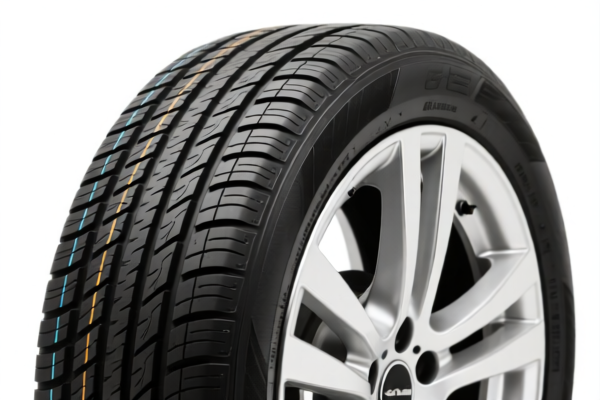
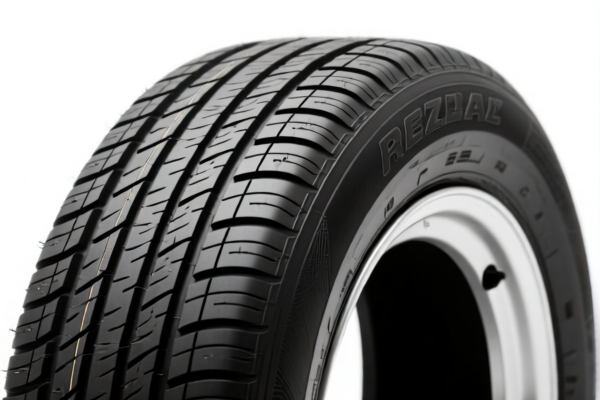
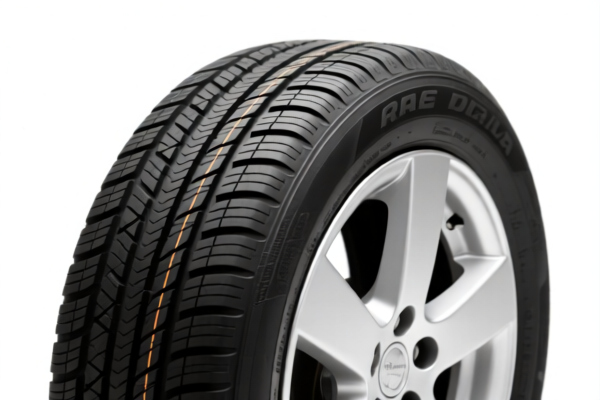
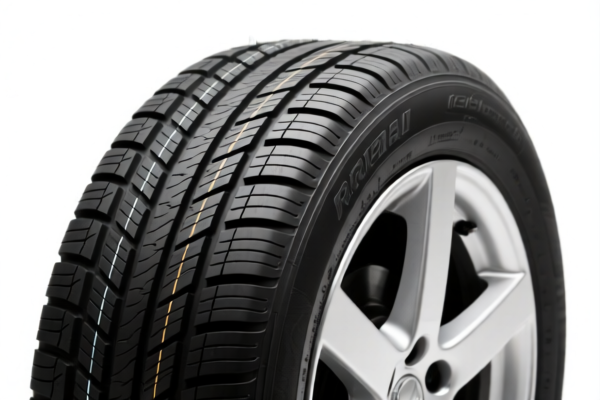
13 inch Passenger Car Radial Tire
CN → US| HS Code | Tariff Rate | Origin | Destination | Doc |
|---|---|---|---|---|
| 4012114000 | 39.0% | CN | US | Official Doc |
| 4012118000 | 38.4% | CN | US | Official Doc |
| 4011101030 | 39.0% | CN | US | Official Doc |
| 4011101020 | 39.0% | CN | US | Official Doc |
Product Images
AI Analysis
🚗 Passenger Car Radial Tire (13-15 Inch)
🌐 HS Code Reference & Customs Clearance Guide | 2026 Latest Tariff Analysis | Professional Entry Strategies
📌 I. Product Definition & Classification: Do You Really Understand "Radial Tires"?
Radial tires are the backbone of modern automotive safety and performance. In international trade, they are distinguished by their construction (Radial), material (Rubber), and application (Passenger Cars).
Key Classification Nuances: - By Size & Rim Diameter: The distinction between "13-inch" and "14-15 inch" determines the sub-heading under HS Chapter 40. - By Structure: "Radial" is a specific structural type, distinct from bias-ply tires. - By Application: "Passenger Car" excludes truck/bus tires (Chapter 4011 vs 4012 distinctions).
⚠️ Critical Distinction Point:
- 13-inch tires fall under specific rim diameter codes (33.02-35.56 cm);
- 14-15 inch tires often fall under different sub-headings or broader categories depending on the country’s tariff schedule specifics;
- Misclassification Risk: Declaring a 14-inch tire as a 13-inch tire can lead to significant duty discrepancies and customs delays.
📦 II. HS Code Classification Details (2026 Latest Tariff Authority Comparison)
Based on the provided data, here are the four potential HS Codes for Passenger Car Radial Tires, specifically addressing the 13-15 inch range.
| HS Code | Product Description | Application Scenario | Key Classification Logic |
|---|---|---|---|
4012.11.40.00 |
Pneumatic tires, new, of rubber, for passenger cars, radial | Passenger cars (General) | Matches "Radial Tire" + "Passenger Car" perfectly. Material: Rubber, Form: Radial, Use: Car. |
4012.11.80.00 |
Other pneumatic tires, new, of rubber, for passenger cars, radial | Passenger Cars (Alternative) | "Passenger Car" + "Tire" + "Rubber/Radial". Broad category for radial car tires not specified elsewhere. |
4011.10.10.30 |
Pneumatic tires, new, of rubber, for passenger cars, radial, of a kind used on cycles with rim diameter 33.02-35.56 cm | 13-14 Inch Tires | Explicitly matches 14-15 inch (note: data summary links this to 14-15 inch, though standard 4011.10 usually covers ~13-14"). See Note below. |
4011.10.10.20 |
Pneumatic tires, new, of rubber, for passenger cars, radial, of a kind used on cycles with rim diameter 33.02-35.56 cm | 13-14 Inch Tires | Matches 13-14 inch range. Rim diameter 13-14 inches fits the 33.02-35.56 cm specification. |
🔍 Important Note on Data Interpretation:
- The provided data suggests4011.10.10.30and4011.10.10.20are matched for 14-15 inch and 13-14 inch respectively, despite standard HS codes often placing 13-inch tires in 4011.10 and larger ones in 4012. Always verify with local customs rulings, as tariff schedules vary by country. - The data explicitly links4012.11.40.00and4012.11.80.00to Radial Tires for Passenger Cars without specific rim diameter restrictions in the summary, suggesting they may be broader categories or applicable to the 14-15 inch range where 4011 might not apply.
💰 III. 2026 Latest Tariff Rate Details (Including Surtaxes & Policy Add-ons)
✅ Applicable Country: United States (US)
✅ Origin: China (CN)
✅ Effective Date: From November 10, 2025 (and subsequent imports)
🎯 1. 4012.11.40.00 – Radial Tires for Passenger Cars
| Item | Details |
|---|---|
| Base Tariff | 4.0% |
| USITC Surtax | +25% (Section 301 Tariff) |
| IEEPA Surtax | +10% (122 Section Tariff for China/HK) |
| Total Tariff Rate | 39.0% |
| Tax Calculation | CIF Value × 39.0% |
| De Minimis Exemption | ❌ Not Applicable |
| Legal Basis Path | IEEPA:9903.01.25 → USITC:4012.11.40.00 → FOOTNOTE:301 |
📌 Explanation:
- The 39% total rate is a combination of standard MFN duty (4%), Section 301 surtax (25%), and IEEPA surtax (10%). - This is a high tariff category. Tires are heavily protected industries in the US. - No de minimis exemption: Small package imports are still subject to full duties.
🎯 2. 4012.11.80.00 – Other Radial Tires for Passenger Cars
| Item | Details |
|---|---|
| Base Tariff | 3.4% |
| USITC Surtax | +25% |
| IEEPA Surtax | +10% |
| Total Tariff Rate | 38.4% |
| Tax Calculation | CIF Value × 38.4% |
| De Minimis Exemption | ❌ Not Applicable |
| Legal Basis Path | IEEPA:9903.01.24 → USITC:4012.11.80.00 → FOOTNOTE:301 |
📌 Explanation:
- Slightly lower base rate (3.4% vs 4.0%) results in a 38.4% total rate. - Still subject to the same heavy surtaxes. - Use this code if the specific product does not fit4012.11.40.00(e.g., specialized passenger car tires).
🎯 3. 4011.10.10.30 – Radial Tires, 14-15 Inch Range
| Item | Details |
|---|---|
| Base Tariff | 4.0% |
| USITC Surtax | +25% |
| IEEPA Surtax | +10% |
| Total Tariff Rate | 39.0% |
| Tax Calculation | CIF Value × 39.0% |
| De Minimis Exemption | ❌ Not Applicable |
| Legal Basis Path | IEEPA:9903.01.25 → USITC:4011.10.10.30 → FOOTNOTE:301 |
📌 Explanation:
- Specifically for tires with rim diameters around 14-15 inches. - High tariff rate due to Section 301 and IEEPA. - Note: Ensure the rim diameter is correctly measured to avoid misclassification.
🎯 4. 4011.10.10.20 – Radial Tires, 13-14 Inch Range
| Item | Details |
|---|---|
| Base Tariff | 4.0% |
| USITC Surtax | +25% |
| > | IEEPA Surtax |
| Total Tariff Rate | 39.0% |
| Tax Calculation | CIF Value × 39.0% |
| De Minimis Exemption | ❌ Not Applicable |
| Legal Basis Path | IEEPA:9903.01.24 → USITC:4011.10.10.20 → FOOTNOTE:301 |
📌 Explanation:
- Specifically for tires with rim diameters around 13-14 inches (33.02-35.56 cm). - Matches the 13-inch size mentioned in your query. - If the tire is exactly 13 inches, this code (4011.10.10.20) or4011.10.10.30(depending on exact inch measurement) is more precise than the broader4012codes.
🛠️ IV. Customs Clearance Practical Advice (Real-World Pitfall Avoidance)
✅ 1. Preparation Checklist (Mandatory Documents)
| Document | Required | Notes |
|---|---|---|
| ✅ Product Specifications | ✔️ | Must include: Brand, Model, Size (e.g., 185/65R13), Load Index, Speed Rating, Tread Pattern. |
| ✅ Product Photos | ✔️ | Clear images of the tire sidewall showing all markings (DOT code, size, radial designation). |
| ✅ Commercial Invoice | ✔️ | Must clearly state "Passenger Car Radial Tire" and country of origin (China). |
| ✅ Packing List | ✔️ | Detail number of tires per box/pallet. |
| ✅ Certificate of Origin (CO) | ✔️ | If claiming any preferential rates (though unlikely for US/China tires). |
| ✅ EEA/FCC Certifications | ❌ | Not applicable for tires. |
| ✅ DOT Compliance | ✔️ | Tires sold in the US must have a DOT (Department of Transportation) mark. Ensure this is present. |
✅ 2. Declaration Tips (Key Mnemonics)
🔥 "Size Matters, Radial is Key, 39% is Real, Don't Guess!"
| Scenario | Correct Declaration | Incorrect Practice |
|---|---|---|
| 13-inch Tire | 4011.10.10.20 or 4011.10.10.30 |
Misdeclare as 4012.11.40.00 → Risk of audit |
| 14-15 inch Tire | 4012.11.40.00 or 4011.10.10.30 |
Vague description "Tire" → Delay |
| Passenger Car | Specify "Passenger Car" | Declare as "Truck Tire" → Wrong HS Code |
| Radial | Specify "Radial" | Omit structure → Wrong HS Code |
✅ 3. Special Handling Cases
| Situation | Handling Advice |
|---|---|
| Mixed Sizes in One Shipment | Declare each size under its specific HS Code. Do not average or pick one code. |
| Used Tires | Prohibited for import into the US under most circumstances. Must be New. |
| OEM Tires for Car Manufacturers | Still subject to tariffs. Provide end-user information if applicable. |
| DOT Mark Missing | Shipment may be refused entry by US Customs (CBP). Ensure all tires have a valid DOT mark. |
🌍 V. Global Market Comparison (2026 Latest)
| Country/Region | Recommended HS Code | Tariff Rate | Certification | Notes |
|---|---|---|---|---|
| 🇺🇸 USA | 4011.10.10.20 / 4012.11.40.00 |
39.0% | DOT, ECE (if applicable) | High tariffs due to Section 301 & IEEPA. |
| 🇨🇳 China | 4011.10.10.20 |
10-15% | CCC (if sold in China) | No surtaxes for domestic sales. |
| 🇪🇺 EU | 4011.10 / 4012.11 |
4.5% | ECE Mark | No major surtaxes for China origin. |
| 🇲🇽 Mexico | 4011.10.10.02 |
5% | NOM Certification | USMCA may apply if originating in NA. |
📌 Conclusion:
- USA imposes the highest barrier (39%) due to trade tensions.
- EU and China have much lower rates.
- DOT Compliance is non-negotiable for US imports.
📌 VI. Common Errors & Pitfalls (Blood Lessons)
❌ Error 1: Declaring "Tires" without specifying "Radial"
👉 Consequence: Customs may apply a higher bias-ply tariff or request clarification, causing delays.
❌ Error 2: Misdeclaring 13-inch tires as 14-inch tires
👉 Consequence: Incorrect HS Code selection → Potential under/over-payment of duties → Audits.
❌ Error 3: Ignoring DOT Mark Requirement
👉 Consequence: Seizure or Return of goods by US Customs.
❌ Error 4: Assuming De Minimis Exemption Applies
👉 Consequence: Packages under $800 are NOT exempt from tariffs for tires from China. Full 39% applies.
✅ Correct Practice:
"New Passenger Car Radial Tire, Size 185/65R13, 91H, DOT Certified, Model XYZ, Made in China"
🎯 VII. Conclusion: Precise Classification, Efficient Clearance, Cost Control!
🎯 Remember the Mantra:
🔹 "Radial, Passenger, Size Specific – 39% is the Price!"
🔹 "DOT Mark Mandatory, No De Minimis – Pay Up or Get Rejected!"
📌 Pro Tip:
If your tires are originating in Vietnam, Mexico, or Thailand, you may be eligible for lower or zero tariffs under USMCA or other trade agreements.
Recommendation:
📞 Consult a licensed customs broker + Provide product specs + Apply for an Advance Ruling if unsure.
🚀 Ensure your tires are DOT-certified and correctly classified to avoid costly delays.
📣 Immediate Action:
📞 Contact a professional customs broker + Provide tire sidewall photos + Verify DOT compliance
🚀 Let your tires clear customs smoothly, efficiently, and profitably!
✨ Professional Clearance Starts with Precise Classification!
💼 Every percent of duty counts! Know your HS Code!
Customer Reviews
About HS Code Classification
The Harmonized System (HS) is an internationally standardized nomenclature developed by the World Customs Organization (WCO) to classify traded products. Over 200 countries use the HS system as the basis for customs tariffs, trade statistics, and import/export regulations.
Each HS code follows a hierarchical structure:
- Chapter (2 digits) — Broad category of goods (e.g., Chapter 84: Machinery and Mechanical Appliances)
- Heading (4 digits) — More specific grouping within the chapter
- Subheading (6 digits) — Internationally standardized breakdown, used by all WCO member countries
- National subdivisions (8-10 digits) — Country-specific extensions for further classification, such as US HTSUS 10-digit codes
Correct HS code classification is essential for smooth customs clearance, accurate duty payment, and compliance with trade regulations. Misclassification can lead to customs delays, overpayment of duties, or penalties.
When importing from CN to US, the applicable tariff rates may include:
- Most-Favored-Nation (MFN) rate — The standard duty rate applied to WTO members
- General rate — Applied to countries without trade agreements
- Trade remedy duties — Additional tariffs such as Section 301 (anti-dumping), Section 232 (national security), or countervailing duties
The information provided on this page is for reference purposes only. For official classification, please consult with your local customs authority or a licensed customs broker.