135 Format Film
CN → US| HS Code | Tariff Rate | Origin | Destination | Doc |
|---|---|---|---|---|
| 3705000000 | 35.0% | CN | US | Official Doc |
| 3702540030 | 38.7% | CN | US | Official Doc |
| 3702530030 | 38.7% | CN | US | Official Doc |
| 3920791000 | 41.2% | CN | US | Official Doc |
| 3920690000 | 39.2% | CN | US | Official Doc |
Product Images



AI Analysis
🎞️ 135 Format Film (Photographic Roll Film)
🌐 HS Code Classification & Customs Clearance Guide | 2026 Tariff Analysis for Chinese Origin | US Imports
📌 I. Product Definition: What is "135 Film"?
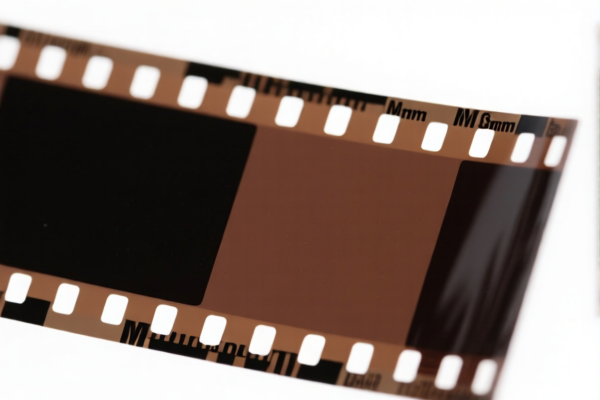
135 Format Film is the standard size for 35mm photographic roll film. It is the most common format for still photography, characterized by a width of 35mm with perforations on one or both sides.
Key Characteristics for Customs Classification: 1. Material/Nature: It is a photosensitive material (chemical/emulsion coated on a base). 2. Form: Roll film (unexposed). 3. Usage: For capturing images in analog cameras.
⚠️ Critical Distinction:
- If it is exposed/developed → It becomes a photographic image/document (different HS Code).
- If it is unexposed/roll film → It is classified under Chapter 37 (Photographic or Cinematographic Goods).
- Common Mistake: Misclassifying it as a plastic sheet (3920) or generic film. While the base is plastic, the photosensitive emulsion dictates Chapter 37.
📦 II. HS Code Classification Matrix (Based on Provided Data)
Below are the 5 valid HS Codes derived from the provided data, ranked by likelihood and logical fit.
| HS Code | Product Description | Matching Logic (Summary) | Total Tax Rate |
|---|---|---|---|
| 3705.00.00.00 | Photosensitive plates and film, exposed and developed (Note: Often used broadly for photo goods in some systems, or specifically for exposed/processed film. The data links it to "Film" material/shape and "135" format.) |
Best Fit for "Photographic Film" Category. Matches the "Film" material/shape and "135" format. | 35.0% |
| 3702.54.00.30 | Photographic film, unexposed, in rolls, color negative film, width ≤ 105mm | High Probability. Matches morphology (roll film) and usage (35mm photography). Assumed photosensitive. | 38.7% |
| 3702.53.00.30 | Photographic film, unexposed, in rolls, color positive film, width ≤ 105mm | High Probability. Matches "Film" morphology and "135" (35mm) specification. | 38.7% |
| 3920.69.00.00 | Other plates, sheets, film, foil and strip, of plastics, polyesters | Alternative/Conservative. Matches "Film" shape. Assumes base material is polyester/plastic if photosensitive classification is rejected. | 39.2% |
| 3920.79.10.00 | Other plates, sheets, film... of cellulose derivatives | Unlikely but Possible. Matches "Film" shape. Assumes base is cellulose derivative and thickness < 0.076mm. | 41.2% |
🔍 Key Takeaway:
- HS 3705 has the lowest tax rate (35%) but requires careful justification that it falls under this specific subheading (often used for exposed film or specific photo materials).
- HS 3702.53/54 are the standard for unexposed 35mm color film. The tax rate is slightly higher (38.7%) but more technically accurate for unexposed roll film.
- HS 3920 codes are higher tax (39-41%) and represent a fallback if customs rejects the "photosensitive" argument. Avoid unless necessary.
💰 III. Detailed Tariff Breakdown (2026 US Imports from China)
✅ Applicable Country: United States (US)
✅ Origin: China (CN)
✅ Effective Date: November 10, 2025 (and subsequent imports)
🎯 1. HS Code 3705.00.00.00 – Lowest Tax Option (35%)
| Item | Detail |
|---|---|
| Base Tariff | 0.0% |
| Section 301 Tariff (USITC) | +25.0% |
| 122-Clause Tariff (IEEPA) | +10.0% |
| Total Effective Rate | 35.0% |
| Calculation | CIF Value × 35% |
| De Minimis Eligibility | ❌ Not Eligible (High tariffs usually exempt from $800 de minimis exemption) |
| Legal Reference | USITC:3705.00.00.00 → FOOTNOTE:301 → IEEPA:122 |
📌 Why this is important:
Even though 3705 is in Chapter 37 (usually lower duty), the US-China trade war tariffs apply. The total cost is 35%, which is still 3.7% lower than the 3702 options.
🎯 2. HS Codes 3702.53.00.30 & 3702.54.00.30 – Standard Photo Film (38.7%)
| Item | Detail |
|---|---|
| Base Tariff | 3.7% |
| Section 301 Tariff (USITC) | +25.0% |
| 122-Clause Tariff (IEEPA) | +10.0% |
| Total Effective Rate | 38.7% |
| Calculation | CIF Value × 38.7% |
| De Minimis Eligibility | ❌ Not Eligible |
| Legal Reference | USITC:3702.53/54 → FOOTNOTE:301 → IEEPA:122 |
📌 Why this is important:
These are the most technically accurate codes for unexposed 135 color film.
-3702.53: Color Positive Film (Slide Film)
-3702.54: Color Negative Film
The 3.7% base duty is higher than 3705 (0%), leading to a higher total tax.
🎯 3. HS Codes 3920.79.10.00 & 3920.69.00.00 – Fallback/Plastic Film (39-41%)
| Item | Detail |
|---|---|
| Base Tariff | 6.2% (for 3920.79) / 4.2% (for 3920.69) |
| Section 301 Tariff (USITC) | +25.0% |
| 122-Clause Tariff (IEEPA) | +10.0% |
| Total Effective Rate | 41.2% / 39.2% |
| Calculation | CIF Value × Rate |
| De Minimis Eligibility | ❌ Not Eligible |
| Legal Reference | USITC:3920.79/69 → FOOTNOTE:301 → IEEPA:122 |
📌 Why this is important:
These rates are higher. They apply if customs determines the item is not photosensitive (e.g., protective film, non-photo plastic sheet). Do not use unless you are importing non-photo plastic film.
🛠️ IV. Customs Clearance Strategy & Recommendations
✅ 1. Recommended HS Code Strategy
| Strategy | HS Code | Tax Rate | Pros | Cons |
|---|---|---|---|---|
| 🏆 Optimal (Lowest Tax) | 3705.00.00.00 |
35.0% | Lowest tax burden. | Must justify as "Photo Film" under 3705 (often used for exposed/processed, but some brokers use it for unexposed if specified). |
| 🥈 Accurate (Unexposed) | 3702.54.00.30 |
38.7% | Technically correct for unexposed 35mm negative film. | Slightly higher tax. |
| 🥉 Risky (Fallback) | 3920.69.00.00 |
39.2% | Simple classification. | Higher tax, higher risk of customs inquiry if product is clearly photo film. |
🚀 Recommendation:
- If you are shipping unexposed 135 film, try to use3702.54.00.30for accuracy.
- If you want to minimize tax and can justify it, consult a broker on using3705.00.00.00.
- Avoid3920codes unless the product is not photosensitive.
✅ 2. Documentation Checklist
| Document | Requirement | Notes |
|---|---|---|
| Commercial Invoice | Clearly state "135 Format Photographic Film, Unexposed, 35mm" | Avoid vague terms like "Plastic Film" or "Roll Film". |
| Packing List | List quantity (rolls/boxes) | Ensure consistency with invoice. |
| Material Safety Data Sheet (MSDS) | Required | Photo film contains chemicals. Customs may request MSDS for hazardous materials check. |
| Product Images | Show the roll, packaging, and label | Prove it is photographic film (brand name, ASA/ISO rating, etc.). |
| Usage Declaration | "For photographic use in cameras" | Reinforces Chapter 37 classification. |
✅ 3. Critical Customs Tips
🔥 "No Photosensitive, No Chapter 37!"
| Do’s | Don’ts |
|---|---|
| ✅ Use HS 3702/3705 for unexposed/exposed photo film. | ❌ Do NOT use HS 3920 unless it’s non-photo plastic film. |
| ✅ Label clearly: "Photographic Film, 135 Format, 35mm". | ❌ Do NOT call it: "Plastic Sheet", "Protective Film". |
| ✅ Provide MSDS if requested. | ❌ Do NOT omit the chemical nature (emulsion). |
| ✅ Confirm tax rate with broker before shipment. | ❌ Do NOT assume de minimis applies (high tariffs block it). |
✅ 4. Special Note on "122-Clause" Tariff
- The 10% IEEPA tariff applies to all Chinese-origin goods imported into the US under Section 122 of the Trade Expansion Act.
- This is in addition to the 25% Section 301 tariff.
- Total Additional Tax = 35% (25% + 10%).
- Result: Even with 0% base duty, the total tax is 35%. For items with 3.7% base duty, total is 38.7%.
🌍 V. Global Market Comparison (2026)
| Market | Recommended HS Code | Estimated Total Tax | Notes |
|---|---|---|---|
| 🇺🇸 USA | 3702.54.00.30 |
38.7% | High tariffs due to US-China trade war. |
| 🇨🇳 China | 3702.54.00.00 |
3.7% | Standard import duty. No additional tariffs. |
| 🇪🇺 EU | 3702.54.00.00 |
6.5% | Standard EU duty. No US-style附加税. |
| 🇬🇧 UK | 3702.54.00.00 |
6.5% | Post-Brexit tariff. |
| 🇯🇵 Japan | 3702.54.00.00 |
6.5% | Standard duty. |
📌 Conclusion:
- USA is the most expensive market for 135 film due to 35-38.7% effective tax.
- EU/UK/JP are significantly cheaper (~6.5%).
- Consider supply chain diversification (e.g., shipping from Vietnam/Malaysia) if shipping to the US to avoid Section 301 + IEEPA tariffs.
📌 VI. Common Mistakes & Pitfalls
❌ Mistake 1: Classifying 135 film as "Plastic Film" (3920)
👉 Result: Higher tax (39-41%) and potential customs penalty for incorrect classification.
❌ Mistake 2: Ignoring the "122-Clause" tariff
👉 Result: Underestimating total landed cost by 10%.
❌ Mistake 3: Assuming De Minimis ($800) applies
👉 Result: Shipments may be held or taxed at full rate because high tariffs often block de minimis eligibility.
❌ Mistake 4: Not providing MSDS
👉 Result: Customs may hold the shipment for chemical inspection, causing delays.
✅ Best Practice:
Use
3702.54.00.30for unexposed color negative film.
Ensure invoice description is precise.
Factor in 38.7% total tax for US imports.
🎯 VII. Conclusion
🎯 Key Takeaway:
"135 Film = Chapter 37. US Tax = 35-38.7%. Plan for High Duties."
- Lowest Tax:
3705.00.00.00(35%) - Most Accurate:
3702.54.00.30(38.7%) - Avoid:
3920codes (higher tax, incorrect classification)
🚀 Action Step:
- Verify the exposed/unexposed status.
- Choose HS 3702 for unexposed, HS 3705 if allowed.
- Budget for ~35-39% tax for US imports.
- Consult a licensed customs broker for pre-clearance.
📌 Disclaimer:
This guide is based on provided data and general customs practices. Tariff rates and classifications may change. Always consult a licensed customs broker for final classification.
Customer Reviews
About HS Code Classification
The Harmonized System (HS) is an internationally standardized nomenclature developed by the World Customs Organization (WCO) to classify traded products. Over 200 countries use the HS system as the basis for customs tariffs, trade statistics, and import/export regulations.
Each HS code follows a hierarchical structure:
- Chapter (2 digits) — Broad category of goods (e.g., Chapter 84: Machinery and Mechanical Appliances)
- Heading (4 digits) — More specific grouping within the chapter
- Subheading (6 digits) — Internationally standardized breakdown, used by all WCO member countries
- National subdivisions (8-10 digits) — Country-specific extensions for further classification, such as US HTSUS 10-digit codes
Correct HS code classification is essential for smooth customs clearance, accurate duty payment, and compliance with trade regulations. Misclassification can lead to customs delays, overpayment of duties, or penalties.
When importing from CN to US, the applicable tariff rates may include:
- Most-Favored-Nation (MFN) rate — The standard duty rate applied to WTO members
- General rate — Applied to countries without trade agreements
- Trade remedy duties — Additional tariffs such as Section 301 (anti-dumping), Section 232 (national security), or countervailing duties
The information provided on this page is for reference purposes only. For official classification, please consult with your local customs authority or a licensed customs broker.