14 15 inch Passenger Car Radial Tire
CN → US| HS Code | Tariff Rate | Origin | Destination | Doc |
|---|---|---|---|---|
| 4012114000 | 39.0% | CN | US | Official Doc |
| 4012118000 | 38.4% | CN | US | Official Doc |
| 4011101030 | 39.0% | CN | US | Official Doc |
| 4011101020 | 39.0% | CN | US | Official Doc |
| 4012114000 | 39.0% | CN | US | Official Doc |
Product Images
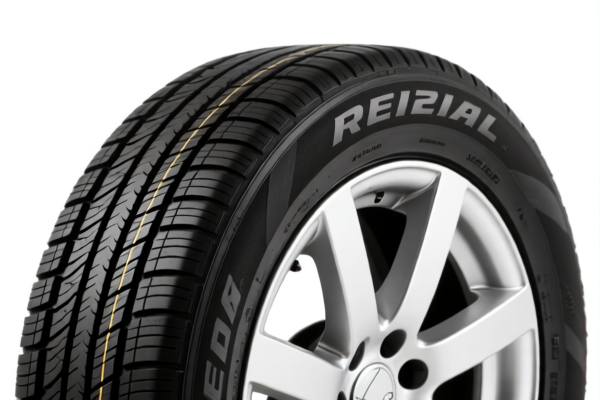
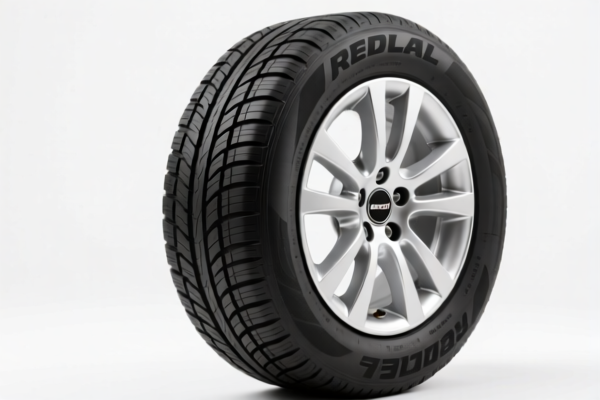
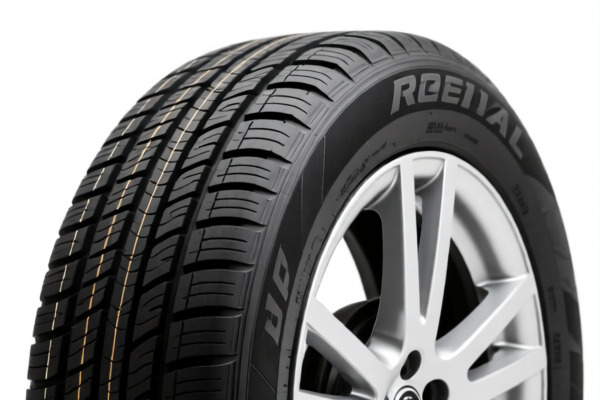
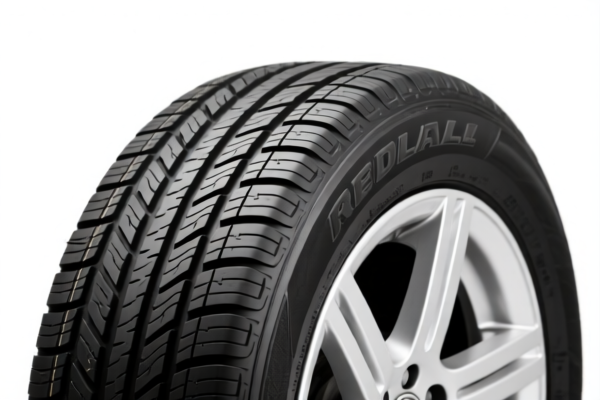
AI Analysis
🚗🛞 14-15 Inch Passenger Car Radial Tire (乘用车径向轮胎)
🌐 HS Code Reference & Customs Clearance Guide | 2026 Tariff Analysis | Strategic Entry Strategy
📌 I. Product Definition & Classification: Why "Tire" is Tricky!
The 14-15 inch Passenger Car Radial Tire is the quintessential component for modern light vehicles, ensuring safety, grip, and performance on paved roads. In international trade, "tires" are not a single category; they are split based on rim diameter, construction type (Radial vs. Bias), and vehicle type (Passenger Car vs. Truck/Bike).
Key Distinctions for Classification: * Radial Construction (R): The cord plies run radially from bead to bead. This is the standard for modern passenger cars (most HS Codes in your data are for Radial tires). * Rim Size Matters: The "14-15 inch" specification is a critical border. * < 14 inches: Often classified differently (e.g., for smaller cars or specific utility vehicles). * 14-15 inches: The sweet spot for compact sedans, SUVs, and crossovers. This specific range often triggers the 4011.10 series. * > 15 inches (e.g., 16+): Often falls under 4012.11 or other subheadings depending on width and load index.
⚠️ Critical Classification Logic: * If the tire is Radial and 14-15 inch rim size → It strictly falls under 4011.10. * If the tire is Radial and used for Passenger Cars but falls outside the specific 14-15 inch "defined range" (or is a broader category for passenger cars) → It may fall under 4012.11. * Crucial Detail: The "Passenger Car" (Passenger) vs. "Truck/Bus" distinction is the first filter in HS Code 4011.
📦 II. HS Code Breakdown (Matching Your 14-15 Inch Radial Tire Data)
Based on your provided data, here is the precise mapping for 14-15 inch Passenger Car Radial Tires and the specific tax implications.
| HS Code | Product Description & Logic | Applicable Scenario | Rim Size Match |
|---|---|---|---|
4011.10.10.30 |
14-15 inch Radial Passenger Tires | The specific "14-15 inch" definition bucket. | ✅ Perfect Match (14-15 inch range) |
4011.10.10.20 |
14-inch Specific Radial Tires | Tires falling strictly within the "14-inch" boundary or specific sub-range. | ✅ Partial Match (14-inch subset) |
4012.11.40.00 |
Passenger Car Radial Tires (General) | Broad category for passenger radial tires, often used if the 14-15 inch specific definition isn't met or for broader classification. | ✅ Functional Match (Passenger Radial) |
4012.11.80.00 |
Passenger Car Rubber Tires | General rubber tires for passenger cars, broader scope. | ✅ Functional Match (Passenger Car) |
🔍 Deep Dive: Why
4011.10.10.30vs4011.10.10.20? *4011.10.10.30: Specifically targets the 14-15 inch diameter range. If your tire is 14.5, 15, or falls within the "14-15" regulatory definition, this is the primary code. *4011.10.10.20: Specifically targets the 14-inch boundary. If your tire is exactly 14 inches or falls into a tighter definition around 14, use this. *4012.11...: These are often used as catch-alls for Radial Passenger Tires that might not fit the strict "14-15 inch" sub-definition or are classified under different national subheadings for "Passenger Car Radial Tires".
💰 III. 2026 Tariff Rate Breakdown (The "Total Tax" Shock)
✅ Origin: China (CN)
✅ Destination: US (Implied by "Add-on Tariff" & "122 Clause" context)
✅ Product: 14-15 Inch Passenger Car Radial Tire
✅ Effective Date: Current (2025-2026)
All products in your data carry a Total Tax of 38.4% - 39.0%. This is a High-Tariff bracket due to the combination of Base Duty, Section 301 (Trade War), and Section 122 (Retaliatory/Specific).
🎯 1. The Tariff Composition (How the 39% is Calculated)
| Tax Component | Rate | Source / Logic |
|---|---|---|
| 1. Base Duty (MFN) | 3.4% - 4.0% | Standard Most-Favored-Nation rate for tires (Section 4011). |
| 2. Section 301 (Add-on) | 25.0% | The core "China Tariff" imposed under U.S. Trade Action 301. |
| 3. "122 Clause" (Specific) | 10.0% | A specific retaliatory or supplementary duty often applied to specific Chinese tire categories (likely related to Section 301 list updates or specific trade remedy). |
| TOTAL | 38.4% - 39.0% | Sum of all three components. |
🔹 Detailed Calculation Example (for 4011.10.10.30):
- Base Duty: 4.0%
- Add-on (301): 25.0%
- 122 Clause: 10.0%
- Total: 39.0%
📌 Interpretation: * The 25.0% add-on is the most significant factor, making US-bound tires from China extremely expensive. * The 10.0% "122 Clause" is an additional layer on top of the 25%. This is not a standard tariff; it is a policy-specific surcharge. * Result: For every $10,000 worth of tires, you pay $3,900 in duties alone.
🛠️ IV. Customs Clearance Strategy & "Avoid Pitfalls" Guide
✅ 1. Critical Documentation Checklist
To clear goods at $39\%$ without delays, you must prove the Rim Size and Radial Construction precisely.
| Document | Requirement | Why It Matters |
|---|---|---|
| Product Spec Sheet | Must explicitly state: "Radial Construction", "Size: 14-15 Inch", "Passenger Car". | Misdeclaring "Bias" or "Truck" tire = Higher Duty or Seizure. |
| Technical Drawing | Show the rim diameter (e.g., 14", 15"). | Customs officers verify the 14-15 inch claim against 4011.10.10.30. |
| Commercial Invoice | Must use the exact HS Code (e.g., 4011.10.10.30). |
If you write 4012.11.40.00 instead of the specific 4011 code, you might get audited for "Incorrect Classification". |
| Packing List | Weight and quantity per box. | Required for duty calculation. |
✅ 2. Declaration "Golden Rules"
🔥 The "14-15 Inch" Trap: * Correct: Declare as
4011.10.10.30if the size is strictly within the 14-15 inch range. This is the most specific code. * Correct: Declare as4011.10.10.20if the size is strictly 14 inches (or within a defined 14-inch sub-range). * Risk: If you declare a 15-inch tire as4011.10.10.20(14-inch specific), Customs may reject it and force you to re-classify, causing delays. * Risk: If you declare a 15-inch tire as4012.11.40.00(General Passenger), you might miss the specific "14-15 inch" benefit (if any) or face scrutiny. Stick to4011if possible.
✅ 3. Tax Mitigation Strategy (Is there a way out?)
- ❌ De Minimis (Section 321): NOT APPLICABLE. Tires are excluded from the $800 de minimis exemption. You MUST pay full duties.
- ❌ Free Trade Agreements (USMCA/Mexico): Only applies if the tires are manufactured in Mexico and meet Rules of Origin. If made in China, NO.
- ✅ Pre-Ruling (Advance Ruling): Apply for an Advance Ruling from CBP (US Customs) confirming your specific tire size falls under
4011.10.10.30and not4012.11. This locks in the classification before shipment.
🌍 V. Market Comparison: Where else does it go?
| Region | HS Code | Total Duty Rate | Notes |
|---|---|---|---|
| 🇺🇸 USA | 4011.10.10.30 |
39.0% (4% + 25% + 10%) | High Risk. 301 + 122 Clause make it very expensive. |
| 🇨🇳 China | 4011.10.10.30 |
~5-10% (Export) | China taxes are low; the burden is on the US importer. |
| 🇪🇺 EU | 4011.10.10 |
~20-40% (Anti-dumping) | Anti-Dumping Duties (AD) often apply on Chinese tires in EU (e.g., +23% AD). |
| 🇦🇺 Australia | 4011.10.10 |
~5% | Lower duty, but strict labeling requirements. |
📌 Conclusion for US Market: The 14-15 inch radial tire is a highly taxed product entering the US. The 39% total tariff (4% base + 25% 301 + 10% 122) is a major cost driver. * Strategy: If possible, consider sourcing from Vietnam, Thailand, or Malaysia (where 301 duties may be lower or non-existent) to avoid the 25% + 10% surcharge.
🎯 VI. Final Verdict & Action Plan
The Bottom Line:
Your 14-15 inch passenger car radial tires are hitting a 39.0% tax wall.
* If you are importing to the US: You must budget $3,900 per $10,000 of goods.
* HS Code Choice: Prioritize 4011.10.10.30 (for the 14-15 range) to ensure accuracy. Avoid general 4012 codes unless the specific size doesn't fit 4011.
Action Items:
1. Verify Rim Size: Double-check your tire specs. Is it 14, 14.5, or 15? Match it to 4011.10.10.20 or 4011.10.10.30.
2. Calculate Landed Cost: $1.39 \times \text{FOB Value}$.
3. Apply for Pre-Ruling: Get CBP confirmation to avoid "Customs Audit" delays.
4. Consider Supply Chain Shift: If the 39% kills your margin, look at non-China supply chains immediately.
🚨 WARNING: "Do not try to hide the 'Passenger Car' nature or 'Radial' construction." Misclassification (e.g., declaring as "Truck Tire" or "Bias Tire") carries civil penalties (up to 4x duty value) and criminal charges for fraud. The 25% + 10% surcharge is non-negotiable for Chinese-origin passenger tires in the US market.
✅ Professional Clearance Starts with Accuracy!
Use the right code (4011.10.10.30) + Know the Tax (39%) + Plan the Supply Chain. 🚀
Customer Reviews
About HS Code Classification
The Harmonized System (HS) is an internationally standardized nomenclature developed by the World Customs Organization (WCO) to classify traded products. Over 200 countries use the HS system as the basis for customs tariffs, trade statistics, and import/export regulations.
Each HS code follows a hierarchical structure:
- Chapter (2 digits) — Broad category of goods (e.g., Chapter 84: Machinery and Mechanical Appliances)
- Heading (4 digits) — More specific grouping within the chapter
- Subheading (6 digits) — Internationally standardized breakdown, used by all WCO member countries
- National subdivisions (8-10 digits) — Country-specific extensions for further classification, such as US HTSUS 10-digit codes
Correct HS code classification is essential for smooth customs clearance, accurate duty payment, and compliance with trade regulations. Misclassification can lead to customs delays, overpayment of duties, or penalties.
When importing from CN to US, the applicable tariff rates may include:
- Most-Favored-Nation (MFN) rate — The standard duty rate applied to WTO members
- General rate — Applied to countries without trade agreements
- Trade remedy duties — Additional tariffs such as Section 301 (anti-dumping), Section 232 (national security), or countervailing duties
The information provided on this page is for reference purposes only. For official classification, please consult with your local customs authority or a licensed customs broker.