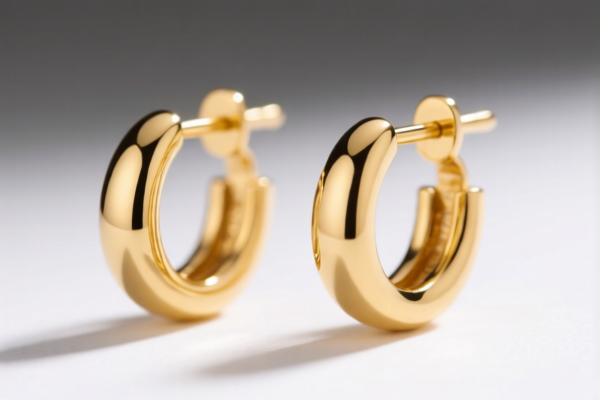
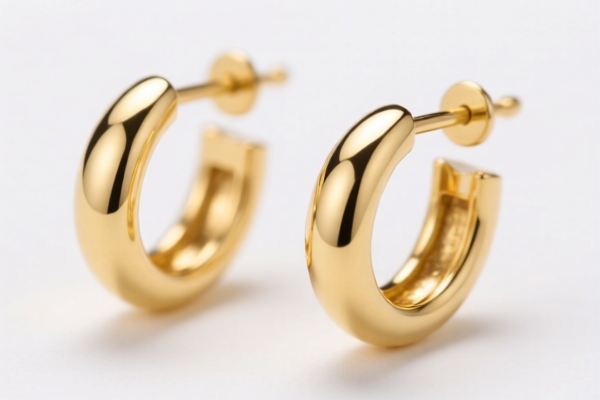
14k gold earplugs
CN → US| HS Code | Tariff Rate | Origin | Destination | Doc |
|---|---|---|---|---|
| 7113195030 | 23.0% | CN | US | Official Doc |
| 7113195091 | 15.5% | CN | US | Official Doc |
| 7115903000 | 38.9% | CN | US | Official Doc |
Product Images

AI Analysis
🎧 14k Gold Earplugs: HS Code Classification & Customs Clearance Strategy
🌐 HS Code Reference & Clearance Guide | 2024/2025 Latest Tariff Analysis | Professional Compliance Strategy
📌 I. Product Definition & Classification: What Are "14k Gold Earplugs"?
"14k Gold Earplugs" are decorative body jewelry items made from an alloy containing 58.3% gold (14 karats), specifically designed for pierced ears. In international trade, they fall under Chapter 71 (Natural or Cultured Pearls, Precious or Semi-Precious Stones, Precious Metals, Metals Clad with Precious Metal, and Articles Thereof).
The critical distinction for customs clearance lies in the specific design and function: * Jewelry Articles (Ch 71): Items worn for ornamentation, including ear plugs, hoops, and studs. * Parts of Jewelry: Components that are not finished jewelry items themselves (e.g., loose clasps, findings).
⚠️ Key Distinction Point:
- If the item is a finished jewelry piece designed to be worn directly (e.g., a solid gold plug, a decorative ear tunnel), it is classified as jewelry.
- If the item is a component for other jewelry assembly, it may be classified as a part.
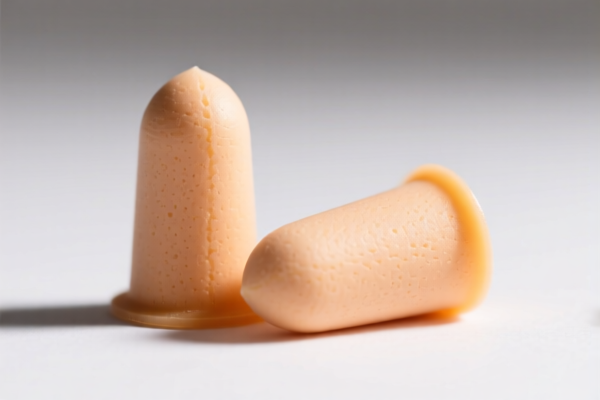
- Note: "Earplugs" in the context of gold jewelry usually refers to studs or decorative plugs, not hearing protection. Hearing protection would fall under Chapter 85 or 95, but "14k Gold" strongly implies jewelry.
📦 II. HS Code Classification Details (Based on Provided Data)
| HS Code | Product Description | Application Scenario | Taxation Detail |
|---|---|---|---|
7113.19.50.30 |
14k gold earplugs classified as precious metal jewelry; material: 14k gold; form: earrings/jewelry parts. | Finished decorative ear plugs, earrings. | Total Tax: 23.0% - Base: 5.5% - Section 301 (Add-on): 7.5% - Section 122: 10% |
7113.19.50.91 |
Other gold jewelry articles; material: gold; form: jewelry parts/accessories. | Gold jewelry components, accessories, or less defined gold jewelry items. | Total Tax: 15.5% - Base: 5.5% - Section 301: 0.0% - Section 122: 10% |
7115.90.30.00 |
Other articles of precious metals; material: gold; form: decorative articles. | General gold articles not specifically classified as jewelry (e.g., ornamental gold items). | Total Tax: 38.9% - Base: 3.9% - Section 301 (Add-on): 25.0% - Section 122: 10% |
🔍 Critical Note:
-7113.19.50.30is the most direct fit for "earplugs" as jewelry.
-7113.19.50.91offers a lower total tax (15.5%) if the item can be legally argued as a "jewelry part" or "accessory" rather than finished jewelry.
-7115.90.30.00carries the highest tax (38.9%) due to the higher Section 301 surcharge (25%). Avoid this unless the item does not fit Chapter 71 jewelry definitions.
💰 III. 2024/2025 Latest Tariff Rate Breakdown (Including Add-ons)
✅ Applicable Country: United States (US)
✅ Origin: China (CN) (Assumed based on Section 122 and 301 context)
✅ Effective Time: Current rates apply
🎯 1. 7113.19.50.30 – Precious Metal Jewelry (Earplugs)
| Item | Content |
|---|---|
| Base Duty Rate | 5.5% (ad valorem) |
| Section 301 Duty | +7.5% (List 4B exclusions may not apply to standard jewelry) |
| Section 122 Duty | +10% (Specific provision for certain gold jewelry/articles) |
| Total Rate | 23.0% |
| Calculation Basis | CIF Value × 23.0% |
| De Minimis Exemption | ❌ Not Eligible (Section 122 and 301 duties typically bypass de minimis) |
| Legal Basis Path | HTSUS: 7113.19.50.30 → Section 301: Footnote 22 → Section 122 |
📌 Explanation:
- Section 122 imposes a 10% duty on certain articles of precious metals, including gold jewelry, regardless of Section 301 rates.
- Section 301 adds 7.5% for Chinese-origin goods under current trade policies.
- Total: 23.0%. This is the standard rate for finished 14k gold ear jewelry from China.
🎯 2. 7113.19.50.91 – Other Gold Jewelry Articles
| Item | Content |
|---|---|
| Base Duty Rate | 5.5% |
| Section 301 Duty | 0.0% (If exempt or not applicable to this specific subheading) |
| Section 122 Duty | +10% |
| Total Rate | 15.5% |
| Calculation Basis | CIF Value × 15.5% |
| De Minimis Exemption | ❌ Not Eligible |
| Legal Basis Path | HTSUS: 7113.19.50.91 → Section 122 |
📌 Explanation:
- This subheading allows for a lower total tax (15.5%) if the item is classified as a "part" or "accessory" rather than a finished jewelry item.
- Strategy: If your "earplugs" are simple, unadorned gold tubes or components meant for assembly, this rate may be advantageous.
- Risk: Customs may challenge this classification if the item is clearly a finished earring.
🎯 3. 7115.90.30.00 – Other Articles of Precious Metals
| Item | Content |
|---|---|
| Base Duty Rate | 3.9% |
| Section 301 Duty | +25.0% (Higher surcharge for non-jewelry gold articles) |
| Section 122 Duty | +10% |
| Total Rate | 38.9% |
| Calculation Basis | CIF Value × 38.9% |
| De Minimis Exemption | ❌ Not Eligible |
| Legal Basis Path | HTSUS: 7115.90.30.00 → Section 301: Footnote 22 → Section 122 |
📌 Explanation:
- Avoid this code if possible. The 25% Section 301 surcharge makes it the most expensive option.
- This code is for gold articles that are not jewelry (e.g., gold leaf, gold wire for industrial use). Using it for earplugs could lead to misclassification penalties.
🛠️ IV. Customs Clearance Practical Advice
✅ 1. Required Documentation Checklist
| Document | Required | Notes |
|---|---|---|
| ✅ Commercial Invoice | ✔️ | Must specify "14k Gold Earplugs/Earrings", weight, karat purity. |
| ✅ Certificate of Origin (CO) | ✔️ | Proof of Chinese origin (triggers 301/122 duties). |
| ✅ Product Photos | ✔️ | Show front/back, markings (e.g., "14K", "585"), and size. |
| ✅ Material Composition Proof | ✔️ | Assay report or supplier declaration confirming 58.3% gold content. |
| ✅ Packing List | ✔️ | Itemize quantities, gross/net weight. |
⚠️ Critical:
- Clearly state "14k Gold" (not just "Gold") to avoid valuation disputes.
- Specify if the item is "Finished Jewelry" or "Jewelry Component".
✅ 2. Classification Strategy & Tips
| Scenario | Recommended HS Code | Reason |
|---|---|---|
| Finished Earplugs/Studs | 7113.19.50.30 |
Direct fit for jewelry. Total tax: 23.0%. |
| Gold Tubes/Components for Assembly | 7113.19.50.91 |
Lower tax (15.5%) if classified as parts. Requires strong justification. |
| Non-Jewelry Gold Articles | 7115.90.30.00 |
❌ Avoid. High tax (38.9%). Only for industrial gold items. |
🔥 Pro Tip:
- If your product is a simple gold tube without decorative elements, argue for7113.19.50.91to save 7.5% in Section 301 duties.
- If it has decorative stones, logos, or complex designs, use7113.19.50.30to avoid misclassification risks.
✅ 3. Special Considerations
| Issue | Solution |
|---|---|
| De Minimis (Section 321) | ❌ No Exemption: Section 122 and Section 301 duties apply even to small shipments. Do not use de minimis for cost-saving. |
| Valuation | Ensure the invoice reflects the actual transaction value. Under-invoicing can lead to seizures. |
| Markings | Ensure all products are marked "14K" or "585" to meet US labeling requirements. |
🌍 V. Global Market Comparison (2024/2025)
| Market | Recommended HS Code | Est. Total Duty | Notes |
|---|---|---|---|
| 🇺🇸 United States | 7113.19.50.30 |
23.0% | Includes Section 122 (10%) + Section 301 (7.5%). |
| 🇨🇳 China | 7113.19.50.30 |
10% | Standard import duty for gold jewelry. No Section 301/122. |
| 🇪🇺 European Union | 7113.19 |
0% | Most gold jewelry enters duty-free under GSP or bilateral agreements. VAT applies separately. |
| 🇬🇧 United Kingdom | 7113.19 |
0% | Similar to EU. VAT and Import Duty may vary based on origin. |
📌 Conclusion:
- The US market is the most costly due to Section 122 and Section 301 duties.
- No de minimis exemption applies. All shipments must declare duties upfront.
📌 VI. Common Mistakes & Pitfalls (Lessons Learned)
❌ Mistake 1: Using 7115.90.30.00 for finished jewelry
👉 Consequence: Overpayment of 15.9% in duties (38.9% vs 23.0%).
👉 Fix: Use 7113.19.50.30 for jewelry.
❌ Mistake 2: Claiming de minimis exemption for small shipments
👉 Consequence: Seizure or penalties. Section 122/301 duties apply to all values.
👉 Fix: Declare all shipments with full duty payment.
❌ Mistake 3: Mislabeling "Gold" as "Gold Plated" to lower value
👉 Consequence: Fines for misdeclaration. "14k Gold" must be accurately declared.
👉 Fix: Provide assay reports if requested.
✅ Correct Practice:
Description: "14k Gold Ear Plugs, Solid Gold, 585 Purity, Decorative Design, Model XYZ"
HS Code:7113.19.50.30
Duty: 23.0% (US)
🎯 VII. Conclusion: Accurate Classification for Cost Efficiency
🎯 Key Takeaway:
🔹 For 14k Gold Earplugs in the US: Use
7113.19.50.30(23.0% total duty) for finished jewelry.
🔹 For Components: Consider7113.19.50.91(15.5% total duty) if applicable.
🔹 Avoid:7115.90.30.00(38.9% total duty) unless the item is not jewelry.
🔹 No De Minimis: Always declare duties, regardless of shipment value.
📌 Tip:
If you are importing into the US, pre-classify your goods with a customs broker or apply for an Advance Ruling to avoid unexpected costs.
For Section 122 exemptions, consult current USITC exclusions, as some gold jewelry items may qualify for exclusions under specific conditions.
📣 Immediate Action:
📞 Contact a licensed customs broker to review your product samples.
📄 Prepare detailed invoices and material declarations.
🚀 Ensure compliance to avoid delays, seizures, or penalties!
✨ Precision in classification saves money and ensures smooth clearance!
💼 Your jewelry deserves the right HS Code!
Customer Reviews
About HS Code Classification
The Harmonized System (HS) is an internationally standardized nomenclature developed by the World Customs Organization (WCO) to classify traded products. Over 200 countries use the HS system as the basis for customs tariffs, trade statistics, and import/export regulations.
Each HS code follows a hierarchical structure:
- Chapter (2 digits) — Broad category of goods (e.g., Chapter 84: Machinery and Mechanical Appliances)
- Heading (4 digits) — More specific grouping within the chapter
- Subheading (6 digits) — Internationally standardized breakdown, used by all WCO member countries
- National subdivisions (8-10 digits) — Country-specific extensions for further classification, such as US HTSUS 10-digit codes
Correct HS code classification is essential for smooth customs clearance, accurate duty payment, and compliance with trade regulations. Misclassification can lead to customs delays, overpayment of duties, or penalties.
When importing from CN to US, the applicable tariff rates may include:
- Most-Favored-Nation (MFN) rate — The standard duty rate applied to WTO members
- General rate — Applied to countries without trade agreements
- Trade remedy duties — Additional tariffs such as Section 301 (anti-dumping), Section 232 (national security), or countervailing duties
The information provided on this page is for reference purposes only. For official classification, please consult with your local customs authority or a licensed customs broker.