15 inch Radial Car Tire
CN → US| HS Code | Tariff Rate | Origin | Destination | Doc |
|---|---|---|---|---|
| 4011101030 | 39.0% | CN | US | Official Doc |
| 4012118000 | 38.4% | CN | US | Official Doc |
| 4012114000 | 39.0% | CN | US | Official Doc |
| 4011101020 | 39.0% | CN | US | Official Doc |
| 4011101010 | 39.0% | CN | US | Official Doc |
Product Images
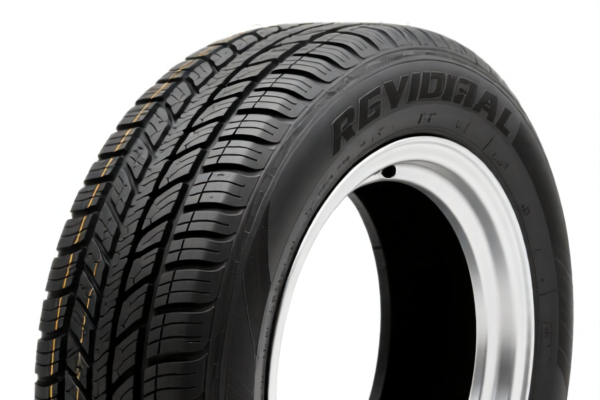
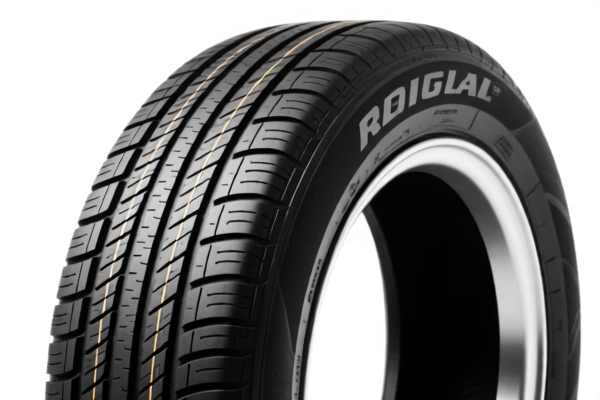
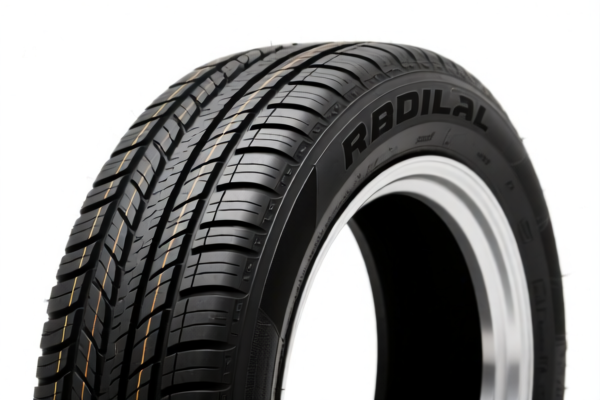
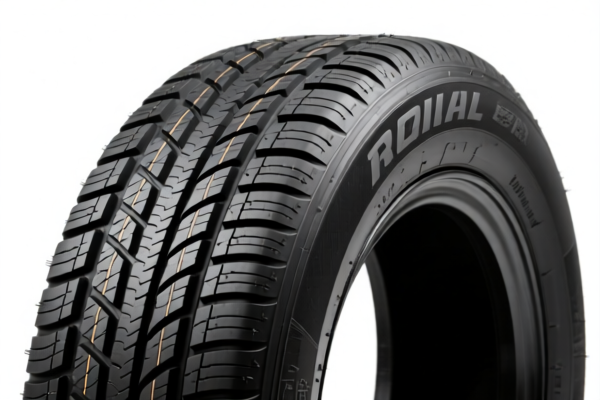
AI Analysis
🚗 15-inch Radial Car Tire (乘用车径向轮胎)
🌐 HS Code Reference & Customs Clearance Guide | 2026 Latest Tariff Analysis | Professional Clearance Strategy
📌 I. Product Definition & Classification: Do You Really Understand "15-inch Radial Tires"?
A 15-inch Radial Car Tire is a critical safety component for passenger vehicles, specifically designed to fit wheel rims with a diameter of 15 inches. In international trade, these tires are strictly regulated under Chapter 40 (Rubber and Articles Thereof).
Because of current geopolitical trade policies (specifically US-China trade tensions), these items are subject to high combined tariffs. Misclassification can lead to severe financial penalties or shipment delays.
⚠️ Key Distinction Points:
- Radial vs. Bias: Must be explicitly stated as "Radial" (R). Bias tires fall under different subheadings.
- Application: Must be for "Passenger Cars" (Passenger Vehicles). Tires for trucks, buses, or aircraft are classified differently.
- Size Specificity: The "15-inch" designation is critical. While some HS codes are general, others specify rim diameter ranges (e.g., 10-14 inches vs. 15+ inches). The data provided highlights specific codes for 15-inch tires.
📦 II. HS Code Classification Details (2026 Latest Tariff Alignment)
Based on the provided data, the 15-inch Radial Car Tire falls into several potential HS Codes depending on the specific manufacturing details, material composition, and exact rim diameter limits. All listed codes carry significant additional tariffs.
| HS Code | Product Summary | Applicability Scenario | Key Differentiator |
|---|---|---|---|
4011.10.10.30 |
Matched 14-15 inch passenger car radial tires, conforms to rim diameter limits | Fits rims at the upper end of the 14-15 inch range | Specific size limit inclusion |
4012.11.80.00 |
Rubber tires for automotive use | General automotive rubber tires | Broader category; "Used for cars" |
4011.10.10.20 |
14-inch passenger car radial tires at specific upper range limit | Fits rims at the 14-inch specific range | Note: Data suggests this may be used if the 15-inch tire is borderline or mis-specified, but typically 15-inch goes to .10.30 or .10.10. See explanation below. |
4011.10.10.10 |
Radial car tires, conforms to material, shape, and use requirements | Standard radial tires meeting basic criteria | Generic radial tire classification |
4011.10.10.30 |
(Repeated in data) Matched 14-15 inch..., conforms to rim diameter | Redundant entry for the 14-15 inch category | Same as first entry |
🔍 Critical Clarification on Code Selection:
-4011.10.10.30is explicitly described as matching 14-15 inch tires. This is the most accurate fit for a standard 15-inch tire if it falls within the defined diameter limits for this subheading.
-4011.10.10.20is described as 14-inch tires. If your tire is strictly 15 inches, this code may be incorrect unless the tire has a dual-specification marking or falls into a gray area between 14 and 15 inches.
-4011.10.10.10is a general code for radial car tires. If4011.10.10.30is rejected due to specific rim diameter exclusions, this generic code serves as the fallback.
-4012.11.80.00is a broader "other rubber tires" category. Use this only if the tire does not fit the strict "radial" definition of 4011 (e.g., if it's a non-radial construction mislabeled, or if it's a retreaded tire, though retreads usually go elsewhere). For new radial tires, 4011 is preferred.
💰 III. 2026 Latest Tariff Rate Breakdown (Including Surcharges & Policy Add-ons)
✅ Applicable Country: United States (US)
✅ Origin: China (CN) (Assumed based on "Section 301" and "122 Section" context in data)
✅ Effective Time: 2025/2026 Import Period
All HS Codes listed below for Chinese-origin 15-inch Radial Car Tires are subject to a very high total tariff rate.
🎯 1. 4011.10.10.30 & 4011.10.10.10 & 4011.10.10.20 (Radial Passenger Car Tires)
| Item | Content |
|---|---|
| Base Tariff | 4.0% (Most Favored Nation Rate) |
| Section 301 Surcharge | +25.0% (USITC Footnote) |
| Section 122 Tariff | +10.0% (Specific Chinese import surcharge) |
| Total Tariff Rate | 39.0% |
| Tax Calculation | CIF Value × 39% |
| De Minimis Exemption | ❌ NOT Eligible (Deny De Minimis) |
| Legal Basis Path | HTSUS:4011.10.10.xx → USITC:Section 301 → IEEPA:Section 122 |
📌 Explanation:
- Base Tariff (4.0%): The standard US import duty for passenger car tires.
- Section 301 (25.0%): Retaliatory tariffs imposed on Chinese goods. Rubber tires are explicitly listed in the China Action Plan.
- Section 122 (10.0%): Additional surcharge for specific Chinese imports under Executive Orders.
- Total 39%: This is a significant cost driver. A $100 tire incurs $39 in duties alone.
🎯 2. 4012.11.80.00 (Other Rubber Tires)
| Item | Content |
|---|---|
| Base Tariff | 3.4% |
| Section 301 Surcharge | +25.0% |
| Section 122 Tariff | +10.0% |
| Total Tariff Rate | 38.4% |
| Tax Calculation | CIF Value × 38.4% |
| De Minimis Exemption | ❌ NOT Eligible |
| Legal Basis Path | HTSUS:4012.11.80.00 → USITC:Section 301 → IEEPA:Section 122 |
📌 Note:
- This code is slightly cheaper by 0.6% but carries the same risk profile.
- Use only if the tire cannot be classified under 4011 (e.g., non-radial or specific material exceptions).
🛠️ IV. Customs Clearance Practical Advice (Real-World Pitfall Avoidance)
✅ 1. Required Documentation Checklist (Non-negotiable)
| Document | Must Provide? | Notes |
|---|---|---|
| ✅ Commercial Invoice | ✔️ | Must clearly state: "15-inch Radial Passenger Car Tire", Qty, CIF Value. |
| ✅ Packing List | ✔️ | Detail number of tires per carton, total weight, dimensions. |
| ✅ Product Specification Sheet | ✔️ | Must include: Radial Construction, Rim Diameter (15"), Load Index, Speed Rating, Tread Pattern. |
| ✅ Proof of Origin | ✔️ | Certificate of Origin (CO) from China. Crucial for verifying Section 301 liability. |
| ✅ Labeling Photos | ✔️ | Show sidewall markings: "RADIAL", Size (e.g., 205/55R15), DOT code. |
| ✅ HTSUS Classification Ruling | ⚠️ Recommended | If unsure between 4011.10.10.30 and 4011.10.10.10, obtain a US CBP binding ruling. |
✅ 2. Declaration Best Practices
🔥 "Declare Radial, Declare Size, Declare Origin, Pay 39%!"
| Scenario | Correct Declaration | Error Consequence |
|---|---|---|
| 15-inch Radial Tire | HS: 4011.10.10.30Name: "15-inch Radial Passenger Car Tire" |
If declared as "Automotive Part" (8708) → Audit Risk + Back Taxes |
| Non-Radial (Bias) Tire | HS: 4011.94.00.00 (Hypothetical) |
Misdeclaring as Radial → False Declaration Penalty |
| Retreaded Tire | HS: 4012.13.00.00 |
New tire declared as Retread → Severe Fraud Allegation |
| Origin: China | Must declare "Country of Origin: China" | Hiding origin → Section 301 Evasion Penalty (5x Duty) |
✅ 3. Special Considerations
| Situation | Handling Advice |
|---|---|
| Mixed Shipments | If packing 15-inch radials with 17-inch radials, ensure separate HS Codes are used if rates differ. 4011.10.10.30 may only cover up to a certain diameter limit; verify if 17-inch goes to a different subheading. |
| OEM vs. Aftermarket | No difference in HS Code. Both are 4011. Ensure invoice reflects correct value (OEM may be priced differently than aftermarket retail). |
| DOT Compliance | Ensure tires have valid DOT codes for the US market. Non-compliant tires will be rejected at customs regardless of tariff payment. |
🌍 V. Global Market Comparison (2026 Latest)
| Country/Region | Recommended HS Code | Base Tariff | Additional Tariffs (China) | Total Estimated Rate | Remarks |
|---|---|---|---|---|---|
| 🇺🇸 USA | 4011.10.10.30 |
4.0% | +35% (301+122) | 39.0% | Highest Barrier |
| 🇨🇳 China | 4011.10.10.30 |
6.5% (Import) | N/A | 6.5% | Export from US/Other |
| 🇪🇺 EU | 4011.10.10 |
4.5% | N/A (Most Favored Nation) | 4.5% | No Section 301 equivalent |
| 🇨🇦 Canada | 4011.10.10.30 |
3.5% | +25% (Section 301) | 28.5% | Similar to US but lower base |
| 🇲🇽 Mexico | 4011.10.10.30 |
0% (USMCA if qualified) | Varies | 0-5% | Check USMCA rules of origin |
📌 Conclusion:
- The USA imposes a 39% total tariff on Chinese 15-inch radial tires.
- For exporters targeting the US, supply chain localization (e.g., production in Vietnam, Thailand, or Mexico) is a common strategy to avoid these duties.
- Do not under-declare value to reduce duty; CBP audits tire imports aggressively due to high duty rates.
📌 VI. Common Errors & Pitfalls (Lessons Learned)
❌ Error 1: Declaring "Car Parts" instead of "Tires"
👉 Consequence: Wrong HS Code (e.g., 8708.95). If caught, back taxes + penalty apply. Tires have specific HS codes.
❌ Error 2: Ignoring "Radial" Specification
👉 Consequence: If the tire is radial but declared as "Bias" or "Other", the tariff rate may be different, leading to underpayment or overpayment.
❌ Error 3: Using De Minimis (Section 321) for B2B Shipments
👉 Consequence: Tires are excluded from de minimis exemptions for Chinese imports. Trying to bypass via small parcel shipping will result in seizure.
❌ Error 4: Misidentifying Rim Diameter
👉 Consequence: If a 16-inch tire is declared as 14-15 inch (4011.10.10.30), it may be misclassified. Verify exact dimensions.
✅ Correct Declaration Example:
"Rubber Tire, Radial, For Passenger Vehicles, Size 205/55R15, Load Index 91V, Made in China"
HS Code:4011.10.10.30
Duty: 39.0%
🎯 VII. Conclusion: Professional Declaration, Cost Control, Compliance!
🎯 Remember These Key Points:
🔹 "Radial + 15-inch + China = 39% Duty"
🔹 "Do not split shipments to avoid de minimis; it won't work."
"Accuracy in size and construction is critical to avoid misclassification penalties."
📌 Pro Tip:
If you are sourcing from China and selling to the US, consider:
1. Negotiating DDP (Delivered Duty Paid) prices with suppliers to include the 39% duty in the product cost.
2. Exploring alternative origins (e.g., Thailand, Vietnam) where Section 301 tariffs may not apply (verify with CBP ruling).
3. Applying for a Pre-Ruling from US CBP if your tire dimensions are borderline between 14" and 15" to ensure correct HS Code selection (4011.10.10.30 vs 4011.10.10.20).
📣 Immediate Action:
📞 Consult a licensed customs broker before shipping.
📄 Ensure all invoices and specs clearly state "RADIAL" and "15-inch".
🚀 Budget for 39% duty to avoid cash flow surprises.
✨ Professional clearance starts with accurate classification!
💼 Every dollar saved in misclassification prevention is pure profit!
Customer Reviews
About HS Code Classification
The Harmonized System (HS) is an internationally standardized nomenclature developed by the World Customs Organization (WCO) to classify traded products. Over 200 countries use the HS system as the basis for customs tariffs, trade statistics, and import/export regulations.
Each HS code follows a hierarchical structure:
- Chapter (2 digits) — Broad category of goods (e.g., Chapter 84: Machinery and Mechanical Appliances)
- Heading (4 digits) — More specific grouping within the chapter
- Subheading (6 digits) — Internationally standardized breakdown, used by all WCO member countries
- National subdivisions (8-10 digits) — Country-specific extensions for further classification, such as US HTSUS 10-digit codes
Correct HS code classification is essential for smooth customs clearance, accurate duty payment, and compliance with trade regulations. Misclassification can lead to customs delays, overpayment of duties, or penalties.
When importing from CN to US, the applicable tariff rates may include:
- Most-Favored-Nation (MFN) rate — The standard duty rate applied to WTO members
- General rate — Applied to countries without trade agreements
- Trade remedy duties — Additional tariffs such as Section 301 (anti-dumping), Section 232 (national security), or countervailing duties
The information provided on this page is for reference purposes only. For official classification, please consult with your local customs authority or a licensed customs broker.