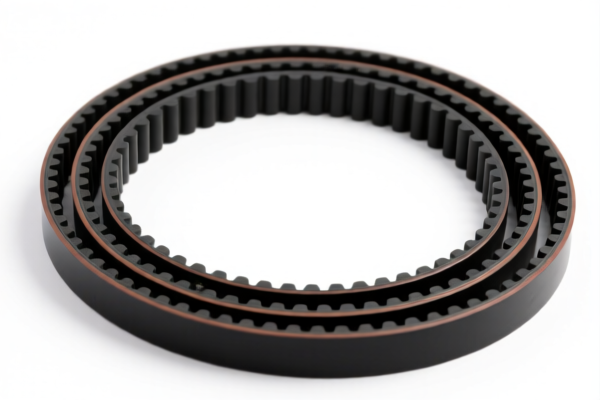
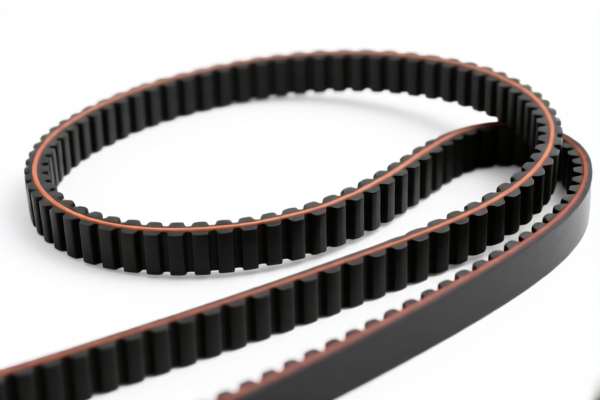
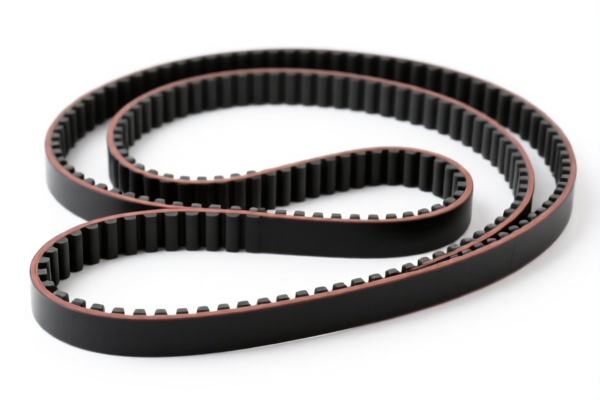
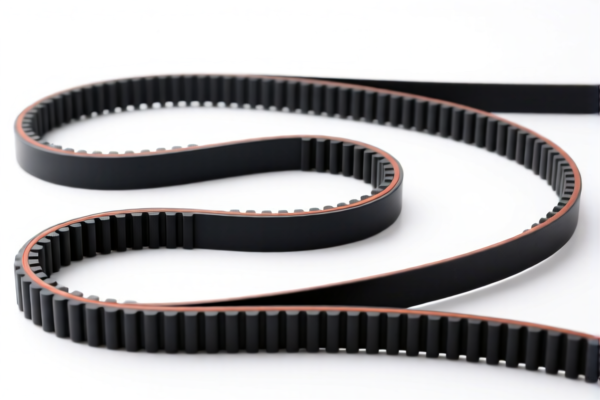
150 198 cm Circumference Synchronous Belt
CN → US| HS Code | Tariff Rate | Origin | Destination | Doc |
|---|---|---|---|---|
| 5910001020 | 39.0% | CN | US | Official Doc |
| 4010364100 | 43.0% | CN | US | Official Doc |
| 4010363000 | 39.1% | CN | US | Official Doc |
| 5910009000 | 37.6% | CN | US | Official Doc |
| 5910001020 | 39.0% | CN | US | Official Doc |
Product Images
AI Analysis
🛠️ Synchronous Belts (Circumference: 150–198 cm) – Classification & Customs Clearance Guide
🌐 HS Code Reference & Customs Guide | 2026 Latest Tariff Analysis | Professional Clearance Strategy
📌 I. Product Definition & Classification: Do You Really Understand "Synchronous Belts"?
Synchronous belts (also known as timing belts) are critical transmission components used in industrial machinery, automotive engines, and automated production lines. In international trade, their classification depends heavily on material composition and reinforcement structure.
For synchronous belts with an outer circumference of 150–198 cm, customs authorities strictly distinguish between: 1. Textile-Enhanced Belts: Where the tensile strength comes primarily from fabric/nylon cords embedded in rubber or plastic. 2. Rubber Belts (General): Where the primary material is rubber, regardless of reinforcement, but not classified specifically as "textile-reinforced" under specific subheadings.
⚠️ Key Distinction Point:
- If the belt is specifically designed for textile machinery or uses textile materials as the primary tensile member, it may fall under Chapter 59.
- If the belt is a general-purpose rubber transmission belt (even with textile reinforcement), it typically falls under Chapter 40 (Rubber).
- The circumference (150–198 cm) does not change the chapter but helps identify the specific application and potential duty risks.
📦 II. HS Code Classification Details (2026 Latest Tariff Authority Cross-Reference)
Based on the provided data, here are the applicable HS Codes for synchronous belts with a circumference of 150–198 cm:
| HS Code | Product Description | Applicable Scenario | Material/Structure | Total Tax Rate |
|---|---|---|---|---|
5910.00.10.20 |
Textile-reinforced synchronous belt, circumference 150–198 cm, made of synthetic fibers or textile materials, used for power transmission. | Specific Textile Machinery Belts | Textile/Synthetic Fiber Reinforcement | 39.0% |
4010.36.41.00 |
Textile-reinforced synchronous belt, circumference 150–198 cm, made of textile material reinforcement, conforms to transmission belt characteristics. | General Rubber Transmission Belts (Textile Reinforced) | Rubber Base + Textile Reinforcement | 43.0% |
4010.36.30.00 |
Synchronous transmission belt, circumference 150–198 cm, textile-reinforced, shape as synchronous drive belt. | Synchronous Drive Belts (Rubber) | Rubber Base + Textile Reinforcement | 39.1% |
5910.00.90.00 |
Rubber synchronous belt, circumference 60–150 cm, made of rubber, belongs to other transmission belts. | Note: Data specifies 60-150cm, but included for comparison. For 150-198cm, see above. | Rubber | 37.6% |
5910.00.10.20 |
Rubber synchronous belt, circumference 60–150 cm, made of rubber, used for power transmission, conforms to synchronous belt definition. | Note: Data specifies 60-150cm. For 150-198cm, refer to 4010 or 5910.10.20 if textile-specific. |
Rubber | 39.0% |
🔍 Key Insight:
- Chapter 59 (5910.00.10.20): Applies to belts where textile materials are the defining characteristic (e.g., for textile machinery). Lower base tax, but still subject to additional duties.
- Chapter 40 (4010.36.41.00 / 4010.36.30.00): Applies to rubber-based synchronous belts, even if reinforced with textile. Higher base tax in some cases (e.g., 8.0% for4010.36.41.00).
- Critical Note: The data provided includes some entries for 60–150 cm. For 150–198 cm, the most accurate classifications are5910.00.10.20,4010.36.41.00, and4010.36.30.00.
💰 III. 2026 Latest Tariff Rate Breakdown (Including Additional Duties & Policy Add-ons)
✅ Applicable Country: United States (US)
✅ Origin: China (CN)
✅ Effective Date: Ongoing (Section 301 & IEEPA duties apply)
🎯 1. 5910.00.10.20 – Textile-Reinforced Synchronous Belt
| Item | Content |
|---|---|
| Base Tax Rate | 4.0% |
| Section 301 Additional Tax | +25.0% |
| 122 Section Tax | +10.0% |
| Total Tax Rate | 39.0% |
| Tax Calculation | CIF Value × 39.0% |
| De Minimis Eligibility | ❌ No (Deny de minimis) |
| Legal Basis Path | Section 301 → 122 Section → HS 5910.00.10.20 |
📌 Explanation:
- This code applies to belts where textile materials are primary.
- 39.0% total duty makes this a high-cost item.
- No de minimis exemption; full duty applies even on small shipments.
🎯 2. 4010.36.41.00 – Rubber Synchronous Belt, Textile-Reinforced
| Item | Content |
|---|---|
| Base Tax Rate | 8.0% |
| Section 301 Additional Tax | +25.0% |
| 122 Section Tax | +10.0% |
| Total Tax Rate | 43.0% |
| Tax Calculation | CIF Value × 43.0% |
| De Minimis Eligibility | ❌ No |
| Legal Basis Path | Section 301 → 122 Section → HS 4010.36.41.00 |
📌 Note:
- This is the highest tax rate in the provided data.
- Applies to rubber-based belts with textile reinforcement.
- Misclassification here can lead to significant overpayment or underpayment penalties.
🎯 3. 4010.36.30.00 – Synchronous Transmission Belt, Textile-Reinforced
| Item | Content |
|---|---|
| Base Tax Rate | 4.1% |
| Section 301 Additional Tax | +25.0% |
| 122 Section Tax | +10.0% |
| Total Tax Rate | 39.1% |
| Tax Calculation | CIF Value × 39.1% |
| De Minimis Eligibility | ❌ No |
| Legal Basis Path | Section 301 → 122 Section → HS 4010.36.30.00 |
📌 Note:
- Very similar to4010.36.41.00but with a slightly lower base tax (4.1% vs 8.0%).
- Still subject to high additional duties.
🎯 4. 5910.00.90.00 – Rubber Synchronous Belt, Circumference 60–150 cm (For Comparison)
| Item | Content |
|---|---|
| Base Tax Rate | 2.6% |
| Section 301 Additional Tax | +25.0% |
| 122 Section Tax | +10.0% |
| Total Tax Rate | 37.6% |
| Tax Calculation | CIF Value × 37.6% |
| De Minimis Eligibility | ❌ No |
| Legal Basis Path | Section 301 → 122 Section → HS 5910.00.90.00 |
📌 Note:
- Although the circumference is 60–150 cm, this code is included for reference.
- For 150–198 cm, prefer5910.00.10.20or4010series.
🛠️ IV. Customs Clearance Practical Advice (Real-World Pitfall Guide)
✅ 1. Required Documentation Checklist (Non-negotiable)
| Document | Must Provide | Explanation |
|---|---|---|
| ✅ Product Specification Sheet | ✔️ | Must include: Circumference, Width, Material (Rubber/Textile), Reinforcement Type |
| ✅ Material Composition Report | ✔️ | Crucial for distinguishing between Chapter 40 (Rubber) and Chapter 59 (Textile) |
| ✅ Product Photos (Label & Structure) | ✔️ | Clear view of branding, model, and any text indicating "Textile Reinforced" or "Rubber Belt" |
| ✅ Third-Party Test Report | ✔️ | If claiming special use (e.g., textile machinery), provide certification |
| ✅ Commercial Invoice | ✔️ | Must clearly state: "Synchronous Belt, Circumference 150–198 cm, Material: Rubber/Textile" |
| ✅ Packing List | ✔️ | Show quantity and weight; avoid vague descriptions |
✅ 2. Declaration Tips (Key Mnemonics)
🔥 "Material Determines Chapter, Circumference Determines Subheading, Always Declare Base Tax + 35%!"
| Scenario | Correct Declaration | Wrong Practice |
|---|---|---|
| Belt is textile-dominated (e.g., for looms) | 5910.00.10.20 (39.0%) |
Misclassify as 4010 → Overpay or Underpay |
| Belt is rubber-dominated with textile cords | 4010.36.41.00 (43.0%) or 4010.36.30.00 (39.1%) |
Misclassify as 5910 → Risk of audit |
| General rubber belt (no textile emphasis) | 4010.36.30.00 |
Use vague terms like "Belt" → Delayed clearance |
| OEM Custom Belt | Provide client specs + design drawings | Generic description "Timing Belt" → High risk of misclassification |
✅ 3. Special Case Handling
| Situation | Recommendation |
|---|---|
| Textile Machinery Belt | If used in spinning/weaving machines, emphasize Chapter 59 (5910.00.10.20) to avoid higher Chapter 40 rates if applicable. |
| High-Circumference Belt (150–198 cm) | Ensure documentation explicitly states circumference to prevent confusion with smaller belts (60–150 cm). |
| Multiple Materials | Provide a detailed material breakdown. If rubber > 50% by weight, lean toward Chapter 40. |
| Pre-Ruling Request | Highly recommended for high-value shipments. File an Advance Ruling with US CBP to lock in the HS Code. |
🌍 V. Global Market Clearance Comparison (2026 Latest)
| Country/Region | Recommended HS Code | Total Tax (China Origin) | Certification Requirements | Notes |
|---|---|---|---|---|
| 🇺🇸 USA | 5910.00.10.20 / 4010.36.41.00 |
39.0% – 43.0% | No special cert required | High duty due to Section 301 + 122 Section |
| 🇨🇳 China | 5910.00.10.20 / 4010.36.41.00 |
~5% – 8% | CCC (if applicable) | Lower base tax, no additional duties |
| 🇪🇺 EU | 4010.36 / 5910.00 |
~4% – 6% | CE (if machinery) | No Section 301 equivalent |
| 🇦🇺 Australia | 4010.36 |
~5% | RCM | Standard MFN rates |
| 🇯🇵 Japan | 4010.36 |
~5% – 7% | PSE (if electrical) | No additional duties |
📌 Conclusion:
- USA is the most challenging market for synchronous belts due to Section 301 and 122 Section duties.
- Chapter 40 (Rubber) often has a higher base tax (8.0%) than Chapter 59 (Textile) (4.0%), but both end up near 39–43% total.
- Accurate material declaration is critical to avoid penalties.
📌 VI. Common Mistakes & Pitfalls (Lessons Learned)
❌ Mistake 1: Declaring a rubber belt as textile belt to avoid 8% base tax
👉 Consequence: CBP audit → Back taxes + penalties. The total rate difference is minimal (39.0% vs 43.0%), but misclassification is fraudulent.
❌ Mistake 2: Ignoring circumference in documentation
👉 Consequence: CBP may reclassify to 60–150 cm codes (5910.00.90.00) if not specified, leading to disputes.
❌ Mistake 3: Using generic terms like "Timing Belt" without material details
👉 Consequence: High risk of Chapter 40 vs 59 classification error. Always specify "Rubber" or "Textile-Reinforced".
❌ Mistake 4: Assuming de minimis applies
👉 Consequence: No de minimis exemption for these codes. Even small samples are subject to full duties.
✅ Correct Practice:
"Synchronous Drive Belt, Outer Circumference 175 cm, Width 50 mm, Material: Chloroprene Rubber with Nylon Cord Reinforcement, Model: XYZ, Intended for: Industrial Machinery"
🎯 VII. Conclusion: Precise Classification Saves Money
🎯 Remember the Mnemonic:
🔹 "Rubber Base = Chapter 40, Textile Base = Chapter 59"
🔹 "Base Tax + 25% + 10% = Total Duty"
🔹 "Declare Circumference & Material to Avoid CBP Flags"
🔹 "No De Minimis for Belts from China"
📌 Pro Tip:
If your belts are originating from Vietnam, Mexico, or Malaysia, you may be eligible for lower or zero Section 301 duties.
For US imports, file an Advance Ruling to confirm the correct HS Code (4010.36.41.00 vs 5910.00.10.20) before shipment.
📣 Action Required:
📞 Contact a licensed customs broker + Provide detailed material specs + Request HS Code Advance Ruling
🚀 Ensure smooth clearance, avoid penalties, and optimize costs!
✨ Professional Clearance Starts with Precise Classification!
💼 Every cent of duty counts!
Customer Reviews
About HS Code Classification
The Harmonized System (HS) is an internationally standardized nomenclature developed by the World Customs Organization (WCO) to classify traded products. Over 200 countries use the HS system as the basis for customs tariffs, trade statistics, and import/export regulations.
Each HS code follows a hierarchical structure:
- Chapter (2 digits) — Broad category of goods (e.g., Chapter 84: Machinery and Mechanical Appliances)
- Heading (4 digits) — More specific grouping within the chapter
- Subheading (6 digits) — Internationally standardized breakdown, used by all WCO member countries
- National subdivisions (8-10 digits) — Country-specific extensions for further classification, such as US HTSUS 10-digit codes
Correct HS code classification is essential for smooth customs clearance, accurate duty payment, and compliance with trade regulations. Misclassification can lead to customs delays, overpayment of duties, or penalties.
When importing from CN to US, the applicable tariff rates may include:
- Most-Favored-Nation (MFN) rate — The standard duty rate applied to WTO members
- General rate — Applied to countries without trade agreements
- Trade remedy duties — Additional tariffs such as Section 301 (anti-dumping), Section 232 (national security), or countervailing duties
The information provided on this page is for reference purposes only. For official classification, please consult with your local customs authority or a licensed customs broker.