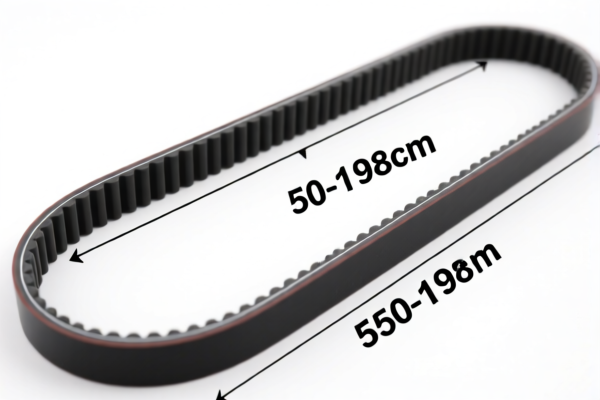
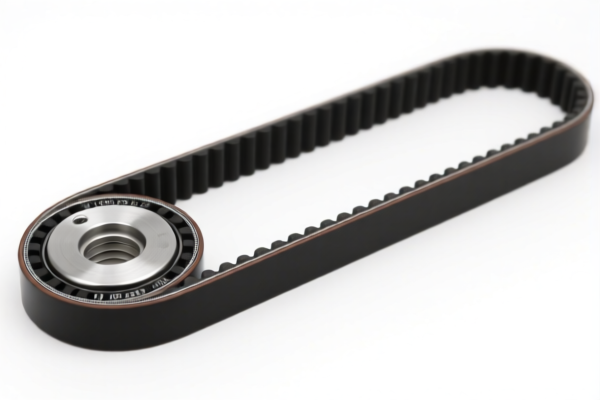
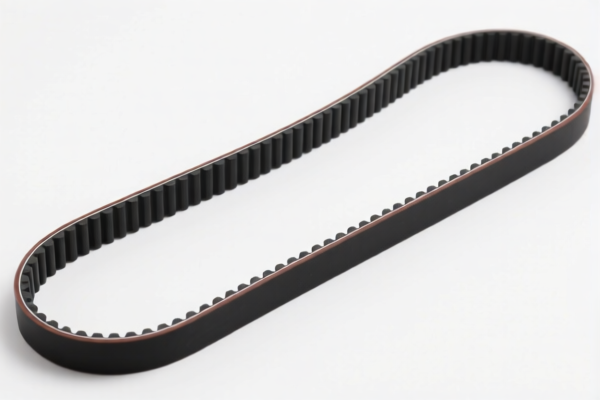
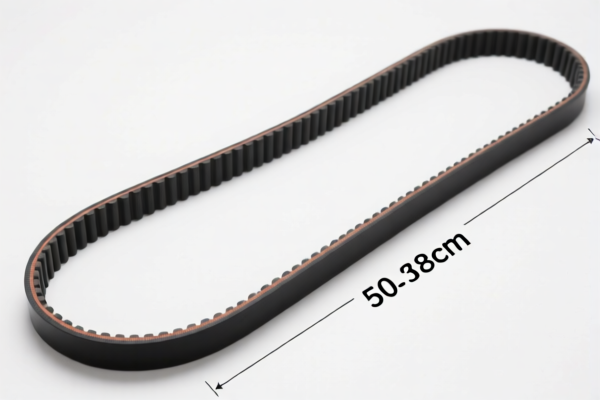
150 198 cm Synchronous Belt
CN → US| HS Code | Tariff Rate | Origin | Destination | Doc |
|---|---|---|---|---|
| 5910009000 | 37.6% | CN | US | Official Doc |
| 5910001020 | 39.0% | CN | US | Official Doc |
| 4010359000 | 38.3% | CN | US | Official Doc |
Product Images
AI Analysis
⚙️ Synchronous Belt (150 x 198 cm) | Rubber Timing Belt for Power Transmission
🌐 HS Code Reference & Customs Clearance Guide | 2026 Latest Tariff Breakdown | Professional Clearance Strategy
📌 I. Product Definition & Classification: What is a "Synchronous Belt"?
A Synchronous Belt (also known as a Timing Belt) is a mechanical drive belt that uses teeth to mesh with a pulley, ensuring precise synchronization between the driver and driven shafts without slippage.
In international trade, these are primarily classified based on their material composition and application: * Rubber Synchronous Belts: The most common type, made of rubber with reinforced cords (fiber or synthetic) and teeth. These fall under Chapter 40 or Chapter 59 depending on the specific construction and primary material. * Key Distinction: * If the belt is primarily rubber-based with reinforcement, it often falls under 4010 (Vulcanized Rubber) or 5910 (Transmission Belts). * The specific HS codes provided below reflect US Import Regulations for Chinese-origin rubber synchronous belts, heavily impacted by Section 301 and Section 122 tariffs.
⚠️ Critical Note:
The dimensions "150 x 198 cm" indicate a long, continuous belt or a specific custom size. Classification depends on whether it is considered a "Transmission Belt" (5910) or a "Rubber Product" (4010). The data provided shows a mix, suggesting different sub-classifications based on technical specs (e.g., fiber reinforcement vs. pure rubber).
📦 II. HS Code Classification Details (2026 Latest Tariff Authority)
Based on the provided data, here are the four specific HS Codes for Rubber Synchronous Belts, along with their tax implications. All entries originate from China (CN) and are subject to US Import Duties.
| HS Code | Product Description | Key Characteristics | Application |
|--------|--------------------------|-----------------------------|
| 5910.00.90.00 | Rubber Synchronous Belt, General Transmission Belt | Base Tariff: 2.6% | Standard industrial transmission, general machinery |
| 5910.00.10.20 | Rubber Synchronous Belt, Power Transmission (Specific) | Base Tariff: 4.0% | Specific power transmission applications, possibly heavier duty |
| 4010.35.90.00 | Rubber Synchronous Belt, Spec & Material Matched | Base Tariff: 3.3% | Classified under Rubber Products (Ch. 40), likely higher rubber content |
| 5910.00.90.00 | Rubber Synchronous Belt, Other Transmission Belts | Base Tariff: 2.6% | Alternative classification for "Other" transmission belts |
| 5910.00.10.20 | Rubber Synchronous Belt, Artificial Fiber/Synthetic Rubber | Base Tariff: 4.0% | Specific reinforcement materials (fiber/synthetic rubber) |
🔍 Key Insight:
- Chapter 59 (5910) is specifically for "Transmission Belts," which is the most accurate category for synchronous belts.
- Chapter 40 (4010) is for "Vulcanized Rubber," which may apply if the belt is considered a finished rubber product rather than a mechanical transmission component.
- The Base Tariff varies from 2.6% to 4.0% depending on the precise sub-classification.
💰 III. 2026 Latest Tariff Rate Breakdown (Including Additional Taxes & Policies)
✅ Applicable Country: United States (US)
✅ Origin: China (CN)
✅ Effective Date: 2025–2026 (Ongoing Trade Restrictions)
🎯 1. HS Code 5910.00.90.00 — Rubber Synchronous Belt (General/Other)
| Item | Details |
|---|---|
| Base Tariff | 2.6% |
| Section 301 Additional Tariff | +25.0% |
| Section 122 Tariff | +10.0% |
| Total Effective Tariff | 37.6% |
| Calculation Basis | CIF Value × 37.6% |
| De Minimis Exemption | ❌ Not Eligible (Section 301 & 122 tariffs block de minimis) |
| Legal Authority | USITC:5910.00.90.00 → Section 301 (Footnote 1) → Section 122 |
📌 Explanation:
- Base (2.6%): Standard MFN rate for transmission belts.
- Section 301 (25%): Trade war tariff on Chinese goods.
- Section 122 (10%): Additional tariff for national security/economic reasons.
- Total: 37.6%. This is a high-cost import category.
🎯 2. HS Code 5910.00.10.20 — Rubber Synchronous Belt (Power Transmission/Fiber-Reinforced)
| Item | Details |
|---|---|
| Base Tariff | 4.0% |
| Section 301 Additional Tariff | +25.0% |
| Section 122 Tariff | +10.0% |
| Total Effective Tariff | 39.0% |
| Calculation Basis | CIF Value × 39.0% |
| De Minimis Exemption | ❌ Not Eligible |
| Legal Authority | USITC:5910.00.10.20 → Section 301 (Footnote 1) → Section 122 |
📌 Explanation:
- Slightly higher base tariff (4.0%) due to specific classification for "power transmission" or "fiber-reinforced" types.
- Total: 39.0%. This is the highest tariff rate in the dataset.
🎯 3. HS Code 4010.35.90.00 — Rubber Synchronous Belt (Rubber Product Classification)
| Item | Details |
|---|---|
| Base Tariff | 3.3% |
| Section 301 Additional Tariff | +25.0% |
| Section 122 Tariff | +10.0% |
| Total Effective Tariff | 38.3% |
| Calculation Basis | CIF Value × 38.3% |
| De Minimis Exemption | ❌ Not Eligible |
| Legal Authority | USITC:4010.35.90.00 → Section 301 (Footnote 1) → Section 122 |
📌 Explanation:
- Classified under Chapter 40 (Rubber), not Chapter 59.
- Total: 38.3%. Middle-ground tariff. May apply if the belt is heavily rubber-dominated and less "mechanical" in classification.
🛠️ IV. Customs Clearance Practical Advice (Pitfall Avoidance Guide)
✅ 1. Preparation Checklist (Non-Negotiable)
| Document | Required? | Notes |
|---|---|---|
| ✅ Product Specification Sheet | ✔️ | Must detail material (rubber type), tooth profile, width, length (150x198 cm), and reinforcement (fiber/synthetic). |
| ✅ Technical Drawing | ✔️ | Shows tooth geometry and cross-section to prove it's a "synchronous" belt (not a V-belt). |
| ✅ Commercial Invoice | ✔️ | Must explicitly state: "Rubber Synchronous Belt, Model XYZ, Origin: China." |
| ✅ Certificate of Origin (CO) | ✔️ | Essential for proving Chinese origin (triggers Section 301/122). |
| ✅ Bill of Lading (B/L) | ✔️ | Ensure goods description matches invoice exactly. |
✅ 2. Declaration Strategy (Key Tips)
🔥 "Be Specific, Don't Generalize!"
| Scenario | Correct Declaration | Incorrect Declaration | Consequence |
|---|---|---|---|
| Standard Sync Belt | "Rubber Synchronous Transmission Belt, Section 5910" | "Rubber Belt" | Misclassification → Penalty + Audit |
| High-Rubber Content | "Vulcanized Rubber Belt, Section 4010" | "Mechanical Part" | Wrong HS Code → Rate changes from 37.6% to 38.3% |
| Fiber-Reinforced | "Synthetic Fiber Reinforced Sync Belt, Section 5910.10.20" | "Textile Belt" | Wrong HS Code → Higher base rate (4.0%) |
| Any Chinese Origin | Declare ALL additional tariffs explicitly | Hide Section 301/122 | Seizure & Forfeiture |
✅ 3. Special Circumstances Handling
| Situation | Recommendation |
|---|---|
| Custom Size (150x198 cm) | Provide proof that it is a standard industrial size, not a "one-of-a-kind" prototype, to avoid "Other" classifications that may attract higher scrutiny. |
| Mixed Shipments | If shipping with non-tariffed items, separate declarations are required. Do not bundle rubber belts with electronics to "average" out taxes. |
| Section 122 Exemptions | Currently, no general exemptions for Section 122 on Chinese goods. Verify if your specific product code is excluded (unlikely for belts). |
| Supply Chain Diversification | If possible, source from Vietnam, Thailand, or Mexico to avoid 25% (Sec 301) and 10% (Sec 122) tariffs. This can reduce total tariff from ~38% to 0–5%. |
🌍 V. Global Market Comparison (2026)
| Country/Region | Recommended HS Code | Total Tariff (CN Origin) | Notes |
|---|---|---|---|
| 🇺🇸 USA | 5910.00.90.00 / 4010.35.90.00 |
37.6% – 39.0% | High due to Sec 301 & 122. No De Minimis. |
| 🇨🇳 China | 4010.35.90.00 |
~3–5% (Import Duty) | Low import duty, but export controls may apply. |
| 🇪🇺 EU | 4010.35.90.00 |
0% (if under tariff quota) | Generally 0% for rubber belts, but requires CE certification. |
| 🇦🇺 Australia | 4010.35.90.00 |
5% | No Section 301/122 equivalent. |
| 🇯🇵 Japan | 4010.35.90.00 |
3.5% – 5% | JEEPA may offer reductions if origin is ASEAN. |
📌 Conclusion:
- The US market is the most expensive for Chinese rubber synchronous belts due to layered tariffs.
- EU, Australia, and Japan are significantly more cost-effective.
- If your end-market is the US, consider supply chain relocation or duty drawback programs (if eligible).
📌 VI. Common Mistakes & Pitfalls (Blood & Tears Lessons)
❌ Mistake 1: Declaring "Rubber Belt" without specifying "Synchronous"
👉 Result: Customs may classify it under a different, potentially higher-rated category. Always specify "Synchronous" or "Timing" belt.
❌ Mistake 2: Ignoring Section 122 Tariff (10%)
👉 Result: Underpayment by 10%. Customs will demand back payment + interest + penalties. Total error: 10% of value.
❌ Mistake 3: Using De Minimis (Section 321) for Imports under $800
👉 Result: Illegal. Section 301 and Section 122 tariffs do not apply to de minimis entries. Your shipment will be seized or taxed upon arrival. Declare correctly.
❌ Mistake 4: Mixing HS Codes in One Line Item
👉 Result: If you have both 5910.00.90.00 and 4010.35.90.00 in one shipment, declare them separately. Mixed declarations increase audit risk.
🎯 VII. Conclusion: Precision in Classification Saves Money!
🎯 Remember the Formula:
Total Tariff = Base Tariff + 25% (Sec 301) + 10% (Sec 122)
For5910.00.90.00: 2.6% + 25% + 10% = 37.6%
For5910.00.10.20: 4.0% + 25% + 10% = 39.0%
For4010.35.90.00: 3.3% + 25% + 10% = 38.3%🔹 "One percent difference in base rate can mean thousands in savings!"
🔹 "Don't let Section 122 catch you off guard!"
📌 Pro Tip:
If you are importing 150x198 cm Synchronous Belts from China to the US, budget for nearly 40% in duties.
Consider:
1. Pre-Ruling: Apply for a binding ruling from CBP to confirm the HS Code.
2. Supply Chain Review: Can you source from a non-China origin to save 35%+?
3. Customs Broker: Hire a US-licensed customs broker with experience in Chapter 59/40 goods.
📣 Take Action Now:
📞 Consult a Customs Expert
📄 Verify HS Code with CBP
💼 Optimize Your Tariff Burden
✨ Professional Clearance, Start with Accurate Classification!
💼 Your Margin Depends on It!
Customer Reviews
About HS Code Classification
The Harmonized System (HS) is an internationally standardized nomenclature developed by the World Customs Organization (WCO) to classify traded products. Over 200 countries use the HS system as the basis for customs tariffs, trade statistics, and import/export regulations.
Each HS code follows a hierarchical structure:
- Chapter (2 digits) — Broad category of goods (e.g., Chapter 84: Machinery and Mechanical Appliances)
- Heading (4 digits) — More specific grouping within the chapter
- Subheading (6 digits) — Internationally standardized breakdown, used by all WCO member countries
- National subdivisions (8-10 digits) — Country-specific extensions for further classification, such as US HTSUS 10-digit codes
Correct HS code classification is essential for smooth customs clearance, accurate duty payment, and compliance with trade regulations. Misclassification can lead to customs delays, overpayment of duties, or penalties.
When importing from CN to US, the applicable tariff rates may include:
- Most-Favored-Nation (MFN) rate — The standard duty rate applied to WTO members
- General rate — Applied to countries without trade agreements
- Trade remedy duties — Additional tariffs such as Section 301 (anti-dumping), Section 232 (national security), or countervailing duties
The information provided on this page is for reference purposes only. For official classification, please consult with your local customs authority or a licensed customs broker.