150 198cm Synchronous Belt
CN → US| HS Code | Tariff Rate | Origin | Destination | Doc |
|---|---|---|---|---|
| 5910001020 | 39.0% | CN | US | Official Doc |
| 4010359000 | 38.3% | CN | US | Official Doc |
| 5910009000 | 37.6% | CN | US | Official Doc |
Product Images
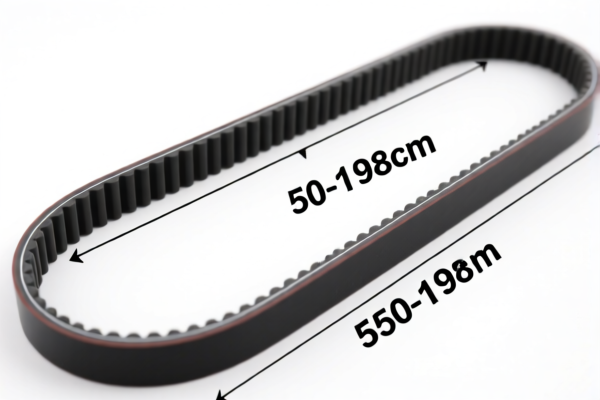
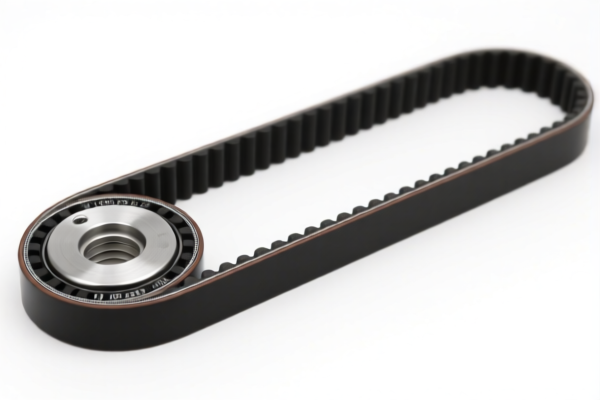
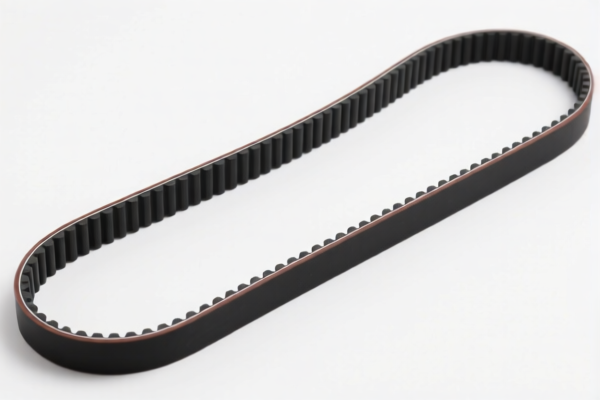
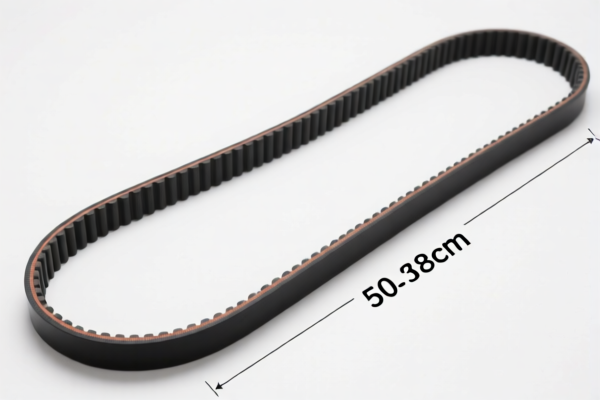
AI Analysis
🎡 Synchronous Belt (150-198cm Length)
🌐 HS Code Reference & Customs Clearance Guide | 2026 Latest Tariff Analysis | Professional Transit Strategy
📌 Part I: Product Definition & Classification: Do You Really Understand "Synchronous Belts"?
The Synchronous Belt (also known as a Timing Belt) is a critical mechanical transmission component used to transfer power and motion with precise synchronization. In international trade, classification depends heavily on its material composition and structural form.
Rubber-based Synchronous Belts: Made primarily of rubber with reinforced cords (often glass fiber or steel), used for high-precision power transmission in industrial machinery, automotive engines, and robotics. Other Material Belts: If made primarily of fabric, plastic, or other non-rubber materials, they may fall under different categories (e.g., Chapter 59 for impregnated fabrics or Chapter 84 for parts).
⚠️ Key Distinction Point:
- If the belt is rubber-based and designed for power transmission (not just traction like a shoe sole or conveyor belt for bulk material) → It generally falls under Chapter 40 (Rubber) or Chapter 59 (Textiles/Impregnated Fabrics) depending on the specific primary material and manufacturing process. - The data provided indicates a strong preference for Rubber (Chapter 40) or Impregnated/Reinforced (Chapter 59) classifications due to the "Rubber" specification.
📦 Part II: HS Code Classification Details (2026 Latest Tariff Authority Comparison)
Based on the provided <DATA>, three potential HS Codes are identified for a 150-198cm Rubber Synchronous Belt. Below is the detailed breakdown:
| HS Code | Product Description | Match Basis (From Data) | Total Tax Rate |
|---|---|---|---|
| 4010.35.90.00 | V-belts, toothed belts or transmission belt of vulcanized rubber other than hard rubber | Match Success: The product name explicitly mentions "Rubber" and "Synchronous Belt." The material (Rubber), form (Synchronous Belt), and specifications fully comply with the core elements of this category. | 38.3% |
| 5910.00.10.20 | Synchronous belts (specific sub-category) | Match Basis: The product form is a Synchronous Belt, material is Rubber, and purpose is power transmission. This completely fits the definition of synchronous belts under this code. | 39.0% |
| 5910.00.90.00 | Other transmission belts, pulleys or belt-pulleys | Match Basis: The "Rubber" (rubber/rubber-like material) fits the material characteristics, and "Synchronous Belt" is a type of transmission belt, fitting the form and purpose of this code. | 37.6% |
🔍 Critical Analysis:
- 4010.35.90.00 is the most precise fit for vulcanized rubber toothed belts, which are typically classified under Chapter 40. - 5910 codes are often used for belts where the textile or fabric reinforcement is considered primary, or if the rubber coating is thin. - Tax Difference: The total tax rate varies from 37.6% to 39.0% due to differences in base tariffs (2.6% vs 4.0%).
💰 Part III: 2026 Latest Tariff Rate Breakdown (Including Surtaxes & Policy Add-ons)
✅ Applicable Country: United States (US)
✅ Origin: China (CN) (Implied by 122 clauses and typical tariff structures in context)
✅ Effective Time: 2025/2026 Period
🎯 1. 5910.00.10.20 — Synchronous Belts (Textile/Impregnated Focus)
| Item | Content |
|---|---|
| Base Tariff | 4.0% (ad valorem) |
| Section 301 Surtax | +25.0% |
| Section 122 Tariff | +10.0% (Specific to certain textile/rubber cross-categories or recent trade actions) |
| Total Tariff | 39.0% |
| Calculation Basis | CIF Value × 39.0% |
| De Minimis Exemption | ❌ Not Eligible |
| Legal Basis Path | USITC: 5910.00.10.20 → Section 301 Footnote → Section 122 Clause |
📌 Explanation:
- This code carries the highest base tariff (4.0%) among the options. - Combined with the mandatory 25% Section 301 and 10% Section 122 surcharges, the total cost burden is significant. - Section 122 typically refers to import restrictions or additional duties on specific goods (often related to national security or supply chain issues).
🎯 2. 4010.35.90.00 — Rubber Transmission Belts
| Item | Content |
|---|---|
| Base Tariff | 3.3% (ad valorem) |
| Section 301 Surtax | +25.0% |
| Section 122 Tariff | +10.0% |
| Total Tariff | 38.3% |
| Calculation Basis | CIF Value × 38.3% |
| De Minimis Exemption | ❌ Not Eligible |
| Legal Basis Path | USITC: 4010.35.90.00 → Section 301 Footnote → Section 122 Clause |
📌 Note:
- This code saves 0.7% in base tariff compared to5910.00.10.20. - It is often considered the standard classification for rubber synchronous belts because Chapter 40 specifically covers rubber articles. - The 10% Section 122 still applies, indicating this product is subject to specific trade remedies.
🎯 3. 5910.00.90.00 — Other Transmission Belts
| Item | Content |
|---|---|
| Base Tariff | 2.6% (ad valorem) |
| Section 301 Surtax | +25.0% |
| Section 122 Tariff | +10.0% |
| Total Tariff | 37.6% |
| Calculation Basis | CIF Value × 37.6% |
| De Minimis Exemption | ❌ Not Eligible |
| Legal Basis Path | USITC: 5910.00.90.00 → Section 301 Footnote → Section 122 Clause |
📌 Important:
- This code offers the lowest total tariff (37.6%). - It is a "catch-all" category for transmission belts not specifically listed elsewhere. - Risk: Using a general code when a specific one (like 4010.35) exists may raise red flags during customs inspection if the product clearly matches the specific definition of Chapter 40.
🛠️ Part IV: Customs Clearance Practical Advice (Real-World Pitfall Guide)
✅ 1. Preparation Checklist (缺一不可)
| Document | Required | Description |
|---|---|---|
| ✅ Product Specifications | ✔️ | Must specify: Length (150-198cm), Width, Pitch, Material (100% Rubber?), Tooth Profile. |
| ✅ Material Composition | ✔️ | Detailed breakdown: Rubber compound %, Fiber/Glass Cord %, Fabric layers. Critical for choosing between 4010 and 5910. |
| ✅ Product Photos | ✔️ | Clear images of the belt's cross-section and teeth. Show labeling/markings. |
| ✅ Technical Data Sheet | ✔️ | Confirm it is for power transmission (not conveyor/bulk material). |
| ✅ Commercial Invoice | ✔️ | Clearly state "Synchronous Belt, Rubber, For Power Transmission." Avoid vague terms like "Rubber Part." |
| ✅ Packing List | ✔️ | Include net weight and gross weight. |
✅ 2. Declaration Strategy (Key Tips)
🔥 “Material Defines Chapter, Purpose Defines Code!”
| Scenario | Correct Declaration | Incorrect Practice |
|---|---|---|
| 100% Rubber Synchronous Belt | 4010.35.90.00 | Declare as "Fabric Belt" → Risk of misclassification penalty. |
| Rubber-coated Fabric Belt | 5910.00.90.00 or 5910.00.10.20 | Declare as "Rubber Part" → May trigger Section 40 scrutiny. |
| Conveyor Belt (Not Power Transmission) | Not 5910/4010 (Likely 4010.11/59.10/84.35) | Declare as "Synchronous Belt" → Wrong HS, high penalty. |
| Short Sample (<10cm) | Same HS Code | Assume different tariff → Incorrect. |
📌 Recommendation:
- If the belt is vulcanized rubber with synthetic fiber reinforcement, 4010.35.90.00 is the most technically accurate and commonly accepted code by US CBP for rubber synchronous belts. - If the fabric/nylon reinforcement is dominant, 5910.00.90.00 might be argued for the lower 2.6% base rate, but requires strong justification.
✅ 3. Special Considerations for US Imports
| Issue | Advice |
|---|---|
| Section 301 (25%) | Applies to ALL rubber/textile imports from China. Non-negotiable unless specific exclusion code is held. |
| Section 122 (10%) | This is a critical add-on. Ensure your HS Code is correctly mapped to the Section 122 applicability list. |
| De Minimis (Section 321) | ❌ NOT ELIGIBLE. Synchronous belts are not eligible for the $800 de minimis exemption. Full customs entry required. |
| Anti-Circumvention | Ensure no assembly/dumping practices are involved. Provide proof of origin. |
🌍 Part V: Global Market Comparison (2026 Latest)
| Country/Region | Recommended HS Code | Estimated Tariff | Notes |
|---|---|---|---|
| 🇺🇸 USA | 4010.35.90.00 |
38.3% | High base + 301 + 122. Strict material documentation needed. |
| 🇺🇸 USA | 5910.00.90.00 |
37.6% | Slightly lower base, but risk of reclassification. |
| 🇪🇺 EU | 4010.35.00 |
~3.5% | No Section 301/122 equivalents. Standard EU external tariff. |
| 🇨🇳 China | 4010.35.90.00 |
~5-8% | Domestic import duties vary. Lower than US rates. |
| 🇮🇳 India | 4010.35.00 |
~10-15% | High import duties. Check specific CBIC notifications. |
📌 Conclusion for US Market:
- The US market is the most expensive for Chinese-made synchronous belts due to the layered tariffs (Base + 25% + 10%). - Total landed cost will be significantly impacted. Consider supply chain diversification (e.g., Vietnam, Thailand) if possible, though Section 301 often extends to transshipped goods from these countries if Chinese origin is proven.
📌 Part VI: Common Errors & Pitfalls (Blood Tears Lessons)
❌ Error 1: Declaring "Rubber Belt" without specifying "Synchronous" or "Toothed"
👉 Consequence: Customs may classify it as a generic conveyor belt (4010.11) or misclassify it, leading to delays.
❌ Error 2: Ignoring Section 122
👉 Consequence: If Section 122 applies but is not declared/charged, it results in back taxes + penalties.
❌ Error 3: Assuming De Minimis ($800) applies
👉 Consequence: Shipments under $800 will still be subject to full tariffs. Failure to declare correctly leads to seizure or fines.
❌ Error 4: Confusing "Synchronous Belt" with "V-Belt" or "Flat Belt"
👉 Consequence: Wrong HS Code → Wrong duty rate → Audit risk. Synchronous belts have specific tooth profiles that must be documented.
✅ Correct Declaration Example:
"Synchronous Timing Belt, Rubber Material, Toothed Profile, Length 198cm, Width 20mm, For Industrial Power Transmission, Model XYZ, Made in China"
🎯 Part VII: Conclusion: Professional Declaration, Cost Saving, Efficient Clearance!
🎯 Remember the Golden Rules:
🔹 "Rubber = Chapter 40, Fabric = Chapter 59, Power Transmission = Key Purpose."
🔹 "US Tariff = Base + 25% + 10%. No De Minimis."
🔹 "Documentation is King. Photos, Specs, and Material Breakdown save you from audits."
📌 Pro Tip:
If your synchronous belt is original from Vietnam, Mexico, or Thailand, you may be eligible for lower or zero Section 301 tariffs, but you must prove non-Chinese origin through a full Certificate of Origin and supply chain audit.
📣 Immediate Action:
📞 Contact a licensed customs broker + Provide detailed product specs + Apply for Advance Ruling if the shipment value is high.
🚀 Ensure Smooth Customs Clearance, Minimize Duties, and Maximize Profit Margins!
✨ Professional Clearance Starts with Accurate Classification!
💼 Every Penny of Cost Matters—Calculate Precisely!
Customer Reviews
About HS Code Classification
The Harmonized System (HS) is an internationally standardized nomenclature developed by the World Customs Organization (WCO) to classify traded products. Over 200 countries use the HS system as the basis for customs tariffs, trade statistics, and import/export regulations.
Each HS code follows a hierarchical structure:
- Chapter (2 digits) — Broad category of goods (e.g., Chapter 84: Machinery and Mechanical Appliances)
- Heading (4 digits) — More specific grouping within the chapter
- Subheading (6 digits) — Internationally standardized breakdown, used by all WCO member countries
- National subdivisions (8-10 digits) — Country-specific extensions for further classification, such as US HTSUS 10-digit codes
Correct HS code classification is essential for smooth customs clearance, accurate duty payment, and compliance with trade regulations. Misclassification can lead to customs delays, overpayment of duties, or penalties.
When importing from CN to US, the applicable tariff rates may include:
- Most-Favored-Nation (MFN) rate — The standard duty rate applied to WTO members
- General rate — Applied to countries without trade agreements
- Trade remedy duties — Additional tariffs such as Section 301 (anti-dumping), Section 232 (national security), or countervailing duties
The information provided on this page is for reference purposes only. For official classification, please consult with your local customs authority or a licensed customs broker.