17 inch Passenger Car Radial Tire
CN → US| HS Code | Tariff Rate | Origin | Destination | Doc |
|---|---|---|---|---|
| 4011101050 | 39.0% | CN | US | Official Doc |
| 4012114000 | 39.0% | CN | US | Official Doc |
| 4013100010 | 38.7% | CN | US | Official Doc |
| 4013905050 | 38.7% | CN | US | Official Doc |
| 4012114000 | 39.0% | CN | US | Official Doc |
Product Images
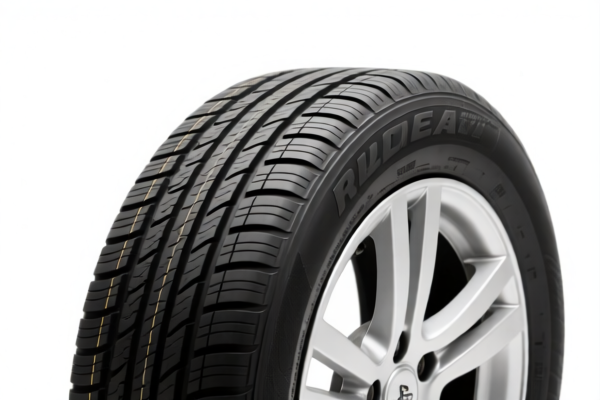
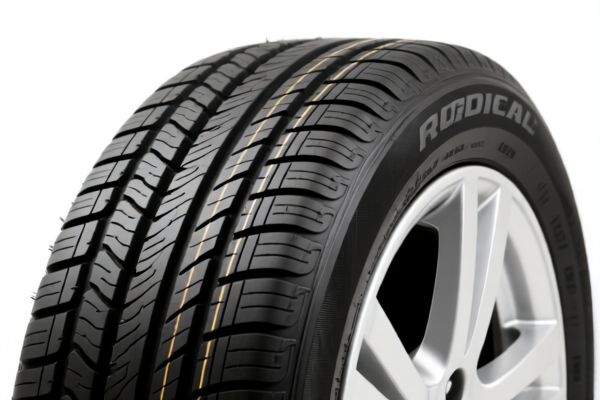
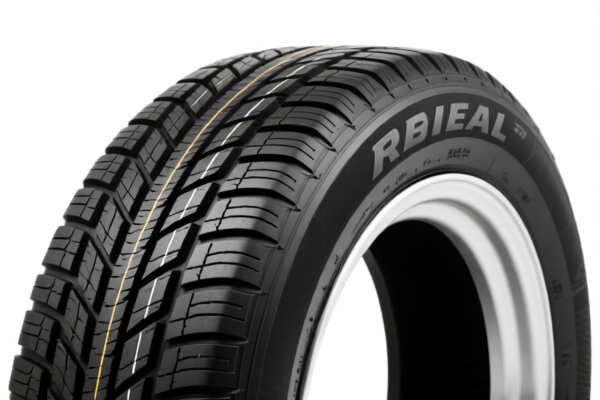
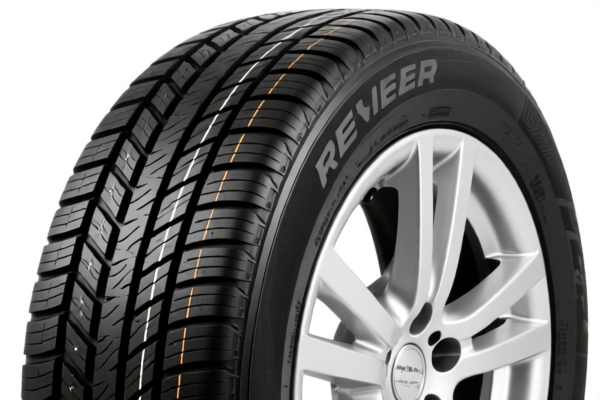
AI Analysis
🛞 Passenger Car Radial Tire (17-inch)
🌐 HS Code Reference & Customs Clearance Guide | 2026 Latest Tariff Analysis | Professional-Level Strategy
📌 Part I: Product Definition & Classification: Do You Really Understand "Tires"?
The 17-inch Passenger Car Radial Tire is a critical safety component for modern vehicles. In international trade, it is strictly categorized under Chapter 40 (Rubber and Articles Thereof). The classification hinges on three key attributes: 1. Material: Rubber (implied by "Tire"). 2. Structure: Radial (Indicated by "Radial"). 3. Application: Passenger Car (Indicated by "Passenger Car"). 4. Condition: New vs. Retread (Refurbished) – This is the most common source of misclassification.
⚠️ Critical Distinction:
- If the tire is NEW (original manufacture) →归入 4011 (New Pneumatic Tires).
- If the tire is RETRIED/REFURBISHED (recapped) → 归入 4012 (Retired/Pneumatic Tires).
- Internal Tubes (Inner tubes) are often confused with tires but belong to 4013. Note: Most modern radial tires are tubeless, but if "Inner Tube" is specified or implied as a separate item, it falls under 4013.
📦 Part II: HS Code Classification Details (2026 Latest Tariff Authority对照)
| HS Code | Product Description | Key Matching Criteria | Tax Rate (Total) |
|---|---|---|---|
4011.10.10.50 |
New Pneumatic Tires, of a kind used for motor cars | Matches "Passenger Car" (Use), "Radial" (Structure), and explicitly mentions 16-17 inch rim diameter. | 39.0% |
4012.11.40.00 |
Retired Pneumatic Tires of a kind used for motor cars | Matches "Passenger Car" and "Radial". Note: Applied if the tire is refurbished/recapped. The summary implies it matches material/shape logic even if "Retread" isn't explicitly stated in the name, but classification logic favors 4012 for retreaded goods. | 39.0% |
4013.10.00.10 |
Inner Tubes, for pneumatic tires of a kind used for motor cycles | Misclassification Risk: Matches "Passenger Car" (if inferred as car tire) and "Tires" (material/shape). However, 4013 is for Inner Tubes, not the outer tire itself. | 38.7% |
4013.90.50.50 |
Inner Tubes, for pneumatic tires other than those of heading 4011 or 4012 | Matches "Passenger Car" (inferred) and "Tire" attributes. Excludes motorcycle-specific items. Also refers to Inner Tubes. | 38.7% |
4012.11.40.00 |
Retired Pneumatic Tires of a kind used for motor cars | Repeated entry. Matches "Radial Tire" and "Passenger Car". Confirms that if the item is retreaded, this code applies. | 39.0% |
🔍 Key Clarification:
- 4011.10.10.50 is the most accurate code for NEW 17-inch passenger car radial tires. It explicitly includes the rim diameter specification (16-17 inches).
- 4012.11.40.00 applies ONLY if the tire is RETRIED/REFURBISHED. If you are importing new tires, do NOT use this code.
- 4013 codes apply to INNER TUBES, not the outer tire. If your product is a standard tubeless radial tire, these codes are incorrect.
💰 Part III: 2026 Latest Tariff Rate Breakdown (Including Surcharges)
✅ Applicable Country: United States (US)
✅ Origin: China (CN)
✅ Effective Date: November 10, 2025 (and onwards)
🎯 1. 4011.10.10.50 — New Pneumatic Tires (Passenger Car, 16-17 inch)
| Item | Content |
|---|---|
| Base Duty | 4.0% (ad valorem) |
| Section 301 Surcharge | +25.0% (USITC Footnote 9903.88.01 / Trade Act Section 301) |
| 122 Clause Tariff | +10.0% (Specific surcharge under Section 122 or related executive orders for rubber products) |
| Total Rate | 39.0% |
| Calculation | CIF Value × 39.0% |
| De Minimis Exemption | ❌ NOT APPLICABLE (deny_de_minimis) |
| Legal Basis Path | USITC:4011.10.10.50 → SECTION_301:25% → CLAUSE_122:10% |
📌 Explanation:
- Base Duty (4.0%): Standard MFN rate for new radial tires.
- 301 Surcharge (25%): Applied to all Chinese-origin rubber tires under the Trade Act.
- 122 Clause (10%): Additional surcharge applicable to specific rubber products imported from China.
- Total: 39%. This is a high-cost item. Do not rely on de minimis (Section 321) for clearance; full duty applies.
🎯 2. 4012.11.40.00 — Retired Pneumatic Tires (Passenger Car)
| Item | Content |
|---|---|
| Base Duty | 4.0% (ad valorem) |
| Section 301 Surcharge | +25.0% |
| 122 Clause Tariff | +10.0% |
| Total Rate | 39.0% |
| Calculation | CIF Value × 39.0% |
| De Minimis Exemption | ❌ NOT APPLICABLE |
| Legal Basis Path | USITC:4012.11.40.00 → SECTION_301:25% → CLAUSE_122:10% |
📌 Note:
- Even though it is a "retired" (retreaded) tire, the surcharge structure remains identical to new tires for Chinese origin.
- Crucial: Ensure the product is truly retreaded. If it is new, misclassifying as 4012 can lead to penalties for false declaration, even if the tax amount is the same.
🎯 3. 4013.10.00.10 & 4013.90.50.50 — Inner Tubes
| Item | Content |
|---|---|
| Base Duty | 3.7% (ad valorem) |
| Section 301 Surcharge | +25.0% |
| 122 Clause Tariff | +10.0% |
| Total Rate | 38.7% |
| Calculation | CIF Value × 38.7% |
| De Minimis Exemption | ❌ NOT APPLICABLE |
📌 Warning:
- These codes are for INNER TUBES, not the outer tire.
- If you import a standard radial tire (which is usually tubeless), using 4013 codes is a classification error.
- While the tax rate (38.7%) is slightly lower than 39.0%, the risk of customs seizure for incorrect classification outweighs the minimal saving.
🛠️ Part IV: Customs Clearance Practical Advice (Real-World Pitfall Guide)
✅ 1. Required Documentation Checklist
| Document | Required? | Purpose |
|---|---|---|
| ✅ Product Specifications | ✔️ | Must specify: "Radial", "Passenger Car", "Rim Diameter (16-17 inch)", "Tubeless/With Tube". |
| ✅ Product Photos | ✔️ | Clear images of sidewall markings (e.g., "R17", "Passenger Car", Radial construction). |
| ✅ Commercial Invoice | ✔️ | Must clearly state "New Pneumatic Tires" or "Retreaded Tires". Do not use vague terms like "Rubber Parts". |
| ✅ Packing List | ✔️ | Quantity and weight per box. |
| ✅ Origin Certificate | ✔️ | To confirm Chinese origin (subject to 301/122 duties). |
| ✅ Tire Identification Number (TIN/DOT) | ✔️ | Required for FDA/USDOT compliance in the US. |
📌 Key Reminder:
- If the tires are tubeless, do NOT declare them as "Inner Tubes" (4013).
- If the tires are NEW, do NOT declare them as "Retired/Retreaded" (4012).
- The Rim Diameter (16-17 inch) is a key differentiator for4011.10.10.50. Ensure this is explicitly stated in the description.
✅ 2. Declaration Tips (Golden Rules)
🔥 "New vs. Retread, Tube vs. Tubeless, Diameter Matters!"
| Scenario | Correct HS Code | Wrong Code | Risk |
|---|---|---|---|
| New 17-inch Passenger Radial Tire | 4011.10.10.50 |
4012.11.40.00 |
Penalty for false classification |
| Retreaded 17-inch Passenger Tire | 4012.11.40.00 |
4011.10.10.50 |
Penalty for false classification |
| Inner Tube (Separate Item) | 4013.10.00.10 |
4011.10.10.50 |
Tax discrepancy + classification error |
| Tubeless Tire (No Tube) | 4011.10.10.50 |
4013... |
Major classification error |
✅ 3. Special Considerations
| Situation | Advice |
|---|---|
| OEM Custom Tires | Provide OEM contract and specs to prove "Passenger Car" use. |
| Mixed Shipments | If a container has both new tires and inner tubes, declare separately. Do not bundle. |
| DOT Compliance | US DOT requires specific markings on sidewalls. Ensure compliance to avoid refusal. |
| Seasonal Products | Winter tires vs. Summer tires: Both fall under 4011 if radial/passenger. No extra duty difference. |
🌍 Part V: Global Market Comparison (2026 Latest)
| Country/Region | Recommended HS Code | Total Duty | Notes |
|---|---|---|---|
| 🇺🇸 USA | 4011.10.10.50 |
39.0% | High duties due to 301 + 122 clauses. No de minimis. |
| 🇨🇳 China | 4011.10.10.00 |
~10-20% | Varies by year; usually lower base rates, no US surcharges. |
| 🇪🇺 EU | 4011.10 |
4.5% | No Section 301 equivalent. Standard MFN rate. |
| 🇦🇺 Australia | 4011.10 |
5% | Moderate duty. No significant surcharges for Chinese tires. |
| 🇯🇵 Japan | 4011.10 |
5% | Standard rate. No major surcharges. |
📌 Conclusion:
- The US market is the most expensive due to the 39% total duty.
- EU, Australia, and Japan are significantly more cost-effective.
- If your target market is the US, factor in the 39% cost into your pricing strategy.
📌 Part VI: Common Mistakes & Pitfalls (Lessons Learned)
❌ Mistake 1: Declaring a New Tire as a Retreaded Tire (4012) |
👉 Consequence: Customs may audit the batch, demand proof of retreading, and impose penalties for false declaration.
❌ Mistake 2: Declaring a Tubeless Tire as an Inner Tube (4013) |
👉 Consequence: Classification error. Even if tax is similar (38.7% vs 39.0%), it triggers additional inspection and potential fines.
❌ Mistake 3: Ignoring the Rim Diameter |
👉 Consequence: 4011.10.10.50 specifically covers 16-17 inch tires. If you don't specify, customs may classify it under a general "other" code with different duties.
❌ Mistake 4: Assuming De Minimis Applies |
👉 Consequence: Tires from China are NOT eligible for Section 321 de minimis exemption. Full duty (39%) must be paid.
✅ Correct Declaration Example:
"New Pneumatic Radial Tire for Passenger Cars, 17-inch Rim Diameter, Tubeless, Model XYZ, DOT Certified"
🎯 Part VII: Conclusion: Precision in Classification, Profit in Clearance!
🎯 Key Takeaways:
🔹 New Tires →
4011.10.10.50(39% Duty)
🔹 Retreaded Tires →4012.11.40.00(39% Duty)
🔹 Inner Tubes →4013(38.7% Duty)
🔹 NO De Minimis Exemption for Chinese tires to the US.
📌 Pro Tip:
If your tires are not from China (e.g., Vietnam, Thailand), you may avoid the 25% Section 301 and 10% 122 Clause duties, reducing the total rate to ~4-5%.
Consider supply chain diversification if US market penetration is critical.
📣 Action Now:
📞 Consult a Licensed Customs Broker to verify the exact tire specification.
📝 Prepare Detailed Product Specs including Rim Diameter, Structure (Radial), and Condition (New/Retreaded).
🚀 Ensure DOT Compliance to avoid refusal at the US port.
✨ Professional clearance starts with accurate classification!
💼 Every percentage point of duty counts! Protect your margin!
Customer Reviews
About HS Code Classification
The Harmonized System (HS) is an internationally standardized nomenclature developed by the World Customs Organization (WCO) to classify traded products. Over 200 countries use the HS system as the basis for customs tariffs, trade statistics, and import/export regulations.
Each HS code follows a hierarchical structure:
- Chapter (2 digits) — Broad category of goods (e.g., Chapter 84: Machinery and Mechanical Appliances)
- Heading (4 digits) — More specific grouping within the chapter
- Subheading (6 digits) — Internationally standardized breakdown, used by all WCO member countries
- National subdivisions (8-10 digits) — Country-specific extensions for further classification, such as US HTSUS 10-digit codes
Correct HS code classification is essential for smooth customs clearance, accurate duty payment, and compliance with trade regulations. Misclassification can lead to customs delays, overpayment of duties, or penalties.
When importing from CN to US, the applicable tariff rates may include:
- Most-Favored-Nation (MFN) rate — The standard duty rate applied to WTO members
- General rate — Applied to countries without trade agreements
- Trade remedy duties — Additional tariffs such as Section 301 (anti-dumping), Section 232 (national security), or countervailing duties
The information provided on this page is for reference purposes only. For official classification, please consult with your local customs authority or a licensed customs broker.