18 color double ended pen
CN → US| HS Code | Tariff Rate | Origin | Destination | Doc |
|---|---|---|---|---|
| 9608200000 | 21.5% | CN | US | Official Doc |
| 9608992000 | 0.0% | CN | US | Official Doc |
| 9608100000 | 0.0% | CN | US | Official Doc |
| 9608200000 | 21.5% | CN | US | Official Doc |
| 9608100000 | 0.0% | CN | US | Official Doc |
Product Images
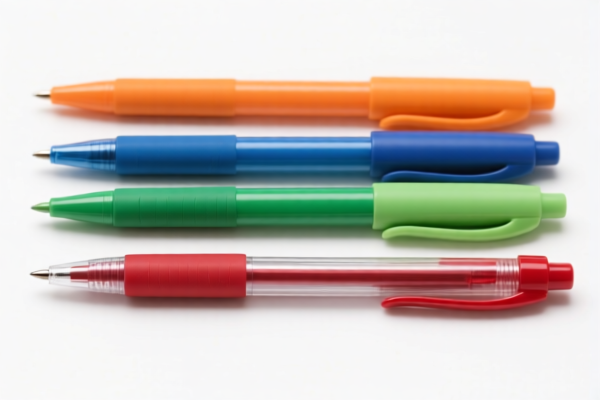
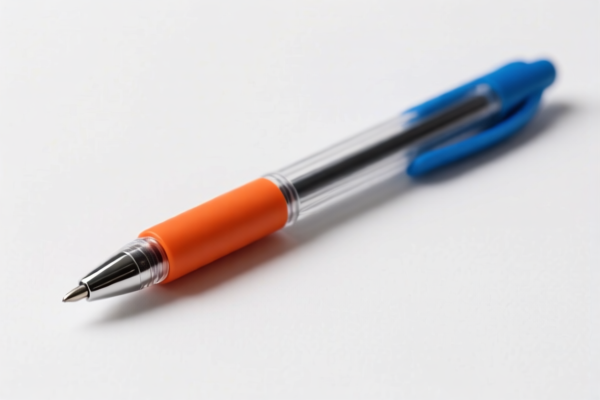
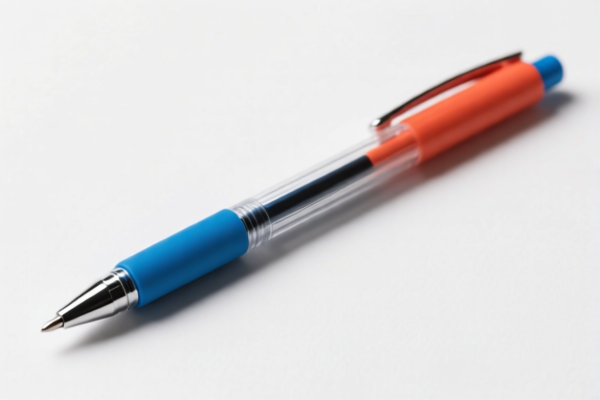
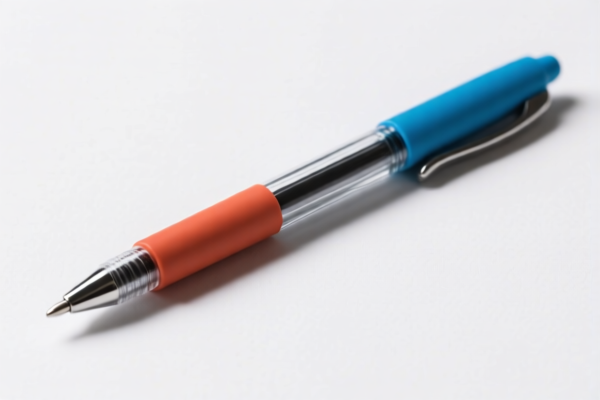
AI Analysis
🖊️ 18 Color Double Ended Pen (Multicolor Ballpoint & Marking Pens)
🌐 HS Code Reference & Customs Clearance Guide | 2026 Latest Tariff Analysis | Professional Entry Strategy
📌 I. Product Definition & Classification: What is an "18 Color Double Ended Pen"?
The 18 Color Double Ended Pen is a specialized writing instrument containing multiple ink cartridges (typically 18 colors) within a single barrel, featuring two writing tips (ends) for quick color switching. In international trade, this product falls under Chapter 96 (Miscellaneous Manufactured Articles), specifically under heading 9608 (Ball-point pens, felt-pointed pens and other pens; marking pens and felt-tipped pens and other porous-tipped pens and markers; ball-point pens refills).
⚠️ Key Classification Distinction:
The core debate lies in whether the pen is classified as a Ball-point Pen (9608.10) or a Porous-Tipped/Marker Pen (9608.20).
- If the tips are standard ball-point mechanisms → 9608.10
- If the tips are felt, porous, or marker-type → 9608.20
Note: Most "18 color" multi-pens use ball-point tips for precision, but some may include felt-tip markers. The provided data reflects both possibilities.
📦 II. HS Code Classification Details (2026 Latest Tariff Authority Reference)
Based on the provided dataset, there are three primary HS Code options depending on the specific tip mechanism and duty calculation method.
| HS Code | Product Description | Application Scenario | Tip Type |
|---|---|---|---|
9608.20.00.00 |
Felt-pointed pens, porous-tipped pens, markers, and other pens (except ball-point) | Multi-pens with felt/marker tips; or pens classified under "other porous-tipped" | ✅ Felt/Porous |
9608.99.20.00 |
Parts and accessories of pens; other pens | Multi-pens classified as "other" or specific multi-component writing tools where no specific subheading fits better; often used for complex multi-tip designs | ✅ Other/Accessory |
9608.10.00.00 |
Ball-point pens | Multi-pens where both ends are ball-point tips; the most common classification for standard multi-color ballpoints | ✅ Ball-point |
🔍 Critical Note:
-9608.20and9608.99often carry different duty structures.
-9608.10is typically duty-free ad valorem in base tariffs but subject to specific per-unit duties and high附加 taxes.
- Do not mix classifications: Ensure the tip type (ball vs. felt) matches the HS code. Misclassification leads to severe penalties.
💰 III. 2026 Latest Tariff Rate Breakdown (Including Surcharges & Policy Add-ons)
✅ Applicable Country: United States (US)
✅ Origin: China (CN)
✅ Effective Date: From November 10, 2025 (including subsequent imports)
🎯 1. 9608.20.00.00 —— Felt-Pointed Pens / Porous-Tipped Pens / Markers
| Item | Content |
|---|---|
| Base Duty Rate | 4.0% (ad valorem) |
| Section 301 Surtax (7.5%) | +7.5% (from Section 301) |
| IEEPA Surtax (122 Clause, 10%) | +10% (Section 122 / IEEPA measures) |
| Total Tariff Rate | 21.5% |
| Tax Calculation | CIF Value × 21.5% |
| De Minimis Eligibility | ❌ Not Eligible (High tariff rate triggers higher scrutiny) |
| Legal Basis Path | USITC:9608.20.00.00 → Section 301:7.5% → IEEPA/122:10% |
📌 Explanation:
- Total 21.5% is significantly higher than ball-point pens in base terms, but no per-unit fee is applied.
- Suitable if the pen uses felt or marker tips.
🎯 2. 9608.99.20.00 —— Other Pens / Accessories (Marking Pens / Multi-Pens)
| Item | Content |
|---|---|
| Base Duty Rate | 0.4¢ per unit + 2.7% (ad valorem) |
| Section 301 Surtax (7.5%) | +7.5% (from Section 301) |
| IEEPA Surtax (122 Clause, 10%) | +10% (Section 122 / IEEPA measures) |
| Total Tariff Rate | 0.4¢ each + 20.2% |
| Tax Calculation | (0.4¢ × Quantity) + (CIF Value × 20.2%) |
| De Minimis Eligibility | ❌ Not Eligible |
| Legal Basis Path | USITC:9608.99.20.00 → Section 301:7.5% → IEEPA/122:10% |
📌 Note:
- This classification is often used for complex multi-pens or those not fitting strictly into ball-point or marker categories.
- The per-unit fee (0.4¢) adds up significantly for high-volume shipments (e.g., 10,000 pens = $40 in base duty alone).
- Total ad valorem rate: 2.7% + 7.5% + 10% = 20.2%.
🎯 3. 9608.10.00.00 —— Ball-Point Pens
| Item | Content |
|---|---|
| Base Duty Rate | 0.8¢ per unit + 5.4% (ad valorem) |
| Section 301 Surtax (7.5%) | +7.5% (from Section 301) |
| IEEPA Surtax (122 Clause, 10%) | +10% (Section 122 / IEEPA measures) |
| Total Tariff Rate | 0.8¢ each + 22.9% |
| Tax Calculation | (0.8¢ × Quantity) + (CIF Value × 22.9%) |
| De Minimis Eligibility | ❌ Not Eligible |
| Legal Basis Path | USITC:9608.10.00.00 → Section 301:7.5% → IEEPA/122:10% |
📌 Explanation:
- This is the most common classification for standard multi-color ballpoint pens.
- Base ad valorem rate: 5.4% + 7.5% + 10% = 22.9%.
- Per-unit fee: 0.8¢ per pen is higher than felt-tip pens. For bulk orders, this can be costly.
- Total Effective Rate: Depends on value per unit, but generally high due to per-unit fee.
🛠️ IV. Customs Clearance Practical Advice (Real-World Pitfall Avoidance Guide)
✅ 1. Documentation Checklist (Mandatory)
| Document | Required? | Explanation |
|---|---|---|
| ✅ Product Specifications Sheet | ✔️ | Must specify tip type (ball vs. felt), ink type, and number of colors. |
| ✅ Product Photos (Clear Labels) | ✔️ | Show both ends of the pen. Clearly visible "18 Color" or similar markings. |
| ✅ Commercial Invoice | ✔️ | Must state "Ball-point Pen" or "Felt-Pointed Pen" explicitly. Do not use vague terms like "Writing Instrument." |
| ✅ Packing List | ✔️ | Detail quantity per box. Critical for calculating per-unit duties. |
| ✅ Third-Party Test Reports | ✔️ | FCC (if electronic), CE, RoHS (if applicable). |
| ✅ Country of Origin Certificate | ✔️ | To verify China origin and apply correct surtaxes. |
✅ 2. Declaration Tips (Key Mnemonics)
🔥 “Tip Type Determines Code, Per-Unit Fee Hits Bulk, Be Specific or Pay the Price!”
| Scenario | Correct Declaration | Incorrect Practice |
|---|---|---|
| Ball-Point Multi-Pen | 9608.10.00.00 – "Ball-point pen, 18 colors" |
Declaring as "Marker" → Wrong classification, penalties. |
| Felt/Marker Multi-Pen | 9608.20.00.00 – "Felt-pointed pen, 18 colors" |
Declaring as "Ball-point" → Wrong classification, penalties. |
| Complex/Multi-Component Pen | 9608.99.20.00 – "Multi-functional writing pen" |
Using generic "Pen" → Risk of audit. |
| Bulk Shipment | Calculate Per-Unit Fee Carefully | Ignoring 0.4¢/0.8¢ per unit → Significant cost overrun. |
✅ 3. Special Case Handling
| Scenario | Handling Advice |
|---|---|
| Mixed Tip Types (e.g., 1 ball + 1 felt) | Generally classified under 9608.20 (Marking/Felt) if one tip is felt, or 9608.10 if both are ball. Consult a customs broker for mixed-tip pens. |
| OEM Custom Colors | Provide client order + design specs. Avoid claiming "generic" if branded. |
| High-Value Pens (e.g., luxury brands) | High CIF value → Ad valorem duty dominates. Per-unit fee is negligible. |
| Low-Value Pens (e.g., promotional items) | Low CIF value → Per-unit fee dominates. Consider if 9608.20 (no per-unit fee) is more cost-effective if tips allow. |
🌍 V. Global Market Clearance Comparison (2026 Latest)
| Country/Region | Recommended HS Code | Tariff (China Origin) | Certification Requirements | Notes |
|---|---|---|---|---|
| 🇺🇸 USA | 9608.10.00.00 or 9608.20.00.00 |
21.5% - 22.9% + Per-Unit Fee | FCC (if electronic), RoHS | High surtaxes apply. Per-unit fees critical for bulk. |
| 🇨🇳 China | 9608.10.00.00 |
~5-8% | CCC (if applicable) | Lower tariffs. No Section 301/IEEPA. |
| 🇪🇺 EU | 9608.10.00 / 9608.20.00 |
0% - 3% | CE, REACH | No surtaxes. Most favorable market. |
| 🇬🇧 UK | 9608.10.00 / 9608.20.00 |
0% - 3% | UKCA, UK REACH | Post-Brexit rules apply. Generally low tariffs. |
| 🇦🇺 Australia | 9608.10.00 / 9608.20.00 |
5% | RCM | No surtaxes. Moderate tariff. |
📌 Conclusion:
- USA is the most expensive due to Section 301 and IEEPA surtaxes.
- EU/UK/Australia offer significantly lower costs.
- Per-unit duties in the US make low-value, high-volume shipments costly.
📌 VI. Common Errors & Pitfall Avoidance (Blood Lessons)
❌ Error 1: Declaring a Ball-Point Pen as "Marker" to avoid per-unit fees.
👉 Consequence: Customs audit → Back taxes + Penalties.
✅ Fix: Accurately declare tip type.
❌ Error 2: Ignoring the 0.4¢/0.8¢ per-unit fee in cost calculations.
👉 Consequence: Profit margin erosion for high-volume orders.
✅ Fix: Calculate total duty = (CIF × Ad Valorem %) + (Units × Per-Unit Fee).
❌ Error 3: Using vague terms like "Pen" or "Writing Tool" on the invoice.
👉 Consequence: Customs holds shipment for clarification → Delays + Storage Fees.
✅ Fix: Use precise terms: "Ball-Point Pen, 18 Colors" or "Felt-Pointed Pen, 18 Colors".
❌ Error 4: Assuming De Minimis exemption applies.
👉 Consequence: Denial of de minimis due to high tariff rates (over 20%).
✅ Fix: Plan for full duty payment from day one.
🎯 VII. Conclusion: Precision Classification Saves Money!
🎯 Remember the Mnemonic:
🔹 "Ball-point: 0.8¢ + 22.9%; Felt-tip: 4% + 17.5%; No De Minimis!"
🔹 "Tip Type Defines Code, Per-Unit Fee Hits Bulk, Surtaxes Add 17.5%!"
📌 Pro Tip:
- If your pen has both ball and felt tips, consult a licensed customs broker for pre-classification.
- For high-volume shipments, consider if switching to felt-tip only (if design allows) to avoid 0.8¢ per-unit fee in 9608.10.
- Always get an Advance Ruling from US CBP if the product type is ambiguous.
📣 Immediate Action:
📞 Contact a Professional Customs Broker + Provide Product Specs + Apply for HS Code Pre-Ruling
🚀 Ensure smooth customs clearance, minimize costs, and maximize profit!
✨ Professional Clearance Starts with Accurate Classification!
💼 Every Penny Counts in Global Trade!
Customer Reviews
About HS Code Classification
The Harmonized System (HS) is an internationally standardized nomenclature developed by the World Customs Organization (WCO) to classify traded products. Over 200 countries use the HS system as the basis for customs tariffs, trade statistics, and import/export regulations.
Each HS code follows a hierarchical structure:
- Chapter (2 digits) — Broad category of goods (e.g., Chapter 84: Machinery and Mechanical Appliances)
- Heading (4 digits) — More specific grouping within the chapter
- Subheading (6 digits) — Internationally standardized breakdown, used by all WCO member countries
- National subdivisions (8-10 digits) — Country-specific extensions for further classification, such as US HTSUS 10-digit codes
Correct HS code classification is essential for smooth customs clearance, accurate duty payment, and compliance with trade regulations. Misclassification can lead to customs delays, overpayment of duties, or penalties.
When importing from CN to US, the applicable tariff rates may include:
- Most-Favored-Nation (MFN) rate — The standard duty rate applied to WTO members
- General rate — Applied to countries without trade agreements
- Trade remedy duties — Additional tariffs such as Section 301 (anti-dumping), Section 232 (national security), or countervailing duties
The information provided on this page is for reference purposes only. For official classification, please consult with your local customs authority or a licensed customs broker.