2 L Square Container
CN → US| HS Code | Tariff Rate | Origin | Destination | Doc |
|---|---|---|---|---|
| 3923102000 | 35.0% | CN | US | Official Doc |
| 3923109000 | 38.0% | CN | US | Official Doc |
| 7323930035 | 62.0% | CN | US | Official Doc |
| 7323940021 | 70.2% | CN | US | Official Doc |
Product Images
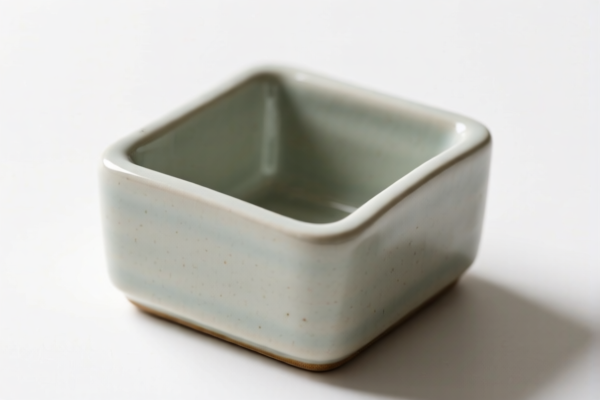
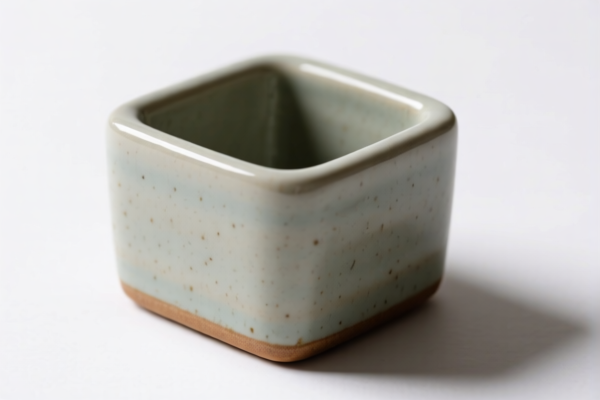
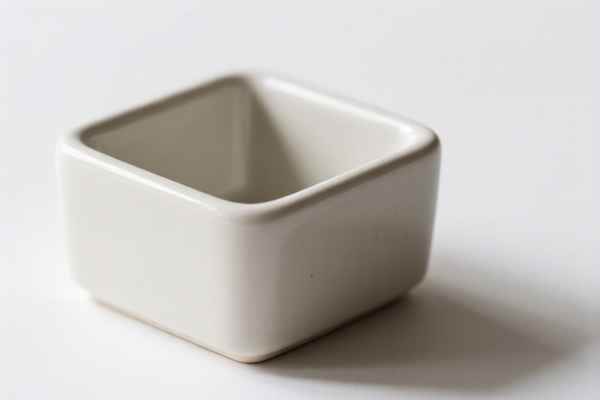
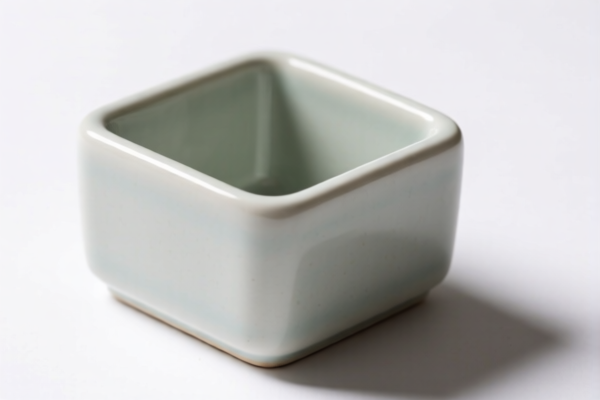
AI Analysis
📦 2L Square Container (Plastic Packaging)
🌐 HS Code Reference & Customs Clearance Guide | 2026 Latest Tariff Analysis | Professional Logistics Strategy
📌 I. Product Definition & Classification: What Exactly is a "2L Square Container"?
A 2L Square Container typically refers to rigid plastic packaging used for food, beverages, chemicals, or general retail goods. In international trade, its classification depends heavily on:
1. Material: Plastic (Chapter 39).
2. Function: Conveyance or packing of goods (Boxes, cases, crates).
3. Specialization: Is it generic, or specially shaped for semiconductors?
⚠️ Key Distinction:
- Generic Plastic Containers (for food, drinks, cosmetics) → Likely 3923.10.90.00.
- Specially Shaped Semiconductor Wafers/Masks Containers → Likely 3923.10.20.00.
- Note: Most standard "2L Square Containers" are NOT for semiconductors and fall under the "Other" category.
📦 II. HS Code Classification Details (2026 Latest Tariff Authority)
| HS Code | Product Description | Application Scenario | Tariff Impact |
|---|---|---|---|
3923.10.90.00 |
Articles for conveyance or packing of goods, of plastics; Boxes, cases, crates, and similar articles: Other | Standard 2L Square Plastic Jugs/Containers for water, oil, chemicals, food packaging | 28.0% (High) |
3923.10.20.00 |
Specially shaped or fitted for the conveyance or packing of semiconductor wafers, masks, or reticles | Specialized ESD-safe or Precision Plastic Boxes for semiconductor manufacturing | 25.0% (Slightly Lower) |
🔍 Critical Analysis:
- If your 2L Square Container is a generic jug (e.g., for cooking oil, detergent, or water), it MUST be classified under 3923.10.90.00.
- Do NOT misclassify generic plastic containers as semiconductor packaging to save 3%. Customs will reject this due to lack of "special shape/fitting" proof.
- Total Tax Rate for Generic Containers: 28.0% (3% Base + 25% Additional).
- Total Tax Rate for Semiconductor Containers: 25.0% (0% Base + 25% Additional).
💰 III. 2026 Latest Tariff Rate Breakdown (With Surcharges & Policy Details)
✅ Applicable Country: United States (US)
✅ Origin: China (CN)
✅ Effective Date: From Nov 10, 2025 (and subsequent imports)
🎯 1. 3923.10.90.00 —— Generic Plastic Packaging Containers (Most Likely for 2L Square Containers)
| Item | Detail |
|---|---|
| Base Tariff | 3.0% (ad valorem) |
| USITC Surcharge (Section 301) | +25.0% |
| IEEPA Surcharge | N/A (Not listed in data as IEEPA applicable here, but Section 301 is dominant) |
| Total Tariff | 28.0% |
| Tax Calculation | CIF Value × 28.0% |
| De Minimis Exemption | ❌ NOT Eligible (Deny de minimis for Section 301 goods) |
| Legal Basis Path | USITC:3923.10.90.00 → FOOTNOTE:3923.10.90.00 |
📌 Explanation:
- The 25% surcharge is imposed under the Section 301 Trade Act on Chinese plastic articles.
- Total Tax = 28%. This is a significant cost factor.
- No Base Tariff Exemption: Even though some plastics have 0% base, this specific subheading has a 3% base.
- Warning: Do not rely on de minimis (under $800) if you are importing via informal entry and the goods are subject to Section 301. Most Section 301 goods are excluded from de minimis.
🎯 2. 3923.10.20.00 —— Semiconductor-Specific Plastic Containers (Specialized)
| Item | Detail |
|---|---|
| Base Tariff | 0.0% (ad valorem) |
| USITC Surcharge (Section 301) | +25.0% |
| Total Tariff | 25.0% |
| Tax Calculation | CIF Value × 25.0% |
| De Minimis Exemption | ❌ NOT Eligible (Deny de minimis for Section 301 goods) |
| Legal Basis Path | USITC:3923.10.20.00 → FOOTNOTE:3923.10.20.00 |
📌 Note:
- Only applicable if the container is specially shaped/fitted for semiconductor wafers/masks.
- Saves 3% compared to generic containers, but proving this classification is difficult and requires strict documentation.
- Risk: Misclassification leads to penalties. Only use if you are in the semiconductor supply chain.
🛠️ IV. Customs Clearance Practical Advice (Real-World Pitfall Avoidance)
✅ 1. Required Documentation List (Non-Negotiable)
| Document | Must Provide? | Explanation |
|---|---|---|
| ✅ Product Specification Sheet | ✔️ | Material type (e.g., HDPE, PP), dimensions, volume (2L), intended use. |
| ✅ Product Photos | ✔️ | Clear images showing the container shape, markings, and any certifications. |
| ✅ Commercial Invoice | ✔️ | Must clearly state: "Plastic Containers, 2L Square, For Packing [Specific Good]" |
| ✅ Packing List | ✔️ | Quantity, weight, packaging type. |
| ✅ Material Declaration | ✔️ | Confirm it is plastic (HS Code 39). |
| ✅ FDA Documentation (If for Food) | ✔️ | If used for food/beverage, provide FDA compliance statement or registration number. |
✅ 2. Declaration Tips (Key Mantra)
🔥 "Be Honest, Be Specific, Avoid General Terms!"
| Scenario | Correct Declaration | Incorrect Practice |
|---|---|---|
| Standard 2L Plastic Jug | "Plastic Container, 2L, Square Shape, HDPE, For Packing Cooking Oil" | "Plastic Box" or "Container" (Too vague → Risk of misclassification) |
| Semiconductor Container | "Plastic Container, Specially Shaped for Semiconductor Wafers, ESD-Safe" | "Plastic Box" (Will be audited and penalized) |
| Generic Plastic Crate | "Plastic Crate, For Conveyance of Goods" | "Wooden Crate" (Wrong material → Severe penalty) |
✅ 3. Special Case Handling
| Scenario | Handling Advice |
|---|---|
| Food Contact | If the container touches food, ensure it meets FDA 21 CFR standards. Provide a Declaration of Compliance. |
| Chemical Transport | If for hazardous chemicals, ensure UN-certified packaging if required. |
| Customs Audit | If Customs questions the HS Code, provide technical drawings proving it is NOT specially shaped for semiconductors (if claiming 3923.10.90.00). |
| Origin Marking | Ensure containers are marked "Made in China" to avoid origin-related penalties. |
🌍 V. Global Market Comparison (2026 Latest)
| Country/Region | Recommended HS Code | Tariff Rate | Certification Requirements | Remarks |
|---|---|---|---|---|
| 🇺🇸 USA | 3923.10.90.00 |
28.0% | FDA (if food) | High tariff due to Section 301. |
| 🇨🇳 China | 3923.10.90.00 |
6.5% | N/A | Lower base tariff. |
| 🇪🇺 EU | 3923.10.90 |
6.5% | REACH (Material Compliance) | No Section 301 surcharge. |
| 🇬🇧 UK | 3923.10.90 |
6.5% | UKCA (if applicable) | Post-Brexit rules apply. |
| 🇯🇵 Japan | 3923.10.90 |
8.0% | JIS Standards | No additional surcharges. |
📌 Conclusion:
- USA is the most expensive market for Chinese-origin plastic containers due to the 28% total tariff.
- EU/UK/Japan offer significantly lower costs (6.5%–8.0%).
- Strategy: Consider supply chain diversification (e.g., sourcing from Vietnam or Mexico) if targeting the US market to avoid Section 301 tariffs.
📌 VI. Common Mistakes & Pitfall Avoidance (Blood & Tears Lessons)
❌ Mistake 1: Declaring as "Other Plastic Articles" (3926.90) to avoid Section 301.
👉 Consequence: Customs will reclassify to 3923.10, apply 28% tariff, and impose penalties.
❌ Mistake 2: Using "Semiconductor Container" for generic 2L jugs.
👉 Consequence: Customs will request proof of "special shape/fitting." Failure to provide → Reclassification to 3923.10.90.00 + Penalties.
❌ Mistake 3: Ignoring FDA Requirements for Food Containers.
👉 Consequence: Goods detained or destroyed at US port. No tariff issue, but total loss of product.
❌ Mistake 4: Claiming De Minimis Exemption for Section 301 Goods.
👉 Consequence: Entry rejected, tariffs + interest charged. Section 301 goods are excluded from de minimis.
✅ Correct Practice:
"Plastic Container, 2L, Square Shape, High-Density Polyethylene (HDPE), FDA Compliant, For Packing Cooking Oil, Model XYZ, Made in China"
🎯 VII. Conclusion: Professional Classification, Cost Control, Smooth Clearance!
🎯 Remember the Mantra:
🔹 "Plastic Container = 3923.10, Generic = 28%, Semi = 25%, Don't Lie, Don't Split!"
🔹 "HS Code Determines Cost, 28% is High, Clear Declaration Saves Time!"
📌 Pro Tip:
If your 2L Square Containers are not made in China, or if you are sourcing from Vietnam, Thailand, or Mexico, you MAY be eligible to avoid Section 301 surcharges.
Recommendation:
📞 Consult a Licensed Customs Broker + Provide Product Specs + Apply for Advance Ruling if volume is high.
🚀 Ensure your supply chain is tariff-aware, your costs are accurate, and your customs clearance is seamless!
✨ Professional Customs Clearance Starts with Accurate Classification!
💼 Every Dollar of Cost Deserves Precise Calculation!
Customer Reviews
About HS Code Classification
The Harmonized System (HS) is an internationally standardized nomenclature developed by the World Customs Organization (WCO) to classify traded products. Over 200 countries use the HS system as the basis for customs tariffs, trade statistics, and import/export regulations.
Each HS code follows a hierarchical structure:
- Chapter (2 digits) — Broad category of goods (e.g., Chapter 84: Machinery and Mechanical Appliances)
- Heading (4 digits) — More specific grouping within the chapter
- Subheading (6 digits) — Internationally standardized breakdown, used by all WCO member countries
- National subdivisions (8-10 digits) — Country-specific extensions for further classification, such as US HTSUS 10-digit codes
Correct HS code classification is essential for smooth customs clearance, accurate duty payment, and compliance with trade regulations. Misclassification can lead to customs delays, overpayment of duties, or penalties.
When importing from CN to US, the applicable tariff rates may include:
- Most-Favored-Nation (MFN) rate — The standard duty rate applied to WTO members
- General rate — Applied to countries without trade agreements
- Trade remedy duties — Additional tariffs such as Section 301 (anti-dumping), Section 232 (national security), or countervailing duties
The information provided on this page is for reference purposes only. For official classification, please consult with your local customs authority or a licensed customs broker.