2 in 1 Needle Threader and Seam Ripper
CN → US| HS Code | Tariff Rate | Origin | Destination | Doc |
|---|---|---|---|---|
| 6307909891 | 24.5% | CN | US | Official Doc |
| 8205517500 | 38.7% | CN | US | Official Doc |
| 8205595560 | 40.3% | CN | US | Official Doc |
| 6307903020 | 25.4% | CN | US | Official Doc |
Product Images
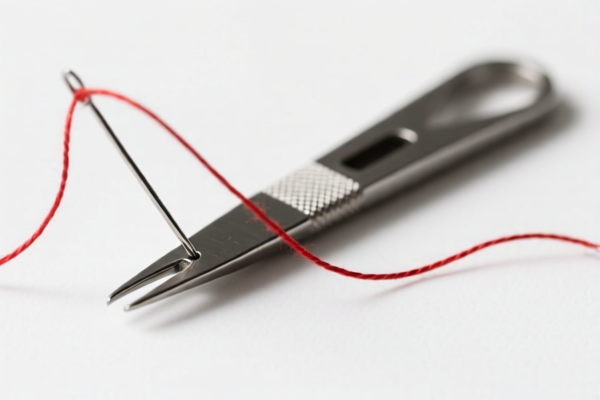
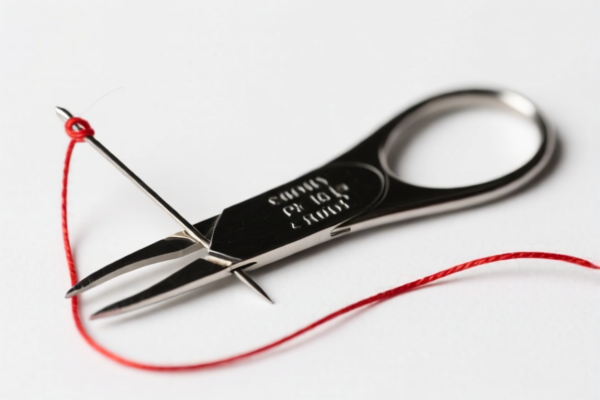
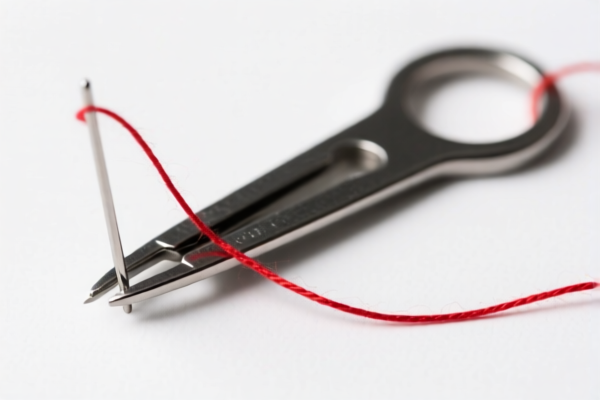
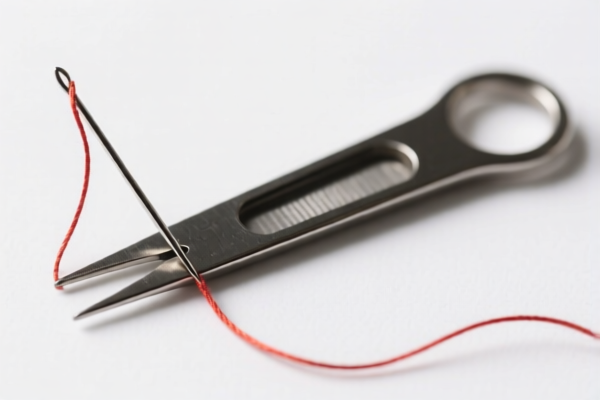
AI Analysis
🧵 The "2-in-1" Needle Threader & Seam Ripper: Precision Classification & Cost Analysis
🌐 HS Code Reference & Customs Clearance Guide | 2026 Latest Tariff Analysis | Professional Clearance Strategy
📌 Part 1: Product Definition & Classification: Do You Really Understand the "2-in-1 Tool"?
The "2-in-1 Needle Threader and Seam Ripper" is a quintessential sewing accessory. In international trade, it is often treated as a single unit, but customs authorities scrutinize its primary function, material composition, and physical structure to determine the correct Harmonized System (HS) code.
There are two distinct classification paths depending on the specific design:
Path A: General Sewing Accessories (Finished Goods Category)
If the item is a small, pre-made tool (often plastic or metal) that functions as a generic aid, it may fall under Chapter 63 as "Other made-up articles." This is often the lower tax liability path if the structure is simple and non-mechanical.
Path B: Hand Tools (Mechanical/Functional Category)
If the item is predominantly metal (steel/iron) or has complex mechanical parts (lever-action threader, spring-loaded ripper), it is classified as a "Hand Tool." This path incurs significantly higher tariffs due to Section 301 and IEEPA duties.
⚠ Key Distinction Point:
- If it’s a simple plastic/mixed-material aid without complex mechanics → Chapter 63 (6307.90.98.91 or 6307.90.30.20).
- If it’s primarily metal/plastic with mechanical parts (levers, springs) → Chapter 82 (8205.51.75.00 or 8205.59.55.60).
📦 Part 2: Detailed HSC Classification Matrix (2026 Latest Tariff Authority)
| HS Code | Product Description | Application Scenario | Primary Material Assumption |
|---|---|---|---|
6307.90.98.91 |
Other made-up articles (Sewing aids, finished goods) | Simple plastic/metal threaders, non-mechanical rips | Plastic / Mixed |
8205.51.75.00 |
Other hand tools: Sewing needles & threaders (incl. hand-operated) | Mechanical threaders, metal-body seam rips | Metal/Plastic Composite |
8205.59.55.60 |
Other hand tools (NEC): Non-刃类 hand tools | Complex lever-action tools, metal-bodied multi-tools | Metal (Iron/Steel) |
6307.90.30.20 |
Other made-up articles: Labeling/Sewing auxiliary materials | Generic sewing accessories, non-specific tools | Plastic / Fabric blend |
🔍 Critical Reminder:
- If the product is marketed as a "Tool" with moving parts, Customs often leans toward Chapter 82.
- If it’s marketed as a "Sewing Accessory" or "Finish Good," Chapter 63 is more favorable.
- Misclassification Danger: Reporting a metal mechanical tool as a generic sewing aid (6307) can lead to audits, back-dated tariffs, and fines.
💰 Part 3: 2026 Latest Tariff Rate Breakdown (Including Surtaxes & Policy Add-ons)
✅ Applicable Country: USA (US)
✅ Country of Origin: China (CN)
✅ Effective Date: Post-November 10, 2025 (for subsequent imports)
🎯 1. 6307.90.98.91 — Other Made-up Articles (The "Low-Risk/Low-Tax" Path)
| Item | Detail |
|---|---|
| Base Tariff | 7.0% |
| Section 301 Surtax | 7.5% |
| IEEPA Surcharge | 10% (Section 122) |
| Total Tax Rate | 24.5% |
| Calculation Base | CIF Value × 24.5% |
| De Minimis Eligibility | ❌ Denied (High tax rate excludes it from $800 exemption) |
| Legal Reference | Base: 6307.90 → Sec301: 7.5% → IEEPA: 10% |
📌 Explanation:
- This code is considered a "made-up article" (like a flag or banner substitute), which often has lower base tariffs.
- Total Cost: ~24.5%. This is the most cost-effective classification if the product design allows it.
🎯 2. 8205.51.75.00 — Hand Tools: Sewing Needles & Threaders (The "Common" Path)
| Item | Detail |
|---|---|
| Base Tariff | 3.7% |
| Section 301 Surtax | 25.0% |
| IEEPA Surcharge | 10% (Section 122) |
| Total Tax Rate | 38.7% |
| Calculation Base | CIF Value × 38.7% |
| De Minimis Eligibility | ❌ Denied |
| Legal Reference | Base: 8205.51 → Sec301: 25.0% → IEEPA: 10% |
📌 Note:
- This is the standard classification for mechanical threaders/seam rips.
- The 25% Section 301 tariff is the primary cost driver here, not the base tariff.
🎯 3. 8205.59.55.60 — Other Hand Tools (N.E.C.) (The "High-Tariff" Path)
| Item | Detail |
|---|---|
| Base Tariff | 5.3% |
| Section 301 Surtax | 25.0% |
| IEEPA Surcharge | 10% (Section 122) |
| Total Tax Rate | 40.3% |
| Calculation Base | CIF Value × 40.3% |
| De Minimis Eligibility | ❌ Denied |
| Legal Reference | Base: 8205.59 → Sec301: 25.0% → IEEPA: 10% |
📌 Warning:
- If the item is deemed a "generic hand tool" rather than a specific sewing tool, it may fall here.
- Total Cost: ~40.3%. This is the highest cost scenario.
- Ensure your product description explicitly states "Sewing Tool" to avoid this catch-all bucket.
🎯 4. 6307.90.30.20 — Other Made-up Articles: Labeling/Sewing Auxiliaries (The "Alternative" Path)
| Item | Detail |
|---|---|
| Base Tariff | 7.9% |
| Section 301 Surtax | 7.5% |
| IEEPA Surcharge | 10% (Section 122) |
| Total Tax Rate | 25.4% |
| Calculation Base | CIF Value × 25.4% |
| De Minimis Eligibility | ❌ Denied |
| Legal Reference | Base: 6307.90.30 → Sec301: 7.5% → IEEPA: 10% |
📌 Note:
- Similar to6307.90.98.91, this is a "made-up article" path.
- Slightly higher base tariff (7.9% vs 7.0%) but still significantly cheaper than Chapter 82.
🛠 Part 4: Customs Clearance Practical Advice (Battle-Tested Pitfall Avoidance)
✅ 1. Required Documentation Checklist (Non-Negotiable)
| Document | Mandatory? | Purpose |
|---|---|---|
| ✅ Product Specification Sheet | ✔ Yes | Detail dimensions, materials (Plastic vs. Metal ratio), and moving parts. |
| ✅ High-Res Photos | ✔ Yes | Show the mechanism. Is it a simple loop? Or a lever? |
| ✅ Commercial Invoice | ✔ Yes | Must clearly state "2-in-1 Sewing Aid: Needle Threader & Seam Ripper." |
| ✅ Material Declaration | ✔ Yes | Specify % of steel, plastic, or iron. Critical for Chapter 63 vs. 82. |
| ✅ HS Code Pre-Ruling Request | ✔ Highly Recommended | Submit to CBP before shipment to lock in the 24.5% rate if possible. |
✅ 2. Declaration Strategy (Key Mnemonics)
🔥 "Function Dictates Chapter, Material Drives Duty, Name Aligns with Reality!"
| Scenario | Recommended Declaration | Wrong Action |
|---|---|---|
| Simple Plastic Tool | 6307.90.98.91 (Sewing Accessory) |
Labeling as "Tool" → Triggers Chapter 82 |
| Metal Lever Tool | 8205.51.75.00 (Sewing Hand Tool) |
Labeling as "Accessory" → Audit Flag |
| Mixed Material | Analyze primary function. If mechanical, use 8205. |
Vague term "Sewing Kit" → Classification Error |
| Bundle with Needles | Separate needles (8206.10.10.00). Do not bundle. |
Bundling → Complex tariff calculation |
✅ 3. Special Circumstances Handling
| Situation | Handling Advice |
|---|---|
| OEM Custom Design | Provide engineering drawings. If the design is unique, argue for "Other made-up articles" (6307) if no standard tool code fits. |
| Plastic Body, Metal Tip | Often still falls under 8205 if the metal part is functional (the threader loop/ripper blade). Check if the metal is integral to function. |
| Sold in Bulk Rolls | If sold as individual units, use the unit code. If sold as parts for manufacturing, different rules may apply. |
| Marketing "Multi-Tool" | Avoid "Multi-Tool" in the title if you want to avoid Chapter 82. Use "Sewing Aid" or "Sewing Accessory." |
🌍 Part 5: Global Market Comparison (2026 Update)
| Country/Region | Recommended Code | Est. Duty | Certification | Notes |
|---|---|---|---|---|
| 🇺🇸 USA | 6307.90.98.91 (Best) |
24.5% | No special cert | Avoid 8205 (38-40%) unless necessary |
| 🇨🇳 China | 6307.90.98.91 |
~5-7% | N/A | Lower base rates |
| 🇪🇺 EU | 8205.59.55 (Typical) |
~4.2% | CE/REACH (if plastic) | EU often classifies as "Hand Tools" |
| 🇬🇧 UK | 8205.59.55 |
~4.2% | UKCA | Post-Brexit rules align with EU mostly |
📌 Conclusion:
- The US is the most aggressive market for these items due to the Section 301 and IEEPA taxes.
- Chapter 63 (24.5%) is significantly cheaper than Chapter 82 (38-40%).
- Strategy: If your product allows, design it to fit Chapter 63 (minimal metal, auxiliary function) to save ~15% in duties.
📌 Part 6: Common Mistakes & Pitfall Guide (Lessons Learned)
❌ Mistake 1: Using generic terms like "Sewing Tool" without specifying material.
👉 Consequence: Customs defaults to Chapter 82 → 38.7% Tax.
👉 Fix: Specify "Plastic Sewing Aid" if applicable.
❌ Mistake 2: Bundling the threader with sewing needles (HS 8206).
👉 Consequence: Mixed classification complexity. Needles have different rules.
👉 Fix: Declare separately.
❌ Mistake 3: Claiming De Minimis ($800 exemption).
👉 Consequence: REJECTED. All these codes have total tax rates >0%, excluding them from Section 321 de minimis.
👉 Fix: Plan for full duty payment.
✅ Best Practice Declaration Example:
"2-in-1 Sewing Aid: Plastic Needle Threader & Seam Ripper, Model XYZ, No Metal Parts, for Retail Sale Only"
(Use this wording ONLY if true. If metal parts exist, be honest and declare8205.51.75.00.)
🎯 Part 7: Conclusion: Precision Classification Saves Profit Margins!
🎯 Remember the Rule of Thumb:
🔹 "Plastic = Accessory (24.5%) | Metal/Mechanical = Tool (38-40%)"
🔹 "Section 301 is the killer, Base Tariff is secondary!"
🔹 "If it moves like a tool, it’s taxed like a tool!"
📌 Pro Tip:
If you are sourcing from Vietnam, Mexico, or Thailand, IEEPA 10% surcharge does NOT apply.
Even if classified as 8205, you might save the 10% IEEPA tax.
Action: Request a Supplier’s Country of Origin Cert and apply for Pre-Ruling to maximize savings.
📣 Immediate Action Required:
📞 Audit your current supplier invoices.
📸 Send product photos to your customs broker.
📝 Request an Advance Ruling from CBP for6307.90.98.91vs8205.51.75.00before your next container loads.
✨ Professional Customs Clearance Starts with Accurate Classification!
💼 Your Bottom Line Depends on Those First 4 Digits!
Customer Reviews
About HS Code Classification
The Harmonized System (HS) is an internationally standardized nomenclature developed by the World Customs Organization (WCO) to classify traded products. Over 200 countries use the HS system as the basis for customs tariffs, trade statistics, and import/export regulations.
Each HS code follows a hierarchical structure:
- Chapter (2 digits) — Broad category of goods (e.g., Chapter 84: Machinery and Mechanical Appliances)
- Heading (4 digits) — More specific grouping within the chapter
- Subheading (6 digits) — Internationally standardized breakdown, used by all WCO member countries
- National subdivisions (8-10 digits) — Country-specific extensions for further classification, such as US HTSUS 10-digit codes
Correct HS code classification is essential for smooth customs clearance, accurate duty payment, and compliance with trade regulations. Misclassification can lead to customs delays, overpayment of duties, or penalties.
When importing from CN to US, the applicable tariff rates may include:
- Most-Favored-Nation (MFN) rate — The standard duty rate applied to WTO members
- General rate — Applied to countries without trade agreements
- Trade remedy duties — Additional tariffs such as Section 301 (anti-dumping), Section 232 (national security), or countervailing duties
The information provided on this page is for reference purposes only. For official classification, please consult with your local customs authority or a licensed customs broker.