2 in 1 Wireless Long Handle Saw
CN → US| HS Code | Tariff Rate | Origin | Destination | Doc |
|---|---|---|---|---|
| 8202406030 | 35.0% | CN | US | Official Doc |
| 8202100000 | 35.0% | CN | US | Official Doc |
| 8465910047 | 38.0% | CN | US | Official Doc |
| 8465910036 | 38.0% | CN | US | Official Doc |
| 8467220020 | 10.0% | CN | US | Official Doc |
| 8467220070 | 10.0% | CN | US | Official Doc |
Product Images
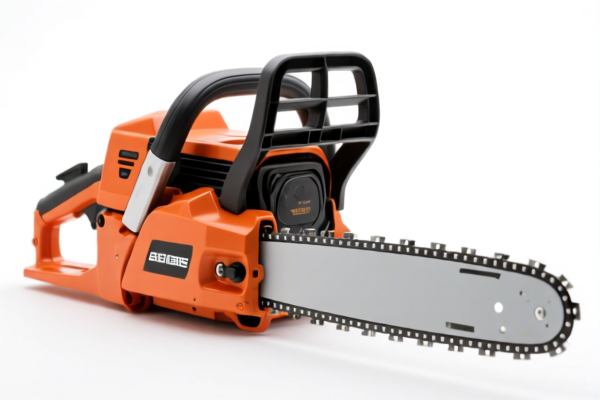
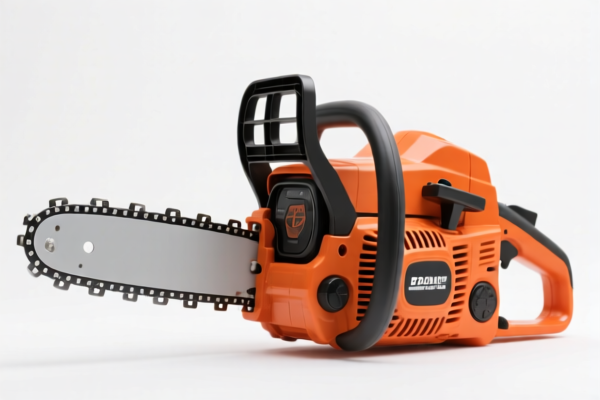
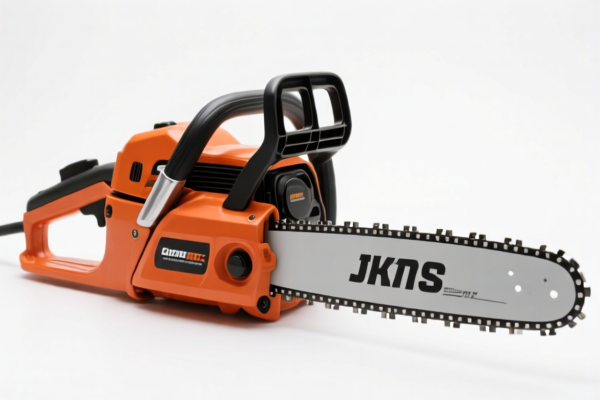

AI Analysis
🌲🪚 2-in-1 Wireless Long Handle Saw (Cordless Pole Saw)
🌐 HS Code Reference & Customs Clearance Guide | 2026 Latest Tariff Analysis | Professional-Level Clearance Strategy
📌 1. Product Definition & Classification: What is a "2-in-1 Wireless Long Handle Saw"?
A "2-in-1 Wireless Long Handle Saw" typically refers to a cordless power tool that combines a chain saw blade (for cutting branches/trees) and often a hedge trimmer blade or a pruning saw on a long pole, powered by a self-contained electric motor (battery-operated).
In international trade, this product falls under Chapter 84 (Machinery and Mechanical Appliances) because it is a machine with a self-contained electric motor, not a simple hand tool or a replaceable blade.
Key Classification Distinction: * If it is a complete portable tool (motor + battery + handle + cutting head): It is classified as a "Tool for working in the hand... with self-contained electric motor". * If it is JUST the blade (no motor, no handle): It would be classified under 8202.40.60.30 (Chain saw blades). * If it is a stationary woodwork machine: It would be classified under 8465.
⚠️ Critical Distinction:
- If the product is a portable, battery-operated pole saw used by a user in hand → HS 8467.22.00
- If the product is a stationary bench-top miter saw → HS 8465.91.00
- If the product is just the replacement chain blade → HS 8202.40.60.30
📦 2. HS Code Classification Details (Based on Provided Data)
Based strictly on the <DATA> provided, here are the relevant HS Codes and their tax implications for a 2-in-1 Wireless Long Handle Saw and related components.
| HS Code | Product Description | Applicable Scenario for "2-in-1 Saw" |
|---|---|---|
| 8467.22.00.20 | Tools with self-contained electric motor: Saws Circular | ✅ Likely Match for Electric Pole Saw. Although "Circular" usually implies disc blades, many customs authorities classify cordless electric saws (including pole saws with circular chains or disc-like cutting heads) under this or the "Reciprocating" category if no specific "Pole Saw" code exists. Check if your specific model has a circular cutting head. |
| 8467.22.00.70 | Tools with self-contained electric motor: Saws Reciprocating and jig | ✅ Likely Match for Reciprocating/Pole Saw. If the saw uses a reciprocating blade (back-and-forth motion, common in hedge trimmers/pruners) or is a general cordless electric saw not classified as circular, this code is often used. This is the most common category for cordless electric hand-held saws. |
| 8202.40.60.30 | Chain saw blades, and parts thereof (other, in continuous lengths) | ❌ Only for Blade Replacement. If you are importing only the replacement chain blade (no motor/handle), use this code. |
| 8202.10.00.00 | Handsaws, and parts (except blades) thereof | ❌ Not Applicable. This is for manual hand saws. Your product is wireless/electric. |
| 8465.91.00.47 | Machine tools: Miter saws (woodworking) | ❌ Stationary Only. Only if it is a fixed, bench-mounted miter saw. |
| 8465.91.00.36 | Machine tools: Tilting arbor table saws (woodworking) | ❌ Stationary Only. Only if it is a fixed, bench-mounted table saw. |
🔍 Key Takeaway:
- For a portable, wireless, long-handle saw, the correct category is 8467 (Hand-held power tools).
- Choose between 8467.22.00.20 (Circular) or 8467.22.00.70 (Reciprocating) based on the cutting motion of your specific model.
- If importing just the blade, use 8202.40.60.30.
💰 3. 2026 Latest Tariff Rate Breakdown (Including Surtaxes)
✅ Applicable Country: United States (US)
✅ Origin: China (CN)
✅ Effective Date: 2025-11-10 onwards
🎯 1. For Portable Wireless Saw (HS 8467.22.00.20 / 8467.22.00.70)
| Item | Content |
|---|---|
| Base Tariff Rate | 0.0% |
| Section 301 Surtax | 0.0% |
| Total Tax Rate | 0.0% |
| Tax Calculation | CIF Value × 0% = $0 |
| De Minimis Eligible? | ❌ No (Due to USITC Footnote requirements for power tools) |
| Legal Basis Path | USITC:8467.22.00.20 / 8467.22.00.70 → 0% Total |
📌 Explanation:
- Excellent News! Portable electric saws (HS 8467.22) currently have 0% total tax from the US, no Section 301 surtax, and no IEEPA surtax.
- This makes them highly competitive for export to the US compared to other electronics or machinery.
- However, ensure the product is correctly classified as a hand-held tool (8467) and not a stationary machine (8465), which might have different rules.
🎯 2. For Chain Saw Blades Only (HS 8202.40.60.30)
| Item | Content |
|---|---|
| Base Tariff Rate | 0.0% |
| Section 301 Surtax | +25.0% |
| Total Tax Rate | 25.0% |
| Tax Calculation | CIF Value × 25% |
| De Minimis Eligible? | ❌ No (Deny de minimis for 301-listed items) |
| Legal Basis Path | USITC:8202.40.60.30 → SECTION301:25% |
📌 Explanation:
- If you import only the replacement chainsaw blade, you will pay 25% tax.
- This is due to the Section 301 trade remedy on Chinese-origin metal saw blades.
- Do not import blades separately if you can import the complete tool to save 25%.
🎯 3. For Stationary Woodworking Machines (HS 8465.91.00.47 / 8465.91.00.36)
| Item | Content |
|---|---|
| Base Tariff Rate | 0.0% |
| Section 301 Surtax | 0.0% |
| Total Tax Rate | 0.0% |
| Tax Calculation | CIF Value × 0% = $0 |
📌 Explanation:
- Stationary woodworking saws (miter/table saws) also enjoy 0% total tax.
- However, this does not apply to a "Wireless Long Handle Saw" which is a hand-held power tool.
🛠️ 4. Customs Clearance Practical Advice (Actionable Tips)
✅ 1. Documentation Checklist (Must-Haves)
| Document | Required? | Details |
|---|---|---|
| ✅ Product Specification Sheet | ✔️ | Must state: "Cordless Electric Pole Saw," "Battery-Powered," "Self-Contained Motor." |
| ✅ Product Photos | ✔️ | Clear images of the motor housing, battery pack, long handle, and cutting head. |
| ✅ Parts List (BOM) | ✔️ | List of components: Motor, Battery, Handle, Blade/Chain. |
| ✅ Commercial Invoice | ✔️ | Clearly describe as "Cordless Electric Pole Saw" or "Wireless Long Handle Hedge Cutter". Avoid vague terms like "Saw Part." |
| ✅ Battery Compliance | ✔️ | Critical: Include UN38.3 test report and MSDS for the lithium battery. Battery shipment requires special IATA/air freight handling. |
| ✅ Safety Certification | ✔️ | UL, ETL, or CE mark proof. US customs may request safety compliance evidence. |
✅ 2. Classification Strategy (How to Avoid Errors)
| Scenario | Correct HS Code | Reason |
|---|---|---|
| Complete Wireless Pole Saw (with motor, battery, handle, blade) | 8467.22.00.70 | Classified as a "Tool for working in the hand with self-contained electric motor." |
| Replacement Chain Blade Only | 8202.40.60.30 | Classified as a "Saw blade." Pays 25% tax. |
| Bare Tool (No battery, just motor+handle+blade) | 8467.22.00.70 | Still a tool. Tax is 0%. |
| Battery Pack Only | 8507.60.00.00 | Lithium-ion battery. Check if 301 applies (usually 0% for batteries). |
🔥 Pro Tip:
"Ship the whole tool, not the parts!"
- Importing the complete wireless saw (8467) → 0% Tax
- Importing just the blade (8202) → 25% Tax
- Importing just the motor (8501) → 0% Tax (but incomplete product)
✅ 3. Special Considerations for "2-in-1" Products
- Motor Type: Ensure the description clearly states "Self-Contained Electric Motor". This is the key phrase for HS 8467.
- Battery: If the battery is included, the entire unit is classified as a tool. If the battery is sold separately, the tool is still 8467, but the battery has its own HS code (8507.60).
- Long Handle: The length of the handle does not change the classification to "Stationary Machine" (8465) as long as it is designed to be held and operated by a person.
🌍 5. Global Market Comparison (2026)
| Country/Region | Recommended HS Code | Tariff (China Origin) | Notes |
|---|---|---|---|
| 🇺🇸 USA | 8467.22.00.70 | 0% | Best market for tax-free entry. Watch out for UL/ETL safety certs. |
| 🇪🇺 EU | 8467.29.80 | ~2.5% | Requires CE Mark and RoHS compliance. |
| 🇬🇧 UK | 8467.29.80 | ~2.5% | Requires UKCA Mark. |
| 🇨🇦 Canada | 8467.22.00 | ~0% | Check for specific Canadian duty-free agreements. |
| 🇯🇵 Japan | 8467.22.00 | ~0-5% | Requires PSE Mark for electrical products. |
📌 Conclusion:
The US market is the most tax-friendly for wireless saws (0% total tax).
However, safety certifications (UL/ETL) are strictly enforced. Ensure your product is certified before shipping.
📌 6. Common Mistakes & Pitfalls (Learn from Others)
❌ Mistake 1: Classifying the complete saw as a blade (8202).
👉 Result: You pay 25% extra tax unnecessarily.
✅ Fix: Always classify the motorized tool under 8467.
❌ Mistake 2: Importing batteries without UN38.3.
👉 Result: Cargo seized by customs or carrier.
✅ Fix: Provide UN38.3 test report and MSDS for all lithium batteries.
❌ Mistake 3: Using vague descriptions like "Garden Tool."
👉 Result: Customs delays, requests for additional info, potential reclassification.
✅ Fix: Use precise descriptions: "Cordless Electric Pole Saw, Model XYZ, 20V Battery, with Chain Blade."
🎯 7. Final Recommendation
- Confirm Your HS Code: Use 8467.22.00.70 for the complete wireless pole saw.
- Avoid Blade-Only Imports: Do not import replacement blades separately if you can bundle them with the tool.
- Prepare Battery Docs: UN38.3 and MSDS are non-negotiable.
- Certify for Safety: Get UL/ETL certification for the US market to avoid customs holds.
🚀 Final Tip:
"Wireless Saws = 0% Tax in US! But Battery Docs = Mandatory!"
Focus on getting the battery documentation right, and you’ll enjoy zero duty savings!
✨ Professional Customs Clearance Starts with Accurate Classification!
💼 Save 25% by importing the tool, not just the blade!
Customer Reviews
About HS Code Classification
The Harmonized System (HS) is an internationally standardized nomenclature developed by the World Customs Organization (WCO) to classify traded products. Over 200 countries use the HS system as the basis for customs tariffs, trade statistics, and import/export regulations.
Each HS code follows a hierarchical structure:
- Chapter (2 digits) — Broad category of goods (e.g., Chapter 84: Machinery and Mechanical Appliances)
- Heading (4 digits) — More specific grouping within the chapter
- Subheading (6 digits) — Internationally standardized breakdown, used by all WCO member countries
- National subdivisions (8-10 digits) — Country-specific extensions for further classification, such as US HTSUS 10-digit codes
Correct HS code classification is essential for smooth customs clearance, accurate duty payment, and compliance with trade regulations. Misclassification can lead to customs delays, overpayment of duties, or penalties.
When importing from CN to US, the applicable tariff rates may include:
- Most-Favored-Nation (MFN) rate — The standard duty rate applied to WTO members
- General rate — Applied to countries without trade agreements
- Trade remedy duties — Additional tariffs such as Section 301 (anti-dumping), Section 232 (national security), or countervailing duties
The information provided on this page is for reference purposes only. For official classification, please consult with your local customs authority or a licensed customs broker.