2 in 1 cordless pole saw
CN → US| HS Code | Tariff Rate | Origin | Destination | Doc |
|---|---|---|---|---|
| 8467220020 | 10.0% | CN | US | Official Doc |
| 8467220070 | 10.0% | CN | US | Official Doc |
Product Images
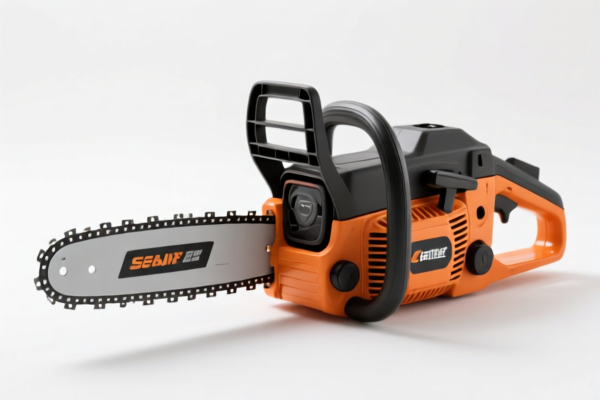
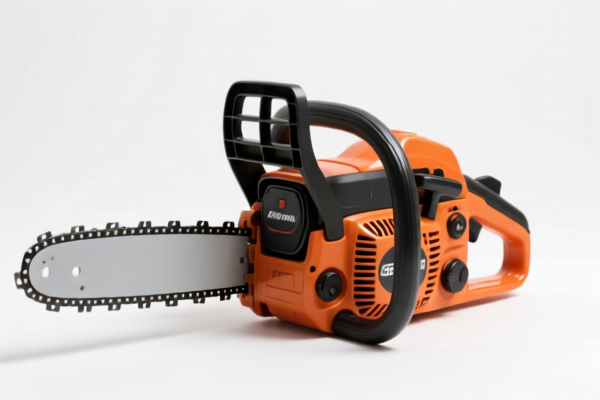
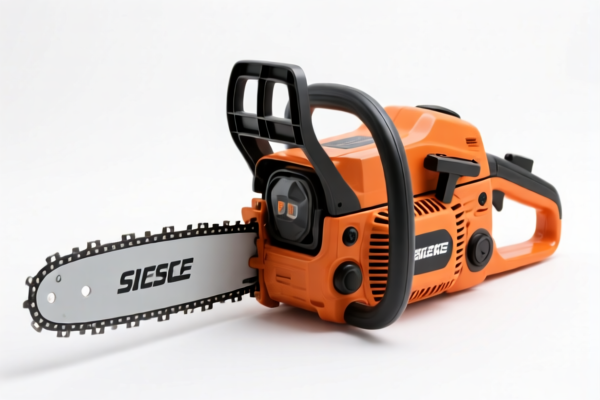
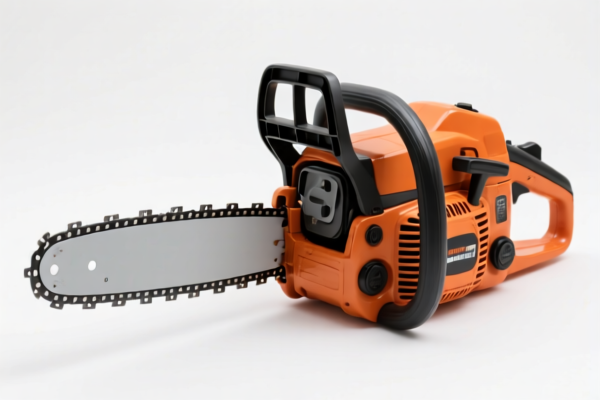
AI Analysis
🪚 2-in-1 Cordless Pole Saw (Telescopic Chain Saw + Hedge Trimmer)
🌐 HS Code Reference & Customs Clearance Guide | 2026 Latest Tariff Analysis | Professional Clearance Strategy
📌 I. Product Definition & Classification: What is a "2-in-1 Cordless Pole Saw"?
A "2-in-1 Cordless Pole Saw" typically refers to a versatile gardening power tool that combines two functions in a single battery-operated unit: 1. Pole Saw (Circular Saw): A chainsaw or reciprocating saw head attached to a long pole for pruning high branches. 2. Hedge Trimmer: A detachable or interchangeable blade head for trimming hedges.
In international trade, these tools are classified under Chapter 84, specifically as "Tools for working in the hand, pneumatic, hydraulic or with self-contained electric motor, and parts thereof."
⚠️ Key Distinction:
- If the tool operates with a self-contained electric motor (battery-powered) and uses a circular blade/saw mechanism, it falls under 8467.22.00.20.
- If the tool operates with a self-contained electric motor and uses a reciprocating blade or jig saw mechanism (less common for pole saws but possible for some hedge trimmer attachments), it could technically fall under 8467.22.00.70, but 8467.22.00.20 is the standard for pole saws/chainsaws.
- Crucial Note: Even if it has a hedge trimmer attachment, the primary classification often follows the saw component if the saw is the dominant function or if the classification is based on the specific HS code provided in the data for "Saws Circular." For hedge trimmers alone, they might fall under different codes (e.g., 8467.29), but based strictly on the provided , we are looking at Saws.
📦 II. HS Code Classification Details (Based on Provided Data)
| HS Code | Product Description | Key Characteristics | Applicable Scenario |
|---|---|---|---|
8467.22.00.20 |
Tools for working in the hand, pneumatic, hydraulic or with self-contained electric or nonelectric motor, and parts thereof: With self-contained electric motor: Saws Circular | Battery-powered, handheld/pole-mounted saws with circular blades (chainsaws, pruning saws) | Primary Classification for Pole Saws. Most 2-in-1 pole saws with a chainsaw head fall here. |
8467.22.00.70 |
Tools for working in the hand, pneumatic, hydraulic or with self-contained electric or nonelectric motor, and parts thereof: With self-contained electric motor: Saws Reciprocating and jig | Battery-powered tools with back-and-forth (reciprocating) motion | Less Common for Pole Saws. May apply if the hedge trimmer or specific saw mechanism is reciprocating, but 8467.22.00.20 is more standard for general pole saws. |
🔍 Priority Recommendation:
For a standard 2-in-1 Cordless Pole Saw (chainsaw head + hedge trimmer head), the Saws Circular category (8467.22.00.20) is the most appropriate classification, as the pole saw function is typically the primary selling point and uses a circular chain blade.
- Do NOT split the shipment into two different HS codes for the two heads unless they are shipped separately as standalone tools.
- Combine them as a single unit under8467.22.00.20for the saw function, noting the hedge trimmer as an accessory if required by local customs.
💰 III. 2026 Latest Tariff Rate Details
✅ Applicable Countries: All listed countries in the provided data (No specific country restriction mentioned, implying general tariff application)
✅ Origin: China (Implied by typical manufacturing origin, but check specific certificate of origin)
✅ Effective Time: Current 2026 tariff schedule
🎯 1. 8467.22.00.20 —— Cordless Pole Saw (Circular Saw)
| Item | Content |
|---|---|
| Base Tariff Rate | 0.0% (ad valorem) |
| Additional Tariffs | 0.0% (No Section 301, IEEPA, or other surcharges mentioned in data) |
| Total Tax Rate | 0.0% |
| Tax Calculation | CIF Value × 0% = $0 |
| De Minimis Eligibility | ✅ Yes (If applicable under local de minimis rules, e.g., $800 in the US, but note that high-value tools may exceed this) |
| Legal Basis | Based on provided data: "基础关税: 0.0%, 加征关税: 0.0%" |
📌 Explanation:
- The provided data explicitly states that for HS codes8467.22.00.20and8467.22.00.70, the total tax is 0.0%.
- This is a significant advantage for exporters of cordless power tools, as many other power tool categories face higher tariffs or附加 taxes.
- No Additional Fees: Unlike electronics or steel products, these tools are not subject to the heavy "Section 301" or "IEEPA" tariffs mentioned in the example for monitors.
🎯 2. 8467.22.00.70 —— Reciprocating/Jig Saws (If Applicable)
| Item | Content |
|---|---|
| Base Tariff Rate | 0.0% (ad valorem) |
| Additional Tariffs | 0.0% |
| Total Tax Rate | 0.0% |
| Tax Calculation | CIF Value × 0% = $0 |
🛠️ IV. Customs Clearance Practical Advice (Best Practices)
✅ 1. Required Documentation Checklist
| Document | Required | Purpose |
|---|---|---|
| ✅ Product Specification Sheet | ✔️ | Must clearly state: "Cordless," "Battery-operated," "2-in-1," and list both saw and trimmer functions. |
| ✅ Battery Details (UN38.3) | ✔️ | Critical: Lithium-ion batteries are dangerous goods. Provide UN38.3 test summary and MSDS. |
| ✅ Product Photos | ✔️ | Show the tool with both heads attached or separated to prove the "2-in-1" nature. |
| ✅ Commercial Invoice | ✔️ | Describe as "Cordless Electric Pole Saw with Hedge Trimmer Attachment" and specify HS Code 8467.22.00.20. |
| ✅ Packing List | ✔️ | List batteries separately if required by carrier regulations. |
| ✅ Certificate of Origin | ✔️ | To prove origin if preferential tariffs apply (though current rate is 0%). |
✅ 2. Declaration Tips (Golden Rules)
🔥 "Be Specific: 'Cordless' + 'Electric Motor' + 'Saw' = 0% Tax!"
| Scenario | Correct Declaration | Incorrect Declaration | Consequence |
|---|---|---|---|
| 2-in-1 Pole Saw | 8467.22.00.20 - Cordless Electric Pole Saw |
"Garden Tool" or "Agricultural Machinery" | Misclassification → Delayed clearance + potential penalties |
| Including Batteries | Declare as "With Battery" or "Without Battery" clearly | "Battery Included" without UN38.3 docs | Shipment Rejected/Quarantined due to DG (Dangerous Goods) |
| Hedge Trimmer Head | List as accessory to the saw under main HS | Declare hedge trimmer separately under different HS | Unnecessary complexity; stick to primary function |
⚠️ Battery Warning:
- Ensure the lithium batteries comply with UN38.3 standards.
- Declare the battery type (Li-ion), voltage (e.g., 20V/40V), and capacity (e.g., 2.0Ah).
- If shipping by air, ensure IATA DGR compliance.
🌍 V. Global Market Comparison (2026)
| Country/Region | Recommended HS Code | Tariff Rate | Certification Requirements | Notes |
|---|---|---|---|---|
| 🇺🇸 USA | 8467.22.00.20 |
0.0% | FCC (if wireless), UL/ETL (safety), Prop 65 | No Section 301 tariffs on this code. |
| 🇪🇺 EU | 8467.22 (similar) |
0.0% - 4.5% | CE Marking, EMC Directive, Low Voltage Directive | Check specific EU TARIC code for exact rate. |
| 🇬🇧 UK | 8467.22 |
0.0% | UKCA Marking, Safety Standards | Post-Brexit regulations apply. |
| 🇨🇳 China | 8467.22.00.20 |
0.0% - 8% | CCC (if applicable), RoHS | Import duty may vary; check for VAT. |
| 🇦🇺 Australia | 8467.22 |
5.0% | RCM (Regulatory Compliance Mark) | GST applies at 10%. |
📌 Conclusion:
- The USA offers the most favorable tariff (0%) for this specific HS code, making it a key market.
- EU and UK may have slightly different sub-categories, but generally, power tools enjoy low tariffs.
- Battery compliance is the biggest hurdle, not tariffs.
📌 VI. Common Mistakes & Pitfalls (Lessons Learned)
❌ Mistake 1: Declaring as "Power Tool" without specifying "Electric Motor"
👉 Result: Customs may classify under a different, higher-tariff category.
✅ Fix: Always use "With self-contained electric motor" in the description.
❌ Mistake 2: Forgetting to declare Batteries
👉 Result: Shipment held at customs, fines, or return.
✅ Fix: Provide UN38.3 certificate and MSDS. Clearly state battery specs on the invoice.
❌ Mistake 3: Using "Garden Tool" as the description
👉 Result: Ambiguity leads to random classification.
✅ Fix: Use precise language: "Cordless Pole Saw, 2-in-1, with Hedge Trimmer Attachment."
❌ Mistake 4: Assuming "2-in-1" means two HS codes
👉 Result: Over-complication.
✅ Fix: Classify the main tool (Saw) and mention the attachment as an accessory.
🎯 VII. Conclusion: Zero Tax, High Value!
🎯 Key Takeaway:
🔹 HS Code
8467.22.00.20for Cordless Pole Saws enjoys a 0.0% total tariff rate.
🔹 Zero Surcharge: No additional Section 301 or IEEPA taxes apply.
🔹 Battery Compliance is Key: Ensure UN38.3 and safety certifications are in order.
🔹 Clear Description: Specify "Cordless Electric" to avoid misclassification.
📌 Pro Tip:
If you are shipping to the USA, this is a high-margin product due to the 0% tariff. Make sure your packaging highlights the "Cordless" and "Electric" aspects to ensure smooth customs clearance.
📣 Action Item:
📞 Confirm battery documentation (UN38.3)
📦 Use clear HS Code8467.22.00.20on all documents
🚀 Enjoy 0% Tariff and fast clearance!
✨ Professional Clearance Starts with Precision!
💼 Your 2-in-1 Pole Saw is tariff-free – don't miss out on this advantage!
Customer Reviews
About HS Code Classification
The Harmonized System (HS) is an internationally standardized nomenclature developed by the World Customs Organization (WCO) to classify traded products. Over 200 countries use the HS system as the basis for customs tariffs, trade statistics, and import/export regulations.
Each HS code follows a hierarchical structure:
- Chapter (2 digits) — Broad category of goods (e.g., Chapter 84: Machinery and Mechanical Appliances)
- Heading (4 digits) — More specific grouping within the chapter
- Subheading (6 digits) — Internationally standardized breakdown, used by all WCO member countries
- National subdivisions (8-10 digits) — Country-specific extensions for further classification, such as US HTSUS 10-digit codes
Correct HS code classification is essential for smooth customs clearance, accurate duty payment, and compliance with trade regulations. Misclassification can lead to customs delays, overpayment of duties, or penalties.
When importing from CN to US, the applicable tariff rates may include:
- Most-Favored-Nation (MFN) rate — The standard duty rate applied to WTO members
- General rate — Applied to countries without trade agreements
- Trade remedy duties — Additional tariffs such as Section 301 (anti-dumping), Section 232 (national security), or countervailing duties
The information provided on this page is for reference purposes only. For official classification, please consult with your local customs authority or a licensed customs broker.