200pcs 3mm Nano Silicone Hair Extension Rings Dark Brown
CN → US| HS Code | Tariff Rate | Origin | Destination | Doc |
|---|---|---|---|---|
| 3926903500 | 24.0% | CN | US | Official Doc |
| 3926909989 | 22.8% | CN | US | Official Doc |
Product Images


AI Analysis
🎀 Hair Extension Rings: Nano Silicone Rings Dark Brown (3mm)
🌐 HS Code Reference & Customs Clearance Guide | 2024-2025 Latest Tariff Analysis | Professional Clearance Strategy
📌 I. Product Definition & Classification: Do You Really Know "Nano Silicone Rings"?
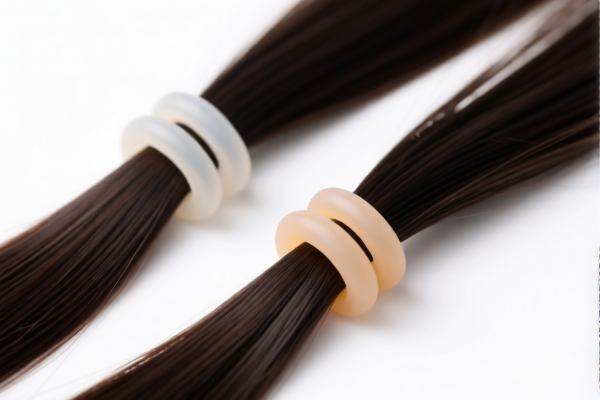
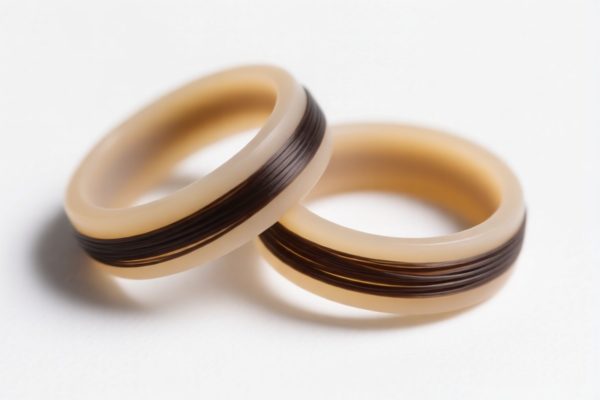
Nano Silicone Hair Extension Rings are small, circular accessories used in hair styling (specifically Nano Ring extensions). They are made from silicone or silicone-based materials and are used to clamp hair extensions to natural hair without heat or glue.
In international trade, these items are classified under Chapter 39 (Plastics and Articles Thereof). Specifically, they fall under Heading 3926, which covers "Other articles of plastics and articles of other materials of headings 3901 to 3914."
⚠️ Key Distinction:
- If these rings are temporary hair accessories (like clips or elastic bands made of rubber/silicone for general use), they might fall under different categories. However, Nano Rings are specifically designed as plastic/plastic-like components for hair extension systems.
- They are not strung and not set into jewelry in the traditional sense.
- Therefore, they are classified as "Other articles of plastics" because they are small, manufactured plastic items not specified elsewhere.
📦 II. HS Code Classification Details (2024-2025 Latest Tariff Authority Comparison)
Based on the provided data, there are two potential HS Codes for these items. The choice depends on whether customs authorities view them as a specific "bead/spangle" article or a general "other plastic article."
| HS Code | Product Description | Applicable Scenario | Tax Rate (Total) |
|---|---|---|---|
3926.90.35.00 |
Beads, bugles, and spangles, not strung (except temporarily) and not set; articles thereof | Specifically viewed as "Beads" or small decorative/clamping components. Often used if the product is marketed as "Hair Beads" or "Nano Beads." | 14.0% |
3926.90.99.89 |
Other articles of plastics | Viewed as general plastic accessories for hair extension systems. If not strictly classified as "beads/spangles" due to shape or function, this is the "catch-all" category. | 12.8% |
🔍 Critical Note:
-3926.90.35.00is more specific to "Beads/Spangles." If your product is round, small, and used for decoration/clamping, customs may favor this code.
-3926.90.99.89is the "Other" category. It has a lower tariff (12.8%) compared to3926.90.35.00(14.0%).
- Recommendation: If the rings are purely functional (silicone clamps) and not decorative, argue for3926.90.99.89to save 1.2% in tariffs. However, if they are shiny, colorful, or marketed as "decorative beads,"3926.90.35.00is safer to avoid reclassification disputes.
💰 III. 2024-2025 Latest Tariff Rate Breakdown (Detailed Explanation)
✅ Applicable Country: United States (US)
✅ Country of Origin: China (CN)
✅ Effective Time: Current (2024-2025)
🎯 1. HS Code 3926.90.35.00 – Beads, Bugles, and Spangles
| Item | Content |
|---|---|
| Base Tariff | 6.5% (Standard MFN Rate) |
| Additional Tariff (Section 301) | +7.5% (List 4A Tariffs) |
| Total Tax Rate | 14.0% |
| Tax Calculation | CIF Value × 14.0% |
| De Minimis Exemption | ❌ Not Eligible (Section 301 tariffs do not apply to de minimis thresholds for China-origin goods in many contexts, but generally, high-value shipments are taxed). Note: For shipments under $800, de minimis may still apply depending on current enforcement, but 301 tariffs are a risk. |
| Legal Basis Path | HTSUS: 3926.90.35.00 → USITC: Section 301 List 4A |
📌 Explanation:
- The 6.5% base rate applies to "Beads, bugles, and spangles."
- The 7.5% additional tariff is part of the ongoing Section 301 tariffs on Chinese goods.
- Total: 14.0%. This is a moderate-to-high tariff for small accessories.
🎯 2. HS Code 3926.90.99.89 – Other Plastic Articles
| Item | Content |
|---|---|
| Base Tariff | 5.3% (Standard MFN Rate) |
| Additional Tariff (Section 301) | +7.5% (List 4A Tariffs) |
| Total Tax Rate | 12.8% |
| Tax Calculation | CIF Value × 12.8% |
| De Minimis Exemption | ❌ Not Eligible (Same as above) |
| Legal Basis Path | HTSUS: 3926.90.99.89 → USITC: Section 301 List 4A |
📌 Explanation:
- The 5.3% base rate is lower than the bead category.
- The 7.5% additional tariff still applies.
- Total: 12.8%. This is 1.2% lower than the bead category.
- Strategic Advantage: If you can justify that these are "functional plastic articles" rather than "decorative beads," you save money.
🛠️ IV. Customs Clearance Practical Advice (Real-World Pitfall Guide)
✅ 1. Required Documentation Checklist
| Document | Mandatory? | Description |
|---|---|---|
| ✅ Commercial Invoice | ✔️ | Must clearly state: "Nano Silicone Hair Extension Rings, 3mm, Dark Brown, 200pcs per pack." |
| ✅ Packing List | ✔️ | Detail weight, dimensions, and number of packs. |
| ✅ Product Specifications | ✔️ | Include material composition (e.g., "100% Silicone" or "Plastic/Silicone Blend"). |
| ✅ Photos | ✔️ | Show the product shape (ring), size (3mm), and color. |
| ✅ Labeling | ✔️ | Labels must match invoice descriptions. Avoid vague terms like "Hair Accessories." Use specific terms like "Nano Rings." |
✅ 2. Classification Strategy (Key Tips)
🔥 "Function Over Form: Choose 'Other' to Save 1.2%"
| Scenario | Recommended HS Code | Reason |
|---|---|---|
| Product is round, shiny, and marketed as "Beads" | 3926.90.35.00 |
Matches "Beads/Spangles" definition. Safer if customs inspectors classify them as decorative. |
| Product is matte, functional, and part of a system | 3926.90.99.89 |
Argue as "Other Plastic Articles." Lower tariff (12.8%). |
| Mixed Shipment (Hair Extensions + Rings) | Separate Codes | Do not mix! Hair extensions may be under 6505 or 9603. Rings are 3926. Misclassification leads to delays. |
📌 Critical Tip:
- If you declare them as "Hair Clips" or "Hair Ties," you risk misclassification.
- Nano Rings are distinct from elastic hair ties. They are plastic components.
- Best Practice: Use "Silicone Nano Hair Extension Rings" in your invoice description. This bridges the gap between "Plastic" and "Functional Accessory."
✅ 3. Special Cases & Mitigation
| Case | Advice |
|---|---|
| De Minimis ($800) | If the total value is under $800, you may avoid Section 301 tariffs (7.5%) under Section 321 de minimis rules. However, this is subject to change. Currently, Section 301 tariffs may still apply to China-origin goods under de minimis. Consult a customs broker. |
| Material Composition | If the rings are 100% Silicone, argue for "Articles of Plastics" (Chapter 39) because silicone is often treated as plastic in HS classifications. If they are metal rings with silicone coating, they may fall under Chapter 73 (Iron/Steel), which has different tariffs. Ensure your invoice says "Silicone/Rubber" not "Metal." |
| Country of Origin | If sourced from Vietnam or Thailand, the 7.5% Section 301 tariff may not apply. Check for FTZ (Free Trade Zone) benefits. Chinese origin is subject to full tariffs. |
🌍 V. Global Market Comparison (2024-2025)
| Country/Region | Recommended HS Code | Tariff (China Origin) | Notes |
|---|---|---|---|
| 🇺🇸 USA | 3926.90.99.89 |
12.8% | Best rate. Avoid 3926.90.35.00 unless necessary. |
| 🇺🇸 USA | 3926.90.35.00 |
14.0% | Higher rate. Use if classified as "Beads." |
| 🇨🇳 China | 3926.90.99.89 |
5.3% (Import) | No additional tariffs. |
| 🇪🇺 EU | 3926.90.97 |
4.7% | No Section 301 equivalent. Lower global tariffs. |
| 🇬🇧 UK | 3926.90.99 |
4.0% | Post-Brexit tariffs. |
📌 Conclusion:
- USA is the most expensive market due to Section 301 tariffs.
- EU/UK have lower tariffs but require CE/UKCA compliance.
- For US shipments, optimize for3926.90.99.89to save 1.2%.
📌 VI. Common Mistakes & Pitfalls (Blood & Tears Lessons)
❌ Mistake 1: Declaring as "Hair Ties" or "Elastic Bands"
👉 Consequence: Misclassification. Elastic bands are often under Chapter 39 but different subheadings. If deemed incorrect, penalties apply.
❌ Mistake 2: Not specifying "Silicone" or "Plastic"
👉 Consequence: Customs may classify under Chapter 65 (Headwear) or Chapter 96 (Miscellaneous Manufactured Articles), leading to higher tariffs or delays.
❌ Mistake 3: Ignoring Section 301 Tariffs
👉 Consequence: Surprise tax bills. Always factor in 7.5% for China-origin goods to the US.
❌ Mistake 4: Mixing "Nano Rings" with "Hair Extensions" in one HS Code
👉 Consequence: Hair extensions are fiber/hair (Chapter 65 or 96), while rings are plastic (Chapter 39). Mixing them causes clearance failure.
✅ Correct Practice:
Invoice Description:
"Nano Silicone Hair Extension Rings, 3mm, Dark Brown, 200pcs, Made of Silicone (Plastic-like Material), for Hair Extension Systems."
HS Code:3926.90.99.89
Country of Origin: China
🎯 VII. Conclusion: Professional Classification Saves Money!
🎯 Key Takeaways:
🔹 "Silicone = Plastic in HS Code"
🔹 "Nano Rings = Plastic Article (3926.90.99.89) → 12.8% Tax"
🔹 "Beads = 3926.90.35.00 → 14.0% Tax"
🔹 "Save 1.2% by choosing 'Other' if functional"
📌 Pro Tip:
If you are importing large volumes, consider Advance Ruling (Ruling Letter) from CBP (US Customs) to lock in the 12.8% rate. This provides legal certainty and avoids post-import audits.
📣 Immediate Action:
📞 Contact a Customs Broker: Provide product photos and invoice drafts.
📝 Use Precise Language: "Silicone Nano Rings" not "Hair Accessories."
🚀 Optimize for Clearance: Choose3926.90.99.89to minimize costs.
✨ Professional Clearance Starts with Precise Classification!
💼 Every Percent Saved is Pure Profit!
Customer Reviews
About HS Code Classification
The Harmonized System (HS) is an internationally standardized nomenclature developed by the World Customs Organization (WCO) to classify traded products. Over 200 countries use the HS system as the basis for customs tariffs, trade statistics, and import/export regulations.
Each HS code follows a hierarchical structure:
- Chapter (2 digits) — Broad category of goods (e.g., Chapter 84: Machinery and Mechanical Appliances)
- Heading (4 digits) — More specific grouping within the chapter
- Subheading (6 digits) — Internationally standardized breakdown, used by all WCO member countries
- National subdivisions (8-10 digits) — Country-specific extensions for further classification, such as US HTSUS 10-digit codes
Correct HS code classification is essential for smooth customs clearance, accurate duty payment, and compliance with trade regulations. Misclassification can lead to customs delays, overpayment of duties, or penalties.
When importing from CN to US, the applicable tariff rates may include:
- Most-Favored-Nation (MFN) rate — The standard duty rate applied to WTO members
- General rate — Applied to countries without trade agreements
- Trade remedy duties — Additional tariffs such as Section 301 (anti-dumping), Section 232 (national security), or countervailing duties
The information provided on this page is for reference purposes only. For official classification, please consult with your local customs authority or a licensed customs broker.