24 color telescopic clothes drying rack
CN → US| HS Code | Tariff Rate | Origin | Destination | Doc |
|---|---|---|---|---|
| 3926907000 | 22.8% | CN | US | Official Doc |
| 9403200090 | 85.0% | CN | US | Official Doc |
| 7326908688 | 87.9% | CN | US | Official Doc |
| 3926909989 | 22.8% | CN | US | Official Doc |
Product Images

AI Analysis
🧺 24-Color Telescopic Clothes Drying Rack (Multi-Color Expandable Drying Rack)
🌐 HS Code Reference & Clearance Guide | 2026 Latest Tariff Analysis | Strategic通关 Strategy
📌 I. Product Definition & Classification: What Exactly is a "24-Color Telescopic Drying Rack"?
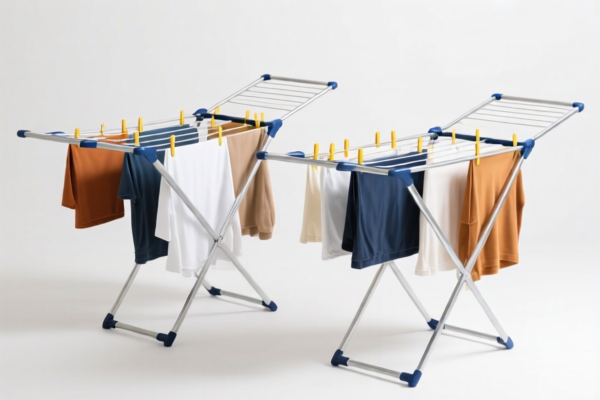
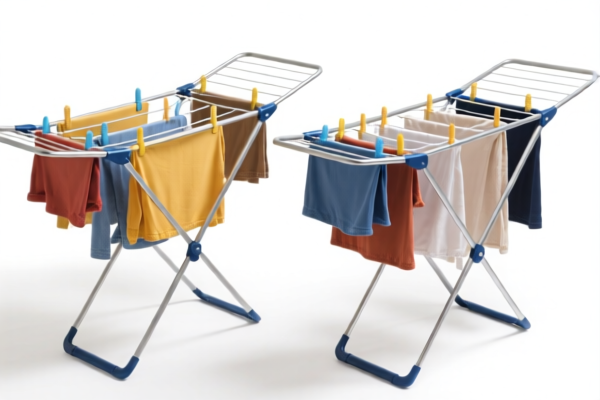
A 24-Color Telescopic Clothes Drying Rack is a household appliance designed for air-drying laundry. Its defining features include: * Telescopic Design: Extends in length or height to accommodate various spaces. * Multi-Color/24-Color: Features a design with 24 distinct colors (often plastic tubes or coated metals), or potentially a rack with 24 individual hanging points (though "24-color" usually implies aesthetics). * Material: Can be All-Metal (Steel/Iron), All-Plastic, or Composite (Metal frame with plastic accessories). * Function: Folding, extendable, and suitable for indoor or balcony use.
⚠️ Critical Classification Distinction:
The HS Code depends entirely on the primary material composition and functionality: * If the structure is primarily Iron/Steel → 7326.90.86.88 (High Tax). * If the structure is a finished Appliance/Consumable (Metal/Plastic) → 9403.20.00.90 (Very High Tax due to "122 Clause"). * If the structure is primarily Plastic → 3926.90.70.00 (Low Tax). * If it is a Mixed Material (non-specific) → 3926.90.99.89 (Low Tax).
📦 II. HS Code Classification Details (2026 Tariff Authority)
Based on your input data, here is the exact breakdown for the "24-Color Telescopic Clothes Drying Rack":
| HS Code | Product Summary | Material Composition | Total Tax Rate |
|---|---|---|---|
7326.90.86.88 |
Metal Products (Iron/Steel) Telescopic Rack | Iron or Steel (Primary Structure) | 87.9% |
9403.20.00.90 |
Finished Consumer Goods Drying Rack | Metal or Plastic (Finished Appliance Form) | 85.0% |
3926.90.70.00 |
Plastic Drying Rack | Primarily Plastic (Similar to clothespins) | 22.8% |
3926.90.99.89 |
Plastic/Metal Composite Home Rack | Non-Specific Composite (Mixed Materials) | 22.8% |
🔍 Key Insight:
Metal/Rigid Frames (7326&9403) face ~85-88% taxes due to aggressive US Section 301 and "122 Clause" penalties. * Plastic/Composite (3926) faces only ~22.8% due to lower base rates and reduced附加 tax (only 7.5% Section 301). * "24-Color" is a marketing term; customs will look at the structural material*, not the color count.
💰 III. 2026 Tariff Breakdown & "122 Clause" Deep Dive
✅ Applicable Market: USA (US)
✅ Origin: China (CN)
✅ Effective Date: 2025/2026 Regulations (Section 301 & "122 Clause")
🎯 1. 7326.90.86.88 – Iron/Steel Telescopic Rack (High Risk)
| Item | Detail |
|---|---|
| Base Tariff | 2.9% |
| Section 301 "Additional" | 25.0% (Standard China Penalty) |
| "122 Clause" (Steel/Aluminum/Copper) | 50.0% (Critical: Iron/Steel falls here) |
| Total Tax | 87.9% |
| Calculation | CIF Value × 87.9% |
| De Minimis Exemption | ❌ NO (Deny) |
| Legal Basis | IEEPA:9903.01.25 + 122 Clause: Steel Products |
📌 Explanation:
This code triggers the "122 Clause" (often associated with Section 232 or specific steel/aluminum tariffs). Even if it's a household item, if it's made of Iron or Steel, the US adds a punitive 50% tariff on top of the 25% Section 301. This is the most expensive classification.
🎯 2. 9403.20.00.90 – Finished Consumer Metal/Plastic Rack (High Risk)
| Item | Detail |
|---|---|
| Base Tariff | 0.0% |
| Section 301 "Additional" | 25.0% |
| "122 Clause" (Steel/Aluminum/Copper) | 50.0% (If Metal is the primary structural component) |
| Total Tax | 85.0% |
| Calculation | CIF Value × 85.0% |
| De Minimis Exemption | ❌ NO |
| Legal Basis | IEEPA:9903.01.25 + 122 Clause |
📌 Explanation:
Even if base tariff is 0%, the "122 Clause" applies to the metal content in the finished product. If the rack has a metal frame, this 50% penalty is triggered. Do not use this code for all-metal racks if you want to save money.
🎯 3. 3926.90.70.00 – Plastic Drying Rack (Low Risk)
| Item | Detail |
|---|---|
| Base Tariff | 5.3% |
| Section 301 "Additional" | 7.5% (Reduced for Plastics) |
| "122 Clause" | 10% (Plastic is NOT subject to Steel/Aluminum 122 clause) |
| Total Tax | 22.8% |
| Calculation | CIF Value × 22.8% |
| De Minimis Exemption | ⚠️ Partial (Check de minimis thresholds) |
| Legal Basis | IEEPA:9903.01.25 (Plastic specific) |
📌 Explanation:
Plastic is NOT steel/aluminum/copper. Therefore, the 50% penalty is waived. The "122 Clause" penalty for plastics is only 10%, leading to a drastically lower total tax of 22.8%.
🎯 4. 3926.90.99.89 – Composite Plastic/Metal Rack (Low Risk)
| Item | Detail |
|---|---|
| Base Tariff | 5.3% |
| Section 301 "Additional" | 7.5% |
| "122 Clause" | 10% (Categorized as non-specific/plastic dominant) |
| Total Tax | 22.8% |
| Calculation | CIF Value × 22.8% |
| De Minimis Exemption | ⚠️ Partial |
| Legal Basis | IEEPA:9903.01.25 |
📌 Explanation:
If the rack is a hybrid (e.g., metal rod with plastic clips/coatings), it can sometimes be classified here as "Other Plastic Articles" to avoid the heavy steel penalties. Strategy Tip: If the metal part is minor, argue for plastic classification.
🛠️ IV. Practical Clearance & Customs Strategy (Action Plan)
✅ 1. Material Strategy: The "Plastic Pivot"
| Scenario | Strategy | Result |
|---|---|---|
| Product is 100% Metal | Hard to avoid 85-87% tax. | Accept high cost or find alternate markets. |
| Product is Metal + Plastic | Design to be Plastic-Dominant. Ensure >50% by weight is plastic. | Qualify for 3926.90.70.00 or 3926.90.99.89 (22.8% Tax). |
| Product has 24 Colors | Use Plastic Coated Metal or All-Plastic Tubes. | Avoid "Iron/Steel" classification. |
🚀 Recommendation:
DO NOT classify a metal rack as7326or9403if you can legally classify it as3926. * Cost Savings: Reducing tax from 87.9% to 22.8% saves 65.1% of your tariff cost. * Design Tweak: If the "24 colors" are achieved via plastic sleeves over metal, emphasize the plastic volume in the declaration.
✅ 2. Declaration Documents Checklist (Must-Haves)
| Document | Requirement | Why? |
|---|---|---|
| Product Specs | Weight breakdown (Plastic vs. Metal %). | Critical: To prove eligibility for 3926 (22.8%) instead of 7326 (87.9%). |
| Photos | Clear shots of the "24 colors" (plastic parts). | Prove it is a "plastic article" or "composite". |
| Material Safety | RoHS, REACH (for plastics). | Essential for plastic imports to 3926. |
| Commercial Invoice | Description: "Plastic Telescopic Drying Rack" (Avoid "Steel Rack" if possible). | Prevents automatic steel penalty triggers. |
| Bill of Lading | Packing list showing "Plastic Dominant". | Support the HS Code argument. |
✅ 3. Declaration "Golden Rules"
🔥 Rule: "Plastic First, Metal Second!" * BAD Description: "Steel Telescopic Drying Rack" → Triggers
7326.90.86.88(87.9%). * GOOD Description: "Plastic Composite Telescopic Drying Rack (24-Color)" → Triggers3926.90.70.00(22.8%).Warning: If the metal frame is structural and dominant, Customs will reject the
3926claim and force the7326rate. Ensure the plastic component is the primary feature.
🌍 V. Global Market Comparison (2026)
| Market | Recommended HS Code | Tax Rate | Strategy |
|---|---|---|---|
| 🇺🇸 USA | 3926.90.70.00 (Plastic) |
22.8% | MUST USE PLASTIC CODE. Avoid metal codes. |
| 🇨🇳 China | 3926.90.99 |
~5% | No extra Section 301/122 tax. |
| 🇪🇺 EU | 3926.90 |
~5% | No Section 301. |
| 🇨🇦 Canada | 3926.90 |
~0-5% | No Section 301. |
📌 Conclusion:
The US is the ONLY market where this product faces ~88% tariffs if made of metal. Strategy: For US export, design the "24-Color Telescopic Rack" to be primarily plastic or a composite where plastic is the dominant material. If it is all steel, the product is unprofitable in the US market under current 2026 tariffs.
📌 VI. Common Pitfalls & How to Avoid Them
❌ Pitfall 1: Declaring a metal rack as "Plastic" without evidence.
👉 Consequence: Customs audit, penalty, and forced re-classification to 7326.90.86.88 (87.9%) + fines.
✅ Fix: Provide weight percentages and material composition reports.
❌ Pitfall 2: Using "Clothes Hanger" instead of "Drying Rack".
👉 Consequence: Wrong HS Code (6307 vs 7326/3926), leading to delays.
✅ Fix: Use accurate terminology: "Telescopic Clothes Drying Rack".
❌ Pitfall 3: Ignoring the "122 Clause" for Steel.
👉 Consequence: Missing the 50% penalty in calculations, leading to cash flow crisis.
✅ Fix: Always check if the product contains Steel, Aluminum, or Copper before declaring.
🎯 VII. Final Verdict: The "24-Color" Opportunity
🚀 Strategic Action:
To successfully export a 24-Color Telescopic Clothes Drying Rack to the USA: 1. Prioritize Plastic: Design the rack so the "24 colors" are plastic tubes or plastic coatings that make the item >50% plastic by volume/weight. 2. Declare as3926.90.70.00: Aim for the 22.8% tax rate. 3. Avoid7326&9403: These codes trigger the 85-88% tax trap due to the "122 Clause" on steel/iron. 4. Prepare Proof: Have a Bill of Materials (BOM) ready that proves the plastic content.💡 Remember:
"In the US, a Metal Drying Rack costs you 88% tax. A Plastic one costs 23%. The difference is your profit margin!"
📌 Quick Tip:
If you cannot make the rack 100% plastic, consider a Hybrid Design where the telescopic mechanism is plastic, and the metal is only for internal reinforcement. This allows you to argue for 3926.90.99.89 (22.8%) and save ~65% on taxes.
✨ Smart Clearance, Smart Profit!
💼 Choose the right HS Code, and you choose your profit margin.
Customer Reviews
About HS Code Classification
The Harmonized System (HS) is an internationally standardized nomenclature developed by the World Customs Organization (WCO) to classify traded products. Over 200 countries use the HS system as the basis for customs tariffs, trade statistics, and import/export regulations.
Each HS code follows a hierarchical structure:
- Chapter (2 digits) — Broad category of goods (e.g., Chapter 84: Machinery and Mechanical Appliances)
- Heading (4 digits) — More specific grouping within the chapter
- Subheading (6 digits) — Internationally standardized breakdown, used by all WCO member countries
- National subdivisions (8-10 digits) — Country-specific extensions for further classification, such as US HTSUS 10-digit codes
Correct HS code classification is essential for smooth customs clearance, accurate duty payment, and compliance with trade regulations. Misclassification can lead to customs delays, overpayment of duties, or penalties.
When importing from CN to US, the applicable tariff rates may include:
- Most-Favored-Nation (MFN) rate — The standard duty rate applied to WTO members
- General rate — Applied to countries without trade agreements
- Trade remedy duties — Additional tariffs such as Section 301 (anti-dumping), Section 232 (national security), or countervailing duties
The information provided on this page is for reference purposes only. For official classification, please consult with your local customs authority or a licensed customs broker.