2500 MAH ULTRA THIN POWER BANK WITH BUILT IN CABLE
CN → US| HS Code | Tariff Rate | Origin | Destination | Doc |
|---|---|---|---|---|
| 8504409510 | 35.0% | CN | US | Official Doc |
| 8507808200 | 38.4% | CN | US | Official Doc |
| 8504409520 | 35.0% | CN | US | Official Doc |
Product Images
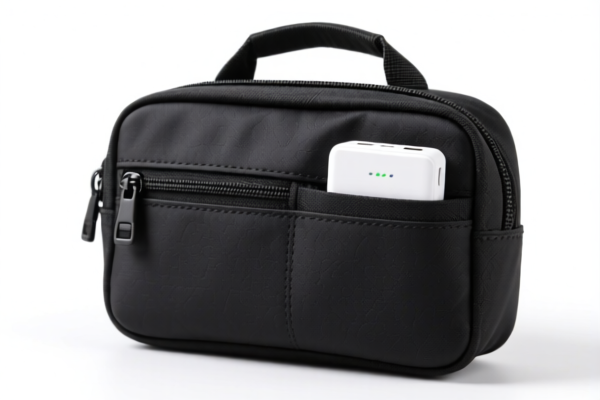
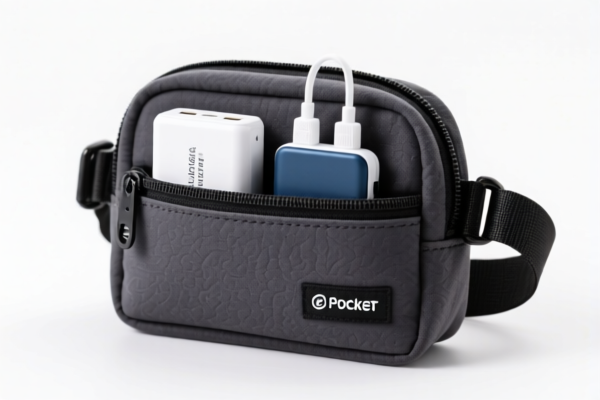
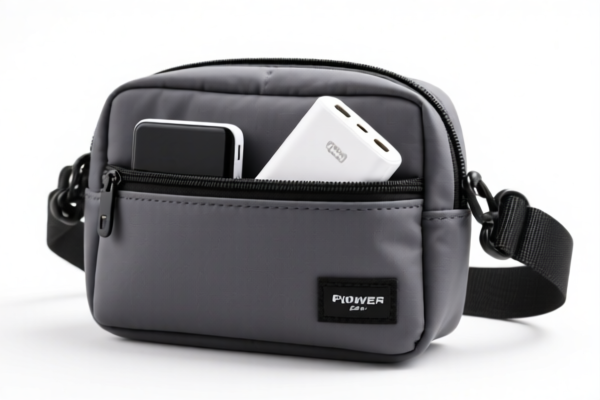
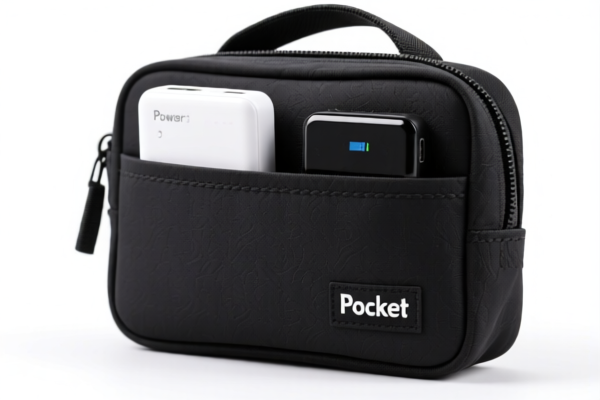
AI Analysis
🔋 Power Bank with Built-in Cable (2500 mAh, Ultra-Thin)
🌐 HS Code Reference & Customs Clearance Guide | 2026 Latest Tariff Analysis | Professional Clearance Strategy
📌 I. Product Definition & Classification: Is it a Converter or a Battery?
This product is a Portable Power Bank featuring a built-in cable and an ultra-thin form factor. With a capacity of 2500 mAh, it falls under the category of portable electronic accessories.
The core challenge in customs classification lies in distinguishing whether the device is classified as a Static Converter (power supply/adapter) or a Battery (energy storage).
⚠️ Key Classification Logic: - If viewed as a Power Converter: It transforms input voltage to output voltage. However, due to its low power output (<50W) and specific form factor, it may fall under specific sub-headings for low-power converters. - If viewed as a Battery: The internal core is a lithium-ion polymer battery. In many jurisdictions, devices where the battery is the primary component for energy storage are classified under battery headings rather than power supply headings.
Given the data provided, we must address both potential classifications and their respective tax implications.
📦 II. HS Code Classification Details (2026 Latest Tariff Authority Reference)
| HS Code | Product Description | Applicability Scenario | Tax Rate |
|---|---|---|---|
8504.40.95.10 |
Static Converter, Power < 50W | Classified as a power conversion device with output far below 50W. Common for small, low-power portable chargers. | 35.0% |
8504.40.95.20 |
Static Converter, Rectifiers/Converters | Classified as a stationary converter device, specifically rectifiers/conversion equipment, inferred power range 50W-150W (Note: This seems inconsistent with "Ultra-Thin 2500mAh" but included in data for potential misclassification or higher-capacity variants). | 35.0% |
8507.80.82.00 |
Other Electric Storage Batteries | Classified based on the core component being the electric battery itself. This is often the most accurate classification for power banks where the battery is the primary value driver. | 38.4% |
🔍 Critical Distinction: -
8504.40.95.xx(Converters): Focuses on the function of converting power. If the customs officer views the built-in cable and circuit board as the main feature, this code applies. -8507.80.82.00(Batteries): Focuses on the component itself. If the declaration emphasizes "Lithium Battery Pack," this code applies. Note the higher tax rate (38.4%) due to the 3.4% base tariff.
💰 III. 2026 Latest Tariff Rate Breakdown (Including Surcharges & Policy Add-ons)
✅ Applicable Country: USA (US) ✅ Origin: China (CN) ✅ Effective Date: From November 10, 2025 (including subsequent imports)
🎯 1. 8504.40.95.10 & 8504.40.95.20 — Static Converters (Power Supply Category)
| Item | Content |
|---|---|
| Base Tariff | 0.0% (ad valorem) |
| Section 301 Surcharge | +25.0% |
| Section 122 IEEPA Surcharge | +10.0% |
| Total Tax Rate | 35.0% |
| Tax Calculation | CIF Value × 35% |
| De Minimis Exemption | ❌ Not Applicable (deny_de_minimis) |
| Legal Basis Path | IEEPA:9903.01.24 → USITC:8504.40.95.xx → FOOTNOTE:122 |
📌 Explanation: - These HS codes are classified under Chapter 85 (Electrical Machinery), specifically Static Converters. - Despite having a 0% base tariff, the 35% total effective rate is driven entirely by trade policy surcharges (Section 301 + Section 122). - Warning: Even though
8504.40.95.20mentions "50W-150W", if your product is definitively <50W,8504.40.95.10is the more precise sub-heading, but both carry the same 35% total tax.
🎯 2. 8507.80.82.00 — Other Electric Storage Batteries
| Item | Content |
|---|---|
| Base Tariff | 3.4% (ad valorem) |
| Section 301 Surcharge | +25.0% |
| Section 122 IEEPA Surcharge | +10.0% |
| Total Tax Rate | 38.4% |
| Tax Calculation | CIF Value × 38.4% |
| De Minimis Exemption | ❌ Not Applicable (deny_de_minimis) |
| Legal Basis Path | IEEPA:9903.01.25 → USITC:8507.80.82.00 → FOOTNOTE:122 |
📌 Note: - This classification treats the power bank as a battery product. - The 3.4% base tariff makes this option 3.4% more expensive than the converter classification. - Use this code only if customs requires you to declare the product primarily as a "Battery" rather than a "Power Supply Device."
🛠️ IV. Customs Clearance Practical Advice (Pitfall Avoidance Guide)
✅ 1. Documentation Checklist (Must-Have)
| Document | Required? | Description |
|---|---|---|
| ✅ Product Specification Sheet | ✔️ | Must clearly state: Capacity (2500 mAh), Output Power (<50W), Input/Output Ports, Built-in Cable type. |
| ✅ Internal Structure Diagram | ✔️ | To prove whether the device is primarily a "converter circuit" or a "battery cell." |
| ✅ UL Certification | ✔️ | Since the product name includes "UL," provide the UL report number for safety compliance. |
| ✅ Commercial Invoice | ✔️ | Description: "2500mAh Ultra-Thin Power Bank with Built-in Cable, Lithium Ion Battery." |
| ✅ Packing List | ✔️ | Separate list of main unit and any accessories (if any). |
✅ 2. Declaration Strategy (Key Mantra)
🔥 "Power < 50W? Declare as Converter (8504). Battery Core? Declare as Battery (8507). Always specify 'Lithium Ion'!"
| Scenario | Recommended HS Code | Risk Level |
|---|---|---|
| Standard Power Bank (<50W) | 8504.40.95.10 |
✅ Lower Tax (35%) |
| Misclassified as Converter (>50W) | 8504.40.95.20 |
⚠️ Same Tax (35%) but Higher Risk of Inspection |
| Declared Strictly as Battery | 8507.80.82.00 |
⚠️ Higher Tax (38.4%) |
| De Minimis Shipment (Under $800) | ❌ Not Eligible | 🚫 All shipments subject to 35%-38.4% tax |
✅ 3. Special Considerations for "Built-in Cable" Products
| Situation | Handling Advice |
|---|---|
| Cable Integrated | Do not declare the cable separately. It is part of the power bank assembly. |
| Lithium Battery Warning | Must label package with UN3481 (Lithium Ion Battery) and handle according to IATA/IMDG regulations for dangerous goods (even if small capacity). |
| UL Marking | Ensure the UL mark on the product matches the certification document. Customs may verify the authenticity. |
| "Ultra-Thin" Description | This is a marketing term. In customs data, use "Slim Form Factor" or simply "Portable Power Bank" to avoid ambiguity. |
🌍 V. Global Market Comparison (2026 Latest)
| Country/Region | Recommended HS Code | Est. Tax Rate | Certification Req. | Note |
|---|---|---|---|---|
| 🇺🇸 USA | 8504.40.95.10 |
35.0% | UL + FCC | High duty due to Section 301 & 122. |
| 🇨🇳 China | 8504.40.95.10 |
~10-13% | CCC | No Section 301. |
| 🇪🇺 EU | 8507.60.00.00 |
0% | CE + RoHS + UN38.3 | Batteries often 0% duty if correct classification. |
| 🇬🇧 UK | 8507.60.00.00 |
0% | UKCA + UN38.3 | Post-Brexit rules apply. |
📌 Conclusion for US Market: - The 35% tariff is a significant cost factor. -
8504.40.95.10is the most cost-effective classification for <50W power banks. - Do not rely on De Minimis ($800 exemption); it is explicitly denied for these HS codes from China.
📌 VI. Common Errors & Pitfall Guide (Blood & Tears Lessons)
❌ Error 1: Declaring as "USB Cable" or "Adapter" without mentioning Battery 👉 Consequence: Customs will inspect and reclassify, leading to delays and potential penalties.
❌ Error 2: Misidentifying Power Output
👉 Consequence: If declared as >50W (8504.40.95.20) but actual is <50W, it triggers a compliance audit. Stick to 8504.40.95.10.
❌ Error 3: Ignoring UN38.3 & MSDS 👉 Consequence: Carrier rejection or customs seizure due to dangerous goods violation. Must provide UN38.3 test summary and MSDS.
❌ Error 4: Assuming De Minimis Applies 👉 Consequence: Package held at border, additional 35-38.4% tax + storage fees.
✅ Correct Approach:
"2500mAh Lithium Ion Portable Power Bank, Built-in Cable, UL Certified, Output <50W. HS: 8504.40.95.10. UN3481."
🎯 VII. Conclusion: Professional Declaration, Cost Efficiency & Compliance
🎯 Remember the Mantra:
🔹 "Low Power? Use 8504.95.10 (35%). High Base? Avoid 8507 (38.4%)." 🔹 "No De Minimis for China-Born Power Banks. Plan for 35% Tax." 🔹 "UL + UN38.3 + MSDS are non-negotiable for smooth clearance."
📌 Pro Tip:
If your power bank is assembled in Vietnam, Malaysia, or Mexico, you may qualify for IEEPA Exemptions, reducing the tax to 0-5%. For US-bound shipments, consider Applying for a Pre-Ruling to lock in the
8504.40.95.10classification and avoid disputes.
📣 Immediate Action Required:
📞 Contact your freight forwarder with UN38.3, MSDS, and UL Report. 🚀 Ensure your commercial invoice clearly states "HS Code: 8504.40.95.10" and "Country of Origin: China". 💼 Accurate classification saves thousands. Don't guess!
✨ Professional Clearance Starts with Precise Classification! 💼 Every percentage point counts in international trade!
Customer Reviews
About HS Code Classification
The Harmonized System (HS) is an internationally standardized nomenclature developed by the World Customs Organization (WCO) to classify traded products. Over 200 countries use the HS system as the basis for customs tariffs, trade statistics, and import/export regulations.
Each HS code follows a hierarchical structure:
- Chapter (2 digits) — Broad category of goods (e.g., Chapter 84: Machinery and Mechanical Appliances)
- Heading (4 digits) — More specific grouping within the chapter
- Subheading (6 digits) — Internationally standardized breakdown, used by all WCO member countries
- National subdivisions (8-10 digits) — Country-specific extensions for further classification, such as US HTSUS 10-digit codes
Correct HS code classification is essential for smooth customs clearance, accurate duty payment, and compliance with trade regulations. Misclassification can lead to customs delays, overpayment of duties, or penalties.
When importing from CN to US, the applicable tariff rates may include:
- Most-Favored-Nation (MFN) rate — The standard duty rate applied to WTO members
- General rate — Applied to countries without trade agreements
- Trade remedy duties — Additional tariffs such as Section 301 (anti-dumping), Section 232 (national security), or countervailing duties
The information provided on this page is for reference purposes only. For official classification, please consult with your local customs authority or a licensed customs broker.