2500mAh Ultra thin Built in Cable Power Bank
CN → US| HS Code | Tariff Rate | Origin | Destination | Doc |
|---|---|---|---|---|
| 8504409520 | 35.0% | CN | US | Official Doc |
| 8507808200 | 38.4% | CN | US | Official Doc |
| 8504409510 | 35.0% | CN | US | Official Doc |
Product Images
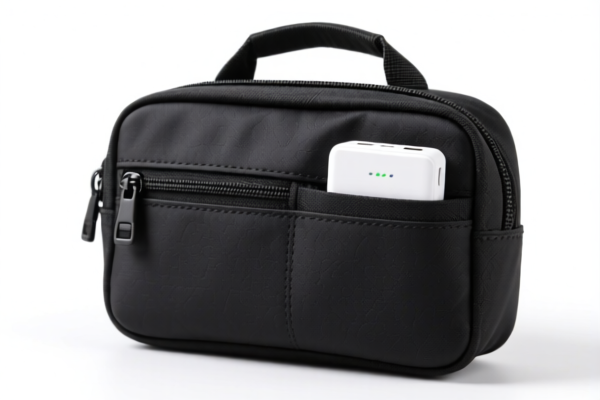
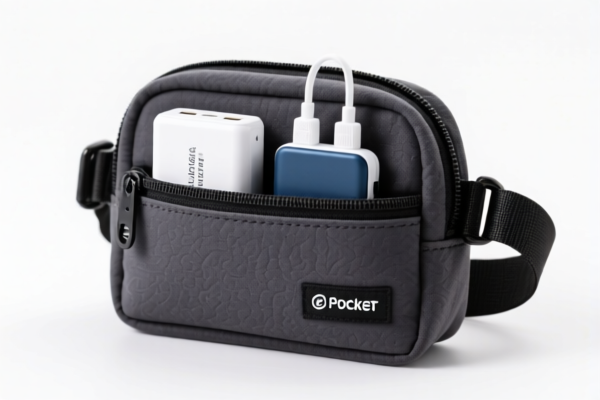
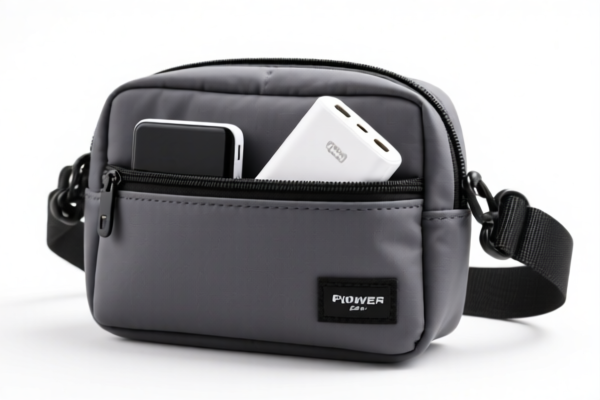
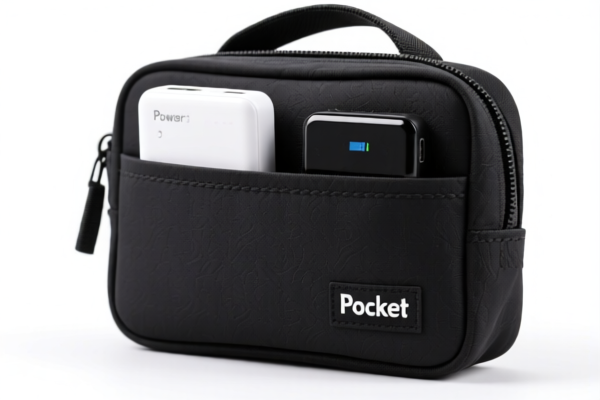
AI Analysis
🔋 2500mAh Ultra-Thin Built-in Cable Power Bank (Power Bank with Cable)
🌐 HS Code Reference & Customs Clearance Guide | 2026 Latest Tariff Analysis | Professional-Level Clearance Strategy
📌 1. Product Definition & Classification: What Exactly Is a "Power Bank with Built-in Cable"?
A Power Bank with Built-in Cable is a portable rechargeable battery device (Lithium-ion/Polymer) that integrates a charging cable directly into its housing, eliminating the need for a separate external cable for certain devices.
In international trade, it is categorized based on its function and component nature: * Is it a Converter? No. It does not convert AC to DC in a stationary manner; it stores DC energy. * Is it a Battery? Yes. Its core function is energy storage via lithium cells. * Is it a Separate Accessory? No. The cable is "built-in," making it an integral part of the battery unit, not a standalone cable (which would fall under different headings).
⚠️ Key Distinction:
- If the device is primarily defined by its battery capacity and chemical composition (Li-ion/Polymer), it falls under Chapter 85, Heading 8507 (Electric Accumulators).
- If it were a simple AC-to-DC adapter without storage, it would be 8504.
- Crucial Note: Many traders mistakenly classify power banks under 8504.40.95 (Static Converters). However, US Customs and Border Protection (CBP) and international standards typically classify standalone lithium battery power banks under 8507.80 (Other electric accumulators) because the primary function is energy storage, not conversion.
📦 2. HS Code Classification Details (2026 Latest Tariff Authority Comparison)
Based on the provided <DATA>, here are the three possible HS Codes and why they are relevant (or less relevant) for this specific product:
| HS Code | Product Description (from DATA) | Why it Fits (or Doesn't) for "Built-in Cable Power Bank" |
|---|---|---|
8507.80.82.00 |
Electric Accumulator (Lithium Battery) Core: Lithium battery, fits "Other Accumulators". |
✅ BEST FIT. A 2500mAh power bank is fundamentally a Lithium-ion/Polymer battery. The "built-in cable" is an accessory/function, but the core commodity is the battery. This code captures the essence of the product as an energy storage device. |
8504.40.95.10 |
Portable Power Supply (Output < 50W) Static converter, low power output. |
⚠️ ALTERNATIVE (Riskier). Some importers argue that because the power bank outputs power (acts as a converter from stored DC to output DC), it fits here. However, this code is typically for converters/adapters, not pure battery storage. If the device only has battery cells and no AC input circuitry, this is often considered incorrect by strict customs auditors, leading to disputes. |
8504.40.95.20 |
Static Converter (50W-150W) Rectifier/Conversion equipment. |
❌ INCORRECT. Your power bank is 2500mAh (very low capacity/power). It does not fall into the 50W-150W range. This code is for higher-power converters (e.g., industrial chargers, larger UPS units). |
🔍 Critical Analysis:
-8507.80.82.00is the most accurate classification for a lithium-based power bank because it identifies the chemical nature (Li-ion/Polymer) and the function (Accumulator).
-8504.40.95.10is a common misclassification used to exploit lower base tariffs, but it carries a high risk of audit if the product lacks AC conversion components.
-8504.40.95.20is not applicable due to power output constraints.
💰 3. 2026 Latest Tariff Rate Breakdown (Including Surcharges & Policy Add-ons)
✅ Applicable Country: United States (US)
✅ Origin: China (CN)
✅ Effective Date: November 10, 2025 (for subsequent imports)
🎯 1. 8507.80.82.00 —— Lithium Ion/Polymer Battery Power Bank (Recommended)
| Item | Content |
|---|---|
| Base Tariff | 3.4% (Ad valorem) |
| USITC Surcharge (301) | +25% (From USITC Footnote 9903.88.01) |
| IEEPA Surcharge | +10% (For China/HK products, effective Nov 10, 2025) |
| Total Effective Rate | 38.4% |
| Tax Calculation | CIF Value × 38.4% |
| De Minimis Eligibility | ❌ NO (Denied. High-value or surcharged items are excluded) |
| Legal Basis Path | IEEPA:9903.01.25 → IEEPA:9903.01.24 → USITC:8507.80.82.00 → FOOTNOTE:9903.88.01 |
📌 Explanation:
- 3.4% is the standard MFN (Most Favored Nation) duty for lithium batteries.
- +25% is the Section 301 tariff on Chinese goods.
- +10% is the new IEEPA surcharge on Chinese electronics/batteries.
- Total: 38.4%. This is the standard, compliant rate for lithium power banks.
🎯 2. 8504.40.95.10 —— Portable Power Supply (Low Power, <50W) (Common but Risky)
| Item | Content |
|---|---|
| Base Tariff | 0.0% (Ad valorem) |
| USITC Surcharge (301) | +25% (From USITC Footnote 9903.88.01) |
| IEEPA Surcharge | +10% (For China/HK products) |
| Total Effective Rate | 35.0% |
| Tax Calculation | CIF Value × 35.0% |
| De Minimis Eligibility | ❌ NO |
| Legal Basis Path | IEEPA:9901.25 → IEEPA:9903.01.24 → USITC:8504.40.95.10 → FOOTNOTE:9903.88.01 |
📌 Explanation:
- 0% base tariff makes this attractive, but it is only valid if the product is legally classified as a "converter."
- If CBP determines it is a battery (8507), you will owe the difference: 38.4% - 35.0% = 3.4% back-tariffs, plus penalties and interest.
- Risk Level: High. Only use if you can prove the device’s primary function is conversion (e.g., includes AC input circuitry) rather than just storage.
🎯 3. 8504.40.95.20 —— Static Converter (50W-150W) (Incorrect for this Product)
| Item | Content |
|---|---|
| Base Tariff | 0.0% |
| USITC Surcharge (301) | +25% |
| IEEPA Surcharge | +10% |
| Total Effective Rate | 35.0% |
| Tax Calculation | CIF Value × 35.0% |
| De Minimis Eligibility | ❌ NO |
| Legal Basis Path | IEEPA:9903.01.25 → IEEPA:9903.01.24 → USITC:8504.40.95.20 → FOOTNOTE:9903.88.01 |
📌 Warning:
- This HS code is for devices with 50W-150W power.
- A 2500mAh power bank has a max output of typically 5V/2A (10W) or 5V/3A (15W).
- Misclassification Penalty: Using this code for a 10W device is clearly wrong and will likely result in an immediate audit, seizure, or heavy fines. Do not use.
🛠️ 4. Customs Clearance Practical Advice (Real-World Pitfall Avoidance)
✅ 1. Required Documentation Checklist (Non-Negotiable)
| Document | Required? | Notes |
|---|---|---|
| ✅ Product Specifications | ✔️ | Must clearly state: Battery Type (Li-ion/Polymer), Capacity (2500mAh), Max Output (e.g., 5V/2A), Cable Type (Built-in Lightning/USB-C). |
| ✅ Battery Test Report | ✔️ | UN38.3 and MSDS are mandatory for lithium batteries. Without these, the cargo will be rejected. |
| ✅ Internal Circuit Diagram | ✔️ | To prove whether it’s a converter (8504) or accumulator (8507). If it only has battery cells + DC-DC buck/boost, it’s still often classified as a battery, but the diagram helps. |
| ✅ Commercial Invoice | ✔️ | Must specify: "Portable Lithium Ion Power Bank, 2500mAh, with Built-in Cable, Model XYZ." Avoid vague terms like "Charger." |
| ✅ Packing List | ✔️ | Show item count, gross weight, net weight. |
| ✅ Certifications | ✔️ | FCC (for electronic emissions), CE, RoHS. |
✅ 2. Declaration Tips (Key Mnemonics)
🔥 "Battery Core, Cable Attached, 8507 is Safe, 8504 is Risky!"
| Scenario | Correct Declaration | Incorrect Practice |
|---|---|---|
| Standard 2500mAh Li-ion Power Bank | 8507.80.82.00 |
8504.40.95.10 (Risk of audit) |
| Power Bank with AC Adapter Function | 8504.40.95.10 (If AC input exists) |
8507.80.82.00 (May be overly conservative) |
| Product Description | "Lithium Battery Power Bank, 2500mAh, with Built-in Cable" | "Power Converter" or "AC Adapter" |
📌 Key Insight:
- Built-in cable does not change the HS Code. It is considered an accessory. The core is still the battery.
- 2500mAh is small. Do not try to classify it under high-power converter codes.
✅ 3. Special Cases Handling
| Case | Handling Advice |
|---|---|
| OEM Custom Design | Provide OEM agreement + design specs. Prove it’s a battery, not a generic converter. |
| Mixed Packaging (Power Bank + External Cable) | Declare as one unit. Do not split. The cable is minor. |
| Pre-charged vs. Non-Charged | Lithium batteries must be non-charged (or at <30% capacity) for air freight. Sea freight allows charged. Ensure UN38.3 compliance. |
| High-Value Claims | If value exceeds $800, de minimis doesn’t apply. Ensure all taxes are pre-calculated. |
🌍 5. Global Market Comparison (2026 Latest)
| Country/Region | Recommended HS Code | Tariff Rate (China Origin) | Certification Required | Notes |
|---|---|---|---|---|
| 🇺🇸 USA | 8507.80.82.00 |
38.4% (3.4% + 25% + 10%) | FCC + UN38.3 + MSDS | High tariff due to 301 + IEEPA. |
| 🇨🇳 China | 8507.80.82.00 |
0% (Imported from Vietnam/etc.) / 13% (VAT) | CCC (if applicable) | Domestic production may have different rates. |
| 🇪🇺 EU | 8507.60.00.00 |
0% | CE + RoHS + Battery Directive | No 301/IEEPA surcharges. |
| 🇬🇧 UK | 8507.60.00.00 |
0% | UKCA + CE | Post-Brexit rules apply. |
| 🇯🇵 Japan | 8507.60.00.00 |
0% | PSE (Battery) | No surcharges. |
📌 Conclusion:
- USA is the only major market with high surcharges (38.4% total).
- EU/UK/JP have 0% duty but strict safety/environmental certifications (CE, PSE).
- Strategy for USA: Consider tariff engineering (e.g., assembling in Vietnam/Mexico) if volume is high, to avoid 301/IEEPA tariffs.
📌 6. Common Errors & Pitfall Guide (Lessons from Blood & Tears)
❌ Error 1: Classifying as 8504.40.95.20 (50W-150W)
👉 Consequence: CBP rejects because output is only ~10W. Fines + Delay.
❌ Error 2: Using 8504.40.95.10 without AC input circuitry
👉 Consequence: CBP audits, finds it’s a pure battery, reclassifies to 8507.80.82.00. Back-tariff + Interest.
❌ Error 3: Missing UN38.3/MSDS
👉 Consequence: Cargo held at port. No lithium battery document = No clearance.
❌ Error 4: Vague description: "Charger"
👉 Consequence: CBP may classify as "AC Adapter" (8504) or "Battery" (8507) arbitrarily. Uncertainty = Risk.
✅ Correct Declaration Example:
"Portable Lithium Polymer Power Bank, 2500mAh, 5V/2A Output, with Built-in USB-C/Lightning Cable, Model XYZ, FCC Certified, UN38.3 Compliant."
🎯 7. Conclusion: Professional Clearance, Save Money, Avoid Delays!
🎯 Remember the Mnemonic:
🔹 "Battery Core, Cable Attached, 8507 is Safe, 8504 is Risky!"
🔹 "2500mAh is Small, Don’t Use 50W Code!"
🔹 "38.4% is the USA Truth for Lithium Batteries!"
📌 Pro Tip:
If your power bank is assembled in Vietnam, Mexico, or Thailand, you may qualify for IEEPA Exemption or lower 301 rates.
Recommendation:
1. Apply for an Advance Ruling from CBP if your shipment value is high.
2. Ensure UN38.3 and MSDS are always on file.
3. Label clearly: "Lithium Ion Battery," "Do Not Air Freight if Charged >30%" (for air).
📣 Immediate Action:
📞 Contact a licensed customs broker + Provide Circuit Diagram + UN38.3 Report
🚀 Let your power bank clear customs smoothly, avoid delays, and protect your profit margins!
✨ Professional clearance starts with accurate classification!
💼 Every cent of cost is worth calculating precisely!
Customer Reviews
About HS Code Classification
The Harmonized System (HS) is an internationally standardized nomenclature developed by the World Customs Organization (WCO) to classify traded products. Over 200 countries use the HS system as the basis for customs tariffs, trade statistics, and import/export regulations.
Each HS code follows a hierarchical structure:
- Chapter (2 digits) — Broad category of goods (e.g., Chapter 84: Machinery and Mechanical Appliances)
- Heading (4 digits) — More specific grouping within the chapter
- Subheading (6 digits) — Internationally standardized breakdown, used by all WCO member countries
- National subdivisions (8-10 digits) — Country-specific extensions for further classification, such as US HTSUS 10-digit codes
Correct HS code classification is essential for smooth customs clearance, accurate duty payment, and compliance with trade regulations. Misclassification can lead to customs delays, overpayment of duties, or penalties.
When importing from CN to US, the applicable tariff rates may include:
- Most-Favored-Nation (MFN) rate — The standard duty rate applied to WTO members
- General rate — Applied to countries without trade agreements
- Trade remedy duties — Additional tariffs such as Section 301 (anti-dumping), Section 232 (national security), or countervailing duties
The information provided on this page is for reference purposes only. For official classification, please consult with your local customs authority or a licensed customs broker.