25L Brake Fluid Plastic Drum
CN → US| HS Code | Tariff Rate | Origin | Destination | Doc |
|---|---|---|---|---|
| 3923300090 | 38.0% | CN | US | Official Doc |
| 3923900016 | 38.0% | CN | US | Official Doc |
| 3926901000 | 20.9% | CN | US | Official Doc |
| 3926909989 | 22.8% | CN | US | Official Doc |
| 8708998180 | 37.5% | CN | US | Official Doc |
Product Images
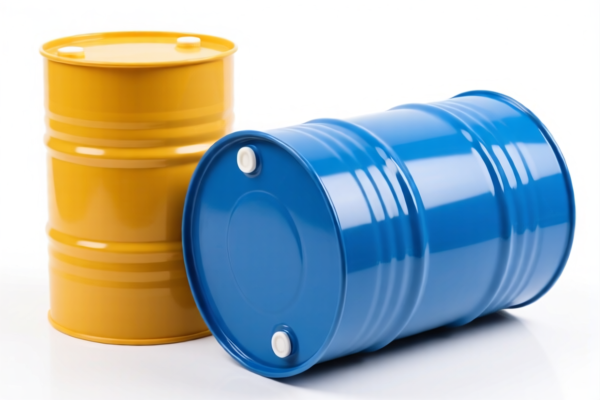
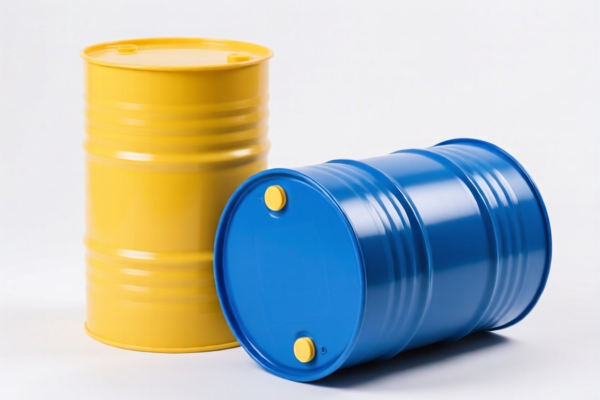
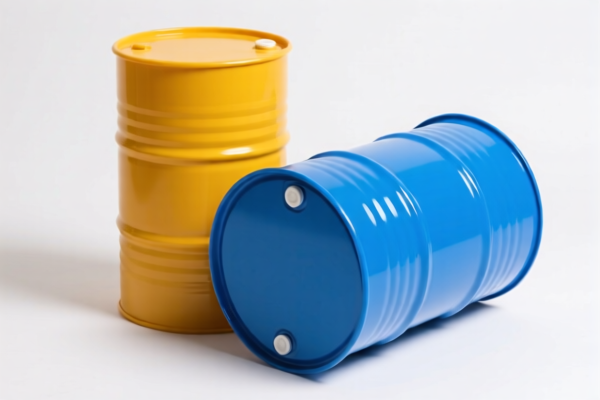
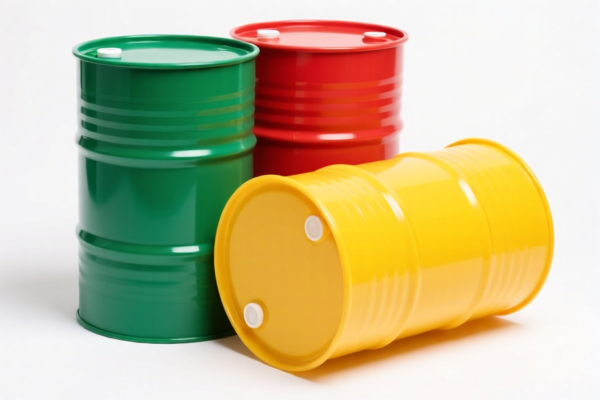
AI Analysis
🛢️ 25L Brake Fluid Plastic Drum (Industrial Plastic Containers)
🌐 HS Code Reference & Customs Clearance Guide | 2026 Latest Tariff Analysis | Professional Entry Strategy
📌 I. Product Definition & Classification: Is It a "Container" or a "Part"?
A 25L Brake Fluid Plastic Drum is a rigid, large-capacity plastic container specifically designed for storing and transporting automotive brake fluid. In international trade, its classification hinges on whether it is viewed primarily as a packaging material or as an automotive accessory/part.
Key Classification Distinctions:
-
Packaging Category (Headings 3923/3926):
- Primary Function: Storage and transport of liquids.
- Material: Plastic (PE/PP).
- Capacity: 25 Liters (>22.71 liters threshold often triggers specific sub-categories).
- Target HS Codes:
3923.30.00.90,3923.90.00.16,3926.90.10.00,3926.90.99.89.
-
Automotive Accessory Category (Heading 8708):
- Primary Function: Specific use in automotive braking systems.
- Material: Plastic.
- Target HS Code:
8708.99.81.80.
⚠️ Critical Warning:
- If declared as a container/packaging, the tariff burden is often higher due to Section III/IV anti-dumping and specific US trade measures. - If declared as an auto part, it falls under a different legal framework, but customs may still challenge this if it lacks specific automotive integration features.
📦 II. HS Code Classification Details (2026 Latest Tariff Matrix)
| HS Code | Product Description | Application Scenario | Total Tax Rate |
|---|---|---|---|
3923.30.00.90 |
Plastic containers, capacity > 22.71L, not elsewhere specified | Standard industrial drums, bulk liquid packaging | 38.0% |
3923.90.00.16 |
Plastic articles for transport/packaging, specifically 25L+ drums | Large-capacity plastic drums (threshold > 22.71L) | 38.0% |
3926.90.10.00 |
Plastic bottles, jars, cans, buckets, pails | Generic plastic buckets/containers (often for oil/water) | 20.9% |
3926.90.99.89 |
Other plastic articles (Catch-all for plastic goods) | Plastic containers not specifically listed elsewhere | 22.8% |
8708.99.81.80 |
Parts and accessories of motor vehicles (Other) | Braking system components, including fluid reservoirs/drums | 37.5% |
🔍 Key Insight:
-3923.30.00.90&3923.90.00.16: These are the most "textbook" classifications for 25L plastic drums. However, they carry the highest tax rate (38.0%) due to specific trade barriers. -3926.90.10.00: Often used for generic "plastic buckets." If the product resembles a standard bucket rather than a specialized industrial drum, this code may be argued, offering a lower rate (20.9%). -8708.99.81.80: The "Auto Part" route. While slightly cheaper than the packaging codes (37.5%), it is highly scrutinized. If the drum is just a plain plastic vessel without automotive branding or specific mounting, customs may reject this code.
💰 III. 2026 Tariff Rate Breakdown (Including Additional Duties)
✅ Applicable Country: United States (US)
✅ Origin: China (CN)
✅ Effective Date: Post-November 2025 (Current Status)
🎯 1. 3923.30.00.90 & 3923.90.00.16 – Large Plastic Containers (The "High Tariff" Route)
| Item | Content |
|---|---|
| Base Duty Rate | 3.0% (Ad valorem) |
| Section 301 Duty (Added) | 25.0% |
| Section 122 Duty (USMCA/Trade Adjustment) | 10.0% |
| Total Tax Rate | 38.0% |
| Calculation Basis | CIF Value × 38% |
| De Minimis Exemption | ❌ NOT Eligible (Deny De Minimis) |
| Legal Path | Section 301: 9903.01.32 → Section 122: 19 USC 1677j → HTSUS: 3923.30.00 |
📌 Explanation:
- These codes are explicitly targeted by Section 301 (25% penalty tariff on Chinese plastics/packaging). - Section 122 adds an additional 10% for certain trade remedies. - Result: A 38% total tariff is significant. For a $1,000 shipment, you pay $380 in duties alone.
🎯 2. 8708.99.81.80 – Auto Parts (The "Accessory" Route)
| Item | Content |
|---|---|
| Base Duty Rate | 2.5% |
| Section 301 Duty (Added) | 25.0% |
| Section 122 Duty (USMCA/Trade Adjustment) | 10.0% |
| Total Tax Rate | 37.5% |
| Calculation Basis | CIF Value × 37.5% |
| De Minimis Exemption | ❌ NOT Eligible |
| Legal Path | Section 301: 9903.01.02 → Section 122: 19 USC 1677j → HTSUS: 8708.99.81 |
📌 Explanation:
- Auto parts from China are also subject to Section 301 (25%) and Section 122 (10%). - The rate is marginally lower (37.5% vs 38.0%), but the risk of reclassification is high if the item is not a certified "part" with mounting points or automotive-specific engineering.
🎯 3. 3926.90.10.00 – Plastic Buckets/Containers (The "Low Rate" Strategy)
| Item | Content |
|---|---|
| Base Duty Rate | 3.4% |
| Section 301 Duty (Added) | 7.5% |
| Section 122 Duty (USMCA/Trade Adjustment) | 10.0% |
| Total Tax Rate | 20.9% |
| Calculation Basis | CIF Value × 20.9% |
| De Minimis Exemption | ❌ NOT Eligible |
| Legal Path | Section 301: 9903.01.02 → Section 122: 19 USC 1677j → HTSUS: 3926.90.10 |
📌 Strategic Note:
- If the drum is structurally identical to a "bucket" (handle, wide mouth), customs might accept3926.90.10.00. - Savings: ~17% less tax than3923codes. - Risk: If customs argues it is a "specialized industrial drum" (not a bucket), they will reclassify to3923and charge the difference + penalties.
🎯 4. 3926.90.99.89 – Other Plastic Articles (The "Catch-All")
| Item | Content |
|---|---|
| Base Duty Rate | 5.3% |
| Section 301 Duty (Added) | 7.5% |
| Section 122 Duty (USMCA/Trade Adjustment) | 10.0% |
| Total Tax Rate | 22.8% |
| Calculation Basis | CIF Value × 22.8% |
| De Minimis Exemption | ❌ NOT Eligible |
| Legal Path | Section 301: 9903.01.02 → Section 122: 19 USC 1677j → HTSUS: 3926.90.99 |
📌 Explanation:
- A middle-ground option. Higher than3926.10but lower than3923.30. - Used when the product doesn't fit the specific "bucket" or "drum" definitions but is clearly a plastic good.
🛠️ IV. Customs Clearance Practical Advice (Real-World Pitfall Guide)
✅ 1. Documentation Checklist (Non-Negotiable)
| Document | Must Provide? | Description |
|---|---|---|
| ✅ Product Specification Sheet | ✔️ | Material (PP/HDPE), Capacity (25L), Neck type, Weight. |
| ✅ Product Photos | ✔️ | Clear images of the drum, handles, closures, and labels. |
| ✅ Commercial Invoice | ✔️ | Must specify "25L Plastic Drum for Brake Fluid" OR "Plastic Container". |
| ✅ Packing List | ✔️ | Net/Gross weight, dimensions. |
| ✅ Customs Ruling (if available) | ✔️ | If you have a prior ruling, attach it to streamline entry. |
| ✅ Material Safety Data Sheet (MSDS) | ✔️ | Required because the content (Brake Fluid) is hazardous, even if the drum is not classified as hazardous material itself. |
✅ 2. Declaration Strategy (Key Mantra)
🔥 "Content vs. Container: Define the Item!"
| Scenario | Correct Declaration | Wrong Declaration | Consequence |
|---|---|---|---|
| Empty Drums | "Empty 25L Plastic Drum" | "Drum with Brake Fluid" | MAJOR ISSUE: Hazardous material declaration required if fluid is present. |
| Drums WITH Fluid | "Plastic Drum containing Brake Fluid" | "Plastic Drum" | FAILURE: Misdescription. Must declare hazardous content per IMDG/US DOT. |
| Generic Packaging | "Plastic Container, 25L, No Automotive Branding" | "Brake Fluid Reservoir" | High risk of reclassification to 8708 (Auto Part) or 3923. |
| Automotive Specific | "Brake Fluid Container, Automotive OEM Part" | "Plastic Bucket" | Customs may reject 3926 and apply 8708 (37.5%). |
✅ 3. Special Considerations
| Situation | Handling Advice |
|---|---|
| Empty vs. Filled | If shipping empty drums, declare as "Plastic Containers" (3923/3926). If shipping filled with brake fluid, the liquid is the primary good for classification (usually 2710.19 or 3824.99), but the container still affects packaging duties. Consult a hazmat specialist. |
| Hazardous Goods | Brake fluid is a Class 3 Flammable Liquid. Even if the drum is plastic, the shipment requires Hazmat Declaration, UN Packaging Certification (e.g., UN 1H1), and special handling. |
| Section 301 Exclusions | Check if 3923.30.00.90 or 3923.90.00.16 are currently excluded from Section 301 duties. Most are NOT excluded. |
| Pre-Ruling | Submit an ACE Pre-Ruling application to US CBP for 3923.30.00.90 or 3926.90.10.00 to lock in the rate and avoid disputes. |
🌍 V. Global Market Comparison (2026 Update)
| Market | Recommended HS Code | Estimated Total Tax | Notes |
|---|---|---|---|
| 🇺🇸 USA | 3923.30.00.90 / 8708.99.81.80 |
37.5% - 38.0% | High due to Section 301 + 122. No de minimis. |
| 🇨🇳 China (Export) | 3923.30.00.90 |
0% (Export Duty) | China does not tax exports for these goods. |
| 🇪🇺 EU | 3923.30.00 |
3.9% + VAT | No Section 301 equivalent. Much lower duty burden. |
| 🇨🇦 Canada | 3923.30.00 |
0% - 5% | USMCA/CUSMA may apply 0% duty if originating in NA. |
| 🇬🇧 UK | 3923.30.00 |
3.9% + VAT | Post-Brexit, no Section 301. |
📌 Conclusion:
- The US is the most expensive market for this product due to layered tariffs. - EU/UK/Canada offer significantly lower duty rates, making them more attractive for profit margins.
📌 VI. Common Mistakes & Pitfalls (Lessons Learned)
❌ Mistake 1: Declaring "Brake Fluid" as the product when shipping empty drums.
👉 Consequence: Customs flags for hazmat (incorrect), then reclassifies to plastic containers. Delays + fines.
✅ Fix: Clearly state "Empty Plastic Drum" and ensure no residue of brake fluid remains.
❌ Mistake 2: Using 8708 (Auto Part) for generic plastic drums.
👉 Consequence: Customs rejects it as "not a functional part" (no mounting/attachment), reclassifies to 3923.
✅ Fix: If it’s just a container, use 3923 or 3926.
❌ Mistake 3: Ignoring Section 122 (10%) in tariff calculations.
👉 Consequence: Underestimating duty by 10%, leading to cash flow issues.
✅ Fix: Always add 10% Section 122 to Section 301 calculations for Chinese plastic goods.
❌ Mistake 4: Misdeclaring capacity.
👉 Consequence: 3923.30 applies to >22.71L. If you declare 20L, but it’s 25L, customs will penalize.
✅ Fix: Accurate measurement in liters/gallons.
🎯 VII. Conclusion: Professional Clearance for Cost Efficiency
🎯 Key Takeaway:
🔹 "For 25L Plastic Drums: Expect 38% Tax in the US. Plan for Hazmat if Filled."
🔹 "Empty Drums: Declare as Plastic Containers (3923). Filled Drums: Declare as Hazardous Liquid + Container."
📌 Pro Tip:
If you are shipping filled brake fluid, ensure you have:
1. UN-certified plastic drums (e.g., UN 1H1/Y1.4/25).
2. Proper labeling (Flammable Liquid Class 3).
3. Correct HS Code for the fluid (likely 3824.99 or 2710.19), not just the container.
📣 Immediate Action:
📞 Contact your broker to confirm if your specific drum design fits
3926.90.10.00(20.9%) to save ~17% in duties.
📄 Request a Pre-Ruling from US CBP if shipping large volumes.
🚀 Ensure Hazmat Compliance if the drums are filled.
✨ Professional Clearance Starts with Accurate Classification!
💼 Every Percentage Point in Tariffs is a Percentage Point in Profit!
Customer Reviews
About HS Code Classification
The Harmonized System (HS) is an internationally standardized nomenclature developed by the World Customs Organization (WCO) to classify traded products. Over 200 countries use the HS system as the basis for customs tariffs, trade statistics, and import/export regulations.
Each HS code follows a hierarchical structure:
- Chapter (2 digits) — Broad category of goods (e.g., Chapter 84: Machinery and Mechanical Appliances)
- Heading (4 digits) — More specific grouping within the chapter
- Subheading (6 digits) — Internationally standardized breakdown, used by all WCO member countries
- National subdivisions (8-10 digits) — Country-specific extensions for further classification, such as US HTSUS 10-digit codes
Correct HS code classification is essential for smooth customs clearance, accurate duty payment, and compliance with trade regulations. Misclassification can lead to customs delays, overpayment of duties, or penalties.
When importing from CN to US, the applicable tariff rates may include:
- Most-Favored-Nation (MFN) rate — The standard duty rate applied to WTO members
- General rate — Applied to countries without trade agreements
- Trade remedy duties — Additional tariffs such as Section 301 (anti-dumping), Section 232 (national security), or countervailing duties
The information provided on this page is for reference purposes only. For official classification, please consult with your local customs authority or a licensed customs broker.